• First Person Accounts: Eeshan Chaturvedi on an LL.M. from Stanford Law School, environmental litigation & more

    First Person Accounts (FPA’s) are meant to provide a first-hand account of Indian law graduates who have pursued, or are pursuing, a post-graduate course (LL.M. or otherwise) from different universities across the world.

    In this FPA, I get to speak with Eeshan Chaturvedi, a litigating lawyer who completed an LL.M. from Stanford Law School (Class of ’17) , with a specialisation in environmental laws.  A graduate of Symbiosis Law School, Pune (Class of ’12) Eeshan clerked with Swatanter Kumar J., both in the Supreme Court and then the National Green Tribunal. Eeshan discusses his time at Stanford, where he also cross-registered at different schools, the value of an LL.M. abroad, and much more.

    Did you contemplate an LLM right after graduation? Or was the plan to always work for a few years before enrolling?

    I was always excited by the idea of specializing in a particular field of law. I think our profession is gradually transitioning into specific fields being made one’s métier. During Law School, I had developed quite a keen interest in Arbitration Laws but in time I understood that basic understanding as taught in Law Schools would not suffice anent specializations.

    However, I was also aware that an abstract interest in any field might not always translate into actual practical interest, for which I was well advised to first work for a few years to really understand where my interests lay and then take a decision as to what might eventually be my specialization.

    “I was also aware that an abstract interest in any field might not always translate into actual practical interest, for which I was well advised to first work for a few years to really understand where my interests lay and then take a decision as to what might eventually be my specialization.”

    Were you always interested in environmental law? Or was this something that you developed an interest in during your Supreme Court clerkship?

    Environmental Law turned out to be a natural progression for me. I was lucky to be clerking with Justice Swatanter Kumar and upon his retirement as a Judge of the Supreme Court, I had the opportunity to be associated with the National Green Tribunal.

    By then I had inculcated a strong liking for the field and was academically inclined towards delving in the subject.

    Given the specific professional interests you had, what were the other schools that you applied to? And why did you narrow down on Stanford Law School?

    I had applied to a few other School in the US however, Stanford was always my first option and I was lucky enough to get through.

    During my research, I had realized that California was at the heart of the environmental revolution of sorts and was the pathbreaker when it came to enviro-legal policy and strategy. The faculty at Stanford is arguably the best with professionals and pioneers taking up interesting courses with a practical reference to all the teachings.

    Apart from the advantages of studying environmental law itself, I was also excited about attending one of the top law schools in the country.

    Any advice on how to go about the application process? More specifically, writing a personal statement, and sourcing recommendation letters? 

    I get asked this question pretty often from prospective students. I really think that the best way to write a personal statement is by being absolutely honest. The admissions board that goes through the applications in the respective colleges is quite experienced and really appreciates honesty and keenness when it comes to SoPs.

    One has to be able to answer through his/her SoP: how and why, firstly, that particular school, and secondly, that particular course.

    “I had, in my SoP been absolutely frank about why I had zeroed in on ELP and Stanford and I think that was what stood out. I would really advise the applicants to not overthink their SoPs and be forthright in their thought process and expression.”

    I had, in my SoP been absolutely frank about why I had zeroed in on ELP and Stanford and I think that was what stood out. I would really advise the applicants to not overthink their SoPs and be forthright in their thought process and expression. As regards recommendations, it is always better to get one from someone who knows your work ethic and is acquainted with your interest in a particular field.

    How was the LLM experience? What were some of the highlights? 

    My experience at Stanford was extremely enriching both academically and socially. The kind of exposure one gets cannot be measured in terms of comparative experiences. The faculty, as I stated, was extremely helpful and approachable despite being the who’s who of the legal field in the US.

    My colleagues and classmates from all over the globe, over time, became really close friends whom I stay in touch with regularly. Also, I do believe that there is a definite impetus a Masters gives to one in her professional career.

    “My colleagues and classmates from all over the globe, over time, became really close friends whom I stay in touch with regularly. Also, I do believe that there is a definite impetus a Masters gives to one in her professional career.”

    During the Masters, I was lucky enough to be chosen as one of the Rising Environmental Leaders of Stanford University. Interactions with peers and faculty and finally the camaraderie are things that I would cherish for a long time.

    At Stanford, you also took a course at the Business School – how was this experience? 

    I took classes in schools outside the Law Schools as well, including the Business School which is one of the advantages of doing a Masters from Stanford. The idea was to try and learn as much as one can in respect to a topic irrespective of the professional background.

    The Graduate School of Business was a brilliant experience where I got to learn about the managerial dynamics of energy laws/technologies which have helped me understand the field better. While it might be quite gruelling, the academic and networking opportunities really open up with such courses.

    Now that you have some time to look back on your LLM, how do you think it has helped your litigation practice? 

    A specialized LLM helps a great deal in litigation especially when you plan on starting your own practice. An intrinsic global understanding of any field not only helps in Courts, while drafting or pleading but also helps you apply principles in an ever developing domestic scenario.

    I have also, over the years, interacted with some LL.M. graduates who have felt that without any substantial connections or background in the legal field, the Master’s puts them on a better footing in terms of identifiability. The connections one makes during their Masters also helps a great deal in reaching out to a larger base of practitioners and litigants alike.

    “I have also, over the years, interacted with some LL.M. graduates who have felt that without any substantial connections/background in the legal field, the master’s puts them on a better footing in terms of identifiability. “

    Lastly, any advice for Indian law graduates who are contemplating a foreign LLM?

    I would really encourage prospective students to take up a field which actually interests them instead of following something that seems more practical or en vogue. Also, it is always advisable to weigh the pros and cons when choosing a school not only on the basis of rankings, faculty, alumni, and placements but also the environment one is looking for.

    For instance, life as a Postgraduate student at Columbia University would be completely different from Cornell, and the student has to choose what might suit her better. An LL.M. is eventually a culmination of various academic, social and professional interactions and engagements and one has to be open for the opportunities that come one’s way.

    “An LL.M. is eventually a culmination of various academic, social and professional interactions and engagements and one has to be open for the opportunities that come one’s way.”

  • IMG_4729.jpgFirst Person Accounts (FPA’s) are meant to provide a first-hand account of Indian law graduates who have pursued, or are pursuing, a post-graduate course (LL.M. or otherwise) from different universities across the world.

    In this FPA, we hear from Ekakshra Mahajan who recently completed her LL.M. from Penn State Law  (Class of ’18) on a $50,000 fellowship.

    In this interview, the Symbiosis Law School graduate (Class of ’17) shares the process behind the fellowship, writing the New York Bar exam, and a whole lot more.

    (Also read Ekakshra’s interview on Lawctopus )

    (Edited excerpts)

    At what stage of your undergraduate program did you decide to enrol for an LLM?

    Before I answer this, I’d like to give a quick background of how I ended up pursuing an LL.M. right after Law School. I participated in the Prof. N.R. Madhava Menon SAARC Mooting Competition in my final year.

    The competition is organized in two stages and members of the top five Indian teams which qualify for the SAARC Rounds of the Competition, are eligible to sit for an interview with leading legal luminaries.

    Two students are conferred with the title of Best Law Students (Male & Female) and receive a Fellowship to pursue an LL.M. from Penn State Law, Pennsylvania State University.

    So effectively, until March 2017, till the award was announced, I hadn’t conceived the idea of pursuing my LL.M. right after graduating Law School.

    Answering your question, I always knew that I would be pursuing post-graduation, but perhaps the clichéd way: acquire work experience and subsequently apply to Law Schools. But, given how opportunities opened up, I was fortunate to alter my career trajectory and pursue an LL.M. right after graduation. Looking back, I think it was a better call especially for someone wishing to litigate.

    Any advice on how one should go about writing the SoP?

    The Statement of Purpose is an integral component of one’s application and as rightly emphasized, needs investment of a substantial amount of time. I’d suggest perceiving it as a reflection of one’s identity.

    Begin the process by writing your experiences, personal accomplishments and defining moments that you’d like a potential Admissions Committee to know. Steer clear from perusing sample SoP’s before you’ve had a chance at personal reflection as that might compel you to modify your writing skills to suit a particular way. Once you have a rough draft ready, then perhaps refine it by studying ‘successful’ SoPs.

    “Steer clear from perusing sample SoP’s before you’ve had a chance at personal reflection as that might compel you to modify your writing skills to suit a particular way. Once you have a rough draft ready, then perhaps refine it by studying ‘successful’ SoPs.”

    This will help retain the originality and authenticity of your SoP and allow it to be distinctive. Given the bulk of applications every University receives on an average, write your SoP in a way that it doesn’t sound generic. Connect your experiences with what the University has to offer and how it suits your career choice. Leadership experiences, community services, demonstrable passion in the field are some of the factors one could consider incorporating. Have a Professor or a senior proof-read your SoP and suggest changes, if any.

    How was the LLM experience? What were some of the bigger differences in the learning experiences between your time at SLS Pune and Penn State?

    The US learning experience is definitely more nuanced. Our classes were conducted with the J.D. students which extended a more diverse experience to the classroom. Penn State Law follows a credits system. There is a minimum requirement of 12 credits and a maximum of 17 credits per semester which allows the student to choose courses flexibly.

    Indian law schools follow a stringent curriculum and the performance of most subjects is examination-based. Most US universities allow you to choose subjects which don’t have a term-end examination, and students can rather opt for research-oriented subjects which are evaluated on the basis of say, a term-end research paper or classroom activities.

    Some courses had open-book examinations which facilitated practical application of the course material without having to memorize every word of a voluminous book.

    Additionally, the Professors ensured that every student came well-prepared to class. The entire schedule of the classes is displayed in advance of the course commencement and students are expected to know the content of the readings which have been assigned, before the class begins. This approach helped advance my interest in the subjects I had opted for. The contents of every leading judgment, including concurrences and dissents are discussed and opinions are invited on subjective issues which significantly contributed to the holistic understanding of a given subject.

    However, I would want to mention that Indian Law Schools provide more extra-curricular opportunities to the students such as Moot Court Competitions or Paper Presentations which help hone an individual’s existing skill-set. Indian education also allows the students to enter the professional realm at a relatively younger age vis a vis US Law Schools which in my opinion, is advantageous.

    “I would want to mention that Indian Law Schools provide more extra-curricular opportunities to the students such as Moot Court Competitions or Paper Presentations which help hone an individual’s existing skill-set.”

    You also successfully wrote the NY Bar something you have spoken about quite extensively.  Was writing the Bar always the plan, or something you decided to do after you began the LLM program?

    I decided that I’ll be taking the New York State Bar Examination before I left for the United States. The entire process works on a very stringent timeline. The New York Bar Appellate Division first ascertains the applicant’s eligibility to take the exam. Documents have to be procured from various Indian institutions including the Law School one has attended and it is recommended that the entire process be completed by the end of September.

    Eligibility to sit for the examination is ascertained by April and once the determination has been made, the application process starts. So, the choice to take the Bar Exam ideally should be made before starting the LL.M. Programme. To be able to practice in the United States, taking the Bar Exam is a pre-requisite. I took the attempt in July, two months after graduating so it was relatively more strenuous.

    “The choice to take the Bar Exam ideally should be made before starting the LL.M. Programme. To be able to practice in the United States, taking the Bar Exam is a pre-requisite. I took the attempt in July, two months after graduating so it was relatively more strenuous.”

    Having said that, one could apply for their OPT and take an attempt in the month of February if they wish to stay back and weigh their career prospects simultaneously. OPT i.e. Optional Practical Training allows International students to legally stay in the United States for one year on a student visa and obtain practical training in their respective field.

    What is your reading of the US recruitment market for international LLMs?

    From my understanding, the US recruitment market in general is very competitive and passing the Bar exam in no way guarantees a job. There are numerous professional networking opportunities and exploiting those during one’s LL.M. year might help in obtaining job interviews or just understanding the US work environment.

    Most law schools participate in the International Students’ Interview Program i.e. ISIP which is hosted by the New York University School of law annually. It facilitates the hiring of highly qualified foreign-trained lawyers enrolled in LL.M. programs and is a great platform for international students to explore opportunities in the United States and abroad.

    Lastly, some say that an LLM does not really help the Indian litigating lawyer. Thoughts?

    We live in an integrated world, managing a whirling vortex of international integrations and diverse jurisdictions. Political uncertainties across the world affect us domestically and gaining global exposure definitely provides an individual an effective niche. So, it might be wrong to suggest that an LL.M. does not help an individual wishing to litigate.

    “Political uncertainties across the world affect us domestically and gaining global exposure definitely provides an individual an effective niche. So, it might be wrong to suggest that an LL.M. does not help an individual wishing to litigate.”

    The courses I pursued have allowed me to have an edge in understanding and deciphering the genesis of various laws while developing an in-depth understanding of the subject.  For example, I pursued Antitrust as a subject in my Fall Semester and given that the Indian Competition Law has largely evolved from the EU and US jurisprudence, it simplified the learning process.

    For someone wishing to litigate, it might be advisable to pursue their LL.M. right after graduation. A litigating lawyer has to weigh a lot of factors before taking the decision of pursuing higher education. Absence from the Bar where they’ve been practicing for a considerable time period might not be the most feasible option especially if they’ve already been able to establish a reasonable client base.

  • First Person Accounts (FPA’s) are meant to provide a first-hand account of Indian law graduates who have pursued a post-graduate course from different schools across the world.

    In this edition of the FPA, we get talking with Anushka Arora who graduated with an LLM from the National University of Singapore (Class of ’18). Currently working in the chambers of Neeraj Grover, Anushka completed her law from Guru Gobind Singh Inderprastha University (Class of ’17). In this FPA, I get her to talk about enrolling for a master’s right after graduation, the learning experience at NUS, and a whole lot more.

    Anushka Arora.png

    (Edited excerpts)

    At what stage of your undergraduate course did you start planning your LLM applications? Did you consider working a few years before enrolling for the course?

    My planning process for applications only started in my final year-end semester.

    No, I did not consider working before leaving for the master’s program as I did not wish to interrupt the flow of my curriculum.

    How did you go about selecting where to apply? Apart from NUS, did you apply to any other schools?

    As I wanted to pursue an LLM in IPR, I started to figure out which law university is the best for an LLM in IPR. Hence I spoke to various IPR advocates in India belonging to top tier firms like Shardul Amarchand Mangaldas & Co. etc.

    I also discussed the same with my undergraduate law professors from GGSIPU, USLLS including my Dean. After gaining feedback and consensus, I settled at the NUS as it turned out that NUS law school was one of the worlds best law University for IPR.

    Thereafter, I also checked the NUS law university course module pages so as to have a general idea as to what subjects they offer and then compared the same with other law universities. It turned out that NUS offered very enterprising IPR modules as compared to other law universities such as entertainment law, biotechnology law, sports law etc.

    “I also checked the NUS law university course module pages so as to have a general idea as to what subjects they offer and then compared the same with other law universities.”

    Yes, apart from NUS, I applied to a few more law Universities, including LSE, UCL, Oxford and Cambridge.

    Did you seek financial aid of any kind?

    Yes, I did.  I twice received the Directorate General Artillery Education Scholarship.

    Any advice for future applicants on writing the statement of purpose, and getting letters of recommendation?

    A well-written statement of purpose and letter of recommendations are the gateway to prestigious universities. Start the preparations for masters at least eight months prior to the date of leaving. Get a letter of recommendation from faculties (who are either the alumni of the university you are applying to or are well reputed) or from renowned legal personalities (if you have interned with them).

    Do not get a letter of recommendation from someone who barely knows you and cannot vouch for you properly. As regards the statement of purpose is concerned, managing within limited word limit and describing your attributes along with purpose can be a cumbersome task, hence you would need to re-edit and rephrase you draft multiple times. A statement of purpose is not your bio, hence a word of caution here is that you need to identify as to what fits best under ‘why shall the university select you or how would the university help you in achieving your goal’.

    “A statement of purpose is not your bio, hence a word of caution here is that you need to identify as to what fits best under ‘why shall the university select you or how would the university help you in achieving your goal’.”

    As mentioned above, all these process and tasks of filling forms etc. takes a lot of time, hence, in order to avoid last moment glitches you need to prepare and start well in advance.

    How was your LLM experience at NUS? What were some of the bigger differences, if any, in the learning experience between NUS and GGSIP University?

    Stupendous!.

    Sleepless nights, exams (6 hours long to 24 hours long), class presentations, moots, conferences, daily class grading’s, daily extensive readings for class, all in just roughly 10 months. I believe this was the main reason why I chose NUS from the options I had, as I wanted to train and push myself to limits I had never been to.

    Pursuing the masters along with training in three different law offices in Singapore was not only too difficult to manage but required a lot of focus and presence of mind in order to balance work and leisure.

    I really cannot compare institutions like GGSIPU, USLLS and NUS as both of these universities have their own uniqueness and quality. However, the teaching/learning process and methodologies used in India are entirely different from that of foreign institutions.

    The education at NUS is a lot more of a professor to student interactive teaching rather than just a lecture style of teaching. The learning experience at NUS involved everyday class assessments, extensive readings, regular exams, various class participatory activities along with professors using props to elaborate upon topics, which not only made the teaching interactive but interesting at the same time.

    “The learning experience at NUS involved everyday class assessments, extensive readings, regular exams, various class participatory activities along with professors using props to elaborate upon topics, which not only made the teaching interactive but interesting at the same time.”

    Early days, but how do you find your LLM helping you as a litigation lawyer? 

    Knowledge- Confidence- Networking, to sum up. An LLM from a well-reputed institution gives you an edge over other employees as regards being entrusted cases to handle by your self, monetary wise and client handling.

    What is your reading of the legal recruitment market in Singapore for international LLM graduates? 

    I wanted to work in Singapore, which is why I opted to pursue masters from the same. Being there for almost a year and working at three different law offices for six months, I realized that sadly the market does not entertain national or international lawyers. But this does not mean there are no chances at all.

    The market is still welcoming arbitration lawyers (to an extent)/foreign lawyers, and to get employment opportunities one would have to invest a lot of time and money. Singaporean law firms, like most foreign jurisdictions, usually consider nationals over international candidates, and as the market is stagnant for Singapore nationals, getting a job can be tough.

    “Singaporean law firms, like most foreign jurisdictions, usually consider nationals over international candidates, and as the market is stagnant for Singapore nationals, getting a job can be tough.”

    Lastly, any advice for Indian law graduates who are looking to apply for a master’s course outside the country? 

    Yes, do not run after a master degree just for the sake of getting a master from abroad. Various universities (well reputed too) engulf huge sums of money without delivering quality education. Usually, students opt for such universities and waste their one precious year of their career, which does not take anyone far.

    Hence, choose your university wisely, check which university has a good repute for a particular field of law, try and aim for the best universities.

    “Hence, choose your university wisely, check which university has a good repute for a particular field of law, try and aim for the best universities.”

    You can work for few years if you feel your curriculum vitae would not do justice to you at the moment. As for the rest, just have faith in yourself, work hard and you shall get what you desire.

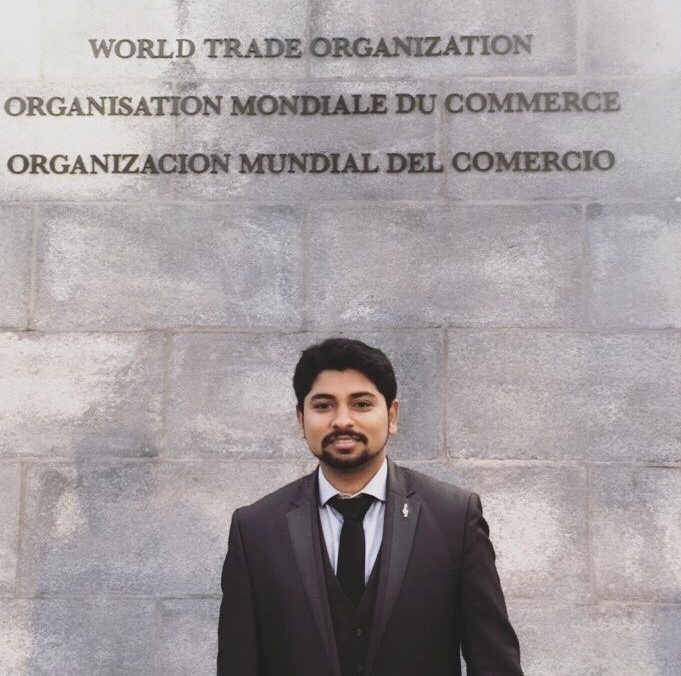
  • First Person Accounts:  Ridhish Rajvanshi on the TRAIL+ program at World Trade Institute, Bern

    First Person Accounts (FPA’s) are meant to provide a first-hand account of Indian law graduates who have pursued, or are pursuing, a post-graduate course (LL.M. or otherwise) from different universities across the world.

    In this edition we speak with Ridhish Rajvanshi  who is currently pursuing an LL.M. from the World Trade Institute in Bern, Switzerland. A graduate of Symbiosis Law School, Pune (Class of ’18), Ridhish shares his impressions of the TRAIL+ program, studying international trade law, the WTI’s admission process, and a whole lot more.

    (Edited excerpts)

    Before going into the LLM, I wanted to know a bit about your time as a DAAD exchange student – how was this experience? And why did you choose to take it up?

    I always wished to study abroad and explore career options outside India. I came to know about the DAAD exchange program in my high school, however, I did not apply for the same at that point of time since it would have been more beneficial to apply for such an exchange in my undergraduate years. Eventually, I did so in my second year of law.

    The reason I opted for the exchange was to understand and explore different cultures around the world, international relations, teaching methodologies and also to quench my curiosity of studying and working abroad. I also wanted to ensure that I was not subscribing to the hype surrounding the idea of studying abroad and it was really worth it. The exchange gave me deeper insight and indeed helped me reach an understanding about what I really wished to pursue after my five years in law school.

    “I also wanted to ensure that I was not subscribing to the hype surrounding the idea of studying abroad and it was really worth it. “

    My experience in Germany was nothing less than wonderful. I was awarded 2,000 euros for approximately three months by DAAD which covered by flight expenses, visa costs, health insurance, rent, and my daily expenses. As compared to India, I realised the methodology of teaching was tilted more heavily towards self-study. The professor discussed topics, provided information about fundamental concepts of subjects / module they were teaching, but a good understanding and grasp of the module was achieved only after engaging in discussions and extensive class participation, which is rather uncommon in the Indian education system. Luckily, during my short stay, I was also able to visit multiple countries, which proved to be a very rewarding experience as well.

    Did you consider working for a few years before embarking on the WTI LLM? Why apply right after your graduation?

    I will be wrong in denying that I did not consider working before deciding to pursue my Master’s at WTI. It was definitively an option. However, after doing a pro and con analysis of the job market in India for trade law versus the opportunities I would be exposed to after pursuing a master degree, the latter proved to be a better choice.

    I had centred my internships around firms, MNCs and government offices focusing or relating to International Trade Law. This helped me gauge the job market; at the same time I did miss out on opportunities that might have culminated into jobs.

    Also, if I had worked after the end of law school, the pay scale in the field of my interest would not suffice and I would not have adequate saving for my Masters. Hence when the opportunity lay in front of me to pursue my LL.M. from a coveted institution for International Trade and Economics, I could not let go of it.

    Additionally, there is always a concern that once you take up job, it is always a little difficult to get back to the routine studies, and considering my nature it would have been a rather difficult decision for me to revert to studies if I had commenced work.

    “Additionally, there is always a concern that once you take up job, it is always a little difficult to get back to the routine studies, and considering my nature it would have been a rather difficult decision for me to revert to studies if I had commenced work.”

    How did you narrow down on WTI? Were there any other schools that you looked at?

    For a person wanting to secure a career in International trade, the global community  is rather small. There are not many institutions providing an LL.M. in International Trade. Most universities around the world provide a general LL.M. and one could choose International Trade as their specialisation during the course of the degree.

    Amongst the few available options, the WTI caught my eye for multiple reasons. The faculty and guest lectures associated are leading practitioners in the field. I have had the opportunity to attend lectures of Prof. Peter Van den Bossche, Dr. Arthur Appelton, Ms. Gabrielle Marceau, Dr. Thomas Cottier, Dr. Pierre Sauvé, various ambassadors to the WTO, WTO Appellate Body Members, etc just to name a few.

    I also looked at the IELPO program at University of Barcelona and Georgetown University, but I did not apply for them. The WTI provided me close proximity with Geneva which is the seat of the WTO. Luckily, I got through in my first application. Sometimes you instantly know when you apply and manage to secure a seat that this is what you have always wanted and you do not need to look back at your decision.

    Did you apply for any financial aid?

    Yes, I did apply for financial aid. I applied with the WTI itself which provides for Director’s Scholarship and the WTI granted a partial waiver on my tuition fees. I would always be grateful to them for this. Unfortunately, not many scholarships are available for Indians planning to pursue their LL.M in Switzerland.

    I do know of the Inlaks Scholarship, the Aga Khan Foundation International Scholarship Programme, the J. N. Tata Endowment awards, and the R.D. Sethna Scholarships. The latter three are loan scholarships and I did not apply for them. I am also grateful to my parents who have constantly supported me and agreed to finance my education abroad.

    The TRAIL+ application is fairly comprehensive. Any advice on how to approach the SoP, as well as the essay questions?

    The Statement of Purpose is a reflection of you. The selection committee reads about your achievements in your CV, they do not want you to write the same thing in your Statement of Purpose. They want to learn about you, your journey on why you want to do an LL.M. They want to learn how you will embrace their program and why it is beneficial for you. They would also like to hear how you can contribute to their alumni base, what you bring to their institution.

    “They want to learn about you, your journey on why you want to do an LL.M. They want to learn how you will embrace their program and why it is beneficial for you. They would also like to hear how you can contribute to their alumni base, what you bring to their institution.”

    And most of all they want to see if you understand yourself by sharing with them your positives and a couple of negatives which you could transform into positives with learning at their program. This does not at all mean that you need to write in flowery English. Use simple words, and shorter sentences. Try and provide an insight of who you are, and the genuine purpose of why you want to study at their institute.

    For the essay question, choose the topic you are most comfortable with. Before you commence your essay, give the topic some serious thought. The most important aspect for writing your essay is the time you put in for research. You should make brief points you wish to include in the essay. After compiling on your research, have structure ready for you essay. Ensure that you prepare facts, figures and supporting material during your research.

    Avoid long sentences and check grammar always, as even you rephrase the sentences or change order, you may not notice but you will end up having grammatical errors and hence you should be cautious.

    Always get someone who has successfully applied to a Masters program to proofread your Statement of Purposes, essays and recommendation letters. Someone would find some grammar issues and would even propose you structure your sentences better. Someone once told me, proofreading is not just about structuring. It gives you a better guidance and understanding.

    If before sending you have not changed your draft at least 5-6 times, you did not write a good one (not a rule, but usually the case for most students).

    How has the TRAIL+ experience been thus far? Anything you wish you had known before embarking on the program?

    The experience has been amazing for me so far and a little tiresome as well. I completed 60 credits in my first semester, which is usually unusual. But when you like the subjects, you make time for them.

    Apart from the incredible subjects of my interest I learnt, we attended the WTO Public Forum and UNCTAD Conference. The WTI is not only an academic learning ground,  far the best in the field, but they also organise field trips for more practical learning and assist in networking. Plus, I also attended a couple of conferences in Geneva on topics of my interest. The level of opportunity and exposure that you get and avail is unmatchable. I also got an opportunity to participate and represent University of Bern (WTI) in the 17th John H. Jackson WTO Law Moot Court Competition, where we made it to the semi-finals of the Regional Rounds.

    A subject I wish I knew better before embarking on the program would probably be Economics. The professors at WTI have been extremely understanding though and knew that being from a law background, one may not have a very in-depth knowledge of Economics. The faculty is very helpful in ensuring that everyone has their basic and fundamental concepts clear and are on the same page and this is true for every faculty that you will be taught by at the WTI. But still it’s always better to know the basics beforehand so that you can focus on learning and understanding the intricacies.

    “The faculty is very helpful in ensuring that everyone has their basic and fundamental concepts clear and are on the same page and this is true for every faculty that you will be taught by at the WTI. “

    Have you had the chance to do externships/internships during the course?

    No, I have not had the chance to do externships/internships during the course. Switzerland does not allow you to work for the first 6 months since your residence permit is valid (usually the day you arrive in Switzerland).

    The period for me has recently finished and I have applied for positions of research assistants and for internship/traineeship after completion of my degree with International Organisations and Law firms.

    It is a little difficult to find jobs in Switzerland as they are quite strict with their migration laws on allowing foreigners/immigrants to work. High skilled labour is always welcomed everywhere but until the competition of one master degree here, it is usually very difficult for a non-EU-EFTA citizen to secure a job here.

    Also, the MILE/TRAIL+ programs are quite extensive and time-cumbersome and you do not usually have the time to work part-time. During the winter and summer break, there are weekly courses that you would be tempted to attend rather than work.

    Lastly, any advice for Indian law graduates who are considering higher education outside the country?

    Chase your dreams. If your dream was to get a higher education degree outside the country, do it. I have always believed in chasing my dreams. I have dreamt way bigger than what a boy born in my family and circumstances would have. I have never stopped chasing my dreams and some way or the other a way has always opened up for me to work and live that dream of mine.

    “I have dreamt way bigger than what a boy born in my family and circumstances would have. I have never stopped chasing my dreams and some way or the other a way has always opened up for me to work and live that dream of mine.”

    But my main advice remains that if you really want a Master’s degree from abroad or this will boost your career options substantially in a way that you could not achieve by investing the same money back at home or a master in same subject from a home university only then should you go abroad, else it is waste of money and time.

    And most importantly, do not have regrets. You may be provided with an opportunity to re-work, not undo your previous regret. So always keep hope and clarity.

  • First Person Accounts: Shireen P Meghe on the Advanced PIL LLM at Leiden University

    First Person Accounts (FPA’s) are meant to provide a first-hand account of Indian law graduates who have pursued, or are currently pursuing, a post-graduate course (be it an LLM or otherwise) from different schools across the world.

    In this edition I speak with Shireen Priya Meghe who is currently enrolled in the Masters in Advanced Public International Law at Leiden University. A graduate of Symbiosis Law School Pune (Class of ’18), Shireen shares her reasons behind choosing Leiden University, going about the LLM application process, and much more.

    (Edited excerpts)

    At what point during your undergraduate degree did you decide to take up a master’s course? Did you contemplate working for a few years before the LLM?

    I wasn’t sure at all what I wanted to do in terms of getting a job or getting masters, till my fourth year. During that time, I did my exchange program at Berlin School of Economics & Law (BSEL) and realised my love for international criminal law.

    I went on to do a moot in it afterwards and chose it as an elective also. The more I read about it, the more I liked it. When I was nearing the end of my undergraduate course, I knew only one thing, that I loved international criminal law. Considering there are very limited opportunities in India for the subject to work in, I decided to go for an LLM right away.

    “When I was nearing the end of my undergraduate course, I knew only one thing, that I loved international criminal law. Considering there are very limited opportunities in India for the subject to work in, I decided to go for an LLM right away.”

    One of my professors from BSEL also wrote me a recommendation, which I believe helped to get in. His work in the field has inspired me since I met him at BSEL.

    How did you go about course selection? And why did you narrow down on Leiden University?

    As I mentioned above, I was steadfast on doing a Masters in ICL. There are fairly limited universities which are good and offer this course. Leiden provides one of the best courses in Advanced ICL so I took my chances and fortunately got in.

    Any advice you would have on how to go about writing the SoP? And also choosing referees for the LoRs?

    I think SOPs and LORs are extremely underrated when it comes to applications. They play major roles in any selection process. I would say make the SOP as real as you can. Do not copy your CV into your motivation letter. The more real the motivation is, the better chances you have at getting into your university of choice.

    “Make the SOP as real as you can. The more real the motivation is, the better chances you have at getting into your university of choice.”

    Mention what you like about the field and what has kept you interested in it. It would also be good to state what you think the university’s role has been in furthering the legal development in the field of your choice and that’s why you decided to choose the university.

    You could also give a special mention to any professor from that university or their work that you have followed throughout your studies and so on and so forth. There is no set formula, but these are the things one can always include in their motivation letter.

    Coming to LoRs, it is very important to choose distinguished people in the field you’re interested in. For example, my LoRs were written by my Dean Dr. Gurpur who is also a Public International Law teacher and has made a mark for herself in the field all over the world. Another one, as I already mentioned, was written by my professor from BSEL who was also an international criminal lawyer and had previously worked in the Rwandan genocide case and so on. It is also important to choose people who know you very closely to keep the LoR as personal as possible.

    Did you apply for financial aid of any sort?

    I did, but I was actually a bit too late when I started applying for them, and therefore couldn’t apply for many. That was a mistake on my part, and now anyone who asks me about the application process, I make sure to tell them to start applying for scholarships as soon as they can.

    How has the LLM experience been thus far? What have been some of the standout experiences at Leiden?

    The first thing that comes to mind when I think about this experience is that it has been intense. When I had read about it being intense on their website, I hadn’t realised what it actually entailed – it means having to be in the library trying to complete the readings before class all week and, most times, even on weekends.

    “When I had read about it being intense on their website, I hadn’t realised what it actually entailed – it means having to be in the library trying to complete the readings before class all week and even weekends.”

    The program is called Advanced Masters in Public International Law specialising in International Criminal Law – thus if I didn’t prepare for my classes beforehand I would be very lost as to what the professor is talking about. Most of my classmates have abundant experience in the field and to get on their level, it takes immense pressure to keep up.

    Apart from the stressful parts, it has also been really wonderful to study with a class full of people who are very international just like me. We all have our differences but we are all in this together, and I’m grateful for that.

    “Apart from the stressful parts, it has also been really wonderful to study with a class full of people who are very international just like me. We all have our differences but we are all in this together, and I’m grateful for that.”

    Leiden University’s course is based in the cities of Leiden and The Hague, and I think that’s the best part about the program. Being in such a close proximity to the Peace Palace makes it all worthwhile. It has been enthralling to have lectures given by luminaries such as William Schabas and John Dugard who are worshipped for their work in the field. Leiden also provides many opportunities such as Moots and Clinics.

    I recently have been selected to be a part of their IHL Clinic team and will be working with an organisation in furtherance of the same; I think that has been the highlight this year for me.

    What is your reading of the recruitment market in the Netherlands when it comes to international LLM students?

    I cannot say much about other programs because their market differs completely, but for Public international law, it is in fact difficult to find a job. Every organisation/institution is willing to give internships which are mostly unpaid. In this field, finding a paid position is the real problem.

    Lastly, any advice for Indian law grads or students who are considering a master’s abroad?

    I didn’t have any work experience apart from internships when I applied, so I would say it is much better to have work experience of at least a year in any field before embarking on this journey. It really gives you a perspective of real life solutions when dealing with the academics here.

    “I would say it is much better to have work experience of at least a year in any field before embarking on this journey. It really gives you a perspective of real life solutions when dealing with the academics here.”

    I would definitely say that it is an experience you must have. Living abroad, in an international environment, teaches you so many things that you cannot imagine in India. Of course you’re going to miss home a bit, Indian food definitely, but finding a temporary home in another country is an adventure in itself.

    “Of course you’re going to miss home a bit, Indian food definitely, but finding a temporary home in another country is an adventure in itself.”

    The education system abroad is so different from India and there are so many aspects I love about it especially that the professors are more open to discussions and informal talks about the subjects outside of classes.

    Good luck to everyone who is trying to find the LLM of their dreams!