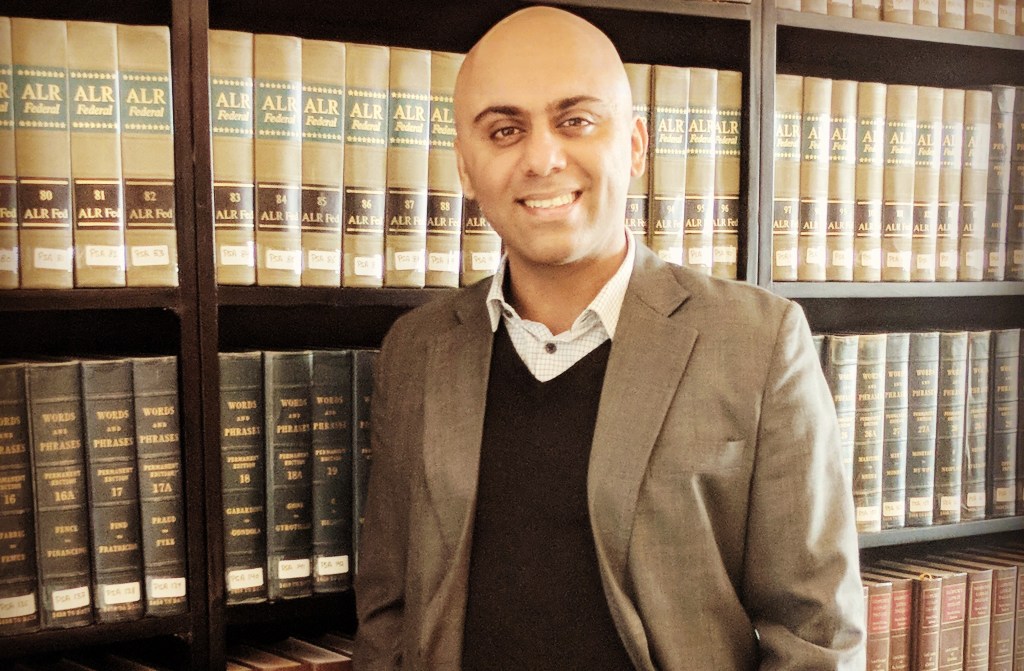
• First Person Accounts: Tishita Mukherjee on an LL.M. at the National University of Singapore (NUS)

    First Person Accounts (FPA’s) are meant to provide a first-hand account of Indian law graduates who have pursued, or are currently pursuing, a post-graduate course (be it an LLM or otherwise) from different schools across the world.

    In this edition, I get Tishita Mukherjee to talk about the LL.M. experience at the National University of Singapore. A graduate of ILS Law College in Pune (Class of ’18), Tishita opted for the LLM in Corporate and Financial Services Law at NUS. In this FPA, she discusses why she chose a master’s right after graduation, the NUS application process, and a whole lot more.

    (Edited excerpts)

    At what stage did you begin thinking about an international LLM? Did you consider working for a few years before enrolling for a post-graduate degree?

    Coming from an academically inclined family, I had always envisioned a post-graduate degree in my career trajectory. In the third year of law school, I found myself in a quandary about whether or not I should pursue it immediately after completing my under graduate degree.

    After hearing the experiences of several others, I decided to grab this opportunity at the earliest. I was certain and highly motivated to specialise in corporate laws because of the exposure that I had gained through internships, conferences, company secretaries and other courses. So I considered it best to dive into the depths of the subject and mould myself in this field from the very beginning.

    How did you go about selecting universities, and why did you narrow down on NUS?

    Being a fresher, my objective behind doing an LLM was not to revisit known concepts but to learn new ones. Thus, the programme structure was the most important consideration.

    NUS offers a comprehensive list of electives, with about thirty within the Corporate and Financial Services Law specialisation and over a hundred other modules in general. This provides the platform to venture into several practice areas.

    “NUS offers a comprehensive list of electives, with about thirty within the Corporate and Financial Services Law specialisation and over a hundred other modules in general. This provides the platform to venture into several practice areas. ” 

    My decision was further strengthened because of the opportunity to be guided by renowned academicians like Professors Sornarajah, Louise Gullifer, Hans Tjio among others. A basic cost-benefit analysis of the course, its reputation in India and Singapore’s proximity to home acted as additional factors.

    Any advice on how to go about the application process, more specifically the writing requirements and the recommendation letters?

    The primary thing is to start early. Admission procedures require a lot of effort and time- from arranging transcripts and LORs to getting your SOPs reviewed. Start with learning about the university and its application procedure. Most universities are very particular about the documents required and you wouldn’t want to lose an opportunity for a documentation error. To gather information in addition to what is available on the university’s website, reach out to the alumni of the University and learn about their experience.

    The next step is to work on your essays. An SoP is the distinguishing factor of your application. It is a narration of your story which expresses your personality, qualities and goals. You can start by looking at a few samples to understand the basic structure and identify the questions that need to be answered. Some of them include- your journey to law, what motivated you to choose a particular specialisation, why that university and how are you an ideal candidate. Paraphrasing someone else’s SOP and repeating the contents of your CV in your SOP are the two big mistakes that need to be avoided. To ensure uniqueness of your SOP, be simple, original and honest.

    “Paraphrasing someone else’s SOP and repeating the contents of your CV in your SOP are the two big mistakes that need to be avoided. To ensure uniqueness of your SOP, be simple, original and honest.”

    With respect to recommendation letters, I advise you to approach those who can vouch for your knowledge in the field of specialisation. I was fortunate to have worked with two senior professors at ILS who supervised and mentored me continuously at several events over three years. Such an endorsement with a personalised and detailed account of your qualities will make your application stand out.

    How has the LLM experience been thus far? What are some of the bigger differences in the learning experiences at NUS and ILS?

    My experience has been enriching both professionally and personally. I have greatly benefitted from the breadth of the University’s syllabi content and interaction with reputed scholars.

    The assessment mechanism at NUS is very different from ILS. NUS has a modular credit system with a requisite of 40-44 credits.

    The varying credits of modules allow you to plan your schedule for the year, in order to have a balanced workload. Continuous evaluation is through class participation, presentations, quizzes, reflection papers, six-hour take home exams and pre-readings for every class, thus making you strive from day one. Classes are conducted with the LLB students, which brings diversity and gives you a glimpse of different perspectives.

    Apart from this, NUS offers great cultural exposure. I have learnt so much outside the classroom from my interactions with people from different backgrounds, however sharing similar ambitions. Canteen conversations with friends would include discussions about food, travel, legal and political systems and cultures of our respective countries. All these develop skills that will help you adapt in any global environment.

    “I have learnt so much outside the classroom from my interactions with people from different backgrounds, however sharing similar ambitions. Canteen conversations with friends would include discussions about food, travel, legal and political systems and cultures of our respective countries. “

    The learning experiences at NUS and ILS have been very different. The foundation laid by ILS led me to NUS. The assessment system in ILS was purely examination-based. Even though it was less practical, ILS offered many opportunities in terms of participation in moots, conferences, activities of each centre, organising events and workshops. The classes were less demanding and allowed me to manage internships, obtain additional qualifications and also engage in co-curricular activities. I can say that both the experiences have been unique and rewarding.

    What is your reading of the recruitment market for international LLM graduates in Singapore?

    The recruitment market in Singapore is very competitive, especially for international students. The employment visa requirements add to the challenge. Recruiters are not very welcoming of international lawyers and preference is generally given to local undergraduate students.

    That being said, opportunities are several in number and securing a job is not impossible if you have the right expertise and motivation. If you are keen on working in Singapore, internships can be a good way to start.

    Lastly, any advice for Indian law graduates who are considering a master’s abroad?

    Be clear about your reasons for doing an LLM. If it is to improve your job prospects or fear of entering work life, think twice. If you consider that it is going to be beneficial in the long-run, go right ahead with it.

    Start early – I cannot emphasize this enough. Studying abroad is an expensive affair so research well and plan your investment carefully. There is no ‘right’ time for a post-graduate degree. No matter when you decide to do it, it will be beneficial in its own way. So trust the motivations that come from within and everything else will fall into place.  Feel free to connect with me on LinkedIn if you need any help.

    “There is no ‘right’ time for a post-graduate degree. No matter when you decide to do it, it will be beneficial in its own way. So trust the motivations that come from within and everything else will fall into place. ” 

  • First Person Accounts (FPA’s) are meant to provide a first-hand account of law graduates who have pursued, or are pursuing, a post-graduate course (LL.M. or otherwise) from different universities across the world.

    Shanya Ruhela
    Shanya Ruhela

    Shanya Ruhela graduated with an Indian law degree from the Rajiv Gandhi National University of Law (’16), following which she enrolled for the LL.M. at Cambridge University. As an LL.M. student, Shanya was also a JN Tata scholar as well as a KC Mahindra scholar.

    Post the LL.M., she returned to India, and a had short stint at Shardul Amachand Mangaldas before joining OP Jindal University as a Research Associate. Last year, Shanya enrolled for a PhD at Tilburg University.

    (Edited excerpts)

    At what stage of your undergraduate course did you start thinking about a master’s? Did you ever plan on working for a few years before enrolling for the course?

    Ever since I read about Newton’s laws of motions in sixth grade, I had been enchanted by the idea of studying at Cambridge.

    The five year integrated curriculum followed by most law schools in the country is comprehensive and well designed; it provides budding lawyers a taste of what avenues legal education might open.

    However, there is a distinct difference between what is taught at the level of undergrad and that of a Master’s course. At the undergraduate level, one only gets a broad idea about various sub-disciples. Education at the level of post-graduation imbibes in a student, the in-depth knowledge that allows the pursuit of a discipline with utmost academic rigour.

    I decided to apply for Masters in my second year of law school after conversing with legal luminaries, alumni and people who I looked upto. It made me realise that the importance of a Master’s from a great university is not just a feather in your cap or a line in your CV but also an experience that helps one shape perspective in life. Hence, I decided to attend Cambridge immediately after graduation. Attaining scholarships to read LL.M. made the decision to opt for LL.M. easier.

    “A Master’s from a great university is not just a feather in your cap or a line in your CV but also an experience that helps one shape perspective in life.”

    How did you go about selecting universities? And why did you narrow down on Cambridge?

    Excellence was my only criterion for selecting the university. Harvard, Yale and Oxbridge are amongst the top law schools in the world. These universities are unparalleled in terms of their faculty, resources, research-focus, student-satisfaction and employment guarantee.

    While growing up Issac Newton was my role model, and so the opportunity to study at Cambridge was too good to pass.

    You were also a JN Tata Scholar as well as a KC Mahindra scholar – any advice on how to go about the writing requirements for both these scholarships?

    I applied to as many places for scholarships as I was eligible for. Do keep in mind that post – study work experience is an eligibility criteria for most of the scholarships. This might not be necessarily stated in the eligibility criterion of the scholarship trust, so you might have to look at previous awardees of the scholarship. It is a sad reality that there is a dearth of merit-based scholarships for Indian students.

    A systemic research on the profiles that the trust intends to sponsor by throughly examining the trust deed, objectives of the scholarship, statements from the board members and previous awardees is a must before writing scholarship essays.

    Go beyond the advertisement of the scholarship because many a times these are brief and fail to convey the objectives of the awarding body. There should be an alignment or a logical correlation between the trust’s vision and one’s personal goals, which must be reflected in the application documents.

    “Go beyond the advertisement of the scholarship because many a times these are brief and fail to convey the objectives of the awarding body. There should be an alignment or a logical correlation between the trust’s vision and one’s personal goals, which must be reflected in the application documents.”

    Many of my peers, colleagues and juniors have refrained from applying for scholarships because they felt that they might not deserve a grant. Nonetheless, one must apply. On that note, I want to also address another issue that plagues the scholarships awarded in our country is that many well – reputed scholarships are biased (awarded to a pre-decided individual). This is a sad reality but please don’t be disheartened if you don’t get a scholarship, stay resilient.

    Time management is also a key factor that needs to be considered. Scholarship research must be done prior to or along with research for LL.M. options. Since creating separate application dockets is a time consuming process, I suggest one must start this process as early as possible.

    Looking back, what were some of the highlights of the Cambridge LLM?

    Cambridge is a town that is bustling with academics, scholars, artists and thinkers. I immediately fell in love with the city, and although I have travelled and lived all over the world, I never felt more at home than in Cambridge.

    Talking to people who either have or wish to change the world is an overwhelmingly motivating feeling. Living and studying amongst the top most law graduates from all over the world is a fascinating experience. Along with my studies, I got involved in other activities like attending workshops, participating in debates and attending numerous networking events and seminars.

    Cambridge instilled in me the courage to pursue my dreams, no matter the risk. After graduation, inspired by the law and economics module I had studied, I decided to pursue doctoral studies in mainland Europe, transitioning from the private sector to research.

    “Cambridge instilled in me the courage to pursue my dreams, no matter the risk. After graduation, inspired by the law and economics module I had studied, I decided to pursue doctoral studies in mainland Europe, transitioning from the private sector to research.”

    At Cambridge, the LL.M. offers about forty different modules ranging from jurisprudence to international commercial taxation. One can audit any number of courses for the first few months and then opt for any four, a mechanism which allows the candidates to make a reasoned decision regarding the specialisations they wish to pursue by giving them an opportunity to broaden their horizons.

    Post the LLM, you came back to India, tried your hand at a law firm, but then opted for an RA post at JGLS – was this because you had already decided to do a doctorate?

    I never decided to do a particular “job” or embody a “role”. I wanted to create an impact, how much ever minuscule it might be. It did take me a year to realise how that could be pursued. When I left the law firm, I had no idea what I was going to do in my life.

    Teaching was, undoubtedly, one of the most fulfilling experiences. Jindal gives the freedom to research with a very manageable work load. Working as a Ph.D candidate in a research centre and amongst researchers is unique because people are fuelled by passion and their thirst for contributing to the body of knowledge.

    In a way, I do believe Rumi when he said what you seek is seeking you.

    How does one go about enrolling for a doctorate course? Right from choosing your thesis, to the supervisor, to getting funding – any advice you would like to share?

    My journey was quite unique – a month after finding out about this programme, I landed in Netherlands to begin my research.

    This, however, is an exception.

    Generally, the process of applying for Ph.D. takes about a year. The application process of doctoral studies differs from a Masters or a Bachelors application. Reflecting upon your proposal and committing to the topic is an essential part of the process.

    “Generally, the process of applying for Ph.D. takes about a year. The application process of doctoral studies differs from a Masters or a Bachelors application. Reflecting upon your proposal and committing to the topic is an essential part of the process.”

    Understandably, it is advisable to discuss your proposal and the ideas contained therein with professionals in the field and your peers. Extensive research precedes finding a supervisor and an institute who share your interest and are willing to fund your research. Certain nations like the Netherlands treat doctoral candidates as employees and hence, one doesn’t need to apply separately for funding.

    Early days yet, but how has the PhD been thus far? Could you tell me what a typical day is like?

    There exists no typical day in the life of a doctoral student!

    A Ph.D. is about finding your method in madness. One realises that a doctorate journey (like life itself) is a process. There are Eureka moments but these are few and far between. My time is divided among gaining a deeper understanding of my project, writing for conferences, attending workshops and relevant classes, learning research techniques and zeroing in on my research plan.

    Some days are highly productive and some not at all. A lot of time is invariably spent in cutting through the noise and finding concepts or literature that may be worthwhile to engage with. Self-motivation and consistency (I am still learning this!) is the key to continuous research and study.

    Lastly, any advice for the Indian law graduate who is interested in a career in research and academia?

    As someone whose trials with unravelling the mysteries of life are ongoing, I do not think I can give advice. I can, however, share what I have learnt along the way. Opting for a straight line path when in law school seems logical and a must; one must remember it is neither.

    Attaining a bachelors degree and interning whilst in law schools barely gives one a slice of what life as a lawyer is. I wish I had taken a break after completing either of my degrees. It is important to take time to figure out what one loves and carve a path to translate that love in a viable career option.

    Do not join academia because you don’t like the practice of law; chances are you might not like legal academia (or research). Find the legacy you wish to create and if you can do that through research, pursue it with all your heart.

    “Do not join academia because you don’t like the practice of law; chances are you might not like legal academia (or research). Find the legacy you wish to create and if you can do that through research, pursue it with all your heart.”

  • The LLM #Admission Interviews: Esra Ozcan, Koç University Law School

    The Admission Interviews, are meant to provide insights into LLM admissions right from the law school itself. The primary idea behind this series is to provide that little bit of extra information that may not be available on the law school’s website.

    Esra Ozcan is an Executive Director at Koç University Law School, an institute I had the good fortune of visiting recently. A short campus visit meant that I could not really dig too much information about the programme or the students, but I did come back mighty impressed with the physical infrastructure in place. Combine this with the living costs, and the chance to live in Istanbul, I do think that this is a programme that the Indian law graduate should give a second look at.

    (Edited excerpts)

    What would you say is the biggest advantage, from the point of view of an Indian law graduate, of enrolling for the LLM at Koc University?

    Koç University has an ambition to train a new generation of lawyers by offering research and learning of different legal disciplines based on multi-dimensional perspectives.

    Therefore, students from India will have the opportunity to experience a global academic atmosphere where they will also be able to adopt legal approaches to cope with local and global issues.

    Is the Law School looking for a certain profile of applicants? For instance, would you prefer those who have worked for a few years above those who are fresh graduates?

    Our aim is to recruit the best students with a global mind of interdisciplinary thinking who will be able to contribute to the development of society, economy, politics and the legal profession.

    We have students with several years of professional experience and also recent graduates.  We do not prefer one group over another. They are all subject to the same admission procedure.

    How does one apply to the LLM program? Could you provide some information on what is asked in the written exam and then the interview? 

    Once an online application form is submitted in our system along with required documents, our admission committee prepares a shortlist of candidates. These candidates are then invited to an online interview via video conference.

    Professors in the committee ask questions from different topics and cases under the umbrella of Public Law or Private Law depending on the program that the candidate applied for. Questions include legal issues comprising comparative and international aspects. This online interview is followed by a written exam which requires an academic essay on a topic provided by the committee.

    What is the approximate LLM class size, for both, the public and the private law courses?

    The average class has 15-20 students.

    Do you provide English proficiency exemptions for Indian graduates whose education has been in English?

    Native English speakers are exempt from English proficiency exam, however, due to regulations in Turkey we have to ask for TOEFL score (80 IBT) from non-native speakers regardless of their previous educational background.

    The LLM brochure mentions that LLM students on the thesis track may receive financial aid – could you disclose the average amount of aid that is provided to applicants? 

    LLM students on the thesis track may receive up to full tuition waiver depending on their success during the interview and written exam. Also international students will find Turkey more affordable in terms of  living costs comparing to traditional graduate destinations.

    Does the University provide any assistance with securing internships and/or externships during and after the LLM course?

    Koç University has a successful Career Development Center providing myriad of career services for all students and young alumni including counselling, interview preparation, organizing recruitment events and gathering professionals from many companies and law firms.

    We also have an exclusive service  “KUcareerlink”  for job and internship announcements. It is an in-house platform where our students can schedule appointments with KUcareerlink career counsellors, draft their CVs, view and apply for jobs and internships exclusively published for Koç University alumni, and also follow national/foreign school/contest/internship announcements.

    Lastly, what is your reading of the employment prospects of international law graduates who enrol for the LLM course at Koç University?

    Istanbul is a global business hub, and hosts a number of international organizations and companies such as UN divisions and international law firms due to its strategic location. Considering this advantage, our students have a wide variety of career opportunities.


    (The University is currently accepting applications for the LLM program, deadline is June 10, 2019)

  • First Person Accounts: Dhruv Suri on Columbia Law School, Indian law firms & more

    First Person Accounts (FPA’s) are meant to provide a first-hand account of law graduates who have pursued, or are pursuing, a post-graduate course (LL.M. or otherwise) from different universities across the world.

    In this edition, I speak with Dhruv Suri, a Partner at PSA Legal, and an alum of Columbia Law School (LLM, ’14). With an Indian law degree from Guru Gobind Singh Indraprashta University (’09), Dhruv worked in India for a few years before enrolling for the LLM. Here, he talks about how Indian law firms view a foreign LLM, the need for Continuing Legal Education in India, and a whole lot more.

    It has been five years since your LLM at Columbia Law School. Looking back, what were some of the biggest highlights of the course, those that are relevant and meaningful to you even now?

    Looking back, I believe the most critical highlight for me has been the network that I have been associated with. Imagine knowing lawyers in almost every part of the world who are working in the same space as you? We often cross-refer work, brain storm on laws and of course, have a great time when we meet socially. I don’t recall the last time I booked a hotel when I visited Europe, South America or the US!

    Outside of the network, I believe the LLM gives you the confidence to undertake cross-border work. Having classmates from all over the world only makes you realize how similar people are despite their cultural differences. Today, when I do business with Germany, France or Japan, not only am I comfortable interacting with them, I also understand their culture which gives them comfort working with me. For me, the LLM was worth every cent because of the cultural diversity I was exposed to.

    “I believe the LLM gives you the confidence to undertake cross-border work. Having classmates from all over the world only makes you realize how similar people are despite their cultural differences.”

    In the Superlawyer interview, you mention that one of the best things about the LLM was getting the chance to live in NYC. So, apart from location, what are some of the other aspects that an LLM aspirant ought to look at which she usually does not?

    One key factor for me was to pick a university that had active alumni. I was clear that the real value of a LLM degree cannot be absorbed during the 9 months on campus but over the rest of your legal (and sometimes even non-legal) career. So, when I was short-listing schools, I checked whether they had an active alumni base in India or not. I also reached out to some lawyers and spoke to them about their experience with the curriculum, interacting with specific professors and of course, the value of the international network of friends they created.

    For any lawyer looking to do his/her LLM, I would highly recommend that they self-introspect and assess what is the key takeaway they are looking for. I also believe that talking to alumni is one of the best ways to get a real perspective to what is likely to be in store. I am an active member of the Columbia Alumni Association and every year when we host a send-off for new admits, and we encourage prospective students to attend as well.

    Additionally, it is also important to get a bird’s eye view of possible opportunities post graduation. For example, if one is interested in technology law and wants to try and get a job in California where most US law firms’ technology practice thrives, it may be wise to pick a non-ivy league school in California as opposed to an ivy league in the east coast. It’ll also help you better prepare for the state bar exam.

    The tuition at US law schools remain some of the highest in the world – if one was viewing an LLM purely from a RoI perspective, do you think it makes financial sense? Or is it better not to view education through an RoI lens?

    Tuition at US law schools is atrociously high. There are no two questions about this. That said, there is a RoI but it is not immediate. It comes over a period of time. This RoI can be in economic terms where you make more money, build your own client base, get promoted faster, etc. or it can be in terms of your personality evolving by interacting with people from all over the world, getting the confidence to work with international counter-parts, learning how to live independently, etc.

    According to me, an LLM makes sense only if (i) you can afford it without causing any extreme financial setback to yourself or your family or (ii) if you have gotten a scholarship, fee waiver or a subsidized student loan that you believe you can re-pay.

    “An LLM makes sense only if you can afford it without causing any extreme financial setback to yourself or your family or if you have gotten a scholarship, fee waiver or a subsidized student loan that you believe you can re-pay.”

    I had a friend whose parents had mortgaged their house to fund his LLM. The LLM is not worth such an extreme step. If a 9-month degree will put your parents’ life saving at risk, you are better off without it. If you actually mortgage a house to fund your LLM, you would also want a quick RoI which, unfortunately, in the legal profession, is hard to come by.

    So, a LLM makes sense if you have the means to pay for it but does not if you have to take loans in India at very high interest rates. The opportunity cost for doing the LLM is then too high.

    Given that you now have an inside view, how do you think Indian law firms view potential recruits who possess a LLM? Do firms place a greater value on such a candidate? 

    The short answer is- No.

    I am yet to come across an Indian firm that would value a LLM at a higher pedestal than experience. That said, if one does their LLM after 4-5 years of working, clears the US bar and decides to come back, a law firm may see value in the degree and the additional bar enrolment.

    A lot of young lawyers believe that just because they went for their LLM to great universities right after graduating, they deserve the best jobs. The reality is far from that. At an associate level, most partners would want someone with actual work experience rather than an additional degree. Of course, this is not the general rule because some lawyers really shine during their LLM. They participate in international moots, publish papers and build a network that Indian firms doing cross border work may value in the long-run.

    “A lot of young lawyers believe that just because they went for their LLM to great universities right after graduating, they deserve the best jobs. The reality is far from that.”

    Do you see Indian law firms or chambers encouraging their employees to pursue further studies, if not a full-blown LLMs then perhaps an executive/continuing legal education (CLE) programs? 

    I do not think this culture is very prevalent but, in my view, it is likely to change. With new legislations being enacted, even the older lawyers need to educate themselves to be able to leverage their seniority in the profession.

    For example, when the Competition Act, 2002 was notified, a lawyer with 10-15 years experience probably knew as much as someone with 2-3 years experience.

    These new laws bring forth a level playing field and encourage younger lawyers to develop specialization and compete against their seniors. The Insolvency and Bankruptcy Code 2016 had the same effect.

    Going forward, our Personal Data Protection Bill, 2018 will also require lawyers to stay abreast with legal developments in this space. CLEs and short-term executive courses will become popular for lawyers who cannot afford to take a year off for a LLM.

    What are your own thoughts on CLE – do you think it should be made mandatory for Indian lawyers?

    Absolutely. In fact, at PSA, we highly encourage Continuing Legal Education. All our lawyers, regardless of experience, have to do internal and external presentations, attend conferences and share updates thereafter, etc.

    In today’s age where technology is playing a big role in how business is being done, it is easy to become irrelevant if you do not take the pains to stay abreast with legal developments. Even on subjects such as ethics, diversity, professional responsibility, etc., the Bar Council should have mandatory sessions conducted by specialists in this space. I would be very happy to see if India adopts a CLE program similar to the US where it is mandatory to earn certain CLE credits to keep your bar license active.

    I know you try and interact with Indian law schools and students – what are some of the global practices that you think Indian law schools ought to adopt?

    I believe lawyers who are passionate about teaching should engage with law schools to conduct 1-2 credit courses each semester. The general quality of our legal education is abysmal with a few exceptions.

    If lawyers come to the forefront, the quality of students that would be graduating from law schools would be far superior to what we have seen thus far. Of course, this requires law firms as well as law schools to coordinate and work out an arrangement that is a win for both.

    Additionally, I’d also like to see lawyers “mentor” teams that are participating in global competitions and train them based on their subject matter expertise of the “real world”.

    The key for me is constant engagement. As long as that happens, our new breed of lawyers will always stay relevant.

    Additionally, I would also like to see the administrative bodies of law schools be run by educationalists/lawyers as opposed to bureaucrats. Every time I engage with interns who come to our firm, they always complain about how the university does not encourage them to work or participate in national and international competitions, etc. In fact, practical assessment ought to become an integral part of training right from year 1.

    And this leads me to my third point where I’d like to see Indian law schools shift from the mundane examination model to more open book exams, just like how any lawyer would work on a case. The questions ought to be practical and consistent with the latest regulations. Our legal education system really needs to do a lot of catching up!

    “I’d like to see Indian law schools shift from the mundane examination model to more open book exams, just like how any lawyer would work on a case. The questions ought to be practical and consistent with the latest regulations.”

    Lastly, how do you think Indian law schools can be made more inclusive? Curious to know this given your work with United Students and educational reservation policies.

    Being inclusive has a totally different meaning in India than what it has in the US. Personally, I believe Indian law schools are fairly inclusive. While I don’t wish to get into the debate of reservation, my own law school class in 2004 had students from all quarters of life due to the policies of the state government back then.

    One key skill that all lawyers ought to possess is to be able to think about the underlying policy behind a law, i.e. the ground reality and the constitutional basis for why legislation was enacted.

    If lawyers train in a privileged cocoon, away from the realities of the world they live in, they will never be able to do justice to their profession. Organizations like IDIA Law started by Shamnad Basheer are doing a great job in increasing diversity and making law schools more inclusive.

  • First Person Accounts (FPA’s) are meant to provide a first-hand account of law graduates who have pursued, or are pursuing, a post-graduate course (LL.M. or otherwise) from different universities across the world.

    Surya Kapoor
    Surya Kapoor

    In this edition, I speak with Surya Kapoor who is currently enrolled for the LL.M. at Georgetown University Law Centre.

    Surya, who completed his law from Delhi University’s Faculty of Law (Class of ’15), also clerked with Justice L. Nageswara Rao for more than two years before embarking on the LL.M.


    Not quite connected to the LLM, but what are your thoughts on the 3-year LLB degree? Did you ever consider taking up the five-year course? And any advantages or disadvantages that you see in the 3-year over the 5-year one?

    I believe both the 3-year as well as the 5-year programs have their own specific sets of advantages and limitations. Though the substantive content of both would broadly be similar, the pedagogical styles are very different and also they both cater to a different set of audience within the legal profession.

    The 3-year LLB course was perfect for me as firstly, it gave me an opportunity to switch from my economics background and enter to the legal profession whilst still being at par with the other 5-year graduates.

    Secondly, I felt the 3-year program treats students like adults and gives a lot of independence to the students. The experience one gets out of the 3 year LLB course depends very heavily on the individual’s motivation and drive.

    “Secondly, I felt the 3-year program treats students like adults and gives a lot of independence to the students. The experience one gets out of the 3 year LLB course depends very heavily on the individual’s motivation and drive.”

    For instance, classes during most of my 2nd and 3rd year were mostly clustered at a particular time period – that gave me the opportunity to pursue and get valuable internship experience for the rest of the day.

    The third advantage that I saw in the 3-year program was that it was more disputes/litigation oriented rather than the 5 year program which was more corporate/law firm oriented.

    (Note: I have a personal bias/inclination towards court room practice over corporate/law firm practice and in no way intend to discourage young lawyers wanting to enter the latter.)

    You sought at an LLM after working, and then clerking, for a few years. Did you ever think about enrolling for an LLM fresh after your LLB degree? 

    No. Being a wide-eyed graduate fresh out of law school, my aim was to begin working as soon as possible with the goal of starting my own practice in arbitration within the next 5-6 years. The idea of an LL.M. never crossed my mind until I began working with Justice Rao in the Supreme Court of India.

    On asking him for guidance, he gave me two essential pieces of advice first, in order to be recognised in the profession, it is very important to position yourself apart from the rest of the crowd and second, given the competition in the profession, having a specialisation would go a long way in achieving my aims.  The advice really resonated with me and eventually led me to my masters journey.

    How did you go about selecting schools? Given that you had a very specialist field of interest, could you share some of the schools that you shortlisted?

    As you mentioned my area of interest is very specialized so for me selecting a school was not that big of a challenge. However choosing the right law school requires a lot of background research and talking to current students as well as alumni is critical as they can give you valuable insights about the school.

    “Choosing the right law school requires a lot of background research and talking to current students as well as alumni is critical as they can give you valuable insights about the school.”

    There are a lot of great law schools for arbitration. MIDS, Columbia, NY, Georgetown, etc. have highly reputed arbitration courses.

    Any advice on how to go about the writing requirements in the LLM applications, more specifically the personal statement?

    Personal statements are a challenge and an opportunity. It forces you to do some soul searching and ask difficult questions from yourself. However being able to produce an an end product that is a very satisfying experience.

    I highly recommend starting early and fine tuning it several times. It is the first impression that you create on the institution, make sure that it is a good one. There are several articles, videos and books on the net regarding how to write a good SOP, but my advice is simple. Keep it real, keep it  interesting and keep it simple.

    “There are several articles, videos and books on the net regarding how to write a good SOP, but my advice is simple. Keep it real, keep it  interesting and keep it simple.  “

    How has the LLM experience been thus far? Any particular highlights?

    It has been a very enriching experience for me. I have had the privilege of interacting with and learning from the legends in the field of international arbitration. I think winning the 8th  LL.M. International Commercial Arbitration Moot competition has been the highlight so far.

    What is your reading of the US arbitration market when it comes to recruiting international LLM grads?

    It is difficult but not impossible for international LLM grads to secure employment in the US arbitration market. Securing a job in the US is itself a full time job. Try hard but don’t expect it to be easy.

    Lastly, any advice for Indian law graduates who are considering studying abroad? 

    My advice is that an LLM abroad is a great journey, if you know your destination. Make sure you know why you want to pursue your masters and then give it your all. This will be the best time of your life.