
• The LLM Admission Interviews: Laura Kagel, School of Law at University of Georgia

    The Admission Interviews, are meant to provide insights into LLM admissions right from the law school itself. The primary idea behind this series is to provide that little bit of extra information that may not be available on the law school’s website.

    In this edition, I get to speak with Laura Tate Kagel from the School of Law at the University of Georgia. Laura is the Associate Director for international professional education for the school’s Dean Rusk International Law Center, and oversees the LL.M. programmes offered by the university. Laura also maintains, what I consider, an interesting balance of academia and activism.

    In this interview, she shares some advice on approaching the personal statement, the tuition waivers that the law school offers, and a whole lot more.

    Over the last eight years at the University of Georgia, what aspect(s) of the LLM program have international law graduates placed the greatest value on?  

    I would say that the individual support has been most important to them. As an alumna of the law school and someone who has lived and studied abroad, I am able to help them navigate some of the challenges of adapting to a different system of legal education and a new environment.

    Conversations that we have can lead to greater clarity about career and personal goals.

    When it comes to the application itself, one of the trickier bits is the Statement of Purpose – any advice on how to condense a number of issues into 500 words?

    I think that it is a good idea to think of the statement of purpose as reflecting how you got to where you are today and where you want to go from here. How have you become qualified to pursue an LL.M. and why does that make sense for your career?

    Could you provide any information on the quantum of financial aid that is granted to the LLM cohort on average? 

    Many of our LL.M. students receive merit-based financial aid in the form of an out-of-state tuition waiver that allows them to pay in-state/Georgia resident rates, of approximately $20,000 (tuition and fees). (The LLM costs can be found here)

    We believe that the University of Georgia School of Law can provide an excellent return on investment and we are happy that we can make it more affordable for qualified students.

    “We believe that the University of Georgia School of Law can provide an excellent return on investment and we are happy that we can make it more affordable for qualified students.”

    Every year we also select several top applicants to be graduate assistants and they pay less than $2,500 for tuition and fees,  and also receive a modest stipend for work as a research assistant under faculty supervision. Our priority deadline for financial aid is January 15.

    One of the reasons why Indian law grads consider an LLM is to sit for the Bar – what is your reading of legal recruitments in the US, specially for international LLM graduates? 

    Many of our LL.M. students prepare to take a U.S. bar exam, usually in New York or Georgia. For some, a U.S. bar admission leads to a career boost in their home country; others find legal work in the U.S.

    If a foreign attorney wants to practice law in the U.S. at the same level as American counterparts, a J.D. degree can smoothen the path. The LL.M. students who are highly successful in our program can apply to transfer to the J.D. program, and thus earn 2 degrees in 3 years. It is not necessary to take the LSAT exam if the J.D. program is entered in this way.

    We also offer a dual LL.M./MBA degree that can be completed in two years and opens up other career opportunities.

    “The LL.M. students who are highly successful in our program can apply to transfer to the J.D. program, and thus earn 2 degrees in 3 years. It is not necessary to take the LSAT exam if the J.D. program is entered in this way. “

    You have had quite a very interesting career thus far, especially when it comes to the educational choices you made. Anything that sets legal education apart from the other courses that you enrolled for?

    I am particularly interested in social justice issues and a legal education gives you a broader perspective on how change can be effected (or what stands in the way of change).

    As far as studying law, it is more rules-based and less subjective than humanities, but literature and law are both subject to interpretation.

    You also sit at the cusp of academy and activism – how do you manage to balance the two?

    I would like to balance them more, but I think that an academic background gives you the tools to influence people’s thinking, whether you do it on a small scale or a grander one.

    Last question – some Indian law graduates who are interested in a research-based career. What advice would you have for those who are looking at the LLM as the stepping stone to a doctorate degree?  

    In our program we offer the opportunity to complete an LL.M. essay under the supervision of a law faculty member. This research and writing project allows students to become expert in a particular area of the law and can provide the basis for an application to an S.J.D. program.

    “This research and writing project allows students to become expert in a particular area of the law and can provide the basis for an application to an S.J.D. program.”

    A Ph.D. student in India may find it beneficial to take a year abroad to gain deeper understanding of U.S. law and embark on a project that could form the basis of a dissertation.

  • First Person Accounts (FPA’s) are meant to provide a first-hand account of law graduates who have pursued, or are pursuing, a post-graduate course (LL.M. or otherwise) from different universities across the world.

    Hemaxi Shah shares her experience as an international LLM graduate at Syracuse University College of Law. 
    Hemaxi Shah

    In this edition, Hemaxi Shah shares her experience as an international LLM graduate at Syracuse University College of Law. Hemaxi graduated with an LLB degree from Rizvi Law College in 2018, and enrolled for the LL.M. that very year.

    (Edited excerpts)

    When it came to the LLM, when did you start thinking about going abroad, and did you ever plan on working for a few years before applying?

    Honestly, there was no plan as such to go abroad for studies. In 2017, I realized that I need some international perspective of the legal field.

    While perusing my bachelors degree I knew I wanted to do masters in law but by 2017 I decided to do it abroad for multiple reasons, namely:

    • Interest in International Business, Corporate and Commercial Transaction
    • International view point.
    • I wanted a master’s degree.
    • It was a 9-months course.
    • Working in Multinational company in future.
    • International study culture.
    • Independency.
    • Education progress (national and Internationally).
    • Developing Strong personality and
    • Self growth.

    I started working on my applications in October of 2017, it was quite unplanned till then.

    How did you go about selecting where to apply, and how did you narrow down on Syracuse?

    I did not have any seniors or experienced persons to guide me on this. It was a google search as to the top listed Universities in US with their rankings and other information.

    I applied to seven universities in all, four in New York, two in California and one in Texas. I was lucky enough to be admitted in all seven. It was a hard choice to decide but Syracuse had the very course structure which I was interested in studying. Secondly, it was in NY so that was a plus and of course, they offered a good amount of scholarship.

    Any advice on how to go about the application process, more specifically the personal statement, and the recommendation letters?

    This totally depends on each individual’s application preference.

    You can apply to a University according to the following preferences:

    • Location
    • Ranking
    • Course duration and structure
    • Field of interest
    • Scholarships offered
    • Internships or full time opportunities offered by the university.
    • Success rate of the students
    • Professors ability and experience.

    For the SoP, I would say the first paragraph should consist of the reason behind choosing the particular field you are in. Then, you can move on to your educational background, why you chose this particular university etc. Write the smallest detail you can read about that university and lastly, state your interest in the course you are willing to take in that university along with your high skills of organization and ability to succeed.
    The recommendation letters are  usually given by your Under Grad College and is usually mailed to the university by the college. The LOR consists of all the years you have spend in that college and your overall behavioural and educational performance. You should get it at least from three of your professors who has better understanding of teaching you and having your progress records.

    How was your LLM experience at Syracuse? Any highlights along the way?

    It was a roller coster ride. Of course it was extremely difficult at the beginning, but time is the best way to change things for the better. The LLM study was worthwhile, the time spent on readings and the lectures were quite fruitful. The professors are highly educated and always ready to answer your questions.

    One of the highlights was a Civil Procedure course which was breadth taking. The professor cold calls and sitting in his class each day of my first semester was a task. Also, the court visits and the way they made us understand the court proceedings.

    Then, the events happening almost every alternate day at the University was refreshing. The most interesting aspect of this was that I got to meet people from 24 different countries and got the opportunity to be their friend and understand their culture closely. And how can I forget my graduation day! I  will miss this year and cherish it all my life.

    What is your reading of the US legal market when it comes to recruiting international LLM graduates?

    According to me, the US legal market is extremely competitive for international students. It is only the internship, mostly unpaid, which has been offered to us easily.

    To get a full-time Paralegal or Legal Assistant position for an LLM student is still a task. Only if you pass the bar exam, you could have better or can say little more opportunities in US legal market. It is way too difficult to put your foot in just nine months and prove to the people around that you are worth it.

    And lastly, any advice for the Indian law graduate who may be considering an LLM abroad?

    For the freshers, I recommend you consider all the aspects before applying. You need to compromise and adjust yourself in many ways including the American culture, food, lifestyle, behavior and the level of maturity. Things are not that easy as you hear them. Experiencing them is a whole different story.

    Lastly, if you plan on studying abroad stay very very determined, strong, ready for the challenges and the excitement! It will be a once in a life experience. Make it count.

  • First Person Accounts: Shezin Hussain on the LL.M. at the Maurer School of Law,  Indiana University Bloomington

    First Person Accounts (FPA’s) are meant to provide a first-hand account of law graduates who have pursued, or are currently pursuing, a post-graduate course (be it an LLM or otherwise) from different schools across the world.

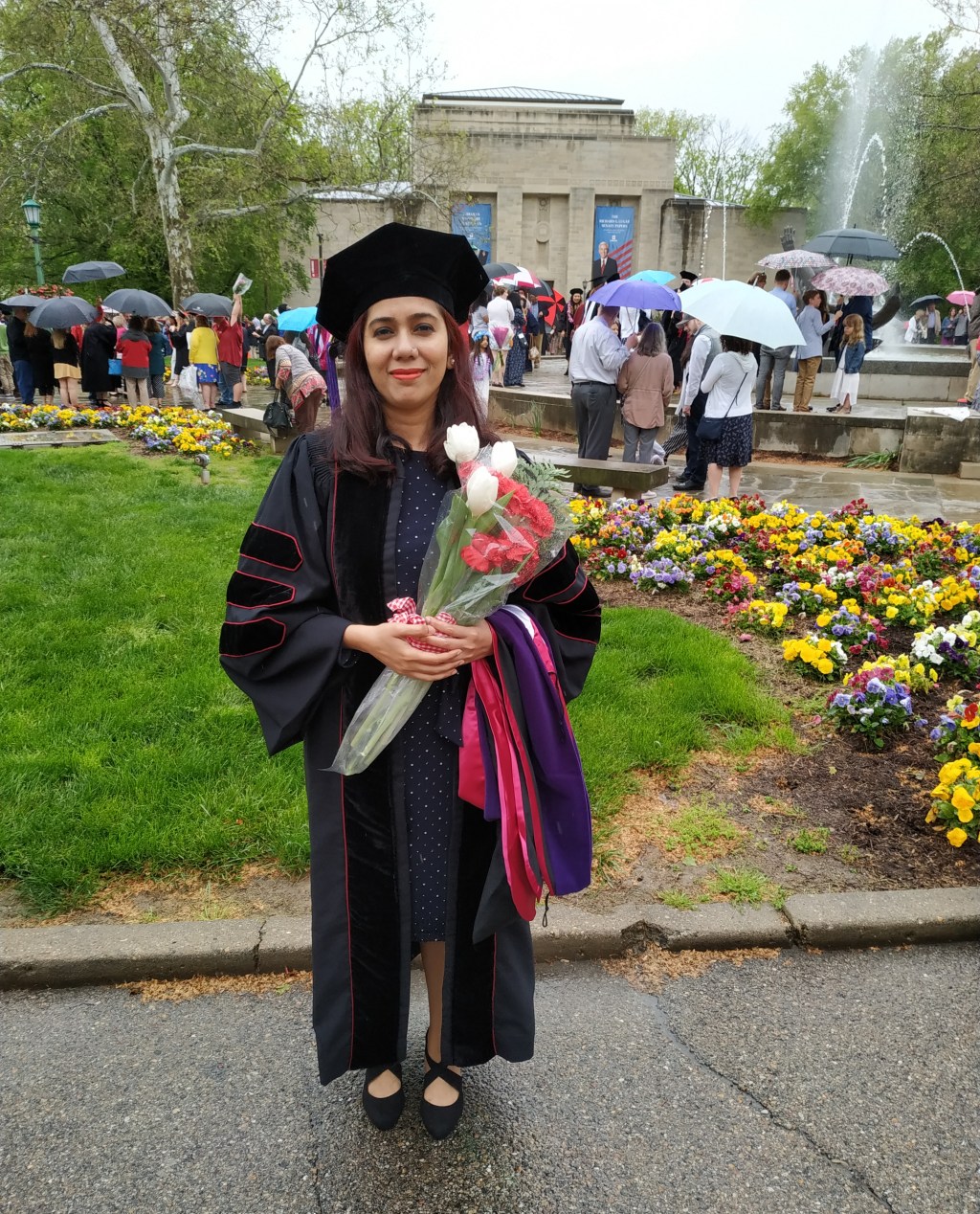
    In this edition, Shezin Hussain shares her LL.M. experience at the Maurer School of Law in Indiana University Bloomington. With a law degree from WBNUJS (Class of ’09), Shezin also has an LL.M. from Southeast University in Bangladesh. Here, she discusses preparing the LLM applications itself, the US legal market for international LLM candidates, and a whole lot more.

    (Edited excerpts)

    This is your second LL.M. degree; in 2011 you completed the LLM course from Southeast University. What got you thinking about a second LL.M.?

    After graduating from WBNUJS I wanted to pursue LL.M either in the UK or USA. My father wasn’t too keen on me pursuing LL.M abroad as I went to boarding schools in India and spent around 16 years of my life growing up in different schools away from family.

    Therefore I decided since I won’t be able to pursue one in USA or UK, I might as well pursue LL.M in Dhaka, Bangladesh. I graduated with an LL.M degree in 2011 from Southeast University. Just after I passed the Bangladesh Bar Council Exam, my father passed away in a bus accident whereby my mother and me were injured too. After recovering from injury, my brothers and me had to take care of the family and fathers’ business. I went on to start my legal career with a bumpy ride. Eventually things were coming back to normal,

    I discussed with my mother that I wanted to pursue another degree abroad. On the one hand, I didn’t want to leave my family behind after such a tragic incident, on the other hand my mother told me that if I wanted to grow professionally, I would have to get out of my comfort zone and pursue my dreams. I wanted to do LL.M but I didn’t have the resources to support my education. I was looking for all the options where I could get the funds. It took me more than a year to research and find out the universities I wanted to go and a way to manage the funds.

    “On the one hand, I didn’t want to leave my family behind after such a tragic incident, on the other hand my mother told me that if I wanted to grow professionally, I would have to get out of my comfort zone and pursue my dreams.”

    How did you go about selecting where to apply, and how did you narrow down on the Maurer School of Law?

    After more than a year’s search, I narrowed down on the universities that I wanted to apply. While I was looking through most of the schools in US, primarily I was looking through the school’s rankings, the programs offered, and the scholarship amount.

    I would like to specially thank Rubayat Islam Khan, Arafat Islam Khan (giving me overall insight of the US schools and the procedures), Vasudha Reddy, Anirudh Burman (Statement of Purpose and guidance with the LL.M scenario in US), Neha Bhatt and Souvanik Mullik.

    A lawyer, a news anchor, coordinator with the Bangladesh Cricket Board – you have done a host of different things. Did you focus on any particular aspect while making the application?

    While I didn’t focus on any particular aspect but concentrated on my skills independently with respect to every work experience I have gained and how it has helped in shaping my decision to focus on pursing LL.M in a foreign institution.

    Any advice on how to go about the LLM application itself?

    LL.M applications require lot of time, energy and perseverance to process. I have contacted the admissions office of each institution and gotten to know their requirements and criteria.

    Even though the websites have a lot of information on how to go about it, I think contacting the admissions office gives more detailed information on what they are particularly looking for in an applicant.

    “Even though the websites have a lot of information on how to go about it, I think contacting the admissions office gives more detailed information on what they are particularly looking for in an applicant.”

    However, I believe those who apply or are applying should exchange emails and contact the admissions office on  a regular basis to understand what they expect from incoming students. I visited each schools’ websites separately and read up about their requirements with regard to curriculum, programs and scholarships. This helped me in narrowing down my list of schools that I finally applied to. I even spoke to students who have pursued different programs in various schools in the US.

    Did you apply for financial aid of any kind?

    I did apply for financial aid. Many schools offer financial aid in various amount and nature. While I was researching on schools to apply, I was focusing on financial aid as well.

    How was the LLM experience? What were some of the big highlights along the way?

    The LL.M experience has been enriching. Apart from the hectic coursework, readings, assignments and exam, it has been really enthralling. I participated in pro-bono work as volunteer for Tenant Assistance Project and Volunteer Income Tax Assistance. Tenant Assistance Project pro-bono work has helped me in understanding how the small claims court functions at a state level, the renters right, rent related issues.

    Volunteer Income Tax Assistance has helped immensely as I learnt about filing of tax returns for income earner’s in the State of Indiana. Both pro-bono work has helped me in relating as to how the state laws function with respect to the above-mentioned topics. Being a participant in a Cyber camp, I learnt about functioning of web cookies, computer data forensics, website penetration testing and few other security and technical issues.

    I also had the opportunity to attend the ABA Tech Show in Chicago which was an eye-opening experience. Since my specialization area was Information Privacy and Cybersecurity, this Tech Show has helped me in identify how the US law firms and organizations are tackling various aspects of privacy and cybersecurity, AI, blockchain. Attending the speaker series organized by Maurer School of Law was very interesting.

    Several speakers around the US who specialise in Cyber Security and Privacy visited Maurer School of Law where they discussed their field of work.  I learned a lot from these speaker series.

    Being an Executive Member of International Students Association made me interact with students from different countries. This experience has been really interesting and different, as the Committee hosts several events.

    What is your reading of the US legal market when it comes to recruiting international LLM graduates?

    Currently, the legal market for LL.M candidates is challenging. Considering the immigration policies, most companies and organizations do not prefer students whom they have to sponsor. Sponsoring an H1B applicant is time consuming and expensive, hence many recruiters prefer US students over International students. However, the situation is different for other subjects. As my understanding goes, JD students have a higher preference than LL.M students.

    “Considering the immigration policies, most companies and organizations do not prefer students whom they have to sponsor. Sponsoring an H1B applicant is time consuming and expensive, hence many recruiters prefer US students over International students. “

    The belief is that JD students have stronger foundation with varieties of courses and exposures. One has to keep searching and applying. It is difficult to identify recruiters who would sponsor international students, however career service offices in universities have resources which a student should utilise. Also, I feel attending career fairs are important, which could help students in exploring their options.

    Lastly, any advice for those who are thinking about doing an LLM abroad?

    Well, my advice would be to do your research more on the specific LL.M program you want to pursue. Prior to investing in an LL.M, the school ranking, affordability, courses offered are essential to consider.

    Gaining work experience prior to LL.M has helped me in understanding what I wanted.

    However, if anyone wants to break through the US legal market, the JD is always a better option than LL.M. However, if you still want to explore the US market with an LL.M, it is still possible but there are several hurdles to overcome.

  • First Person Accounts: Subha Nivedha on the LL.M. in Public International Law at Leiden University

    First Person Accounts (FPA’s) are meant to provide a first-hand account of law graduates who have pursued, or are pursuing, a post-graduate course (LL.M. or otherwise) from different universities across the world.

    In this edition, Subha Nivedha discusses her time as an LL.M. candidate (’19) at Leiden University where she took up the Advanced LL.M. in Public International Law. A graduate of the School of Law at Sastra University (Class of ’18), Subha is also the founder of the NGO, MSAAW. In this interview, she talks about how she went about shortlisting the schools to apply to, her time at Leiden, and a lot more.

    As an undergrad student, at what point of time did you start thinking about an LLM? And did you think of working for a few years before applying?

    I wanted to work at international organisations for a long time. That was always something I wanted to do. Around the fourth year [of the undergraduate course], I really started planning for an LLM, and more so I wanted to do it abroad.

    Yes, I did consider working for a while, but since I had started my own NGO ‘MSAAW’, and had already worked for a few years on gender and human rights, I felt I was ready to start immediately on the LLM.

    Was this decision influenced by the study abroad programme at Manchester University? How was this experience?

    It had a huge influence. My home university didn’t have a tie-up with UoM, so I had to independently process it. I wanted to try applying for this to know if I would qualify to get into the universities I wanted.

    Once I got the admission, it was about whether I could keep up with the international standards. The experience was an eye-opener. It was very enriching not just academically, but also helped me gain confidence to aim for bigger things.

    When did you start searching for law schools to apply to, and how did you go about narrowing down on Leiden?

    I started working on my Masters applications when I was in the UK. I was a little anxious about my chances, so I applied to a lot of schools. I applied to more than twelve law schools if I remember right. I did have a lot of pros and cons lists when it came to choosing the school I wanted to go to. But I think the overall combination of location, courses, finance and also the challenge of a new kind of education system made me choose Leiden.

    “I think the overall combination of location, courses, finance and also the challenge of a new kind of education system made me choose Leiden.”

    Any advice on the application process, more specifically, the Statement of Purpose?

    Most people who have applied for LLMs will start with the advice of ‘starting early’. That is the golden rule. In addition, it really helps to understand why one wants to do an LLM. The reasons can be extremely diverse and there is no right or wrong answer to the why, but it just has to be the right one for the person applying.

    “The reasons can be extremely diverse and there is no right or wrong answer to the why, but it just has to be the right one for the person applying.”

    Writing a Statement of Purpose is a process. The self-awareness while writing one can be one of the most introspective things that can be done. Honesty and passion. If those two things are communicated well, then I think it can be categorised as a good SOP.

    Did you apply for financial aid of any kind?

    I missed the scholarship application deadline for Leiden, because I hadn’t initially planned for Leiden. But I applied for the other popular scholarships like Commonwealth, Narotam, Tata. I did get shortlisted for interviews, but didn’t manage to secure a scholarship, unfortunately.

    How has the LLM experience been thus far? Any highlights that you can share?

    The LLM has shown me how much endurance I have. It is very intense, fast paced and challenging course, especially this Advanced LLM. It is very enriching in the sense, people who are way more senior and experienced listen and value your input in class or on a group project.

    There is a lot of mutual respect which helps in bettering your career. I did a part-time job at an NGO in my first semester. So through that, I could represent the organisation at the UN conference of Business and Human Rights – that was a dream come true moment.

    Lastly, any advice for the Indian law graduate or student who is considering pursuing a master’s (LLM or otherwise) outside the country? 

    Give yourself a break. Living abroad has shown me how to balance my life. I am trying really hard to make sure I don’t spend insane hours in the library. Yes, a Masters is a huge commitment, requires a lot of hard work and focus, but it also could give a burnout.

    So, pause for a minute to understand if you have the stamina to work on this. Whether this will make or break you. This is the only advice I think I have, apart from ‘Keep dreaming’. That is the guiding path.

  • An Unpleasant Epiphany or where I realise why “Education Agent” is a four-letter word

    The distaste was quite evident, “We actually tell students to stay away from people like you” he told me. To his credit though, once he had expressed this rather strong opinion, the admissions executive did actually go on to answer my questions. Every single one of them. In a fairly civil tone I might add.

    I got the information I wanted but the scorn definitely rankled.

    It still does at times.

    Of course, I would be lying if I said that this reaction was completely unexpected. After all, “education agents” are often viewed with a certain level of suspicion, in India and abroad.

    With good reason.

    Pay enough attention, and you will notice a news story every now and then about how a hapless student, or two, was “duped” by an education agent, one who usually guarantees admissions in a “reputed” university. The moneys involved are massive (I can only imagine how much Mr. Saini made before being arrested) with profits generated from the exploitation of ignorance and fear.

    A bit like lawyers perhaps?

    And the repercussions are being felt around the world. In Australia, for instance, a parliamentary report has suggested “more stringent agent requirements”. The unexpected shutting down of an education agency in Brazil has affected students in Ireland.

    And in America, well America.

    Of course, just like the legal industry, there are several well-meaning, highly professional education counsellors and agents in the country. They are good at what they do, and more importantly, are solely led by the best interests of their clients.

    However, and this is my final reference to lawyers, I do think we could do with some sort of regulation as well. Or perhaps an earlier step could be increasing general awareness and knowledge. Universities could, perhaps, publish a list of recognized agents, their commission rates, and what the agent can and cannot do.

    Perhaps.

    To be honest, I have little doubt that I will continue to face suspicion and mistrust at the education fairs that I must attend, at the “meet and greet” events that are so crucial for networking, and during e-mail exchanges with law schools across the world.

    I don’t think this is going to change overnight. I really don’t.

    And I can see why.

    It still rankles though. It really does.