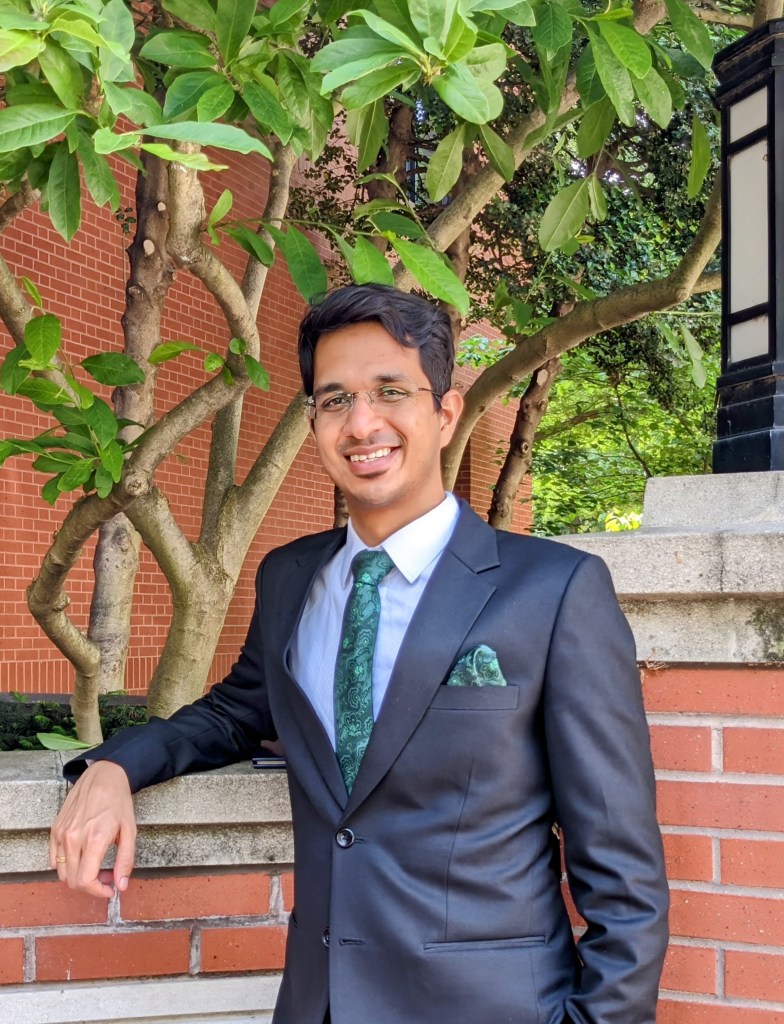
• Greetings! My name is Adarsh P. Koirala, and I invite you to join me on a journey filled with challenges, growth, and cultural exploration as I adjust to life in the United States.

    As a licensed lawyer in Nepal with a background as a teaching assistant in a law school, I have always been passionate about pursuing advanced legal studies and broadening my horizons.

    This led me to the University of New Hampshire Franklin Pierce School of Law in Concord, New Hampshire, where I embarked on an exciting adventure to obtain my Master of Laws (LLM) degree.

    My name is Adarsh P. Koirala, and I invite you to join me on a journey filled with challenges, growth, and cultural exploration as I adjust to life in the United States.
    Adarsh P. Koirala

    The decision to leave my homeland and enroll in an LLM program in the United States was not one I took lightly. It marked the beginning of a remarkable chapter in my life, filled with rich experiences and encounters with people from diverse backgrounds. In this blog, I will share my personal journey of adjusting to life in the US, including the trials and triumphs I faced along the way.

    From battling jet lag to navigating cultural differences, from the unique shopping experiences at Walmart to the undeniable need for a car in this vast country, my story encompasses the essence of adapting to a new environment while pursuing academic excellence.

    So, fasten your seatbelts as we delve into the highs and lows of my life as an international LLM student in the United States. It’s a tale of perseverance, cultural immersion, and the pursuit of the American dream.

    1. Weather

    The weather in Concord, New Hampshire when I arrived was very much like my hometown in Nepal. When I arrived, the weather welcomed me with its unique charm. The daytime temperatures were moderate, providing a pleasant backdrop for exploration and academic pursuits. However, as the sun dipped below the horizon, a gentle chill in the night air reminded me that I was far from home, adding an extra layer of excitement to my journey. I have been looking forward to the fall season’s most awaited moment; the turning colors of leaves.

    I have seen some photos of New Hampshire in the Fall, and it is majestic! It gives away the sensation that the whole of nature is trying to enjoy the last moments of summer before the winter comes where the only thing visible is snow.

    2. Jet lag

    As I embarked on my journey to pursue a Master of Laws (LLM) degree in the United States, my excitement was accompanied by a formidable adversary: jet lag. The 28-hour flight from my home country left me disoriented, with my internal clock in disarray.

    For the first few days, I found myself wide awake at odd hours, nauseous, heightened sense of smell and struggling to stay awake during lectures. Overcoming jet lag required patience and adapting to a new time zone, which was my initial lesson in adjusting to life in the US.

    3. Navigating Cultural Differences

    One of the most eye-opening aspects of my experience was navigating the maze of cultural differences. While my prior research had prepared me to some extent, nothing could truly prepare me for the nuances of American culture.

    From the casual greetings and friendly smiles to the open conversations, it was a whole new world. One unique aspect of American law schools is the freedom to eat in the classroom. It is a small yet significant cultural difference that added to the overall informality and inclusivity of the learning environment.

    In addition, I was often unable to describe certain things because some words in American English are different from other parts of the world. I remember asking my roommate something about the sidewalk, but I intuitively said, “foot path.”  Embracing these differences allowed me to connect with my peers and appreciate the diversity that makes the United States unique.

    4. A Unique Shopping Experience

    Full disclosure, I have only been to Walmart, and that is the only reason I am excluding every other supermarket for this blog’s purposes. Walmart is a ubiquitous presence across the US and was an entirely new shopping experience for me. The vastness of the store and the sheer variety of products were overwhelming at first. But what left the most lasting impression were the checkout lines. The queues seemed to stretch on forever, a stark contrast to what I was accustomed to back home. However, this experience became a lesson in patience and adaptability. I soon discovered the convenience of self-checkout lanes, which allowed me to navigate the shopping process with ease.

    Furthermore, I needed a laptop for my studies, and there were countless options available. After some research, I discovered that I could find a laptop with better specifications and a more affordable price compared to different stores. This experience taught me the importance of thorough research and price comparison, which helped me make an informed decision and save money.

    5. The Need for a Car

    One crucial aspect of life in the US, outside of a major city, is the need for a car. Public transportation options can be limited, and the distances between places significant. I feel immensely lucky that I got to know good people from around the world, but it became evident that having my own vehicle is essential. If you are an international student like me, chances are you would want to buy a car right after you come to the states. This will give you the freedom to explore new places and participate in opportunities that come along the way.

    6. Food

    America’s diverse culinary landscape was a delightful discovery. The plethora of food options, both in restaurants and grocery stores, was astounding. What truly stood out to me was the affordability of ingredients and goods for home-cooked meals when compared to the American lifestyle in general. This allowed me to explore and savor a taste of home even when I was thousands of miles away, which has made my American journey even more enriching.

    7. Different Legal education system.

    There is a stark contrast in teaching styles between law schools in the United States and my prior experiences as a teaching assistant in Nepal. In the US, the emphasis is not solely on rote memorization and regurgitation, but rather on critical thinking, class participation, and in-depth analysis of legal cases. Professors encourage students to engage in lively debates and challenge us to question legal principles. This is a significant departure from the more lecture-based approach I have previously experienced. While adapting to this new way of learning has been challenging at times, it has also been incredibly enriching. I find that this teaching style deepens my understanding of the law and hones my communication and analytical skills. I am confident this will help prepare me for a more dynamic and practical approach to the legal profession. Navigating the classroom provided a valuable lesson in the adaptability required for international students like me to thrive in the American education system.

    Conclusion

    Adjusting to life in the US as an international LLM student has been a transformative experience. From battling jet lag and navigating cultural differences to embracing the uniqueness of Walmart shopping and recognizing the need for a car, each challenge has been a steppingstone in my journey.

    It’s been a journey filled with personal growth, cultural enrichment, and the acquisition of life skills that go beyond the classroom. I am excited to see what the future holds in this land of opportunity as I continue to adapt and thrive in this diverse and dynamic environment.

    (This post was first published here)

    We need your help in keeping this blog alive. If you feel that the content on this blog has helped you, please consider making a donation here

  • (Photo by Kalle Kortelainen on Unsplash)

    Perhaps the greatest benefits of a yearly calendar, apart from the Dad jokes involving next/last year references, is that it allows you the chance to reflect over a fairly specific period of time. A lot can happen over twelve months. Quite a lot.

    For instance, one can learn quite a few lessons in a year, three of which are:

    • The best clients are the ones that come through word of mouth. They have a good idea of what they want, and whether Amicus Partners can provide it. Which really makes the entire process so much more enjoyable.

      This admissions cycle has seen close to 70% of clients coming in by way of referrals. This is not only the best form of validation, but also means spending less time on that ugly combination of even uglier words, “business development”.

    • Scaling admissions counselling is difficult. At least it has been for me, more so after trying to explore different pathways to scale. Part of the problem lies in the inherent nature of the job – can a deeply personalized experience, which ideally admission counselling ought to be, be replicated with multiple service providers?

      Of course, this is not to say that scale has not been achieved – for me, the ideal template is the Spivey Group but at a more macro scale, there are players like IDP who operate at a global, multi-subject level.  Clearly, there are ways to scale. The bigger question, I suppose, is do I want to?

    •  India is diverse. Without trying to sound too much like the introductory lines of a documentary on India, I have to say that I am astounded by just how different and varied my clients have been. Each story unique in a way, each dream and aspiration that tiny bit different.

    The past year has seen a lot of change in other terms as well. I moved cities and countries, enrolled in a graduate school, and now am a participant in the “international student experience” that is such an integral part of studying abroad. This experience also comes with homework and class readings – both of which come with their own set of challenges, more so for a mediocre student whose last stint at formal education ended nearly fifteen years ago.

    On the plus side, I am getting to sit with some very, very bright people and see first-hand how education works (or does not) and gain some insights into what this field might look in five or ten or twenty years. I also get to see a bit of what AI is going to do in the field of education (short answer: nobody knows). 

    My course also allows me to gain a much deeper understanding of international higher education, US law schools, and student recruitments. Where do the pain points lie, how can these be addressed, and perhaps equally important, how can one make money while doing this.

    More importantly, it allows me to actually meet the people who work in law schools, visit their campuses, and speak to them “off the record” so to speak – that alone has been a learning experience like no other.

    Not to deliberately end on a sober note, but the politics surrounding international education and immigration seem to be reaching the boiling point in the last year. Two significant ones from an Indian standpoint would be the UK and Canada. Interestingly both these countries will see federal elections within the next two years, so one really must wait to see how all of this plays out.

    Till then, here is to the next twelve months.

    May the lessons be learnt, may more mistakes be made, and may the small wins bring a smile to your face. 

    Lead Photo by Kalle Kortelainen on Unsplash

    We need your help in keeping this blog alive. If you feel that the content on this blog has helped you, please consider making a donation here

  • First Person Accounts (FPA’s) are meant to provide a first-hand account of law graduates who have pursued, or are pursuing, a post-graduate course (an LLM or otherwise) from different universities across the world.

    Sushant Mahajan recently graduated with an LLM from George Washington University (GW Law), where he took up a concentration in dispute resolution. In
    Sushant Mahajan

    Sushant Mahajan recently graduated with an LLM from George Washington University (GW Law), where he took up a concentration in international dispute resolution. In this FPA, he shares his experiences of enrolling for a master’s abroad after seven years of work experience, balancing his India practice and the LLM coursework, and the GW Law LLM experience itself. 

    When we spoke about your reasons for pursuing the LLM at GW, one of the things you mentioned was the need to cater to a global set of clients. Was this something that you thought of from the very start of your legal career? Do you foresee a growing interest for high quality legal work from India?

    My decision to pursue an LLM was significantly influenced by my early exposure to international legal work. One pivotal experience was my involvement in the ‘Italian Marines’ case at the International Tribunal for the Law of the Sea (ITLOS), where I gained first-hand insight into complex transnational issues.

    This exposure was supplemented over the years by participation in numerous international arbitrations at SIAC, LCIA, and DIAC, which allowed me to appreciate the global nature of legal practice and underscored the importance of catering to a diverse and international clientele.

    Pursuing an LLM was a strategic step to enhance my expertise in areas such as international law, international business transactions, international dispute resolution, and international finance. I aimed to equip myself with the skills and knowledge necessary to effectively address the needs of clients with international interests.

    I anticipate a notable surge in the demand for high-quality legal work originating from India. The dynamic nature of the Indian economy, coupled with its increasing integration into the global market, suggests a growing interest in sophisticated legal services. With businesses in India actively participating in cross-border transactions and the influx of foreign capital in India, the need for legal professionals capable of delivering comprehensive and informed legal support is definitely going to rise.

    Another reason why you chose GW in particular was the university’s reputation for IDR – could you tell me a bit more about this? Any other schools that you looked at or would advise other lawyers to consider in this particular field of law?

    GW Law is one of the few top law schools that offers a concentration in international dispute resolution. The concentration offers a unique opportunity to delve into the intricacies of international dispute resolution and is committed to providing a practical and immersive experience in the field. There are dedicated courses focusing on international arbitration, investor-state dispute settlement, and international business transactions.

    What further solidified my decision was the prospect of learning from globally renowned academicians and practitioners such as Sean Murphy, Stanimir A. Alexandrov, Marinn Carlson, John R. Crook, and Steve Charnovitz.

    In addition to this, the strategic location of GW Law in Washington, D.C., provides unparalleled access to influential practitioners and institutions. This exposure allows students not only to grasp the theoretical aspects of international law but also to gain practical insights and build connections within the vibrant international arbitration community based in the heart of Washington, D.C.

    For lawyers interested in pursuing a career in IDR, I would recommend thoroughly researching programs at various institutions, and assessing factors such as faculty expertise, access to practical experiences, and alumni achievements.

    Ultimately, the choice should align with one’s professional goals and the specific aspects of IDR that one wishes to specialize in.

    Are there any notable developments in international dispute resolution that you believe are relevant in the Indian context?

    In recent years, the landscape of international dispute resolution has witnessed several noteworthy developments that bear implications for the Indian context. With the global legal framework continually evolving, one key development is the call for reform of the Investor-State Dispute Settlement system, which I have elucidated more in ‘The Future of EU Investment Law’ and ‘Studying International Investment Treaties and Investor-State Disputes through a Central Asian Lens’.

    India is a major destination for FDI and as such it may find it necessary to contribute to the discussion on the reform of ISDS.

    Another important issue, that I have highlighted in ‘Entry to Foreign Lawyers & Law Firms in India & its impact on International Arbitration in India’ is how the entry of foreign lawyers and law firms in the Indian legal market would influence the dynamics of international arbitration within the country.

    This development could potentially impact the quality of legal representation, and contribute to the internationalization of dispute resolution practices in India.

    Given that you already had a well-established practice, was it a difficult decision to move to DC for the LLM? Any “cost benefit” analysis tips that you can share?

    The decision to come to Washington, D.C., for the LLM at GW Law was indeed a thoughtful one, given my well-established legal practice. Undertaking a cost-benefit analysis did play a pivotal role in the decision-making process.

    I considered the professional growth and networking opportunities that the LLM program and its location offered. The potential for expanding my professional network and gaining exposure to diverse legal perspectives was a significant benefit that factored into the decision. Another critical consideration was the specialized expertise offered by the LLM program. The concentration in international dispute resolution at GW Law complemented my existing practice, allowing me to deepen my expertise in a targeted area.

    Nonetheless, a thorough analysis of the potential return on investment was crucial. This involved weighing the costs of tuition, living expenses, and any temporary disruption to my practice against the long-term benefits of acquiring specialized knowledge and expanding my professional network.

    Early days yet, but how has the LLM experience been? What have been some of the most rewarding aspects of the program?

    The LLM experience has been extremely fulfilling and rewarding. One of the standout features was the opportunity to immerse myself in a specialized learning environment and freely engage with distinguished faculty known for their expertise in international law. The professors bring a wealth of practical experience and academic insight contributing to wholesome discussion of the law.

    The program has also facilitated extensive networking opportunities, allowing me to interact with fellow students, legal professionals, and industry experts from all across the globe. The diversity of experiences among my peers substantially enhanced my understanding of the interconnected nature of legal practice around the world.

    From a purely professional perspective, how do you think the LLM builds into your plans for growth?

    The program’s concentration in international arbitration and dispute resolution aligned seamlessly with my career trajectory, offering specialized expertise crucial for navigating the complexities of global legal practice.

    This targeted knowledge enhances my proficiency in handling international disputes, positioning me as a sought-after expert in an increasingly competitive legal landscape. Moreover, the program’s emphasis on practical application ensures that my learning extends beyond theoretical knowledge. Participation in moot court competitions, negotiations, and real-world case studies hones my practical skills, preparing me to adeptly navigate complex international legal challenges in my professional practice.

    Additionally, the unique advantages of engaging with notable professionals, law firms, and international organizations during the program creates a valuable network that can catalyze future collaborations, partnerships, or career advancements.

    Also, you had to balance your work along with the LLM course load – was this tricky? How did you manage to do both?

    Balancing my professional commitments with the LLM course load did present its challenges, but effective time management and a strategic approach allowed me to navigate both responsibilities successfully. Striking a balance required meticulous planning and prioritization.

    I structured my work hours efficiently, dedicating specific blocks of time to coursework, research, and assignments. Clear communication with colleagues about my academic commitments fostered understanding, and their support proved instrumental in managing expectations during peak academic periods.

    Moreover, effective use of technology streamlined communication and collaboration, ensuring that work tasks were efficiently addressed even while pursuing the LLM.

    Making the most of my time, I successfully revitalized the ‘International Arbitration Students Association at GW,’ organized panels on contemporary issues in international dispute resolution, graduated with highest honors, and received the ‘Thelma Weaver Award’ for my contributions to the law school—achievements attained without compromising the quality of my work.

    Lastly, any advice for Indian legal practitioners with a similar amount of PQE who are considering a master’s abroad? What would you say are two or three of the most important factors to be taken into account before enrolling?

    Embarking on an LLM program abroad after several years of legal practice can be a transformative experience, offering unique opportunities for personal and professional growth. When advising legal practitioners with a comparable PQE, it is imperative to stress the significance of thorough research before choosing a program.

    A well-informed decision involves considering factors such as the program’s curriculum, faculty expertise, and available specializations.

    Opting for universities with a strong reputation in the specific field of law that aligns with one’s career goals is necessary to ensure an enriching and relevant educational experience.

    We need your help in keeping this blog alive. If you feel that the content on this blog has helped you, please consider making a donation here

  • First Person Accounts (FPA’s) are meant to provide a first-hand account of law graduates who have pursued, or are pursuing, a post-graduate course (an LLM or otherwise) from different universities across the world.

    Stella James recently completed an Environmental Law Master's from Melbourne Law School, a decade after completing her undergraduate law from India. In this FPA, she discusses the pros and cons of studying at MLS, the LLM experience itself, and a whole lot more. 
    Stella James

    Stella James recently completed an Environmental Law Master’s from Melbourne Law School, a decade after completing her undergraduate law from India. In this FPA, she discusses the pros and cons of studying at MLS, the LLM experience itself, and a whole lot more. 

    Melbourne Law School is such an interesting choice – what prompted you to pursue an LLM here?  And given your specific interest in environmental law, were there any other schools that you applied to?

    My choice was partly personal and partly professional.

    Personally, I did not want to live in either the US or the UK, so the obvious choice of countries was eliminated.  Professionally, while there are environmental law courses in many Universities, MLS is one among only a handful of law schools in the world that have a specific focus on marine ecosystems as well as indigenous rights, which are my core areas of interest.

    Also, I had lived in Melbourne for a couple of months when I was younger and absolutely loved the city.

    So, all my preferences seemed to align well.

    I didn’t apply to any other places but some of the other Universities with interesting programmes that I was considering were the UN University for Peace in Costa Rica, Utrecht University in the Netherlands and University of Cape Town in South Africa.

    What were some of the expectations you had from the LLM? 

    Honestly, my expectations were quite modest. Having worked for 10 years, I mostly wanted to get a better theoretical foundation in environmental law. I was also excited to live and learn in a different country.

    Early days yet, but how was the LLM experience at MLS? Looking back, do you think your expectations were met?

    To be honest, it was a mixed bag.

    There was a lack of transparency in course structure beforehand (more in the next question), which was a very deep disappointment. I was quite unhappy with the subject availability in 2023, and because of visa restrictions, I ended up in a position of being compelled to take a few subjects online from India just to be able to study subjects of interest.

    This has affected how well I’m able to learn and also affected my grades. Despite the extreme frustration with that, the faculty and my cohort were so amazing that they made my time there completely worth it.

    Every single one of my classes was absolutely excellent!

    Classes have a quota of 30 students, so they were small, participatory and fun. The knowledge and understanding that I gained was tremendous. I also loved experiencing different pedagogical methods. And I absolutely loved that the MLS culture celebrates cooperation and support in academics and discourages unnecessary competition between peers.

    While all of the faculty were very good, there were two professors who completely transformed my world view. Having done my LLM after a decade of working in the environmental justice space, I truly did not expect that such a massive intellectual shift could still happen.

    Also, is there anything about the LLM experience that you wish you had known before you enrolled?

    Several subjects are shown on the website as part of the Environmental Law Masters, but they are not all available every semester. The subject handbook for each year is only released at the beginning of each calendar year in January.

    Of approximately 25 subjects that are listed on the website, only about 10 subjects were actually available in 2022-2023. This was very disappointing as it meant that I was very limited in the subjects that I could choose and was interested in.

    I wish I had understood this structure earlier and planned my joining date and subject selections accordingly.

    The other aspect that I wish I had known about the teaching format of ‘intensives’, which is the most common format at MLS. The intensive format involves only one subject taught at a time. The teaching of the subject lasts only one week, from Wednesday to Tuesday. The subject is taught for the entire day from 10am to 4pm approximately.

    This structure has a lot of advantages as it concentrates the learning period and gives a lot of time for research for papers, but can also be extremely difficult and tiring during the teaching week.

    Could you tell me a bit about your cohort at MLS? Were their members from a diverse set of backgrounds and work experience? And how did you find yourself utilising your own work experiences as an LLM candidate?

    The cohort was my favourite part of being at MLS!

    I got to study alongside judges and judicial assistants, litigators, company sustainability advisors and environment and human rights activists from South and SE Asia, South America and the Pacific Islands, and of course Australia. Discussions, both in class and outside, with people working in environmental and human rights law in Chile, Colombia, Indonesia, Fiji and Tuvalu, among others, has expanded my understanding of environmental law much beyond my expectations.

    During class, all the faculty strongly encouraged comparative analysis of law between different countries, both on paper and in practice. This was true even in subjects that were focused on Australian domestic law.

    I was able to contribute a fair bit to these discussions from my own work, and exchanging notes from our work experiences with other students. I also wrote papers based on Indian law for a few subjects. For these, I was able to draw strongly on my experiences in shaping my analysis.

    Not to put you in a spot, but are there any specific learnings you made during the LLM that you now find yourself implementing in your work now? I suppose what I am asking is whether the LLM has helped you in a professional capacity?

    I’m still finding my way professionally after the Master’s. But soon after I came back, I taught a few classes on environmental law to conservation science students. One class was on climate change, which was drawn entirely from what I studied in my master’s.

    For the other classes, although I didn’t use the content, I relied very heavily on the teaching techniques that my professors at MLS had used. It guided the readings I picked as well as the structure of my class activities.

    I had taught the same classes a couple of years ago and personally, I felt that this time went much better for both the students and me. I hope to figure out soon whether the Master’s will be useful for me in a non-academic setting.

    Lastly, any advice for the Indian lawyer who is considering a master’s abroad?

    I would say that firstly, spend some time to be clear and honest to yourself about why you want to do a Masters, professionally and personally. I strongly suggest getting at least 4-5 years of work experience before applying for one.

    The master’s can be a transformative experience if done right.

    Secondly, do your research. Don’t pick schools based only on rankings. Universities have history, context and values. Think of your interests and whether the law school has enough space for them (both in their curriculum and extra curricular spaces) and figure out if your values align with the values of the law school you will go to.

    Thirdly, if you haven’t lived abroad (even if you have traveled), it is going to be a difficult experience. So think about if the country/city that you choose is one that you want to make your home for a year. Again, countries and cities  have history, context and values and it helps a lot if you feel like you belong.

    Also, figure out what support the University provides for international students because that can be crucial in easing your transition.

    We need your help in keeping this blog alive. If you feel that the content on this blog has helped you, please consider making a donation here

  • First Person Accounts (FPA’s) are meant to provide a first-hand account of law graduates who have pursued, or are pursuing, a post-graduate course (an LLM or otherwise) from different universities across the world.

    In 2021, Apoorva Vijh graduated with an LLM from Penn State Law, focusing on International Commercial Arbitration. Now a dual-qualified lawyer (India and California), Apoorva shares more of her journey as an international student, preparing for the California Bar and so much more. 
    Apoorva Vijh

    In 2021, Apoorva Vijh graduated with an LLM from Penn State Law, focusing on International Commercial Arbitration. Now a dual-qualified lawyer (India and California), Apoorva shares more of her journey as an international student, preparing for the California Bar and so much more. 

    I am curious though what were the schools, apart from Berkeley, you had shortlisted once you had decided to pursue an LLM abroad? What were the factors you considered while making this list? 

    I only applied to Penn State University, UC Berkely and University of Pennsylvania. Creating a list of these colleges involved careful consideration of several key factors. Firstly, academic reputation was paramount. I researched institutions known for excellence in International Commercial Arbitration, evaluating faculty expertise, research opportunities, and program rankings.

    Professor Thomas E. Carbonneau, one of the biggest names in arbitration academia in the US, taught us US Arbitration at Penn State, which is my biggest flex! The availability of specialized programs and courses at Penn State aligned with my career goals influenced my choices, as did the overall structure and flexibility of the LLM programs.

    Alumni success stories and the strength of the alumni network played a role in assessing the post-graduation support and potential career outcomes.

    Lastly, I considered the institution’s commitment to fostering a diverse and inclusive academic environment, recognizing the value of exposure to different perspectives in shaping a comprehensive legal education.

    What were some of your expectations from the LLM?

    Embarking on my LLM journey at Penn State, I held several expectations. Firstly, I anticipated gaining specialized expertise in my chosen field of law, honing my skills to a level that would enrich my professional practice. Additionally, I expected exposure to diverse legal perspectives, given Penn State’s reputable faculty and international student body.

    I also looked forward to the cultural exchange inherent in an international academic environment, anticipating personal growth through exposure to different legal traditions and viewpoints.

    Was it always the plan to sit for the California Bar after graduating? 

    Not at all. When I moved to the US, I went with an open mind and with a “we’ll see what happens” attitude. It was much later during LLM that I realized the need to be a licensed attorney understanding the potential for growth it brings with itself.

    It took a while to find the right direction regarding the bar examination which eventually led me to the beautiful and sunny California!

    Sticking with this, how did you approach the job-hunting process? Did Penn State offer career development services?

    To be honest, I found the job-hunting process to be quite challenging, at least in my case. I graduated in 2021 during the time when Covid-19 pandemic had still captured the world. The economy and job market were unpredictable, not to mention, most of them were either closed or laying of existing employees.

    I sent in more than 100 applications in a span of two months leading me to only 4-5 offers, one of which I took as a Law Clerk in Los Angeles, California.

    Penn State did provide assistance in the job hunt process by providing guidance on approach and including CV and Cover Letter writing workshops.

    However, with Covid-19 pandemic dominating the world at that time, there is only so much that they could do.

    Apart from the ginormous offerings at the Creamery, what would you say were some of the highlights of the LLM experience at Penn State?

    Although nothing can be a bigger highlight than the Creamery, I did have some good days. The Penn State LLM program offers a wide variety of elective course helpful in curating a specialization of one’s interest. Not to forget, the university encourages to engage in innumerable co-curricular activities.

    During my time, I was fortunate enough to be chosen as an Advisor for the Penn State Moot Court team selected for the Williem C. Vis International Commercial Arbitration Competition held in Vienna, Austria each year. Never in the history of Penn State had they included any LLM candidate to be an advisor to the all J.D. team.

    I was lucky, I think.

    I was also chosen as the Junior Editor by the German Law Journal, Washington and Lee University School of Law, Virginia. Lastly, one of the things which made me really glad, was being elected as the LLM Representative to represent the South Asian Law Students Association, Penn State Law and organize social activities and events representing the South Asian countries and their traditions.

    Could you tell me a bit more about the macro-level differences in litigation practice between California and say the Supreme Court of India? Would you say there is a greater emphasis on procedure in the US as compared to India?

    As a dual licensed attorney, I would navigate distinct legal landscapes characterized by unique procedural nuances and cultural influences. In California, the legal system is firmly rooted in common law traditions, placing considerable emphasis on precedent and case law. The state’s civil procedure is meticulously outlined in the California Code of Civil Procedure, and the discovery process is a hallmark of litigation, allowing for comprehensive information exchange between parties.

    Alternative dispute resolution methods, such as mediation and arbitration, are also integral to the Californian litigation practice, providing flexible avenues for dispute resolution outside the courtroom.

    Conversely, practicing law in India involves navigating a legal system with a blended character, drawing from both common law and civil law traditions. The Code of Civil Procedure governs civil litigation, and while an adversarial approach is evident, the legal culture is also influenced by an inquisitorial spirit, particularly in matters of justice and fairness.

    The hierarchical court structure, with district courts, high courts, and the Supreme Court, requires a strategic understanding of jurisdictional dynamics. Additionally, alternative dispute resolution mechanisms are actively encouraged, with the Arbitration and Conciliation Act providing a comprehensive framework for arbitration proceedings.

    As an attorney, the challenge lies in adapting to these distinct legal frameworks, understanding the cultural nuances, and effectively advocating for clients within the parameters of each jurisdiction’s legal practices and norms.

    As for the California Bar, you have discussed how arduous the process is – what kept you going?

    As a foreign trained attorney preparing for the California Bar Examination, several factors propelled me forward despite the notorious difficulty and lower passing rates associated with the exam.

    Firstly, a deep sense of determination and commitment to professional growth motivated me. Recognizing the challenges, I approached the preparation process with resilience. To be honest, I came across people on my journey who suggested me to change the jurisdiction from California to some other state, given that California requires highest pass rate in the United States.

    I am glad I stuck to my instinct.

    Additionally, a strategic study plan and a disciplined approach played crucial roles. I diligently adhered to a well-organized study schedule, focusing on the specific subjects and skills emphasized by the California Bar Examination. Seeking guidance from experienced mentors and accessing resources tailored to the exam’s format and requirements were integral to my preparation strategy.

    Furthermore, maintaining a positive mindset was essential. Acknowledging the difficulty of the exam, setting realistic goals and celebrating small victories along the way helped sustain motivation during the arduous preparation period.

    Lastly, a strong support system, mine being my family, especially my mom, provided emotional encouragement and the confidence to enter the exam room with faith.

    Moving away from professional growth, how did you deal with the personal or cultural challenges that come about with moving to a new country? Again, what were the ways in which you kept motivations high?

    Moving to the US has been the biggest bet of my life which presented both personal and cultural adjustments. I actively sought to immerse myself in the local culture, engaging with the community through various activities and events. This not only broadened my understanding of American society, I also recognized the importance of maintaining a balance between embracing the new culture and preserving elements of my Indian identity.

    This involved participating in cultural exchange initiatives, joining relevant communities, and celebrating festivals and traditions from home. Connecting with fellow international students and professionals who shared similar experiences provided a valuable support system and a platform for sharing insights on coping with cultural adjustments.

    Dealing with personal challenges also involved cultivating resilience and adaptability. Additionally, staying connected with family and friends back in India through regular communication helped create a sense of continuity and support.

    One of the most common motivations behind a foreign LLM is finding employment abroad – do you think this is a good reason to pursue an LLM? Any advice you would like to share for prospective LLM applicants?

    I believe that the motivation to pursue a foreign LLM with the aim of finding employment abroad is a valid and strategic reason for many individuals. However, the decision to undertake an LLM program is also often driven by a desire to gain specialized knowledge in a particular area of law, exposure to a different legal system, and the opportunity to enhance one’s professional qualifications. It can open doors to international job opportunities, legal practice in a specific field, or even engagement with multinational corporations.

    Building a life abroad comes with its own challenges and hiccups. It is essential for individuals considering this path to thoroughly research and understand the legal job market in their desired jurisdiction. Networking, building connections with legal professionals, and staying informed about immigration and licensing requirements are crucial steps to facilitate a successful transition to a legal career abroad.

    My advice to prospective LLM applicants is to start with a clear understanding of their career goals, thoroughly research LLM programs, considering factors such as faculty expertise, program structure, and available specializations. Be prepared for the academic rigor of the program and develop effective study habits. Embrace the diversity within LLM programs, as engaging with individuals from various backgrounds enhances understanding of global legal issues.

    Lastly, do not stop working hard until you reach where your heart wants you to be!

    We need your help in keeping this blog alive. If you feel that the content on this blog has helped you, please consider making a donation here