• The Amicus Interviews: Deborshi Barat on the MALD at Fletchers, legal research & more

    The Amicus Interviews are meant for broader discussions on legal education, and the legal profession at the global level. One of the goals of this series of interviews is to get the views of Indian law graduates who are working outside the country. Another goal would be to track the educational aspirations of the Indian Law Graduate (ILG), especially when it comes to studying outside the country.

    Deborshi Barat is currently a PhD scholar at the Fletcher School, Tufts University the same institute where he completed the MA in Law & Diplomacy as well as an LL.M. In this interview, the NUJS graduate discusses his time as a postgraduate student, the changing face of Indian legal education, choosing a PhD supervisor, and a lot more.

    You have had quite an interesting career trajectory thus far but going back to 2013 when you signed up for the MALD course at Tufts – what was the thought process then? What attracted you to a “non-law” master’s?

    I had worked at a law firm (S&R Associates, New Delhi, mainly engaged in Capital Markets, General Corporate, M&A, and Dispute Resolution) and then at the Calcutta High Court. There had, thus, come a time when I wanted to marry legal practice with a comprehensive policy education to complete the picture.

    The Fletcher School of Law & Diplomacy at Tufts University was a cherished destination, and hence the desire to seek a non-law Masters degree program without severing the ‘law’ connection.

    Were there other schools that you applied to as well? And if so, what got you to narrow down on Tufts?  

    I did apply to Columbia University for its MPP program at the School of International and Public Affairs (SIPA). In the end, I’ll admit it was a tough choice between SIPA and Fletcher.

    Eventually I chose Fletcher because it seemed a better fit for what I wanted, and how I wanted to tailor my education. Boston was the extra incentive!

    Any advice on how to go about the application process? Was it difficult to translate your previous experience as a corporate lawyer while making the applications?

    Like many other things, the application process is not tough but requires a systematic approach. It’s good to be honest about one’s aspirations and build a compelling narrative therefrom as part of the Statement of Purpose.

    Several of the admission committees of elite universities are exposed to applicants wishing to change their career trajectory. Accordingly, I found that the previous corporate experience provided a good platform to pitch myself better as a suitable candidate. It wasn’t an obstacle.

    “Several of the admission committees of elite universities are exposed to applicants wishing to change their career trajectory.”

    Did you apply for/receive financial aid of any sort?

    I did. I received generous aid from both SIPA and Fletcher, thus complicating the decision-making process further.

    It would have been difficult for me to confirm admission without financial aid, and I always knew that my enrolment was contingent upon receiving a scholarship.

    How was the course itself? Any highlights in particular that you wish to share? 

    The multi-faceted faculty at Fletcher is, by far, the most valuable resource available for students. I ended up being at Fletcher for longer than I’d initially planned, completing two masters degrees (the M.A. in Law & Diplomacy and the LL.M. in International law, respectively), and finally enrolling for the PhD program.

    The famous collegiality of the Fletcher ‘mafia’ is a different experience altogether, and one learns a lot from one’s peers as well, especially because the range of perspectives, nationalities, professional backgrounds, and world-views is staggering.

    “The famous collegiality of the Fletcher ‘mafia’ is a different experience altogether, and one learns a lot from one’s peers as well, especially because the range of perspectives, nationalities, professional backgrounds, and world-views is staggering.”

    I also find it interesting that after the MALD, you opted for an LL.M. at Fletcher – again, what got you to enrol for this course? Was it at this point in time that you had decided that a doctorate degree would be next?

    I was already admitted to the M.A. in Law & Diplomacy (MALD) program at Fletcher – its keystone offering. Once there, I realised that it made sense to apply for an LL.M. as well, not least because the International Law faculty at Fletcher is outstanding.

    I hadn’t yet decided on doctoral studies. I wanted to embrace Fletcher’s courses in full, and the options are plenty.

    Clearly, you enjoyed your time at Fletcher – but can you tell me how you went about choosing your supervisor? And any pointers on what prospective doctorate scholars ought to keep in mind?

    Fletcher requires a capstone thesis prior to graduation as part of its curricular requirements. I had already taken a few courses with Prof. Salacuse, and converted the final paper for one of his courses into my capstone, and eventually, my PhD pitch. Sharing a comfortable working relationship and mental wavelength, other than respect and curiosity to work with, are in my mind the chief determining factors while choosing one’s PhD advisor.

    The advisor should be excited about your proposal. Obviously, prospective doctoral candidates should bear in mind that their future dissertation will stay with them a long time – perhaps define the rest of their academic life. Accordingly, it’s important to choose a topic or an area of research that one is passionate about.

    Lastly, it is also important to note that a PhD is perhaps just the beginning of a lifetime’s worth of scholarship. The idea is not to get stuck with one stage of research, but to build something that can springboard you on to higher, better things. An exit strategy is as important as the decision to pursue a doctorate in the first place.

    “Lastly, it is also important to note that a PhD is perhaps just the beginning of a lifetime’s worth of scholarship. The idea is not to get stuck with one stage of research, but to build something that can springboard you on to higher, better things.”

    As someone who has had a fair bit of experience in academia and research outside the country, how do you think Indian law schools can build research centres and/or encourage research and scholarship?

    At present, while I continue working on my dissertation thesis, I have assumed the position of Assistant Professor at the Jindal Global Law School, O.P. Jindal Global University. I felt the need to be attached to a research-based institution where I could teach and leverage the networks, opportunities, and available infrastructure to better serve my intellectual needs.

    Jindal is, in my mind, a harbinger for things to come, especially in terms of law schools around the country, with its focused attention on research. A lot of interest among law students lie in getting jobs. As important as law firms and legal practice are, scholarship is indispensable.

    “A lot of interest among law students lie in getting jobs. As important as law firms and legal practice are, scholarship is indispensable.”

    The fact that two of my previous vice-chancellors at NUJS, Profs. B.S. Chimni and M.P. Singh, among other doyens of the Indian legal universe like Prof. Upendra Baxi, have also joined Jindal recently, clearly demonstrate that legal education in the country is changing, getting more geared towards a US law school model which promotes publications, pedagogy, and a robust intellectual ecosystem, rather than restricting itself within the confines of mass-producing graduates with a law degree.

    What is your reading of the employment opportunities that international graduates can access in countries like the US? More specifically, international law graduates who are interested in academia and research?

    Getting law firm jobs in the US after a US masters remains a viable option, but I think it’s not as prevalent as it used to be five or ten years ago. If one is interested in converting an LLM into a law firm job in the US, one should be careful about the choice of law school, the eventual Bar Exam, the eligibility requirements, and above all, the practice areas that will eventually open up.

    For candidates interested in research, the opportunities are more seamless, and one may choose from a wide bouquet of interest areas. Several think tanks and research-based organisations exist that scout around for such applicants, depending on their unique requirements and the expertise offered therein.

    “For candidates interested in research, the opportunities are more seamless, and one may choose from a wide bouquet of interest areas.”

    In terms of teaching opportunities, especially faculty positions in Law, the market is a lot more competitive. Pursuing (and finishing!) a PhD and publishing prolifically in prestigious peer-reviewed journals remain indispensable requirements.

    Lastly, any advice for the Indian law graduate who may be considering a master’s abroad? 

    The most significant advice that I received on this subject was from a Partner at S&R Associates – that of remaining open-minded, to retain one’s intellectual curiosity, and to believe that a Masters abroad, other than the tangible benefits, provides an irreplaceable cocktail of experience and exposure.

    Accordingly, other than being realistic about one’s chances of obtaining admission and scholarship/ financial aid, it is a good idea to plan in advance and build on credentials that could help sell one’s profile better.

    “Other than being realistic about one’s chances of obtaining admission and scholarship/ financial aid, it is a good idea to plan in advance and build on credentials that could help sell one’s profile better.”

  • First Person Accounts: Umika Sharma on the LL.M. from QMUL, PhD at National University of Singapore (Part I)

    First Person Accounts (FPA’s) are meant to provide a first-hand account of law graduates who have pursued, or are pursuing, a post-graduate course (LL.M. or otherwise) from different universities across the world.

    Umika Sharma is currently a PhD Scholar (Law) at the National University of Singapore (NUS). A graduate of the University School of Law and Legal Studies (’17), Umika enrolled for an LL.M. at Queen Mary University of London right after her undergraduate course. She then spent a year working before enrolling at NUS.

    In the first part of a two-part interview, Umika shares her thoughts on the journey thus far, her LL.M. experience at Queen Mary, applying for a PhD, and a whole lot more.

    You have had quite a whirlwind journey over the past three years – an LLM right after your undergrad, followed by a mini-pupillage, then traineeship at the Asian International Arbitration Centre, all the while also marketing for ArbitralWomen, and now a PhD – tell me, how much of this was carefully planned out? 

    Yes, quite a rollercoaster. Good thing I seem to enjoy them. Chronologically, the LL.M. was completely planned. In fact, it had been in the works since the first year of  law school.

    Though I did not plan which LL.M., but I knew I was going for higher studies for sure.

    I had also planned on gaining post-LL.M. experience. That was also meticulously planned and implemented during the degree. I had made and continuously updated a list of firms, institutions and individuals where and with whom I could gain experience and had sent out applications all throughout my degree and some even before I had set foot in London.

    Undertaking the mini-pupillage and a few shadowing experiences were a part of that plan. I wanted to see how cases were handled in the U.K. and, was fortunate enough to find barristers and solicitors who gave me that opportunity. AIAC was one of the institutions on my list where I wanted to gain experience. So, when I got the traineeship, I packed my bags and moved from London to Kuala Lumpur.

    ” I wanted to see how cases were handled in the U.K. and, was fortunate enough to find barristers and solicitors who gave me that opportunity.”

    As for ArbitralWomen, I had been a member and had attended many of their fantastic events in London. When they sent out a call for these positions, I responded, got selected and then started working with them on their marketing activities.

    Lastly, the Ph.D. was more of an idea that developed purely out of interest. Because of a lack of focus on research and training during my first degree, I hadn’t seriously considered it as a career option.

    But at Queen Mary, where I was given access to the field’s best professors- who had a strong understanding of the academic world and also worked as counsels/arbitrators-along with proper and complete guidance, I got interested in research.

    I had chosen many modules with a substantial research component and was expected to produce multiple well-researched papers by the end of each semester and also a fifteen-thousand-word thesis by the end of the degree. In total, well over thirty thousand words by the end of my LL.M. Therefore, it was here that I was challenged to go out of my comfort zone and produce in-depth research.

    Turns out, I really enjoyed doing it.

    My good grades also gave me the confidence that in addition to liking what I was doing, my professors liked my work too. Consequently, by the end of my LL.M., I had seriously started considering a Ph.D. I shared my plans with my professors and mentors and all of them unequivocally supported the idea that I should take my research career forward. Their confidence in my work and my interest in my research topic helped me make up my mind and then apply to NUS.

    “By the end of my LL.M., I had seriously started considering a Ph.D. I shared my plans with my professors and mentors and all of them unequivocally supported the idea that I should take my research career forward. “

    When you graduated in 2017, was a PhD always on the cards? Or was this something you decided to take up only after the LLM?

    In 2017, a Ph.D. was not something I had seriously considered.

    But by the end of my LL.M., I was sure I wanted to pursue a research degree. It was a gradual change of heart because of the exposure and training that I received during my degree and also my deep interest in the topic.

    By the time I finished my LL.M., I was already looking at Ph.Ds. As I wanted to head back to Asia, NUS was an obvious choice.

    I am also curious to know what you thought were some of the differences in your undergraduate education and the LLM. Specifically, from the point of someone who is interested in research?

    There were many. While during my undergrad, there was a focus on the “black letter of the law”, my LL.M. focused more on critical thinking and in-depth analysis of legal concepts as well as trying to gain a practitioner’s perspective.

    The course delved into the nitty gritty of the procedural aspects of international dispute resolution. Even though, international arbitration can be seen as a field of law build around procedural issues of law; it also has some very interesting conceptual frameworks. So, it seems to me that it attracts people who like to dab both into practice as well as maintain a strong academic connection through teaching, publications, talks and so on.

    That’s the most prominent contrast that I saw from my Indian undergrad.

    In India, most of our teachers tend to be pure academicians. While that’s not necessarily bad, it does limit their reach in some respects, especially while teaching subjects that have a significant procedural (and often practical) component.

    “In India, most of our teachers tend to be pure academicians. While that’s not necessarily bad, it does limit their reach in some respects, especially while teaching subjects that have a significant procedural (and often practical) component. “

    Whereas, during my degree at QMUL, I was taught by academics who also practice in the field. They often shared their experiences as practitioners. Moreover, the School of International Arbitration also hosted regular seminars and networking events where practitioners from all over the world were invited to teach and also interact with us. Learning from their war stories and understanding what I was studying in classes from a practitioner’s perspective were invaluable insights into the subject matter.

    That is something that I feel Indian law schools miss out on. I also found this interaction of academics and practice especially useful for my research. I felt that it gives one’s research an edge because then you can bring many different perspectives on a particular topic to the table.

    Ultimately, it enhances the quality of your research and takes it beyond the realm of abstract theories to a solid foundation in how that research question that you’re exploring can be grounded in real-world scenarios. It also ensures that your practical worldview is not only limited to your experience but also has influences of other professional’s experiences from almost all over the world.

    Additionally, the networking opportunities that universities like QMUL and NUS provide are unparalleled. Through these events I got access to the best practitioners in the industry. I feel the constant interaction of academics and practice was the most exciting element during my LL.M. and again during my Ph.D.

    Another stark difference that I saw was the institutional support and access to (almost) unlimited resources. The online library and all its resources provided to me during my LL.M. felt like a golden ticket to the world of research. The advanced tools that were at my disposal made the process of research both interesting and enjoyable.

    I also had access to researchers who could help me gain research skills reasonably quickly. I had opted to take extra classes and tutorials to learn how to research thoroughly and sometimes distil the research process to its very basics and build my skills from scratch.

    “I had opted to take extra classes and tutorials to learn how to research thoroughly and sometimes distil the research process to its very basics and build my skills from scratch.”

    Most importantly, every professor, researcher, as well as all the supporting staff were extremely approachable and helpful. Having access to all of these resources and resource persons was what helped me quickly adapt to how research is done at an international level. Many Indian universities generally (in my limited experience) have this shortcoming.

    Because of a lack of access to advanced resources and also accessible well-trained researchers, it’s quite hard to develop your researching skills. To me, it seems that there is a gap between encouraging research during law school and provided the tools to learn and undertake advanced research.

    “To me, it seems that there is a gap between encouraging research during law school and provided the tools to learn and undertake advanced research.”

    Lastly, international universities also provide you the opportunity to interact with an excellent peer group. I studied in a class with around fifty nationalities. Most of them were seasoned professionals in their respective countries. Many spoke half a dozen languages or so. They opened my eyes to how differently the same principles of law operate in different jurisdictions. The opinions and experiences that they brought to the classroom were sometimes so unique that we spent hours discussing how law functions in our respective countries.

    That sort of an engaging environment was also the driving force behind many of my research ideas. I had access to this peer group which could be my soundboard for these ideas and teach me novel ways of looking at the same problem but from a completely different perspective. I feel it immensely helped me to develop as a researcher both in terms of my thinking process and also employing comparative techniques to refine on that thinking. During my Indian education, this diversity of opinions and experience was something that was missing.

    “During my Indian education, this diversity of opinions and experience was something that was missing.”

    This peer group also turns into lifelong friends, supporters of your career and many have become mentors. All of this is in addition to the vast alumni network that I have access to. Since completing my degree, I have lived in two more countries, and I find QMUL alumni from my course everywhere. Having a well-developed alumni network is another thing that has helped me immensely. In India, that is not necessarily the case except for the well-established universities. Even if there is a vast network, tapping into it can also be quite challenging if the university specifically doesn’t support that network.

    “Since completing my degree, I have lived in two more countries, and I find QMUL alumni from my course everywhere. Having a well-developed alumni network is another thing that has helped me immensely.”

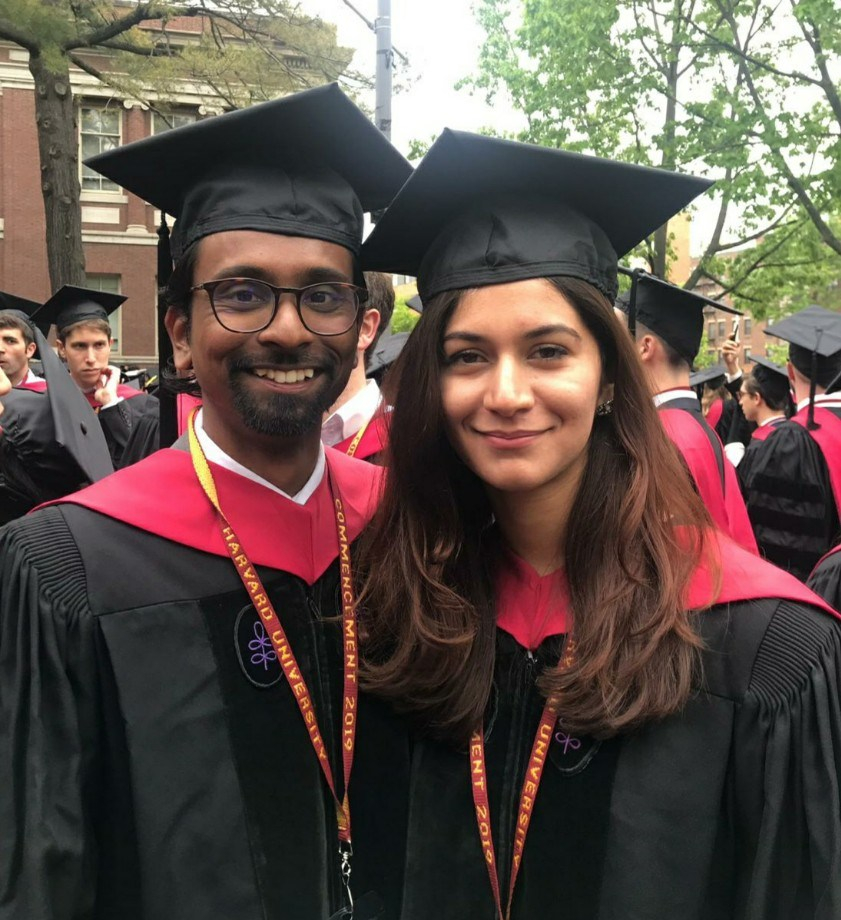
  • First Person Accounts: Sagnik Das on the Inlaks scholarship, LL.M. at Harvard Law School

    First Person Accounts (FPA’s) are meant to provide a first-hand account of Indian graduates who have pursued, or are pursuing, a post-graduate course (LL.M. or otherwise) from different universities across the world.

    Sagnik Das graduated from National Law University Jodhpur (Class of ’16) and spent the better part of two years clerking in the Delhi High Court. He recently completed an LL.M. course from Harvard Law School (’19) and in this interview he talks about his time at Harvard Law School, the Inlaks scholarship, making the most of the LL.M., and a lot more.

    Was an LL.M. always on the cards while you were an undergraduate law student? Or was this something that you decided to do after working for a bit?

    It was always on the cards for me. In my time as an undergrad student at NLU Jodhpur, I tried out quite a few things. But at the back of my mind I always knew I wanted to pursue an LLM abroad. I worked for a while to both build my profile and to get a better sense of what I want to study or focus on during my LLM year.

    Initially, I worked with a law firm for a while, and while I had a good time there, I always knew that I wanted to do something different from a law firm job in India. I tried it out so that I didn’t have any regrets later on. I later decided to do a judicial clerkship, both for the enriching learning experience and for the value add in terms of applications for LLM.

    How did you go about the process of selecting schools? Did you look at UK schools as well? Lastly, why Harvard?

    Selecting schools was actually quite a task and I picked six schools that I applied to eventually. I think this bit is rather important and every prospective applicant should spend quite a bit of time on this, rather than just applying to all the standard, reputed institutions, without doing in depth research. I picked a couple of schools in UK as well, but I always more keen on studying in the US, if not for anything else but for the academic environment here.

    “I think this bit is rather important and every prospective applicant should spend quite a bit of time on this, rather than just applying to all the standard, reputed institutions, without doing in depth research. “

    Why Harvard? Because of the sheer width of courses on offer and the critical perspective to academic instruction that it is famous for. The sense I have gotten is that HLS teaches you not just what the law is, but really much more about how to question it and develop a critical and analytical approach to its study.

    Given that you were clerking at the time of applying, did you find it tough to balance work and the application process? How early did you begin the application process?

    The clerkship wasn’t an extremely time intensive job. It gave me adequate time to work on my applications side-by side. The application process is long and requires a lot of patience more than anything else. It is pretty time consuming too. So I’d say that’s definitely a factor to be kept in mind for people whose jobs are more taxing. Mine wasn’t.

    I began the application process by researching on the schools I wanted to apply to and preparing a table of what I wanted to study in each of those schools, what courses I was looking to take, which professors I was looking to work with etc. and the application requirements of each of those schools. I’d say I began in April of the year in which I was applying (usually application deadlines are between November-January).

    Apart from Inlaks, did you apply for any other sort of financial aid?

    I did. I applied to almost all the scholarships and/or interest free loans that were available to Indian students (Narotam Sekhsaria, JN Tata, KC Mahindra etc.).

    Coming to Inlaks, what was the toughest part of the selection process? Could you share your experiences of the interview stages? 

    The Inlaks scholarship is really competitive and the competition isn’t just against law students, but students from other disciplines as well. The interview was in two stages. The first stage was a technical interview with subject matter specialists. So, there are multiple panels for the different disciplines.

    The law panel had four lawyers and it was quite a grilling interview. But it was a very good interview in the sense that most of the questions were on larger issues of legal policy in India, rather than questions requiring rote learning, like what does “x” section of “y” statute state. The interviewers were clearly specialists in the field and it was a good, challenging round.

    “It was a very good interview in the sense that most of the questions were on larger issues of legal policy in India, rather than questions requiring rote learning, like what does “x” section of “y” statute state. “

    The final round had one panel for all candidates from the various disciplines. There were experts from various fields on the panel, including   some trustees from the Inlaks foundation. From the legal profession, there was Justice Vazifdar on the interview panel.

    The final round too was very challenging and Justice Vazifdar asked me the most number of questions, some of which were quite technical. Overall, there was a lot of grilling in both interviews.

    Any advice for those looking to apply for scholarships in general, and Inlaks in particular? 

    It is really difficult to advice on the various kinds of scholarships, because different scholarships look for different things in the candidates. But mostly, if you make it to the interview stage, you’re guaranteed to get a whole host of questions relating to things you have done so far in your career, so I’d say being extremely thorough with all the areas that you have worked in previously, is the first step.

    One should also do some research on what kind of a candidate is the granting foundation looking for, and try to build a case on those lines. A one-size-fits-all approach is therefore ill advised.

    For Inlaks in particular, there’s a lot of emphasis on academic and co-curricular achievements, so one must highlight that in their application forms. As for the interview, it’s really important to work very hard and prepare thoroughly, all the while being mentally ready for questions on a wide range of topics.

    “For Inlaks in particular, there’s a lot of emphasis on academic and co-curricular achievements, so one must highlight that in their application forms”

    It’s not necessary, and often unlikely, that if you want to study x area of law, that the questions are going to come from that area. So one must be pretty comprehensive in preparation, keeping also a keen eye out on relevant current developments in those areas (for instance, know all important legal issues that are playing out in the country currently).

    What were some of the most challenging aspects of the Harvard LL.M. experience? Anything that you wish you had known before enrolling? 

    Academics at Harvard is extremely rigorous. To be able to navigate through one’s courses, work on the dissertation, look for jobs following the LL.M. (provided that’s something one has to worry about), cumulatively make the year very busy and hectic.

    Having said that, it’s a very rich academic environment, and for someone who likes that, it is an especially rewarding experience.

    I had always expected the year to be hectic. The one thing I wish I had known before was the importance to streamline one’s academic and professional focus relatively early into the course. There isn’t enough time to try out a whole lot of options by keeping them all open – the course is too short for that.

    “There isn’t enough time to try out a whole lot of options by keeping them all open – the course is too short for that. “

    Looking back, how do you think one can derive the most value from what is a relatively short course?

    Great question. I think focus is of utmost importance. It’s always worthwhile to think (and research) long and hard, before starting the program, on what one wants to achieve out of the LL.M. year.

    Finally, networking is almost as important as what you study. You need to meet and talk to the right people (and there’s plenty of opportunity to do so at Harvard) in your areas of interest.

    “Networking is almost as important as what you study. You need to meet and talk to the right people (and there’s plenty of opportunity to do so at Harvard) in your areas of interest.”

    Last, but definitely not the least, it’s great to get to know your class and make friends from around the world. The LL.M. cohort is diverse and it would be a shame if one misses the opportunity to make relationships that last well beyond the year.


    If you would like Amicus Partners to provide some personalised advice on your LLM applications, please fill in this form and we shall get back to you as soon as possible.

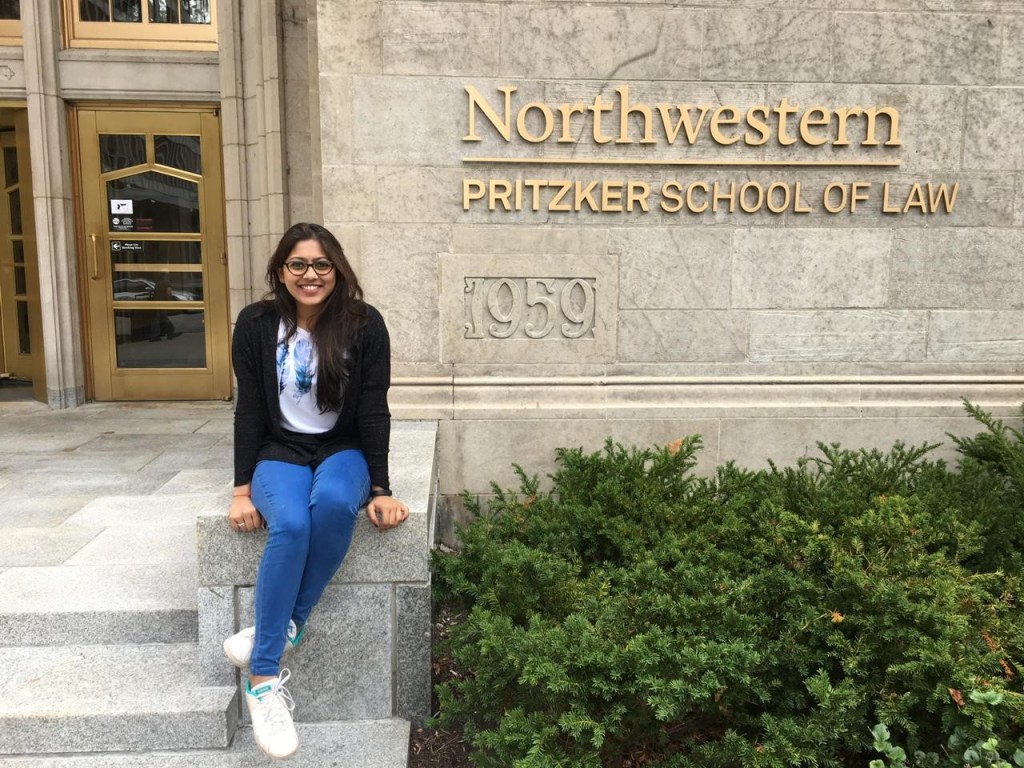
  • First Person Accounts: Shagun Parekh on an LL.M. from Northwestern’s Pritzker School of Law

    First Person Accounts (FPA’s) are meant to provide a first-hand account of law graduates who have pursued, or are pursuing, a post-graduate course (LL.M. or otherwise) from universities and law schools across the world.

    Shagun Parekh graduated from the Pravin Gandhi College of Law in 2017, and enrolled for the LL.M. at Northwestern University’s Pritzker School of Law immediately thereafter. Currently a legal consultant with Chugh LLP, Shagun shares her reasons for opting for an LL.M., how one can make the most of the nine-month course, writing a good personal statement, and a whole lot more.

    You opted for an LLM right after your undergrad. So, when did you start preparing your applications? And did you ever consider working for a while before the LLM? 

    I knew right from my first year of law school that I wanted to go to the United States for my masters degree. I started networking on LinkedIn and talking to seniors about it as early as my second year.

    Although most times I was told that it was still very early to discuss these things and that my fourth year would be an ideal start, I think knowing what I wanted to do early on gave more time to curate my CV according to what I wanted it to look like when I finally applied for the LLM.

    “I think knowing what I wanted to do early on gave more time to curate my CV according to what I wanted it to look like when I finally applied for the LLM.”

    My application process however, started towards the end of the first semester of my final (5th) year. I definitely considered working for 1-2 years and was also advised to do the same by most of my mentors, counsellors and peers but eventually decided against it as I did not want a break in my studies. Getting some work experience is always a good idea though and I would recommend it even though I did not end up taking that route.

    One of the most difficult aspects is deciding just where to apply – how did you go about selecting schools, and what got you to narrow down on Northwestern? 

    I applied to around 10 schools out of which 2 were my “safety nets” – a concept counsellors push on you to ensure that you get in at least somewhere. I would recommend not doing that since most applications end up costing around $80-$100. It is easy to get swayed by what people tell you and what people around you are doing, but if you know you don’t want to go to that school, don’t apply irrespective of how easy it is to get in.

    “It is easy to get swayed by what people tell you and what people around you are doing, but if you know you don’t want to go to that school, don’t apply irrespective of how easy it is to get in.”

    An LLM is a financial decision as much as it is an academic one.

    During my early research phases, I used the LLMguide website a lot to read about universities and then narrowed down to a list on the basis of location preferences and courses. I decided on Northwestern because they offered great courses, some financial aid, and the fact that they were 9th on the top 10 ranking at the time. A big personal factor was also that I had close family residing in Chicago.

    Another tricky aspect is the Statement of Purpose (SoP) – any advice here for prospective applicants?

    Irrespective of what people may lead you to believe, an SoP can literally make or break your application. Every applicant will have a star studded CV because every applicant has worked just as hard as you to be considered worthy of the university they are applying to. The only thing that sets you apart is your SoP.

    “Every applicant will have a star studded CV because every applicant has worked just as hard as you to be considered worthy of the university they are applying to. The only thing that sets you apart is your SOP.”

    It is important to firstly, begin early. Do not underestimate the time, efforts and number of drafts it will take before you reach your final SoP.

    Secondly, write it yourself. Do not outsource it to educational agencies who help write it for you. An SOP stands out when it is personal and talks to the admissions committee as if it speaks for the applicant. A generic draft may save you time and effort but it can cost you your dream university!

    Thirdly, seek help without reservations! Reach out to seniors, fellow students, teachers, mentors, colleagues and get them to proof read your drafts. Take suggestions and be open to criticism.

    Lastly, when you seek help, beware that too many cooks spoil the broth – and approach only selective trusted resources around you – you need honest opinions, strong suggestions and someone who understands the process and how much it means to you.

    Did you apply for/receive financial aid of any kind?

    There are a lot of scholarships available and if you do the right research early enough you maybe able to clinch a few! However, I did not apply or any financial aid with universities or scholarships as I did not know enough when I was applying.

    Most universities will offer an amount of financial aid as per the quality of your application. Northwestern did offer financial aid to me and although it was useful, it was much lower than what some of the other schools offered me. Looking back, maybe I would not mind taking up admission at the University which offered more financial aid since it was still within the top 20 universities but this is a completely personal decision and it depends on a lot of other factors!

    “Looking back, maybe I would not mind taking up admission at the University which offered more financial aid since it was still within the top 20 universities but this is a completely personal decision. “

    Like I said before, an LLM is as much a financial decision as it is an academic one. I would only advise that before you choose a school which offers little/no financial aid over a school which offers a lot more, compare every single factor and really think it through rather than deciding per what people have to say!

    What were your expectations from the LLM program, and looking back, were these expectations met?

    My LLM experience has been life changing and I would not trade it in for anything! Going into the program I expected to learn more about the areas of law which I really liked and wanted to eventually practice in. Right from Day 1 I learned not only what the law was but how I could apply it to any situation or case that came up. They train you to think differently.

    The way they structure the syllabus, target the core aspects of the subject and teach you not only the law but how to practice in that area of the law was a phenomenal change from what I had experienced back home. The program did not just meet my academic expectations, it exceeded them!

    However, placements and job opportunities for LLMs in the United States continue to dwindle and it is really tough to get a job – much tougher than I originally anticipated it would be.

    How do you think LLM candidates can make the most of the (relatively) short programme? 

    Network with as many people as possible, friends, roommates, classmates, teachers, visiting faculty etc. Try and step out of your comfort zone each day and enjoy the process. Make use of this time to learn as much as you can, academically as well as on a personal development basis because this opportunity will never come again.

    The quality of education offered by almost all universities abroad is extremely high so absorb everything possible to shape your career the way you pictured it to be. Even if 9 months is a short time compared to other masters programs which are about 2 years, when you go into the program knowing you have only 9 months, you need to make each day count!

    And lastly, any advice for the Indian law graduate who may be considering a master’s abroad? 

    Oh yes, tons! Firstly, too many people will try to tell you what country you should go to, when you should apply, where you should apply, and how you should decide every aspect of this process – but remember, this is for YOU.

    What you are looking for. your finances, educational background and what you expect to achieve from this degree are the only things that matter.

    Secondly and at the the risk of sounding repetitive, NETWORK! Talk to friends, colleagues and expand your connections on LinkedIn to know more about this process and make informed decisions.

    Thirdly, if you want to find a job in the United States then before you go, research about the bar exam requirements that the state you wish to settle down in would require. For example, New York, Illinois and California all have very different eligibility criteria. You can also not ignore the immigration aspects if you are currently eyeing the United States but do not let that discourage you from doing what you always wanted to do. The process is difficult but it is not impossible!

    “You can also not ignore the immigration aspects if you are currently eyeing the United States but do not let that discourage you from doing what you always wanted to do. The process is difficult but it is not impossible!”

    Lastly, I know this process can be exhausting and would love to help in any way I can. Feel free to reach out at shagunps.sp@gmail.com or on LinkedIn for any questions you may have and I will try my best to address them!

  • First Person Accounts: Pallavi Railkar on the LL.M. at Columbia Law School

    First Person Accounts (FPA’s) are meant to provide a first-hand account of Indian graduates who have pursued, or are pursuing, a post-graduate course (LL.M. or otherwise) from different universities across the world.

    Pallavi Railkar graduated from NLIU Bhopal in 2011, and spent close to five years working in the field of corporate law. In 2016, she enrolled for the LL.M. at Columbia Law School. In this interview, she discusses her methods for shortlisting law schools, choosing Columbia over UPenn, writing the NY Bar, and a whole lot more.

    Did you ever consider an LLM right after your undergrad? Or was the plan always to work for a few years and then apply?

    I never seriously considered an LLM during or after my undergrad in India. This is because I was aware of the fact that an LLM degree does not add any business or economic value to our career in India. However, I did want to have some international exposure in my career at some point. So, although I had no immediate plans for LLM degree after my undergrad, I might have planned for it at a later point, if I did not have an opportunity to work outside India for sometime otherwise.

    Having completed an LLM degree now, to answer the second question, it is always better to work for sometime before pursuing masters, especially for US masters. The US [law schools] have a very work-focused approach and they value work experience before pursuing masters degree. Therefore, I recommend gaining some experience before an LLM degree. It also gives you clarity about your interest areas which helps you to design your LLM program accordingly.

    “I recommend gaining some experience before an LLM degree. It also gives you clarity about your interest areas which helps you to design your LLM program accordingly.”

    How did you go about shortlisting the schools you would to apply to, and what were the schools that you finally applied to?

    Shortlisting schools was easy for me. My criteria for shortlisting were schools that were good for corporate law and geographic convenience. All Ivy League law schools and other top universities in the US have very good courses, faculty and other resources for corporate law.

    So, meeting the first criteria was not difficult.

    Therefore, for me, it came down to geographic convenience. I reside in Pennsylvania, therefore, I applied for schools in Pennsylvania and New York. I applied to Columbia Law School, Upenn, Cornell Law School, NYU, and two other law schools of Pennsylvania State University – Penn State Law and Dickinson Law.

    What got you to narrow down on Columbia Law School?

    This was a very difficult decision for me at the time. I was accepted at all the above law schools that I applied to. I had narrowed down on Upenn and Columbia Law School. Crossing out NYU, Cornell and Pennsylvania State Universities was easy.

    Hence, I was left with deciding between Columbia and Upenn.

    Upenn was a very convenient option geographically, it is only 30 minutes drive from my residence. It is also an Ivy League and well known for corporate law. Upenn also offers a certification course from Wharton Business School. This was a unique feature which I was highly considering given the outstanding reputation of Wharton Business School as well.

    Speaking with the current students at both Columbia and Upenn was extremely helpful to come to a decision. I compared all the factors between both the schools such as finances, courses offered, geographic convenience, etc.

    Financially, both schools were equally expensive, more or less. It seemed earlier that Upenn’s tuition was cheaper than Columbia, but when you add the Business certification course fee from Wharton Business School, it turns out that Upenn’s total tuition is slightly higher than Columbia.

    In terms of courses offered, like I said, certification course from Wharton Business School was something unique that Upenn offered. I spoke with the then current students at Columbia, and I learned that students of Columbia Law School and Columbia Business School have the option to take courses at the other school. Therefore, if a law student likes a course at the business school, he can register for one course per semester.

    “Students of Columbia Law School and Columbia Business School have the option to take courses at the other school. Therefore, if a law student likes a course at the business school, he can register for one course per semester.”

    This was common for business school students also to register for courses at the law school. I was then convinced that Wharton Business School certification at Upenn is not a huge advantage over Columbia after all. After crossing out courses and finances, the only advantage with Upenn for me was I would not need to move and rent another place near the school. I could have comfortably operated from my residence.

    I felt this advantage was a bit small compared to the vast resources that Columbia offered in terms of faculty, courses, advantage of being in NYC. Columbia is a much bigger brand and is extremely resourceful in every field that it offers. This is how I narrowed down on Columbia.

    Did you apply for/receive financial aid of any kind?

    I had applied for, but did not receive any financial aid from Columbia. However, Pennsylvania State University had offered me 71% Scholarship at the outset.

    When it comes to studying in NYC, any advice on how to go about finding accommodation? And any suggestions on what the approximate monthly spend would be?

    If you are joining Columbia, it has an online system of registering your housing preferences. Based on your preferences and the lottery system, you are allocated housing when you arrive at Columbia just before the school starts.

    If students prefer to change their accommodations during the LLM, the housing department at Columbia is very flexible and it allows students to terminate the lease before its term without charging any penalty.

    “If students prefer to change their accommodations during the LLM, the housing department at Columbia is very flexible and it allows students to terminate the lease before its term without charging any penalty.”

    There are also Facebook groups for accommodations where students constantly post information on sub-letting the apartments. This is another way to directly get in touch with other students or find roommates to share the apartment without going through the process of Columbia Housing Department.

    The approximate monthly spent on rent could be anywhere from $1000 to $3000, depending on the size of apartment, whether it is shared or rented solely. I spent $2100 for a 1-bedroom apartment right in front of the law school.

    What were some of the highlights of the LLM experience?

    The LLM experience was very fulfilling both personally and professionally. Some of the highlights of my LLM program were the courses I took, the incredible people I met, faculty, classmates.

    The faculty for all the courses that I registered for was outstanding. Most of them were full time partners at leading law firms in NYC.

    My M&A deals workshop class was very fast paced, highly competitive and extremely exciting. I absolutely enjoyed the class. The professors were partners from a top M&A law firm in the city. Similarly I enjoyed my corporations and evidence class a lot.

    Earlier this year, you also managed to pass the NY Bar – any advice on how to go about prepping for the bar exam?

    The NY bar is a tough exam, and I think everyone has their own way of prepping that works for them. I can share a few things that worked for me. I had subscribed to Barbri bar exam prep course.

    I made my own personal notes from the lectures offered by Barbri for each subject. This made my revisions easier. I would also supplement my notes each time I learned a new concept or wanted to add to the existing topics and concepts.

    Besides Barbri, I also bought Steven L. Emanuel’s MBE bar review book and subscribed to Adaptibar online for practicing the MBE (multiple choice questions) part of the bar exam. I therefore, used more than one bar review course. Adaptibar is very good for practicing MBE questions. It gives short explanations for all the choices. It also offers a mobile app, so one can just practice a few questions on the phone while taking a break.

    In addition to practice questions, Emanuel also offers 8-10 pages of short summary of all the important topics for all 7 MBE subjects. I found this summary helpful for a few topics. Sometimes a concept which we might find difficult to understand, explained or phrased differently, might become easier to understand. This is what happened when I used more than one bar prep course.

    A few concepts that I did not understand from Barbri materials, I could easily understand from Emanuel summary. I also learned many concepts through practice questions from Barbri, Emanuel, Adaptibar, which were sometimes not covered in Barbri lectures.

    Therefore, I think practicing MBE questions in parallel while reviewing concepts and topics is important. Another factor I think is most important is time. Most students give the bar right after graduation, which leaves them with barely two months. But if you are taking the Bar later, I would say start the preparation slightly ahead of two months.

    “Most students give the bar right after graduation, which leaves them with barely two months. But if you are taking the Bar later, I would say start the preparation slightly ahead of two months.”

    These are a few things that worked for me. I know many of us passed exam very comfortably by sticking to only one bar exam prep course, Barbri or Kaplan. So it is an individual choice. The Bar exam ultimately just needs sincere commitment. It does seem overwhelming at times during the prep time, but by just keeping at it and not giving up can see you through the exam.

    Also spread your time equally among all topics. Do not blindly rely on Barbri or Kaplan recommendations about important topics. Bar exam is very unpredictable, therefore, it is best to treat each and every subject and topic equally important.

    Lastly, any advice for the Indian law graduate who may be considering an LLM abroad?

    An LLM abroad is a very fulfilling and enriching experience. I would say working and gaining some experience before pursuing masters definitely goes a long way. For an LLM from US, if the goal is to get a job in the US, one may want to consider doing a JD instead.

    Having said that, students are able to secure jobs in the US with an LLM degree as well. Every individual case is different. It is just slightly trickier on the job front with an LLM compared to a JD degree.