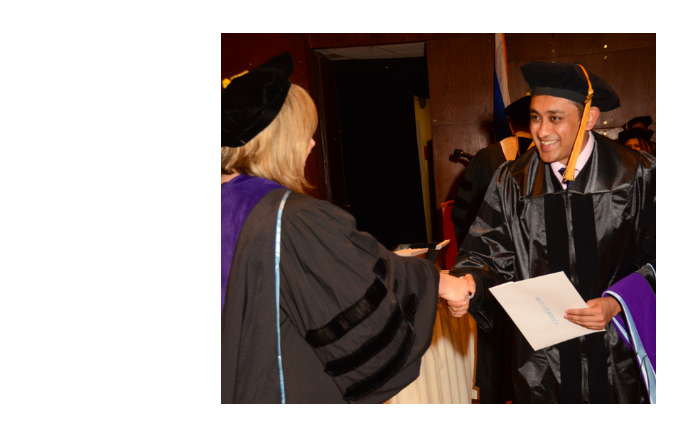
• Adya Aishwry is a recent graduate of the Wake Forest University, where she had enrolled for an LL.M. specialising in International Business Laws
    Adya Aishwry

    First Person Accounts (FPA’s) are meant to provide a first-hand account of Indian graduates who have pursued, or are pursuing, a post-graduate course (LL.M. or otherwise) from different universities across the world.

    Adya Aishwry is a recent graduate of the Wake Forest University, where she had enrolled for an LL.M. specialising in International Business Laws. A graduate of the Devi Ahilya Vishwavidyala (BA LLB, ’17), Adya spent some time as a litigator in the High Court of Jharkhand before embarking on her LL.M.

     What got you to take up an LLM, and was this something you were considering doing right after your undergraduate degree?

    The idea of studying abroad struck me while I was still in my second year of undergrad. I was not very satisfied with the academics and curriculum of my law school. I remember watching shows like Suits and Boston Legal during the same time.

    It may sound silly, but that was my first encounter to how rewarding my profession is specially in other countries. The swanky offices, exhilarating everyday challenges and of-course the fat pay cheques (which is not always true) led me to become a buoyant dreamer. As a starry-eyed fan, I was fascinated.

    The LL.M is a course that paves the way to become an attorney in a different country. It offers the theoretic knowledge and exposes to a new set of legal standards. It is a well-rounded experience of meeting people from different cultures, learning under prolific professors and a promise of rigorous but very fun curriculum. It is an absolute win-win!

    Although I had plans to gain experience before pursuing my Masters but as soon as I started working, I realized I wanted to learn more before finally starting to work. Fortunately, I got accepted for the programs and I went for it.

    “Although I had plans to gain experience before pursuing my Masters but as soon as I started working, I realized I wanted to learn more before finally starting to work. “

    How did you go about selecting where to apply, and why did you narrow down on Wake Forest?

    I had applied and gotten through ten colleges in the UK, NUS in Singapore and George Washington & Wake Forest in the US.

    In narrowing down colleges in the UK, I just went for the top Russell group universities. I chose to apply to NUS, GWU and Wake Law based on their reputation, scholarships and what the program had to offer. Along with the aforementioned factors, the fact if I would be allowed to work after the program was also a major factor to consider for me.

    The United States being the land of opportunities and the beacon of freedom enticed me as a country. At Wake, I was a recipient of the International Merit Scholarship. The program was very attractive to me due to its small classroom, interesting courses and sought-after professors. It was an easy choice for me and now when I look back it was one of the best years of my life.

    “The program was very attractive to me due to its small classroom, interesting courses and sought-after professors. “

    Did you apply for/receive financial aid of any kind?

    I was a recipient of the International merit scholarship which covered a decent percentage of my tuition. The nominal amount of tuition and living expenses were partly covered through a loan and by my parents.

    Any advice on how to go about the application process, more specifically the personal statement and letters of recommendation? 

    While choosing universities, one must take a lot of factors into consideration depending on what they want from of the program. Factors like courses and specializations offered, diversity in the classroom, research opportunities under professors, reputation, financial aid etc. should be taken well into consideration by an applicant.

    According to me, personal statements are a reflection of you as a person and as a professional. It basically is an answer to all the questions you might be asked in an interview if there was any. Therefore, one must very articulately present their personal statements their achievements, experiences, and how one is a good fit for the university.

    The Letters of Recommendation are also a major aspect of one’s application. Therefore, one should always try to get recommendations from the professors who know them well and can vouch for their achievements as a professional and dynamism as a student. A recommendation from a professor of a course one wants to pursue as a specialization could be an attractive aspect of the application.

    “A recommendation from a professor of a course one wants to pursue as a specialization could be an attractive aspect of the application. “

    How has the LLM experience been thus far? Any highlights along the way?

    The LL.M. has been one of the best decisions so far for me. It was an all rounded experience full of rigor and fun at the same time.

    I wish I could choose one highlight but everything through the year ranging from midnight library study meetups to numerous batch dinners at Professors’, from getting cold called in the class to discussing twenty different legal systems in the same classroom, all of it has been an immensely enriching journey for me.

    Apart from the course itself, what have been some of the benefits of enrolling for the LLM?

    An LLM does not only offer the course but it’s a wholesome experience in its own. Learning under one of the most renowned erudite of their field to making friends from so many different cultures, it has all to offer.

    The experience to study in an American university has been very surreal, insightful and exuberant for me. The diversity in the class helped me gain a perspective of different avenues of law and society. It helped me understand how laws on a particular issue could be so different in other countries.

    “The diversity in the class helped me gain a perspective of different avenues of law and society. It helped me understand how laws on a particular issue could be so different in other countries.”

    Along with the courses, depending on your interest you get exposed to so many different aspects of life including cultures, fashion, cuisine and of-course how American (or English) society works.

    Lastly, any advice for the Indian law graduate who may be considering an LLM abroad?

    First of all, I would suggest choosing the university and the specialization wisely after taking various factors into consideration.

    Secondly, moving to a different country can be very exciting but it comes with its own challenges. One should be ready to adapt and embrace the good and the bad.

    And thirdly, during the program try to connect very well with the professors. They are a great source of guidance at any point and can be helpful in building future professional connections.
  • mhamstra
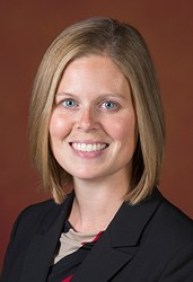
    Miki P. Hamstra

    At the start of this year, I had published an interview with Miki Hamstra, the Director of Graduate Programs at Indiana University’s Robert H. McKinney School of Law.

    In the interview, she had spoken about what LLM applicants ought to look for while selecting law schools, what a graduate admissions office looks for in a personal statement and so on.

    I thought it was quite an instructive interview, and the feedback on the interview only reaffirmed this.

    Which is why I am more than a tad bit happy to announce a webinar on LLM applications that Miki will be hosting this Saturday, October 26 at 4:30 pm IST.

    You can attend the webinar by clicking here, make sure to download GoTo Meeting beforehand.

    I think the webinar will be great opportunity for LLM applicants to learn about the application process, and also get their specific questions answers.

  • Chanaka Ramanayaka  (LL.M., California Western School of Law) to talk about his reasons for choosing CWSL, the LLM experience itself, and a whole lot more. 
    Chanaka Ramanayaka

    As most readers know by now, First Person Accounts (FPA’s) are meant to provide a first-hand account of Indian law graduates who have pursued, or are currently pursuing, a post-graduate course (be it an LLM or otherwise) from different schools across the world.

    The FPA (International) is meant to broaden this scope somewhat, getting non-Indian law graduates to discuss their LL.M. experiences in different law schools from across the world. The idea behind the FPA(I) interviews is to help the Indian law graduate better understand her potential cohort, and also expand the LL.M. conversation in general.

    In this FPA(I) interview, I get Chanaka Ramanayaka  (LL.M., California Western School of Law) to talk about his reasons for choosing CWSL, the LLM experience itself, and a whole lot more.

    How did you go about selecting where to apply for an LLM? And what got you to narrow down on CWSL?

    Well, back in Sri Lanka, I was engaged mostly in criminal appeals and some criminal trials. As a junior attorney, I was working in the chambers of a President’s Counsel, while having my own practice. I was always inclined to expand my experience and gain some international exposure.

    Having studied in UK, I had plans of pursing post graduate studies abroad.

    I was looking for a post graduate degree in several countries, namely UK, Australia, and USA. The biggest challenge for me was to select a program that matched my aspirations. I wanted a program that focused on several subjects, offered by a reputed university or a law school. I was thoroughly impressed with the LLM program of CWSL due to the option to select your own courses, and the reasonable cost of the LLM course.

    Any advice on the LLM application itself? How much time do you think one requires for the application process?

    I spent a good deal of time attending to the LLM application. I can specifically remember the hours spent on formulating my Personal Statement.  I also had to go through my past LLB transcripts, course dates, and other pertinent information.

    I believe it’s only prudent to dedicate several days to thoroughly go through the application and get all the pertinent information before filling it out.

    Did you apply for/receive financial aid?

    Although I did not apply for any financial aid, the law school awarded approximately a $2,000 scholarship.

    You also studied law in the UK, with an LLB from the University of Middlesex. How would you compare your experiences in the UK with those in the US? Any big differences? 

    I did my undergraduate studies in law, LLB (Hon), at University of Middlesex, UK.  The program at the University of Middlesex was completely exam based with only one assignment based course.

    During the entire three years of the LLB, I committed myself completely to attending lectures and legal research. In retrospect, I would say it was a program to screen potential candidates who would be successful at completing the Solicitor’s or Barristers course.

    As for the LLM at CWSL, the intensity is on par with what I experienced in UK. However, the lecturers are more accessible and friendly. Also, you would be able to better prepare for your exams by utilizing the outlines and past exams.

    CWSL goes above and beyond to supply its students with all the facilities needed to successfully complete the program of studies. Therefore, I was able to successfully complete the LLM with a cum laude (equivalent to a degree with merit ).

    “CWSL goes above and beyond to supply its students with all the facilities needed to successfully complete the program of studies. “

    How was the LLM experience at CWSL? Looking back, what were some of the highlights of the course?

    My experience at CWSL was absolutely fulfilling. I was able to take up core subjects in order to better prepare for the bar exam. I was immensely engaged in the lectures and the pertinent legal research.

    I can remember spending the mornings in lecture halls, discussing laws and case laws with lecturers, and the evenings in the law library. At present, I am a licensed attorney in the state of California, having passed the California bar exam.

    The CWSL LLM gave me the tools and the knowledge to be successful in taking the bar exam. I would advise anyone contemplating about postgraduate studies or a program to use as a stepping stone for the bar exam to consider CWSL.

    “I would advise anyone contemplating about postgraduate studies or a program to use as a stepping stone for the bar exam to consider CWSL.”


    (Full disclosure: California Western School of Law is one of our clients here at Amicus Partners)

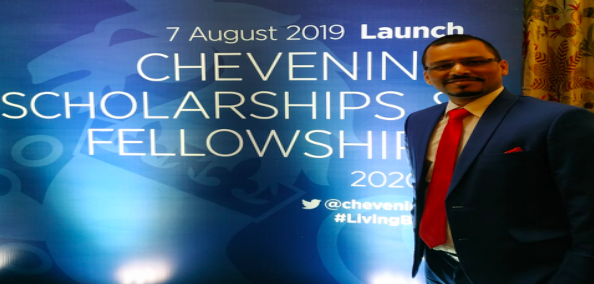
  • Dhananjay Kumar is a Chevening Scholar (2020) who will be pursuing a Masters in Public Policy at King’s College London
    Dhananjay Kumar

    The Chevening Scholarship is the UK Government’s global scholarship programme, funded by the UK Foreign and Commonwealth Office and partner organisations. It offers future leaders and outstanding professionals from all over the world to pursue a one-year master’s degree in any subject at any UK university.

    You will live and study in the UK for a year, during which time you will develop professionally and academically, grow your network, experience UK culture, and build lasting positive relationships with the UK. For 2020-2021, the Chevening application started from 7th August 2019 and are open until 5th November 2019.

    I faced a common problem while writing the four questions (asked in a form of essay) in the Chevening Scholarship application form. The problem was that there were a lot of achievements I had to write but the questions were sort of intertwined resulting in repetition of points.

    So, before answering these questions, make sure you understand the demand of each question and categorise all your achievements in such a way that it fits into the different questions properly and there is no repetition.

    You need to think over these four broader points to answer the four questions mentioned below:

    • Explain the Problem.
    • Demand of the problem/ what needs to be done?
    • Explain your work (individual/group) to solve problem.
    • What was the outcome/impact on society/ nation/ world?

    The application involves writing four essays in English which can be broadly described as:

    1)   Leadership and Influence

    Chevening is looking for individuals who will be future leaders or influencers in their home countries. Explain to them how you meet this requirement, using clear examples of your own leadership and influencing skills to support your answer.

    (Minimum word count: 100 words, Maximum word count: 500 words)

    • Give the background of your life that may be in the form of childhood experiences/ rural background/ poverty/ deficit environment/ first generation learner/ orphan/ drugs ( Not more than 50-60 words)
    • Use 3-4 leadership examples. First leadership example at school level, Second Leadership example at University Level and Third example at Job level. Further substantiate with its influence on the societal/ national/ international level.
    • There can be more than one leadership example at any level but these examples must be presented in a progressive manner. The flow is of essence here.

    2)  Networking

    Chevening is looking for individuals with strong professional relationship building skills, who will engage with the Chevening community and influence and lead others in their chosen profession. Please explain how you build and maintain relationships in a professional capacity, using clear examples of how you currently do this, and outline how you hope to use these skills in the future.

    (Minimum word count: 100 words; Maximum word count: 500 words)

    Here, the aspirants should focus on showing effective networking (means how s/he is/was associated with different people/organisation professionally) through various examples. The networking can be shown by showing one’s association with

    •  Family
    • Society
    • Teachers/Professors
    • Civil Society
    • NGOs
    • Government
    •  International organizations.

     Again, take 3-4 concrete examples which reflect your capability of establishing networks with various people/organizations.

    3)   Why Study in the UK and why the three course choices?

    Outline why you have selected your three university courses, and explain how these relate to your previous academic or professional experience and your plans for the future. Please do not duplicate the information you have entered on the work experience and education section of this form.

     (Minimum word count: 100 words, maximum word count: 500 words)

     This question demands aspirants to do comprehensive research about two things

    •  The chosen course.
    • The three universities where you want to pursue this course. The aspirants should focus their research on modules (subjects) taught in the university and the professors who teach these modules.

    In this question, aspirants should write 2-3 lines about ones work/goal and how particular Course and University will help in achieving the goal.

    Write one paragraph for each University (i.e. total three paragraphs).

    The final Paragraph should focus on how becoming a Chevening Scholar will help in achieving your mentioned goal.

    4)   Career plan

    Chevening is looking for individuals who have a clear post-study career plan. Please outline your immediate plans upon returning home and your long term career goals. You may wish to consider how these relate to what the UK government is doing in your country.

    (Minimum word count: 100 words, maximum word count: 500 words)

    This question requires the Chevening Scholarship aspirants to discuss the plan after finishing the studies in the UK. Here, the focus should be on explaining Short/Medium and Long term career goals. This Question is make or break. The aspirants must give a clear blueprint of his/her career after returning from UK.

    The aspirants may mention his/her willingness to work as an academician or are having a political pursuit or want to start an organization. And how these career paths could help in achieving one’s goal mentioned above. The last paragraph could focus on how Chevening Scholarship will be instrumental in achieving these career goals.

    Note: The applicant should focus on originality and must not copy from previous scholar essays. There is a high chance that the scrutiny committee will find it through the plagiarism software and out rightly reject your application.

    Also, if you are not truthful in your application process, you may not be able to show your passion in the interview stage or get caught by the Interviewer as they are highly experienced people. So, one last Mantra, be honest in your application process and you will get through.

    Everyday, people are requesting me to share my essays with them. I sincerely request you all to kindly refrain from doing so. I will not be able to share them. However, you can send me your essays and I will definitely give my comments and also if needed, I will discuss the same on the phone with you.

    You can send me your essay on dhananjay3166 [at] gmail [dot] com.

    Dhananjay Kumar is a Chevening Scholar (2020) who will be pursuing a Masters in Public Policy at King’s College London

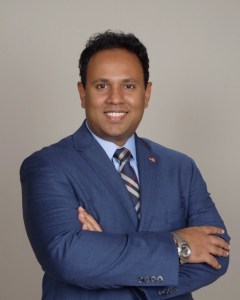
  • Sabarish Suresh is currently pursuing a JSD at the Cardozo School of Law in New York City.

    First Person Accounts (FPA’s) are meant to provide a first-hand account of Indian graduates who have pursued, or are pursuing, a post-graduate course (LL.M. or otherwise) from different universities across the world.

    Sabarish Suresh is currently pursuing a JSD at the Cardozo School of Law in New York City. A graduate of Jindal Global Law School (’18), Sabarish enrolled for the LL.M. at Cardozo immediately after his law degree. In this interview, he shares a few words on his experiences at Cardozo, why he chose to opt for a JSD, and a whole lot more.

    Quite curious about your decision to enrol for the JSD, but let’s discuss the LLM first. Why not work a while before the LLM?

    From the end of my first year of my undergraduate program, I grew an affinity to teaching as a possible career. This was quite an unexpected realization actually, given that I had enrolled into a BBA LLB to pursue a career in corporate law.

    As the adage goes, things took their own turn.

    Critical theory and interdisciplinary study of the law was something that pushed me further away from corporate law and entrenched my interest firmly towards a career in academia and teaching. My decision, therefore, for an LLM right after my undergraduate degree stems from this context – to secure a stable foundation for a potential career in academia.

    How did you go about selecting just where to apply? And while making your LLM applications, was the plan to always apply for the doctorate program?

    I wanted to study in a place that had a rich tradition of critical jurisprudence and interdisciplinary scholarship.

    I knew before hand that traditionally celebrated schools such as Ox-Bridge and (most of) Ivy League would not be the apposite place for my interests.

    While they do have lustrous ranks and ratings behind them, I found their scholarship quite arid and following a monotonous drumbeat. Consequently, I began searching for places that had a rich intellectual history in critical legal studies and interdisciplinary scholarship. Cardozo Law and Birkbeck London stood out as top contenders. I did not realize, then, that my academic sojourn at Cardozo would exceed beyond my Masters.

    “I began searching for places that had a rich intellectual history in critical legal studies and interdisciplinary scholarship.”

    Why narrow down on Cardozo? 

    Although I also got accepted to the programs at Edinburgh, Queens and Leeds, my priority in the UK was Birkbeck London. I had applied only to Cardozo in the US. Cardozo seemed more attractive of the two for two primary reasons.

    First, it had an idiosyncratic LLM program in Comparative Legal Thought that exclusively focused on studying law in conjunction with theory, comparatively and across disciplines. It was a course tailored for students interested in a serious academic career. Second, it was also the place where I felt I could work on psychoanalysis and law – my primary research interest – most favorably.

    I was given the opportunity to write my thesis under the supervision of Professor Peter Goodrich, who really grounded a psychoanalytic mode of reading the law in the 90’s.

    As a result, New York it was!

    Did you apply for/receive financial aid of any kind? 

    Yes. When you apply to Cardozo, you also have the opportunity to apply for institutional scholarships. There are a number of factors that they take into consideration such as financial capacity, academic merit, publication history or work experience et. al. I was awarded a Dean’s Merit Scholarship that enabled me to pursue the degree.

    Any advice on the LLM application itself, more specifically the written requirements?

    Well, it all depends on what you aim to achieve. If clearing a Bar Exam is one’s primary goal, there isn’t much that can be offered in terms of advice: follow the ranks, tabulations, Bar Exam clearance records et al.

    But if studying to enhance one’s knowledge in a particular domain is the criteria, you need to break away from just looking at rankings and do more work. You need to be well versed with the intellectual histories of the Universities you’re interested in, to gauge how much you’ll be able to learn in your area of interest.

    “But if studying to enhance one’s knowledge in a particular domain is the criteria, you need to break away from just looking at rankings and do more work. “

    The history of a University can be quite telling. For example: when I began looking at Cardozo’s history, I realized that Derrida’s reputed 90’ lecture on the Force of Law was given at Cardozo; and also that prolific and radical minds like Zizek, Derrida and Drucilla Cornell have been on the faculty at Cardozo. It gave a clearer picture, thereby, of the tradition of theory that Cardozo inherits and cherishes.

    The written requirements may be crucial, and often can tip the scales if your grades are not too high. I view the Statement of Purpose as a critical document. Most SOPs are drafted teleologically, exclusively concentrating on the purpose of getting into the program. While, of course, that is your purpose: writing it from a certain distance to yourself will give the document a more objective and fair value.

    Speak not just about why you are well qualified for the program, but also about yourself as a person. Admission panels receive hundreds of SOPs, if not thousands, mostly in the same self-serving manner. A critical distance to the self in writing the SOP can prove not just to be different (brownie points for strategy), but will also offer a refreshing perspective to the admissions panel. They have your CV to decipher your experience and everything that you’ve accomplished; you don’t need an SOP to repeat the same facts.

    “They have your CV to decipher your experience and everything that you’ve accomplished; you don’t need an SOP to repeat the same facts.”

    How early on into the LLM did you know that you wanted to do a JSD, and did you tailor your LLM experience accordingly?

    When I began working on my LLM thesis, I soon realized the scope and ramifications with what I was working on. I worked, and continue to work, on a psychoanalytic reading of the Indian Constitution given its contentious (in fact repressed) relationship with the Partition.

    My, somewhat narrow, emphasis on repression alone as a pivotal factor in the Indian Constitution, gradually moved on to expanding the study to include politics of space, time, cartography, chorography, antirrhetic, emblems and architecture. I realized that what I aspired to work on needs a more rigorous and longer commitment.

    The Partition affected the Constitutional discourse in India not just apropos textual inscriptions and juridical discourses, but through visible, yet unacknowledged (precisely unconscious), signs and symbols all around the Indian body-politic. This realization and countenance demanded further study ; and it took the form of a JSD.

    Could you tell me a bit about the JSD application, and how you went about it?

    The JSD program at Cardozo is quite small. No more than two candidates are usually selected in a given year. I wanted to continue, and expand, the work I had already laid out in my LLM. I sent an application with a detailed research proposal and plan.

    Fortunately, I was selected to read for a JSD and continue my work under Professor Goodrich.

    Looking back, what have been some of the highlights of the LLM experience? 

    Meeting Sanford Levison and talking about theological underpinnings of constitutional documents certainly stands out.

    I took a class at the New School for Social Research on Levinas, taught by Simon Critchley, which opened a hitherto unexplored world in continental philosophy. That course affected my work, thinking and method in many ways; and continues to do so.

    Lastly, any advice for the Indian law graduate who is considering a doctoral degree outside the country? 

    I would highly recommend that one knows who one wants to work under. Having a Doctoral advisor in mind is crucial, and ideally that should be what directs one’s application to a particular place.

    Writing to the scholars beforehand and discussing one’s work and its potential helps significantly. Scholars do not usually refuse to supervise a serious and rigorous research proposal, and more often than not, assist in many ways to bring the student on board.

    “Scholars do not usually refuse to supervise a serious and rigorous research proposal, and more often than not, assist in many ways to bring the student on board.”

    However, it is a tradition in most places that one is admitted to a Doctoral program only if they have also completed a Masters from the same school. One might want to keep this mind when applying for a Masters as well.