The Faculty of Law of the National University of Singapore (NUS Law) is one of the premier places for legal research in Asia.
It has an active research culture with seven research centres, an intense and diverse array of research events and seminars, and large numbers of eminent researchers visiting it from around the world. In 2019, it was ranked the top Law School for research in Asia by the QS and Times Higher Education rankings, and 13th and 21st globally.
NUS Law is currently inviting applications for Post-Doctoral Fellowship positions commencing in AY2020-2021.
These Post-Doctoral Fellowship positions may be held generally within NUS Law or, for candidates with appropriate backgrounds and expertise, within the Centre for Asian Legal Studies, Centre for Banking and Finance Law, EW Barker Centre for Law and Business and the Centre for Legal Theory.
Successful applicants will commence their Fellowships at the start of August 2020 and conclude them at the end of July 2021.
Closing date for applications is 31 December 2019.
The Faculty of Law of the National University of Singapore (NUS Law) is one of the premier places for legal research in Asia. It has an active research culture with seven research centres, an intense and diverse array of research events and seminars, and large numbers of eminent researchers visiting it from around the world.
In 2019, it was ranked the top Law School for research in Asia by the QS and Times Higher Education rankings, and 13th and 21st globally.
It is offering up to three fully funded places for its PhD programme starting August 2020. Successful applicants will receive (i) a monthly stipend of between S$2,000 and S$2,700 per month, and (ii) a full tuition fee subsidy for a maximum of four years. PhD students who successfully pass the upgrade processes will receive an additional monthly stipend of up to S$500 per month. We will also provide, in addition, funding for research expenses and conferences up to a maximum of S$8,000 during the period of the programme.
Outstanding applicants in any field of law are strongly encouraged to apply. Prospective applicants are strongly encouraged to consult the Faculty Research Interests webpage which may be found here as well as the Doctoral Programme webpages which can be found at here
The closing date for all applications is 1 December 2019.
Application instructions and requirements can be found at here.
First Person Accounts (FPA’s) are meant to provide a first-hand account of Indian graduates who have pursued, or are pursuing, a post-graduate course (LL.M. or otherwise) from different universities across the world.
Praggya Surana recently completed an LL.M. from Harvard Law School (’19), a course she enrolled at three years after obtaining the BA LLB degree from NLSIU. In this interview, she shares some insights into the LL.M. itself, how she went about applying, and a lot more.
So, let us get right to it – the HLS admission is probably one of the more unique ones when it comes to US law schools. Any advice on how to approach the essay questions?
The statement of purpose is quite unique for every individual. It’s a good idea to have a narrative about what you bring to the table and how the particular program fits in with your larger goals.
I had not read any other essays before writing my own application which really helped because I did not have any pre-conceived notions of what works and what does not.
“I had not read any other essays before writing my own application which really helped because I did not have any pre-conceived notions of what works and what does not.”
My legal essay was an extract from a longer article I had written, and tied in with the area of law I wanted to study.
Did you ever consider an LLM right after your undergrad, or was the plan to always work for a while and then apply? Thoughts on applying right after graduation?
I was pretty certain that an LLM was not for me through my undergrad. It was only after working for a while that I decided that I would enjoy studying further.
I think it makes sense to apply once you are certain about why you want that degree and what you want to gain from it. That way you can make the most of the (incredibly short) LLM experience. I had classmates who were both, much younger and much older than I am.
I don’t think there is any one right time for an LLM.
Once you had decided that you wanted to enrol for an LLM, how did you go about shortlisting just where to apply?
My area of interest is public international law so I shortlisted universities which focus on this. I also spoke to seniors and professors who were incredibly helpful in narrowing down the places I should be looking at.
The best advice I received was to look at Professors who are doing the kind of work I see myself doing in the future and apply to those universities.
Did you apply for/receive financial aid?
I applied for financial aid from the university and did receive a combination of grant and loan.
How has the LLM experience been? Early days for sure, but what were your expectations from the course and were these met?
It’s definitely been the best year of my life. I had heard this cliché from so many of my seniors but I finally understand it. The sheer number of opportunities, both academic and otherwise, are unparalleled. I went in focused on the academic aspect of the LLM, which were definitely met.
“It’s definitely been the best year of my life. I had heard this cliché from so many of my seniors but I finally understand it. “
I felt like a kid in a candy store when picking my courses.
It was exciting to explore niche subjects in an academic system with so much choice, very unlike the Indian education system in that regard. Apart from that, a definite highlight is the amazing friends I have made over the year.
Lastly, any advice for the Indian law graduate who is considering a master’s abroad?
Organize. It takes time to get all your ducks in a row and planning goes a long way in making the application process enjoyable.
If you would like Amicus Partners to provide some personalised advice on your LLM applications, please fill in this form and we shall get back to you as soon as possible.
First Person Accounts (FPA’s) are meant to provide a first-hand account of Indian graduates who have pursued, or are pursuing, a post-graduate course (LL.M. or otherwise) from different universities across the world.
Kiran Devrani is a recent LLM graduate from the School of Law at New York University (’18). After completing her law from Vivekananda Institute of Professional Studies (’15), worked at a corporate law firm for three years before enrolling at NYU where she took up the specialised LLM in international business regulation, litigation and arbitration.
Was it difficult to apply while also working at the same time? When did you start the application process itself, and what were some of the schools you considered applying for?
It was quite challenging, and rigorous for me. I was also working on an arbitration matter at that time. So, it was tiresome and difficult to first work on pleading drafts for arbitration at office and then come back home and work on personal statements for universities, research about courses & universities, keep checks on deadlines, gather the relevant documents etc.
But thankfully, I have very supportive sisters and a friend who helped me a lot during those stressful days.
I started my application process during September 2017 (which was a bit late). One should start it earlier, I would say at least a year before you are applying, because it takes a lot of time to prepare list of colleges (one has to do a thorough research about courses offered, university and professors), personal statement and essays for scholarships. There were so many scholarships which I missed because of late application process.
“One should start it earlier, I would say at least a year before you are applying, because [the application process] takes a lot of time “
I considered both U.K and U.S universities, so apart from NYU I applied at Columbia, Cambridge, University of Bristol, University of Nottingham, Queen’s Mary, King’s College and also MIDS Geneva.
Were you always looking at a specialised LLM or were you open to a general LLM as well?
No, I was open to general LLM also as long as the university had those courses that I am interested in.
What was it about NYU that ticked all the right boxes?
Firstly, NYU has the best arbitration courses (both commercial and investment treaty) which I was looking for. Luckily, I found that it offered the specialized program in arbitration i.e. International Business Regulation and Arbitration (IBRLA).
Secondly, NYU’s location- Greenwich Village, which is surrounded by amazing restaurants, cafes, Washington Square Park etc. There are always some or other things to do around and places to hang out with friends and relax after hectic class schedules.
Sticking with NYU, the personal statement section is quite small. How did you manage to put down all your thoughts in 500 words?
My initial personal statement was quite long, approximately 1,000-1,500 words. But then I reviewed it at least 6-7 times. While writing the personal statement, I focused on explaining why I chose NYU, my interest in the courses and how they are linked with my work experience.
I tried not to be repetitive. One should avoid overlapping things between resume and personal statement, that’s what I did and was able to put all my thoughts concisely in 500 words.
Did you apply for/receive financial aid?
I did apply for one scholarship at NYU but couldn’t get it.
How has the LLM experience been? Looking back, what have been some of the highlights along the way?
It was wonderful! I had the best time of my life at NYU, made so many friends from all over the world, got to explore big apple city and was taught by some of the best law practitioners and academicians.
I had some amazing NYU memories- picnics at central park, D’Agostino’s terrace and Hayden hall’s basement parties, weekend brunches with friends, once a week going to Oppa or West 3rd Common with IBRLA friends, NYU’s Halloween ball, NYU’s South Asian Law Association’s Ball (Diwali celebration- we danced like crazy), texting each other on LLM group for free food events at NYU, NYU karaoke night, Bowling match at my birthday (my team won) etc.
Did you find yourself falling back on your professional experience during any of the courses? And if so, how useful did you find your work experience?
I did, during my international commercial arbitration course and Oral Advocacy in International Investment and Commercial Arbitration Seminar classes. We discussed some landmark Indian arbitration cases in the class, since I knew them already and also had the chance to work on the new amendments that were made in Arbitration Act after those cases, I was able to argue the changing perspective of arbitration regime in India.
Further, during the seminar class when we had to do cross examination of witnesses, since I had drafted cross-examination questions earlier, I didn’t take much time while preparing for that in class. In fact, lot of LLMs in my batch had more work experience than me and during class discussions they used to mention their real-world legal experiences and problems.
“A lot of LLMs in my batch had more work experience than me and during class discussions they used to mention their real-world legal experiences and problems.”
Not connected to the LLM per se, but was it easy finding accommodation in NYC?
Not at all, NYC is an expensive city. During my LL.M year, I lived on campus (D’Agostino hall) and after finishing LLM when I tried to look for apartments, it was not easy to find one within a reasonable budget, and modest location.
Lastly, what is your reading of the employment prospects of international LLM graduates in the US right now?
I specialized in International Arbitration and what I experienced was that it is not easy to get an employment in that area of law in U.S. Most international law firms wish to hire either J.Ds or a bilingual student (either French, Mandarin or Spanish).
First Person Accounts (FPA’s) are meant to provide a first-hand account of Indian graduates who have pursued, or are pursuing, a post-graduate course (LL.M. or otherwise) from different universities across the world.
Sanvid Tuljapurkar recently completed an LL.M. from the Georgetown University Law Centre (’19). In this FPA, the graduate of Symbiosis Law School, Pune (’18) discusses how she went about selecting which law school to apply to, financial aid for LLM students, and a whole lot more.
In terms of planning, when did you start the LLM application process? And how much time do you think prospective applicants ought to set aside for the applications?
I developed an interest in international trade law in my third year when I participated in the ELSA Moot Court Competition. After the moot court competition, I tried to participate in and gain exposure in the field of international trade law through all possible means. Understanding that international trade law is a combination of economics, political science and law, I focused not only on the legal aspects trade but tried to gain exposure political science and economics as well.
I interned at a think tank to develop my understanding of political science and policy analysis and to improve my writing skills. I also attempted to write on issues that lie at the intersection of economics and law to comprehend the effect of socio-economic realities of a society on international trade. I pursued all these opportunities to holistically understand international trade law but having these experiences proved to be beneficial while applying for my LL.M.
“I pursued all these opportunities to holistically understand international trade law but having these experiences proved to be beneficial while applying for my LL.M.”
During my fourth year of law school, I had attended the International Trade Law and Policy Certificate course conducted by the Indian Institute of Foreign Trade. This course had invited practitioners from India as well as all over the world to teach the basics of international trade law. During this course, I realized the difference between the perception of international trade law between the global north and the global south. To me, it was important to delve into a deeper understanding of these differences to be able to appreciate international trade law.
I didn’t definitively decide on pursuing the LL.M. till the end of my fourth year. For me, the LL.M. was the next step to develop a deeper comprehension of international trade law as it is a very niche area of law that requires specialized training. I decided to pursue the LL.M. for an academically enriching experience.
Since I focused on my interests all through law school, my application automatically fell into place when I decided to apply. I strongly believe that an application involves merely conveying your interests. If one pursues their interests through the best possible means, an LL.M. application becomes a very effortless exercise.
I would recommend that prospective applicants start the application process well in advance to be able to meet early application and scholarship deadlines, some of which are very early on in the academic year.
What were the factors you kept in mind while shortlisting where to apply?
From the very beginning of the application process, I was certain about wanting to specialize in international trade law. I think it is very important for applicants to know why they are pursuing the LL.M. before they decide on which schools to apply for.
While shortlisting universities, I started by designing the LL.M. program, choosing courses, professors I wanted to study with, and co-curricular opportunities offered by universities. This research helped me shortlist my choices to three universities.
Although I applied to three universities, I leaned more towards Georgetown Law because of the variety of courses it offers. It allowed me to choose from a wide variety of courses through the International Business and Economic Law LL.M. and the WTO and International Trade Studies Certificate.
“I leaned more towards Georgetown Law because of the variety of courses it offers. It allowed me to choose from a wide variety of courses through the International Business and Economic Law LL.M. and the WTO and International Trade Studies Certificate.”
For me, it was very important to balance the traditional international trade law courses like that of trade remedies with courses dealing with more current issues of internet and international trade as well as courses that deal with international trade issues faced by the global south like access to medicine. Being able to qualify to take the New York Bar Examination was also a consideration when I applied for Georgetown Law.
In addition to the choice of school, the city where the school is located was also a major consideration. For example, in addition to all the courses that interested me at Georgetown, the fact that it is in Washington D.C., a place that moulds international trade policy and houses several major law firms and think tanks was a major factor.
“In addition to the choice of school, the city where the school is located was also a major consideration.”
Narrowing down on three universities gave me the time to focus on each application. Having designed my course from the very beginning gave me a clear picture of what I wanted from the LL.M. program which was a very helpful to customize applications for each school.
Any advice on how to go about the application itself, more specifically sourcing recommendation letters and writing the personal statement?
An application is a combination of researching about the school and conveying one’s interest in applying for a specific program in that school. Applying through the early application process is very advantageous as it helps increase the chance of acceptance.
With respect to recommendation letters, I chose to get the recommendation letters from professors who taught me relevant courses. In my opinion, having personal anecdotes in the recommendation letter is very helpful.
Writing the personal statement was a very natural process. I was advised by everybody I consulted to spare at least a month or two to write my personal statement. But personally, it took me a very short period to write my personal statement after researching about the universities, knowing what they expect from their applicants and knowing my reasons for applying. I strongly believe that if you know what interests you and if you have taken all possible efforts to develop an understanding of your interests in a holistic manner, writing a personal statement will be a very effortless process.
“But personally, it took me a very short period to write my personal statement after researching about the universities, knowing what they expect from their applicants and knowing my reasons for applying.“
Did you apply for/receive financial aid?
It is very important to apply for scholarships well in advance since the deadline for some scholarships and fellowships are very early on in the application process.
I received the KC Mahindra Scholarship and the R. D. Sethna Scholarship. Most universities also have their own scholarships.
How has the LLM experience been? Looking back, is there anything that you would have perhaps done differently?
Before the LL.M. started, I attended the Summer Experience offered by Georgetown Law. As a part of this experience I arrived at the University a month and a half before the LL.M. courses commenced.
As a part of the Summer Experience I studied the basics of U.S. legal system taught by Prof. Charles Abernathy (those who have watched the TV show ‘The Good Wife’ may recall him being mentioned in some episodes). His classes involved not only studying the U.S. legal system but developing the ability to question every word in a law or a judgment.
The Summer Experience set a tone for the LL.M. program, gave me a chance to get familiarized to the U.S. law school system, adjust in a foreign environment and develop strong relationships for the year to come. Since the courses I studied during the Summer Experience were included in the list of mandatory courses required to be taken to qualify for the New York Bar Examination, it also allowed me to take more trade related courses during the year. I would recommend opting for such an experience if it is offered by the University. Training received on how to read a judgment and having taken an examination before the LL.M. started was very use and gave me a head start.
The LL.M. experience has had a profound impact on my understanding of international trade law and my ability to perceive and present a legal issue. I had the opportunity of studying with professors such as Joost Pauwelyn, Jennifer Hillman, Jessie Krier and Gary Horlick. I also worked on a project that involved drafting a post Brexit trade agreement making procedure for a beneficiary. The LL.M. was a combination of academics and hands on practical exposure to some of the most complicated trade related issues.
Through the Institute of International Economic Law Fellowship, I had a chance to attend conferences and hear some of the most distinguished international trade professionals and understand the most current international trade related issues from them. I also served as the LL.M. adviser for the Georgetown Journal of International Law which completed my U.S. law school experience.
The opportunity to intern in at the UN and WTO’s International Trade Center in Geneva immediately after the LL.M. gave me a very international experience. Georgetown’s Post Graduate Fellowship was very helpful in terms of funding since most UN internships are unpaid.
What is your reading of the recruitment opportunities available to international LLM graduates in the US?
Recruitment in the U.S. is a very competitive market. Obtaining a job is dependent on various factors. Law firms prefer candidates with a J.D. over those with an LL.M. and preference is also given to those who have a few years of experience.
The Optional Practical Training program provides for a one-year work authorization so long as LL.M. graduate has obtained some work (paid or voluntary). This gives graduates some time to look for more permanent opportunities in the U.S.
Since a degree from the U.S. is valued all over the world, it also provides for a chance to explore options elsewhere. In my opinion, it is important to start exploring these options from the very beginning. Networking is a very big component while looking for a job. It is also very important to make use of the alumni connection that the University offers while looking for recruitment opportunities. Meeting people from the very beginning of the LL.M. and building my own network has been very helpful for me.
“In my opinion, it is important to start exploring these options from the very beginning. Networking is a very big component while looking for a job.”
If one is pursuing the LL.M. for obtaining employment in the U.S., having a work experience makes a difference. Prospective applicants may also consider doing a J.D. if the goal is to obtain employment in the U.S.
Lastly, any advice for the Indian law graduate who is looking to study abroad?
The LL.M. is a once in a lifetime experience from the application process to graduation. It is a very academically enriching experience but working on several tasks, including completing readings for classes, participating in co-curricular activities, networking and looking for a job can be very challenging.
Living away from home has its own challenges.
I would certainly recommend balancing the various tasks and using time judiciously. The LL.M. year passes by very quickly and it is very easy to lose sight of one’s goals in the busy year. I would recommend prospective applicants to define their goals and what they expect to achieve before commencing the LL.M. and begin working for it from the very first day.
“I would recommend prospective applicants to define their goals and what they expect to achieve before commencing the LL.M. and begin working for it from the very first day.”
The entire process gives a unique opportunity to not just obtain world class education but develop one’s personality and perception of the world.
 The Faculty of Law of the National University of Singapore (NUS Law) is one of the premier places for legal research in Asia.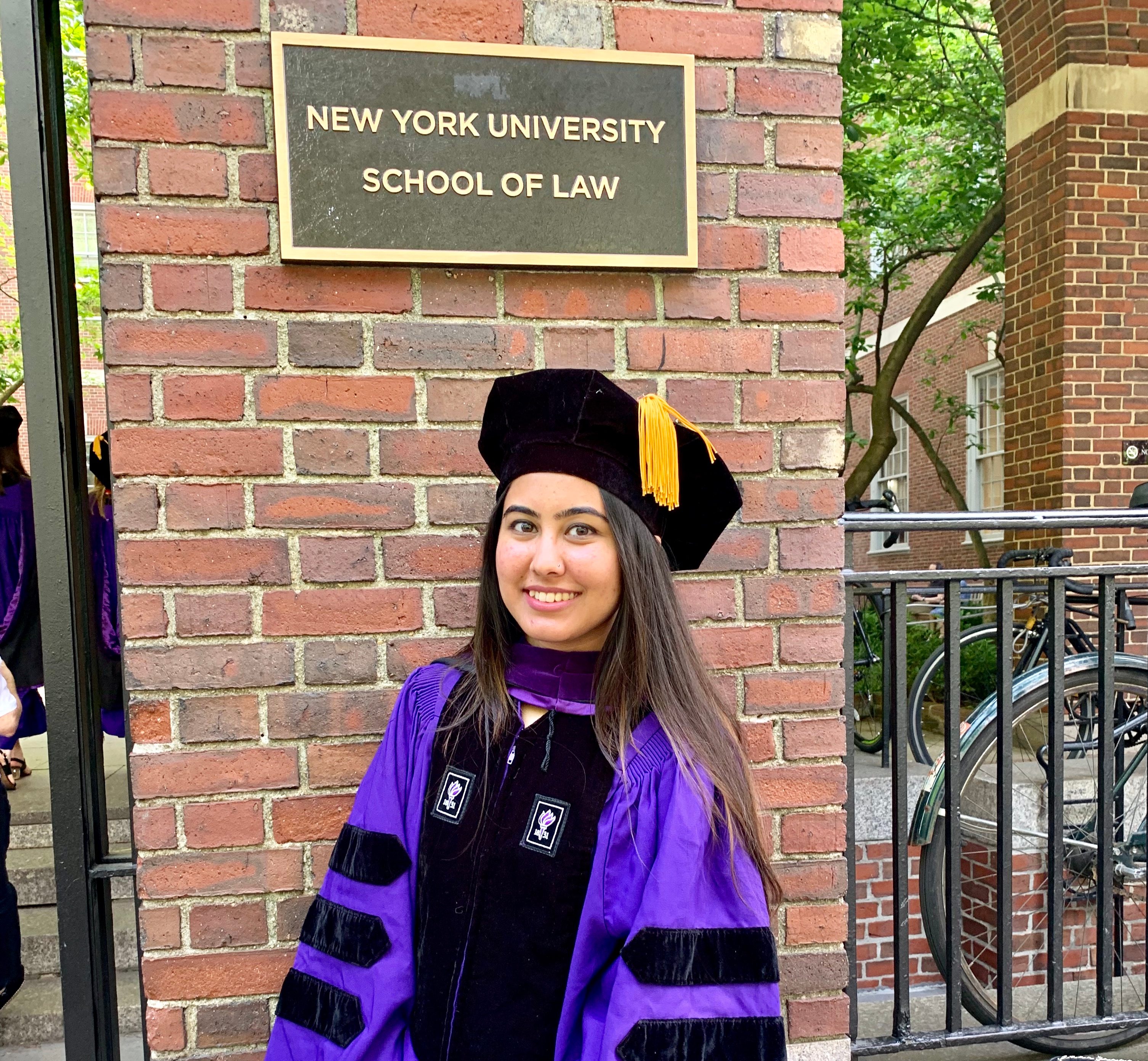
 Amicus Partners