• The Amicus Interviews are meant for broader discussions on legal education, and the legal profession at the global level. Along with the LLM application itself, these interviews are meant to bring across a slightly macro perspective on things.

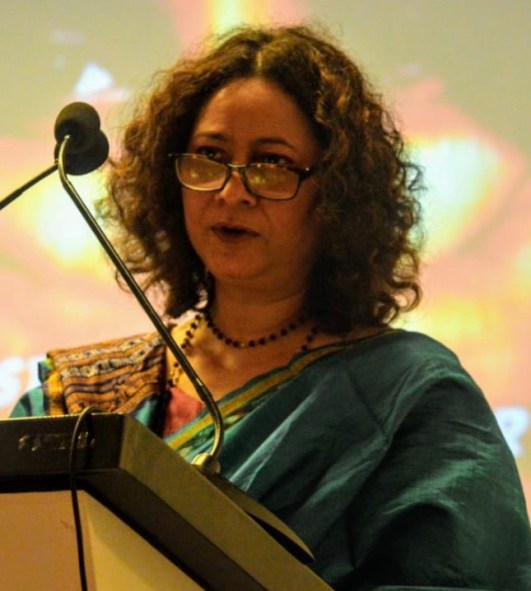
    Professor Reena Patel
    Professor Reena Patel

    In the second part of the interview with Professor Reena Patel (you can read the first part here), I talk to her about her experiences at Maharishi Law School, which she set up, her thoughts on Indian legal education, and a whole lot more.

    We spoke about the Maharishi Law School experience earlier. But, for the readers, what was the most exciting part about setting up the law school?

    The most exciting, as well as the most challenging, aspect was the opportunity to create a School that is driven by the aspiration to constantly grow and improve, where excellence was the standard from the get go.

    Establishing this required curriculum, pedagogical and administrative aspects to be set up and delivered, involving both faculty and student responsibilities and expectations. Particular emphasis had to be placed on capacity building and enabling all stakeholders to take responsibility for their respective roles while guiding and supporting them.

    “Particular emphasis had to be placed on capacity building and enabling all stakeholders to take responsibility for their respective roles while guiding and supporting them.”

    All of this amounted to effectively setting up a culture where the academic endeavour takes precedence and has paramountcy within the broader institution and achieving this was both exciting and fulfilling.

    You introduced some fairly novel practices when it came to both, student and faculty recruitment. First, for the students, you insisted on having an interview round before admissions were granted – why?

    The most important quality we looked for in a student, beyond the requirement of fairly basic high school results, was their willingness and ability to commit to rigorous learning for their period of study.

    To establish this, we interviewed every single applicant before they were offered a place at the School.

    And for faculty, you invested a lot of time and effort on training and pedagogy – what was the kind of response you received?

    The faculty were like sponges – they soaked up every opportunity to learn, to grow and achieved very commendable success in their output both within and outside the School at conferences and other fora. Many were successful in achieving fellowships, some received awards and have continued to achieve greater success as academics.

    Sticking to Maharishi, one of the things you tried to encourage was an examination system that did not rest solely on penalties. Could you tell me a bit about how you set this up?

    The penalty system is premised on the assumption that the responsibility for successful learning rests solely on the student, whereas it rests equally on faculty and students, although the responsibilities are different in each case. Success or failure of the student, therefore, is predicated on the concomitant fulfilment of faculty responsibilities.

    At the institutional level, it is the responsibility of the institution to ensure that every possible learning opportunity is given to the students. Apart from classroom teaching and summative assignments, formative assignments of various kinds are possible including assigned reading and writing, skill driven creative output, tutorial sessions and guided study, among others, and all of these were encouraged to be adopted as required.

    It is only at the exhaustion of all these opportunities that if a student has failed to learn that the burden of that failure can be placed on the student and penalties follow.

    “It is only at the exhaustion of all these opportunities that if a student has failed to learn that the burden of that failure can be placed on the student and penalties follow.”

    Therefore  it is imperative to identify and address the gaps and failures in creating these opportunities throughout the delivery. This is iterative process for a new institution where the opportunities for student learning have to be created to suit the abilities and needs of the student body, aligned with the standards and goals of the institution.

    Maharishi was followed by a short stint at UPES. Given your experience in the private sector, do you think legal education is being overrun by commercial interests?

    Unfortunately, yes. But the real regrettable aspect in my experience more broadly is the prevalent model where commercial success is understood to be at the cost of academic depth excellence. Clearly, as the most successful institutions around the world demonstrate, this need not be so.

    “The real regrettable aspect in my experience more broadly is the prevalent model where commercial success is understood to be at the cost of academic depth excellence.”

    And when it comes to the “national” law schools, how do you think they can overcome the funding deficit. Clearly, raising fees is not a desirable solution is it?

    Absolutely. Raising the fees is not the answer at all. The only way is as every successful educational institution anywhere in the world is able to do so – through generating research funding. This of course depends on research depth and excellence.

    The LLM is a course that just has not got the attention it deserves when it comes to Indian law schools – how do you think this can change? How do we build an environment of academic research and publishing in law schools?

    Academic research can be broadly of any of the three kinds – theoretical/conceptual (which is what ‘academic’ research is generally understood as in India), policy research and applied research. In the field of law, all these are necessary, relevant and urgently required to be developed in India.

    The first step towards this is to deliver quality postgraduate programmes since it is only at the Masters’ level that a student has sufficiently broad based knowledge across the discipline to start in depth analysis in any specific area within the field.

    “It is only at the Masters’ level that a student has sufficiently broad based knowledge across the discipline to start in depth analysis in any specific area within the field.”

    The tools for in depth analysis learned at this level then enable the student to go deeper at the Doctoral stage and successfully develop a unique insight that makes a contribution to the field and thereafter lead as an expert and specialist in that field, whether as an academic or practitioner.

    Currently in India, I believe we are not focusing enough on generating this kind of depth of expertise through our postgraduate programmes.

    To begin with, the relevance of research/expertise in a given area for the development of law as a field needs to be established and this needs to come from law schools through outputs which are seen by other academics, practitioners and policy makers as relevant. As far as policy and applied research are concerned, this can be begun through devising appropriate research focus areas at the institutional level and facilitating a role for policy and practice experts in postgraduate academic programmes as is widely practiced in North America.

    Regarding the development of theoretical/conceptual research, one of the ways this can be integrated is by enabling academics to devise and teach courses pertinent to their expertise areas, which would also have the positive effect of generating specialised course offerings for the School.

    Further, we need to encourage as much of academics’ expertise areas as possible to come through in their teaching, both undergraduate and postgraduate. This autonomy to devise the curriculum and their syllabus is essential both to make it worthwhile for the academic to continue their research which directly contributes to fulfilling the necessary teaching requirements as well as to enable students to gather insights in a consistent, regular manner throughout their tenure at Law School.

    “The fact is, research activity and research led teaching is resource intensive and faculty need time to develop and deliver these.”

    The fact is, research activity and research led teaching is resource intensive and faculty need time to develop and deliver these. Which in turn would require a revision of the teaching model we have in India that is classroom delivery heavy and essentially leaves academics with very little time, and institutions very little leeway, to devise research led courses and delivery. The setting out of required curriculum and mechanically adopted syllabi across law schools do not help. either.

    Lastly, what are your readings on the future of legal education in India? Would you say that the future is bright?

    It is bright because there is so much to be done and tremendous potential for development!
  • The Amicus Interviews are meant for broader discussions on legal education, and the legal profession at the global level. Along with the LLM application itself, these interviews are meant to bring across a slightly macro perspective on things.

    In this edition, I speak with Professor Reena Patel. As part of the first graduating batch of the National Law School of India University (NLSIU), Prof. Patel has an insider’s view into what would eventually mark a substantial shift in Indian legal education. She followed the undergraduate law degree with an LL.M. and then a PhD at Warwick University.

    Professor Reena Patel
    Professor Reena Patel

    I first came across Prof. Patel while visiting the Maharishi Law School (MLS), of which she was the Dean, for giving a talk on LL.M applications. The MLS had been conducting some interesting experiments in the field of legal education, and I was curious to know more. In the first part of the interview though, we focus more on the NLSIU experience, and her own legal education.

    You were part of the first batch at NLSIU. Back then, did you have an inkling that you were part of something novel?

    Yes I did, actually. I came to make the application for NLSIU knowing that this was an initiative to improve legal education and that it was being set up with the involvement and support of senior advocates, judges and academics including Prof. Madhava Menon, and Prof. Upendra Baxi.

    Once at NLSIU, we were all very aware that this was unique from the very start of the enrolment process. The key aspect of it being the pace and intensity of learning, coupled with breadth and depth of the opportunities created for us to do so. The small class size, the novel trimester system, the minimum attendance requirement and 6 day teaching week set the stage for the innovative delivery to ensure continuous learning and student engagement.

    “Once at NLSIU, we were all very aware that this was unique from the very start of the enrolment process. The key aspect of it being the pace and intensity of learning, coupled with breadth and depth of the opportunities created for us to do so.”

    The breadth of the curriculum, covering 60 courses over 5 years itself was a huge change and brought many new, multidisciplinary course offerings that had never been taught, such as Law and Rural Development, Environmental Law, among others. Research led Seminar courses and Practice led Clinical courses were introduced as part of the undergraduate programme for the first time.

    As students, we were required to take responsibility for our own learning and the Socratic method, problem based learning, case studies, independent research (project papers), group projects and individual viva voce exams helped to achieve this.

    At the same time, we had eminent academics and legal professionals from around the world teaching as guest faculty at regular, frequent intervals. We were privileged to have, for example, the late Mr. Ram Jethmalani teach us Criminal Law for a couple of weeks in our very first trimester.

    Furthermore, apart from regular activities such as Moot Court competitions, participating in Legal Aid Clinics, Lok Adalats, hosting conferences, mandatory internships were not only novel, they were opportunities to learn from the best. All of this had a cumulatively positive effect in shaping a comprehensive programme and lead to graduates with a wide array of skills.

    Keeping in view the prevailing low expectations from most institutions as well as students at undergraduate level elsewhere across the country, we knew that being part of a programme thoroughly structured around maximum student learning and growth was truly remarkable.

    “We knew that being part of a programme thoroughly structured around maximum student learning and growth was truly remarkable.”

    The bar was set high for us by the institution and the realisation that we were expected to succeed was itself a powerful transformative force in shaping our learning and success through the five years and later.

    Looking back, what were some of the most valuable aspects of the learning experience at NLSIU? And more specifically, what were some practices/experiments that needed to be rethought?

    The emphasis on independent learning and that the field of law was a constantly evolving one, highlighted by the fact that our professors were seen to be constantly learning too. This entrenched both an openness to looking beyond the ‘givens’ to search out what was relevant but yet unclear in the field.

    “The emphasis on independent learning and that the field of law was a constantly evolving one, highlighted by the fact that our professors were seen to be constantly learning too.”

    I wouldn’t say there were any experiments as such which did not have strong pedagogical foundations, nor that there were any practices which needed to be rethought. Yes, they certainly needed to be consistently delivered and effectively monitored to be so.

    You have enjoyed quite an enviable career since your undergraduate days. What got you to Warwick, and what kept you there?

    I chose to go to Warwick to study Law in Development, which in those days was not an established field in India and available as a specialised area of learning only in a few institutions globally.

    Given my own upbringing in Western Orissa in small towns, development issues were always important to me and I believed it was imperative that educational excellence needed to be orientated towards, and be relevant towards, working on development challenges.

    “I believed it was imperative that educational excellence needed to be orientated towards, and be relevant towards, working on development challenges.”

    I was also fortunate to be awarded a full scholarship by the Foreign and Commonwealth Office in the UK to do my LLM and I took the opportunity to learn at one of the leading institutions in the world in this field.

    I was subsequently awarded another scholarship to undertake Doctoral Studies in the area of Gender, Law and Development which I have always been passionate about. After completing my Doctorate, I secured a Lectureship at Warwick itself to teach on the LLM in Law and Development (among other subjects). I secured a tenured, permanent position soon thereafter and continued until 2011.

    My years at Warwick were extremely fulfilling, not least because I was engaged in the teaching and research in subject areas I thoroughly enjoyed and was passionate about.

    “My years at Warwick were extremely fulfilling, not least because I was engaged in the teaching and research in subject areas I thoroughly enjoyed and was passionate about.” 

    Furthermore, the international student and faculty, interdisciplinarity of academic engagement and the culture of collaborative work all contributed to a very enriching and fulfilling experience.

  • First Person Accounts (FPA’s) are meant to provide a first-hand account of Indian graduates who have pursued, or are pursuing, a post-graduate course (LL.M. or otherwise) from different universities across the world.

    Vishal Sharma is a currently pursuing an LL.M. in Legal & Political Aspects of International Affairs at Cardiff University in the United Kingdom. For this graduate of the Himachal Pradesh University Institute of Legal Studies, the LL.M. will be the second post-graduate degree, the first being an M.A. in Public Policy, Law and Governance from the Central University of Rajasthan.

    In this FPA, Vishal shares the reasons behind opting for an M.A., the learning experience at Cardiff, and a whole lot more.

    (Edited excerpts)

    Vishal Sharma is an LL.M. Candidate at Cardiff University, United Kingdom
    Vishal Sharma

    After your undergraduate law degree, you opted for an MA in Public Policy, Law & Governance – what attracted you towards this course? And how useful was your law degree during this course?

    During the time I was pursuing my B.A.LL.B (Hons.) from the Himachal Pradesh University Institute of Legal Studies, Shimla I had built a lot of interest in Public Law.

    As I was nearing the end of the program I happened to go to New Delhi for an internship in a renowned firm where I worked on the initial research for a Supreme Court writ petition concerning the need for compulsory voting in India.

    In the process, I realised how important the study of Public Policy and Governance was for a person who is interested in Public Law and thus got attracted to the M.A. in Public Policy, Law & Governance programme at the Central University of Rajasthan. The course is the first of its kind course in India which fuses the techniques and approaches of Public Policy and Governance with the Indian legal theory and practice.

    The course offered almost everything I was in search for and my law degree was very useful in that concern as I could understand the legal technicalities of policy making and governance in a better way and form.

    Right after the MA, you enrolled for the LL.M. at Cardiff – again, what were some of the reasons that made you look for the second master’s degree?

    I initially had no plans of studying further as I wanted to join legal practice focusing more on Public Law, but as I was nearing the end of the two-year Master’s degree, I with the support of a few friends started an organization called the Limbic Movement.

    This is the World’s first ideological movement centred around an organizational sphere furthering the use of the  Limbic Ideological Dimension (A theory I have been working on for some time which is aimed at the formation of a New Political Spectrum) in the areas of Public Policy, Law and Social Work.

    When researching on some policy considerations which we were aiming to work on under the initiative I realised that a lot of the policy making in the current system was dependent on the international setups and actors and for this reason I decided that I needed to train myself in a field related to international law.

    How did you go about selecting where to apply? And why narrow down on Cardiff?

    The course was the first priority for me and UK seemed to be the best destination as I found some interesting courses offered by the premier Russell Group Universities.

    Thus, I choose to apply for an LLM in Legal & Political Aspects of International Affairs at Cardiff University and an LLM in International Law and Governance at Durham University as these were the only two courses I was interested in.

    I got offers from both the Universities, but I choose Cardiff University as the framework of the course was based on a combination of International Law and International Relations which aims at analysing the legal and political aspects of international affairs affecting public systems all across the world, providing me with what I wanted to study.

    Any advice on the application process itself?

    My only advise is that one should prepare a professional CV and personal statement which is precise and that one should try to apply as early as possible.

    Did you apply for/receive financial aid?

    The options were very limited concerning this specialization, but I managed to get partial financial aid.

    How has the LLM experience been thus far? What are some of the differences between the MA and the LLM as a student?

    The LLM experience has been very challenging and every day has been a learning experience. The education system when compared to India is also quite different and more focus is put on analysis and ideas and this new way of dealing with issues is what I feel will help me in the long run.

    Concerning the MA and LLM question I believe that they cannot be compared as both are entirely separate domains but from what I have witnessed one can say that an MA student has to work more on the art of understanding the narrative upon which systems work.

    While, on the other hand, an LLM student has to work more on understanding the frameworks through which systems work.

    Lastly, any advice for the Indian law graduate who is considering a master’s abroad?

    I advise everyone to give the first and only preference to the course as the education system in especially the Western countries demands originality and innovation from the student at every step.

    So, if you choose the wrong course and specialization things may get very tough for you.

  • First Person Accounts (FPA’s) are meant to provide a first-hand account of Indian graduates who have pursued, or are pursuing, a post-graduate course (LL.M. or otherwise) from different universities across the world.

    Sindana Ulaganathan is a 2019 graduate of the Institute for Law & Finance (Goethe University Frankfurt)
    Sindana Ulaganathan

    Sindana Ulaganathan is a 2019 graduate of the Institute for Law & Finance (Goethe University Frankfurt) where she completed the LL.M. Finance. She enrolled for the masters about four years after completing her law from ILS Pune.

    In this FPA, Sindana shares her experience at the ILF, what prompted her to enrol for an LL.M., and a whole lot more.

    How did you come across the Institute for Law & Finance? When you were looking at postgraduate studies, what were the other schools/programmes that you shortlisted?

    While I was working as a Manager at the Corporate Legal Group of ICICI Bank , I grew to enjoy working in the field of banking and finance law. Therefore, about four years into my stint at ICICI Bank, I was actively on the lookout for LL.M. programs that specialised in banking and finance law.

    During the course of my research, I learnt that the LL.M. in Finance program at the Institute for Law and Finance was ranked highly, and was designed to incorporate a practical approach. I had also shortlisted the Advanced LL.M. in Law and Finance program at Leiden University, Netherlands and the International Financial Law LL.M. program at King’s College, London.

    The timing of an LLM is quite interesting – was there any specific instance that convinced you it was time for an LLM? Or was it just a series of incidents? 

    As far as I was concerned, an LL.M. was not necessarily to be seen as a means to an end, but an end in itself. This was purely because of the personal and professional development invariable to an LL.M. from a reputed institution. Therefore, an LL.M. was always on my mind right from when I was pursuing my Bachelor’s degree in law in India.

    However, immediately after undergraduate studies, I had to choose between accepting a full time position at ICICI Bank and pursuing an LL.M. While I was sure of my intention to pursue an LL.M., I was still unsure of the exact field that I wanted to pursue my LL.M. in and so I chose to work at ICICI Bank.

    Looking back now, I believe it was a good decision to work for a few years before pursuing an LL.M. program since one gains greater clarity on the area of law that one is interested in.

    “Looking back now, I believe it was a good decision to work for a few years before pursuing an LL.M. program since one gains greater clarity on the area of law that one is interested in.”

    After a little over four years of gaining some work experience, I decided it was time to start applying to universities.

    What were some of your expectations from the LLM itself? And, looking back, were they met?

    From a first reading of the description of the courses offered and based on the fact that only about 60 students are admitted each year, I expected the LL.M. Finance program to be competitive and challenging.

    I also expected the course to be practically oriented since most of the courses were being taught by working professionals and the course structure included a mandatory internship.

    One of the prime reasons I chose this program was its interdisciplinary structure with the option to choose from both law and finance subjects. In retrospect, my expectations were well and truly exceeded. The program helped reinforce my learnings, and acquire a more comprehensive understanding of various aspects of banking and finance.

    Given the relatively short nature of the course, how do you think international LLM graduates can make the most out of the nine odd months?

    Some of the most fascinating experiences of an LL.M. program are the classroom lectures and discussions. It is helpful to keep up with the course readings before class in order to follow the lectures and participate in discussions.

    And of course, it goes without saying that the best experiences are had outside classrooms. The exposure to different cultures from across the world that you receive by making new friends and travelling is unparalleled. I believe these experiences are just as important as the studying itself.

    “The exposure to different cultures from across the world that you receive by making new friends and travelling is unparalleled.”

    It is important to have fun amidst all the readings, exam preparations and theses writing.

    Could you tell us a bit about how the internships are set up in the LL.M. programme?

    Since the LL.M. Finance program requires students to complete a mandatory internship, there is a specific team dedicated to helping students finding an internship of their choice.

    We were required to choose the type of internship – in a law firm or a bank or a regulator – and provide three choices from amongst a list of firms willing to offer internship opportunities.

    Thanks to this process, although I had to wait quite a bit to hear from the firms I had applied to, it was relatively easier for me to find an internship. Since these internships could lead to potential employment opportunities, I would advise future applicants who are interested in pursuing a career in Frankfurt to think prospectively and apply to teams and firms/banks that they would like to secure a job offer at.

    Lastly, any advice for the Indian law graduate who may be considering a master’s abroad? 

    I believe a master’s abroad is an investment in itself and it is important to determine one’s personal interests and reasons for pursuing it. This helps choose an LL.M. program that satisfies these individual interests.

    For example, one may wish to pursue an LLM abroad to dive into policy making or enter the elite field of academia or like in my case, simply to gain more exposure and insight in one’s area of interest.

    Therefore, it is essential that one is aware of the specific reasons for pursuing an LL.M. abroad.

  • First Person Accounts (FPA’s) are meant to provide a first-hand account of Indian graduates who have pursued, or are pursuing, a post-graduate course (LL.M. or otherwise) from different universities across the world.

    Rupavardhini B R, LLM at Harvard Law School
    Rupavardhini B R

    Rupavardhini B.R., a Deputy Director in the Indian Audit and Accounts Service, completed an LL.M. from Harvard Law School in 2018 as a Fulbright scholar.

    Graduating from NUJS in 2010, Rupavardhini enrolled for the master’s course after close to half a decade in the civil services.

    In this FPA, she discusses the Fulbright Nehru application, the Harvard Law School experience, and a lot more.

    What got you thinking about a master’s course once you had joined the IAAS? Was a master’s you had always wanted to do even as undergraduate law student?

    After spending a few years in the Indian Audit and Accounts Service, I found myself wanting to work in specific areas like gender and environmental policy.

    These were the subjects I had been interested in right from my days in NUJS. It seemed like the right time to go back to an academic environment and specialize. The idea was to gain some exposure, domain knowledge, and come back to work further in those fields within the government.

    “The idea was to gain some exposure, domain knowledge, and come back to work further in those fields within the government.”

    The civil services are still fairly a generalist’s domain but I hoped a masters would allow more opportunities for me to work in specific areas. An LLM felt like a better fit with my law degree rather than a public policy course.

    I had always wanted to pursue a Masters even from my undergraduate days especially after hearing about the experience from my seniors. But the timing of it was vague as I was more focused on the civil services exam after graduation. I don’t think I actively worked on the goal while at law school. It was only after entering the civil services that I started seriously thinking of applying.

    You attended HLS as a Fulbright scholar – can you tell me a bit about how you went about the scholarship application process? Any advice for prospective applicants?

    The Fulbright Nehru Masters Fellowship on which I attended HLS is a two-stage process. There is a written application which one submits online and is usually announced in February each year. It asks for the study objectives, a personal statement, future plans, apart from a few questions designed to offer more insight into your personality and motivations. The shortlisted candidates are called for an interview at the USIEF office in Delhi.

    The Fulbright is one of the earliest scholarship applications and the process starts a year and a half before the course starts. So for 2021 masters course entry, the scholarship is announced in 2020. It is important to plan ahead and get the application materials ready well in advance. The USIEF also holds events at various cities offering information and helpful advice about applying. So it is a good idea to check in with the local Fulbright chapter or check their website for events in other cities.

    “The Fulbright is one of the earliest scholarship applications and the process starts a year and a half before the course starts. So for 2021 masters course entry, the scholarship is announced in 2020. “

    In my opinion what the Fulbright and most other scholarships are looking for are candidates with a clarity of purpose. It is important for applicants to clearly state why they are applying for a masters, why they have chosen a particular area of specialization and how it fits in with the work they have done in the past and more importantly how it ties in with their future career plans.

    Having strong recommendations is essential for a successful application, both for an LLM and scholarships. I would advise anyone thinking about a masters to get in touch with professors in time. The Fulbright and many other scholarships require work experience. So a professional recommendation would be as important as an academic one. Approach people who know your work well and can give anecdotal evidence of academic and professional attributes rather than someone who is likely to write a generic reference because they are not well acquainted with your work.

    “Approach people who know your work well and can give anecdotal evidence of academic and professional attributes rather than someone who is likely to write a generic reference because they are not well acquainted with your work.”

    While most other scholarships expect the candidate to have independently applied to the masters programs and to have appeared for other necessary tests like the TOEFL, the Fulbright stands out because on selection, the entire application process is paid for and facilitated by USIEF. This is a huge relief as one can then just focus on the LLM application without the stress of arranging funding.

    How did you go about selecting just where to apply? Did you ever consider a specialised LLM directly connected to your work at the IAAS?

    Since I had secured the Fulbright fellowship, I received a lot of guidance from IIE (the organization which handles the admissions process for the Fulbright scholars in the US) on University selection. A Fulbright scholar can apply to four universities and the IIE provides inputs on Universities which would be best suited to the candidate’s profile and area of interest.

    I narrowed in on Harvard, Columbia, Stanford and NYU based on the mix of courses on offer, the overall quality of the campus experience, and the diverse cohort. I suppose if I hadn’t received the Fulbright award I would have applied to a few more Universities.

    Most of the courses I did at Harvard were directly connected to my work in the IA&AS. We do a lot of work in the area of environmental audit and sustainable development and the office of the Comptroller and Auditor General of India has a specialized international centre (iCED) that engages in research in the area.

    I also took courses in other schools at Harvard on a range of topics like public policy, entrepreneurial solutions to problems in developing countries etc. as the chance to learn about diverse issues was important to me. I feel the exposure across disciplines and the interaction with professional across fields that a masters offers is as important to a civil servant as subject matter specialization would be.

    “I feel the exposure across disciplines and the interaction with professional across fields that a masters offers is as important to a civil servant as subject matter specialization would be.”

    Also curious to know how easy or difficult was it to get the requisite permissions to enrol for the LLM – anything that future applicants from the civil services ought to keep in mind?

    Apart from a few initial hiccups with getting the requisite permissions, I did not face too many issues with it and my department was generally supportive. My boss at the time and my former Director at the National Academy of Audit and Accounts where I had trained, happily wrote recommendations for me and helped me out at every stage of the process.

    While in general most departments are fairly supportive of officers pursuing higher studies, the process of getting the permissions on paper could take longer than anticipated. So it is necessary to start the process at work well ahead of the application deadlines.

    Many scholarships require a clearance or endorsement in the form of a NOC from the employer. So not getting the paperwork processed on time could lead to missing out on scholarship opportunities.

    Am sure you get asked this all the time, but when it came to the HLS essay questions – how did you approach the personal statement part of the written requirements?

    The personal statement should have a clear narrative of how prior study, work and life experiences have motivated the applicant to pursue the masters and the career path they envision after that. As the term indicates, it should give a picture of the individual journey so far and how one has arrived at the particular stage in one’s life and career and how the LLM experience would facilitate one’s future plans.

    “As the term indicates, [the personal statement] should give a picture of the individual journey so far and how one has arrived at the particular stage in one’s life and career and how the LLM experience would facilitate one’s future plans.”

    The other part to it is the essay which asks the candidate to identify a problem and the lacunae in the law or policy relating to it and propose solutions. It is helpful to narrow down on a specific problem rather than a generic and wide ranging issue so that one can suggest feasible legal or policy solution to tackle it.

    For example, I had identified inadequate incorporation of gender concerns in environmental programs in India as a problem and proposed solutions at the policy formulation, implementation, and evaluation stages. This tied in with my primary areas of interest in gender and law, and environmental law. There are no right or wrong answers to these questions.

    I think the aim is to assess whether the candidate has the capacity of critical analysis and the ability to coherently write on a legal issue.

    Looking back, what were some of the most valuable components of the LLM experience? Are there any skills gathered during the LLM that you now find yourself using in your professional life?

    I think the most valuable part was the chance to meet people from across the world. Apart from the friendships I formed, it has been wonderful having a network of people whom I can contact for professional input and support.

    Being a Fulbright scholar also gave me the chance to meet people from other professions. I have been consistently turning to the friends I made there. From getting brilliant people to lecture as guest faculty for my courses at the National Academy of Audit and Accounts to putting me in touch with the right people for work related queries, I have found the LLM experience has widened the range resources available for me to use for my work.

    “Being a Fulbright scholar also gave me the chance to meet people from other professions. I have been consistently turning to the friends I made there.”

    Attending lectures by eminent personalities from various fields was also exciting. Meeting the people whose books one had read and relied upon professionally was a great experience. One becomes better at presenting work and speaking in public by listening to such speakers. My research skills are also much better after the LLM.

    Lastly, anything you would like to tell the Indian law graduate who may be considering a master’s abroad?

    The biggest caveat I would like to offer is to be realistic about what you expect from a masters in terms of placements. While the experience is invaluable and definitely improves work prospects, it is also expensive without a scholarship. The experience with job seeking is not the same across the board, even in very reputed universities.

    So, try and envision what you want to do after the masters and speak to people working in the same area who have done their masters abroad. This will help in making an informed decision about whether to invest in a study loan.

    “Try and envision what you want to do after the masters and speak to people working in the same area who have done their masters abroad. “

    For those wanting to pursue their masters in the US, getting the documentation in place for the New York bar exam has to begin early. Most universities have good resources for students appearing for the Bar.

    But one has to plan ahead.


    If you would like Amicus Partners to provide some personalised advice on your LLM applications, please fill in this form and we shall get back to you as soon as possible.