• Random photo

    At Amicus Partners, one of the of my biggest learnings is that education and growth (personal and professional) need not always be a linear process. Nor are there always template answers and pathways for finding success.

    And this is where the idea behind “The Alternates” came up – have people followed non-traditional routes to find success? And if so, what are the difficulties they faced, and what are the things they have learnt along the way?

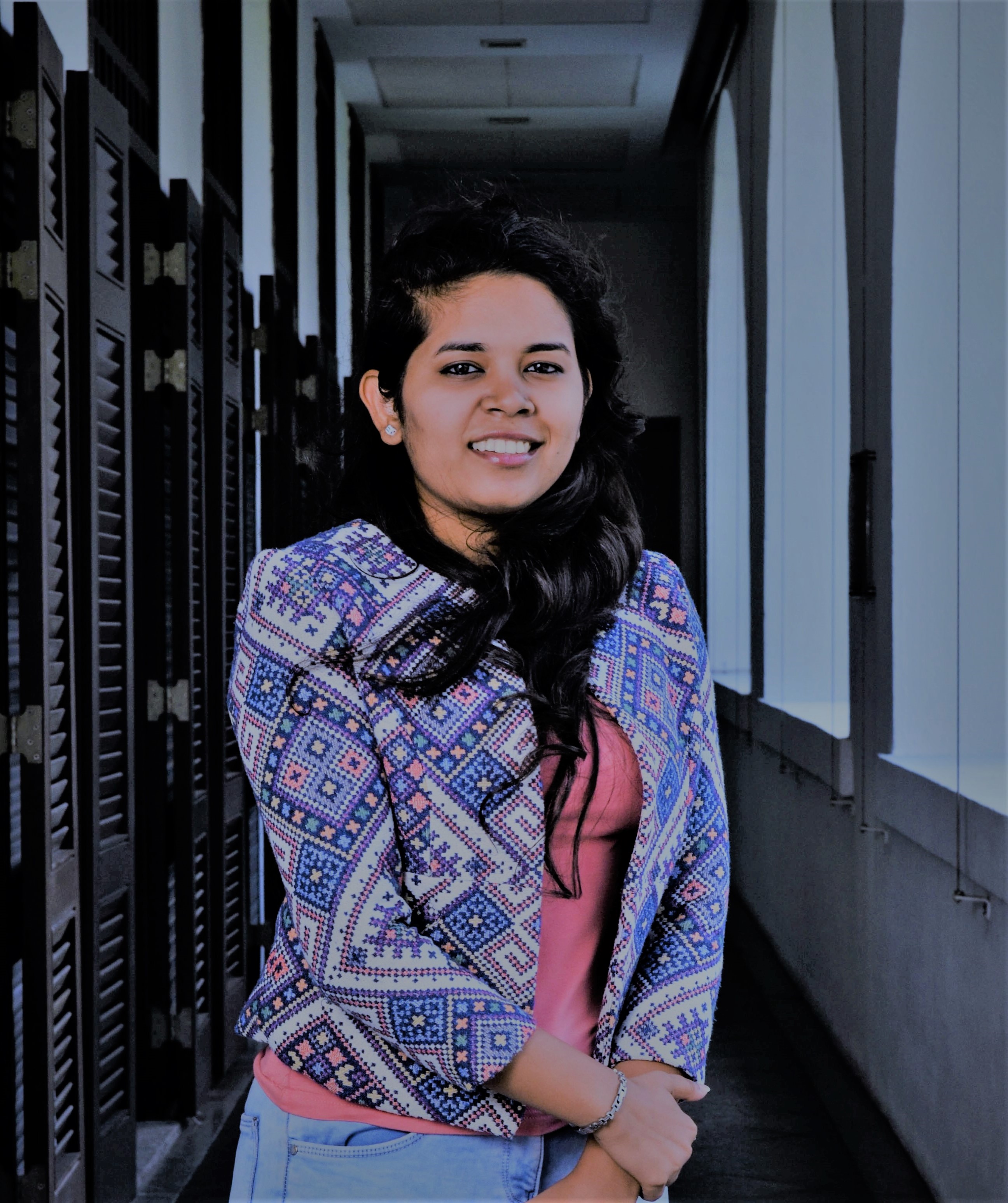
    In this edition, we get NUJS graduate (’09) Annie Philip to share a few thoughts. Annie is currently the Lead, Compliance and Regulatory Policy at Sahaas Zero Waste, a position she took up in 2018.

    So, let’s start from the start? What got you interested in the study of law, and looking back, are you happy with the choice made?

    I must admit that I was not one of those teenagers who knew exactly what they wanted to do after school. I was very certain that I did not want to do engineering or medicine. Oceans and forests held great interest for me but at that point in time, I did not know the careers that were possible in those fields expect the Indian Forest Service.

    I was also interested in law and journalism and a big reason for that were books, movies and my idea of what lawyers and journalists do (because I didn’t have any real exposure to them). Finally, I gravitated towards law and wrote the entrance exams for NLS, NUJS and NALSAR. I did not get through any of them in my first attempt and my Class 12 marks were not particularly great either.

    That, along with my naivety, led me to join Rizvi Law College in Mumbai for a year. While it was not the best decision academically, living alone in Mumbai at 17 and figuring my way in the city was an incomparable life lesson.

    “While it was not the best decision academically, living alone in Mumbai at 17 and figuring my way in the city was an incomparable life lesson.”

    Anyway, the next year I again wrote the entrance exam for NUJS, got through and here I am now. Looking back, I realise that a lot of what happened was a combination of circumstances and chance/luck and not just pure design. And I am definitely happy with the way everything played out, including Rizvi!

    Again, with the benefit of hindsight, how do you think legal education shaped your perspective? Any aspects of education that you wish would change? 

    I think looking at just legal education would be too narrow a perspective. In hindsight, I would say living the residential law school life for five years, with the classes, projects, midnight conversations with college besties, moots, internships and generally, navigating through law school, played an instrumental role in what life after law school would look like.

    Personally, I was lucky to be surrounded by friends who were unconventional and that helped me have a unique perspective. For example, one of my closest friends wanted to be a police officer since the day she joined law school and another one always wanted to work on human rights and with refugees. That led to a lot of conversations and ideas around civic responsibilities, ethics and how law could be used beyond just traditional careers.

    With respect to our legal education, while there were some gaping holes, it made me realise the importance of research and having an eye for detail. It inculcated logical thinking and drafting and instilled the ability and confidence for clear communication.

    “I wish there was more emphasis on social responsibility, empathy and the role that lawyers could play in bringing about positive transformations in the society.”

    As for the things I could change – I wish there was more focus on practical learning rather than theoretical classes and rote learning (to an extent). I thought teaching assistantships was an incredible idea and it should have been extended beyond just one semester. Clinics were not given any importance during my time which is a pity because it could have been one of the most effective ways to understand procedural laws.

    Finally and most importantly, I wish there was more emphasis on social responsibility, empathy and the role that lawyers could play in bringing about positive transformations in the society.

    After graduating, you chose to work in a law firm, and spent a good amount of time there. What were some of the more enjoyable aspects of this line of work? 

    Contrary to popular belief about people who leave law firms, I did (mostly) enjoy my time in law firms (albeit the stress and hours), made some great friends and learnt so so much!

    It cannot be denied that law firms attract some of the smartest minds in the legal fraternity, and therefore, being surrounded by them provides an excellent opportunity to challenge yourself, to keep acquiring new skills and learning more and more.

    Plus there is something cool about knowing the shareholding pattern, funding details and internal workings of the companies that delivers your food, operates the cabs you ride, manufactures stuff that you see in supermarkets, operates the restaurants that you eat at etc.etc.

    Now, to the more interesting part, before joining Saahas, you opted to travel for a long, long time. How was this experience? Any particularly fond memories that you wish to share of this time?

    It sounds clichéd but the experience was incredible and life-changing. I travelled for almost 8 months across 3 continents and there was just so much to soak in! Apart from the sheer beauty and diversity of the places themselves, the travels put me in situations which were truly out of my comfort zones. And all those experiences really helped towards an immense amount of personal growth.

    I could go on about the fond memories from my travels but I would say that every day I spent in South America was super special. Snorkelling with sea lions, turtles, marine iguanas, sharks (and pretty much, every other marine animal that one sees in Nat Geo) in the Galapagos islands, being lost amongst the Inca ruins in Peru, driving through the most hauntingly beautiful salt pans in Bolivia, walking through the Amazon forests, meandering through Laz Paz and Cusco, meeting the friendliest people along the way and eating some of the most delicious food I have ever had in life – each experience was exceptional!

    “There are a lot of broken things in the world that can be fixed only if people from all walks of life start thinking and acting differently.”

    That was one part of the story and the other one was realising how many places I visited in South America had the same issues as India – poverty, inequality, environmental degradation, exploitation, dysfunctional systems etc. However, like in India, these issues and circumstances didn’t seem to affect the warmth, friendliness, resilience or happiness shown by the people there. These experiences undeniably fed into a growing awareness in me that there are a lot of broken things in the world that can be fixed only if people from all walks of life start thinking and acting differently.

    How did you land up at Saahas? What is the kind of work you do here, and what aspects of it do you enjoy the most? What is a typical day (pre-COVID) at Saahas like?

    When I left AZB, I knew I was going to work on some aspect of the environment – that love for forests, oceans and everything they hold was not dimmed by all the years in a law firm! So the initial leaning was towards biodiversity conservation. However, during my travels, I was truly exposed to scale of the waste crisis, especially in South America. The sight of plastic bottles during hikes in Peru or tissue paper in the Bolivian salt pans– some of the remotest corners of the world, bothered me so much.

    Once I returned to India, I started reading and understanding more about the waste crisis. It fascinated and scared me at the same time. Friends and family joked that it took a sabbatical and travels to South America to understand that waste is an issue, especially with all the dumpsites in India!  It was again a reminder how much law firm life keeps us in a comfortable bubble where we are insulated from some of the harsher realities of Indian society.

    Anyway, in my readings, I came across Saahas Zero Waste, an organisation which is doing some incredible work around holistic waste management in Indian cities. I wrote to them regarding my interest in working with them and a month later, I took the plunge into this new unknown sector. That was February 2018 and since then, each day has been a learning experience.

    My work at SZW is a mixed bag! I do regular corporate law work such as compliance, review of contracts, documentation for our impact investment etc. But the more interesting part of my work is working with governmental authorities in making policies and laws on waste management, conducting workshops and training sessions to build their capacities, visiting waste processing sites and landfills in different parts of the country and doing practical research on the issues relating to waste. It is also one of those sectors that has you segregating waste manually from dustbins at a cricket match and then taking you to conferences around the world. It is this diversity and flexibility in work along with the opportunity to make small differences in the bigger scheme of climate change and environment that I most love about my work.

    When making the choice to move to Saahas, how did you evaluate the financial repercussions of such a move?

    My assessment of the financial repercussions has been called irrational by some people! Sometime in my 5th year at AZB, I started to think more deeply about purpose of work, personal contribution to society and the ability to make unconventional choices. That was also the time I started considering at what number (of savings), would I consider leaving a law firm and the great deal of money that it provides. My colleagues and I actually played a game in office and everyone had such wildly differing numbers. That was my first realisation that there is no right number and a decision like this was very personal and had to go beyond factoring just money.

    “There is no right number and a decision like this was very personal and had to go beyond factoring just money.”

    At year 8, I did a review of my savings and figured that the amount seemed decent enough to be a financial cushion in case of any emergency. I should also point out here that I was also single and asset-free and incredibly lucky to not have any loans, financial responsibility towards family and other liabilities. This meant that my decision could be entirely based on the lifestyle I chose to lead after leaving behind the corporate law firm world.

    I took a massive hit on my salary moving to Saahas (I earn a 5th of my last salary at AZB!) but I have never felt that I have compromised on my quality of life. I make smarter and more sustainable choices about what to buy, how much to eat and drink at restaurants/pubs, what assets I want in life, letting go of super luxuries etc. I don’t want to sound like those lifestyle gurus but still – the change in lifestyle made me more grounded, de-cluttered my existence of unnecessary things and truly opened my eyes to what I really value in life.

    “I don’t want to sound like those lifestyle gurus but still – the change in lifestyle made me more grounded, de-cluttered my existence of unnecessary things and truly opened my eyes to what I really value in life.”

    Do you miss law firm life? 

    I have been asked this question quite a lot! And every time I make the effort to think about it a little before rattling off an answer which confirms to my choices and how work for me now is far more socially and environmentally conscious.

    But to answer the question, I don’t miss the life. I am really grateful that I started my career in law firms but leaving when I did, seemed right and everything since then makes me very glad for the new chapter in life.

    Lastly, any advice for today’s law graduates on how they should make their own career decisions?

    I have a bunch of advice actually because there is no one size fits all in this case.

    We live in a world which really allows us to be innovative with the work we would like to do. So, take that risk to try out what you truly like. And don’t worry if things don’t work out, a law degree is a fantastic safety net and you can always come back to more traditional careers.

    “Social media makes it seem that everyone should have a passion and they should whole-heartedly follow it! Reality, however, is often different.”

    It is also completely okay to work a job which you moderately like and gives you time to explore other facets of life. Social media makes it seem that everyone should have a passion and they should whole-heartedly follow it! Reality, however, is often different. A lot of people don’t have that all consuming passion; the practicalities of life need to be considered.

    Therefore, don’t pressurise yourself or feel inadequate if this passion seems to be absent and you choose to have a ‘regular’ job.

    The important thing to remember is to continue being socially, politically and environmentally conscious and not let apathy set in.

    Finally, I would say that it’s never too late to do what you truly believe in. And there is rarely a straight path to where you are meant to be, so meander and explore. And never forget to enjoy every minute of that meandering and exploring!


    We need your help in keeping this blog alive. If you feel that the content on this blog has helped you, please consider making a donation here

  • First Person Accounts (FPA’s) are meant to provide a first-hand account of Indian graduates who have pursued, or are pursuing, a post-graduate course (LL.M. or otherwise) from different universities across the world.

    Sruthi Srinivasan completed the LL.M. in Commerce and Technology Law from the University of New Hampshire Franklin Pierce School of Law in 2017
    Sruthi Srinivasan

    Sruthi Srinivasan completed the LL.M. in Commerce and Technology Law from the University of New Hampshire Franklin Pierce School of Law in 2017. A law graduate from ILS Pune (’13), Sruthi worked as an in-house lawyer as well as a litigation counsel before embarking on the LL.M.

    You have already discussed quite a bit about your LLM in the Legal Desire interview, so won’t repeat the questions. Nearly three years after the interview, what is your opinion of the Franklin Pierce LLM? 

    The FPLC LLM is one of the best programs offered in the US as classroom sessions are practical and there is a high possibility of the same getting translated into work place scenarios.

    Course work can be personalized post discussion with the Graduate Program Director and that offers one the flexibility to take up regular courses along with some new age cutting edge ones such as Information Age Commercial laws etc.

    Recently about 40 alumni based in Mumbai and Delhi met with Dean Megan Carpenter. Dean Megan Carpenter is an internationally known expert in IP and is great addition to FPLC.

    What were some of the schools apart from Franklin Pierce that you applied to?

    I had applied to law schools in the East Coast only, as I am well acclimatized to the East Coast. I had applied to:

    • Northeastern University School of Law
    • Boston College of Law
    • Suffolk University School of Law
    • University of Connecticut School of Law

    I got an admit with scholarship/financial aid from all the schools.

    In hindsight, was there something that you would have done differently when it came to the LLM experience? 

    Nothing. I had planned and prepared 4 months in advance for funding, graduate scholarships etc. That involved mostly researching schools and speaking to the alumni of each school. I was comfortable with FPLC and decided to go for it.

    How has the LLM helped you in your professional growth? 

    Post coming back, I have worked with a major fashion platform and currently am at a global role in an engineering services outsourcing and product development IT services for the global manufacturing industry. The LLM has allowed me to diversify and has opened arenas.

    And lastly, what advice would you have for the Indian law graduate who may be considering a master’s abroad? 

    Please start the preparation for a master’s program at least 4-6 months early before the deadline. If you are applying to schools that need LSAC, WES etc that requires coordination and paperwork from the university one graduated from in India(which takes time).

    “Please start the preparation for a master’s program at least 4-6 months early before the deadline.”

    If one is looking for funding then that requires additional time to ensure SOP’s, LOR’s and other graduate essay’s for funding/scholarship requirement are completed. For LLM’s looking to stay back in the US, please contact the International Student Advisor of your respective universities at least one semester ahead.

    For LLM folks considering the bar exam in US, evaluation process has to begin in the first semester itself as that again takes time and involves coordination with your University in India.

  • First Person Accounts (FPA’s) are meant to provide a first-hand account of Indian graduates who have pursued, or are pursuing, a post-graduate course (LL.M. or otherwise) from different universities across the world.

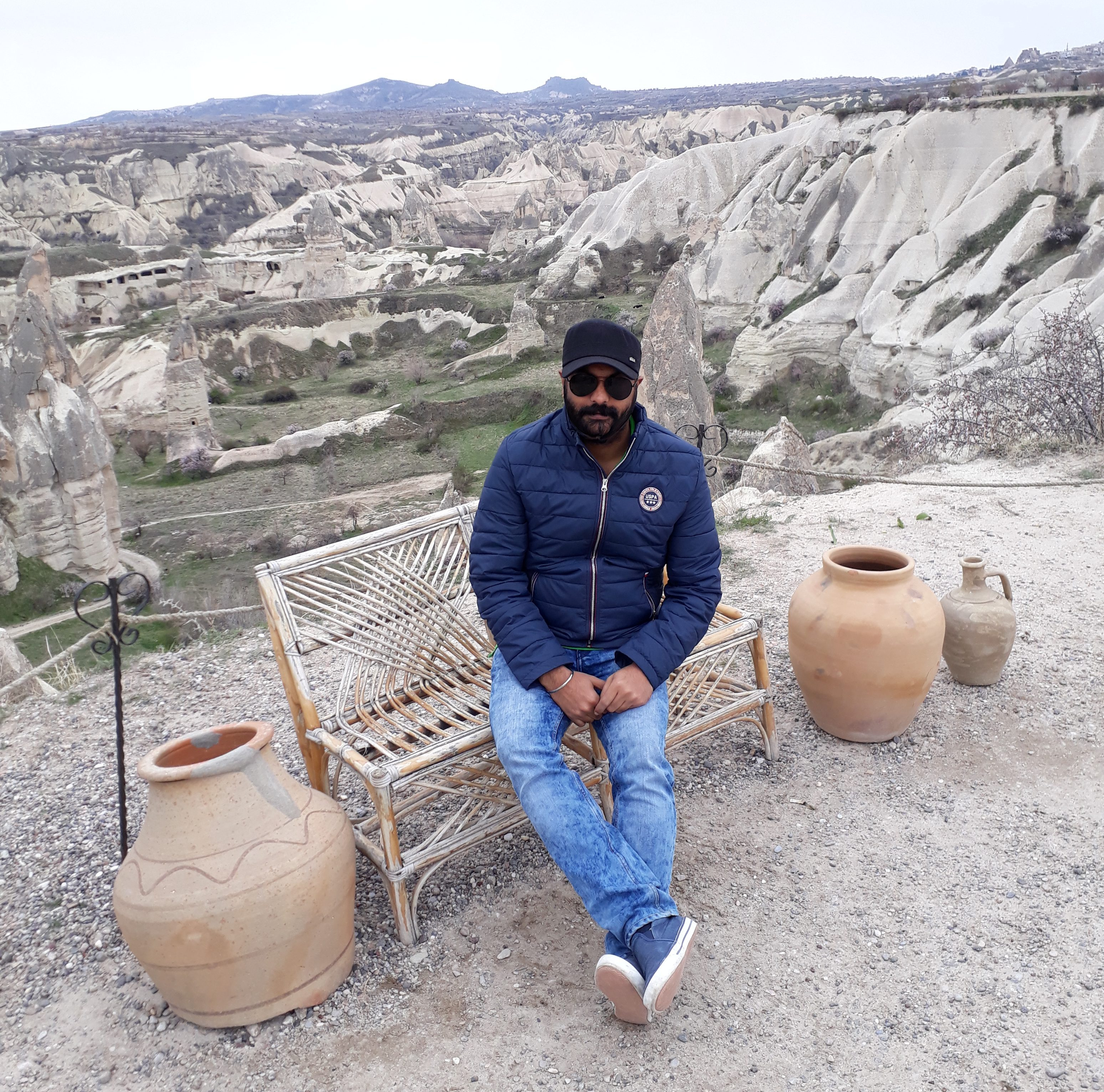
    Jatinder Singh is slightly unique when it comes to the FPA series. He is a commerce graduate who completed an MBA in 2006, and then enrolled for an LL.M. in 2016. The choice of course is also quite interesting; Jatinder took up the LL.M. in Intellectual Property offered by Ankara University and the World Intellectual Property Organisaton (WIPO). In this FPA, he shares his reasons for enrolling, discusses the LL.M. experience itself, and more.

    (Edited excerpts)

    Jatinder Singh completed an LLM in Intellectual Property from Ankara University and WIPO
    Jatinder Singh

    Nearly ten years after an MBA, you decided to enrol for an LL.M. – what was the thinking behind this move? 

    I was working in intellectual property field from last 10 years; however I never got a chance to study intellectual property. After my graduation I got job in the Intellectual property outsourcing firm and during these years I never got a chance to invest money and time in studying IPR.

    I was working on IP documents every day, but never got the chance to understand the laws behind those procedures, so I decided to study law, specially IPR.

    Did you ever consider getting an LLB from India first? 

    Yes, I explored the opportunities within India. But in most of them, require a 3 year study of common law, before the specialized branch of law. And here I was getting a chance to study IPR without the 3 years program.

    How did you go about selecting just where to apply for the LL.M.? And what got you to narrow down on the Ankara – WIPO course?

    The main selection criteria were based around course content, faculty and scholarship. I applied to a number of international institutes where scholarship was available, because I am a father and I need to support my family financially.

    After analysing the available options, I narrowed down on the Ankara-WIPO course because of two reasons,

    • One, I was getting full scholarship which includes all expenses and monthly stipend and
    • Two, the residential phase was only for five months which I could manage by taking a sabbatical rather than leaving my job.

    Any advice on how one should go about the application process?

    The program is offered jointly by the WIPO, Turkpatent and the Ankara University; the applicant has to apply on the WIPO Academy webpage for admission.

    One should start 1-2 months prior to the application deadline to get the documents in order. Some of the required documents are: TOEFL scorecard, Transcript of University studies, Recommendation letter and Motivation letter.

    Did you apply for/receive financial aid?

    My scholarship was aided by Turkish Cooperation and Coordination Agency (TIKA), and included travel costs; tuition fees, accommodation, subsistence allowance and medical insurance.

    How was the LL.M. experience itself? Was it difficult to balance the LL.M. along with work? 

    The course has compulsory distance learning phase for first three months to equip each participant with basic knowledge in Intellectual Property laws and a final exam at the end; to prepare for the intensive residential phase at Ankara University. The initial three months do not require dedicated study; a couple of hours per week will suffice.

    In terms of professional growth, what are some of the benefits that you derived from the LL.M.?

    This course gives you a chance to learn from distinguished professors, Patent examiners and IP attorneys. The course structure includes visit to Turkish Patent office IP seminars which provide excellent networking opportunities; and prospective internship and career opportunities with WIPO, EUIPO and TurkPatent.

    Lastly, any advice for non-law graduates who may be considering a master’s in law?

    I fully recommend going for an (international) LLM! As it does not require previous knowledge of law and it will you in perfecting in on a specialism, you gain more knowledge than you would think possible, meet interesting people and visit beautiful places and have a greater understanding of the legal landscape.


    If you would like Amicus Partners to provide some personalised advice on your LLM applications, please fill in this form and we shall get back to you as soon as possible.

  • The Admission Interviews, are meant to provide insights into LL.M. admissions right from the law school itself. The primary idea behind this series is to provide that little bit of extra information that may not be available on the law school’s website.

    Andrea McLeod-Karim, who is the International Regional Manager at the Victoria University of Wellington (VUW)
    Andrea McLeod-Karim

    In this edition, we speak with Andrea McLeod-Karim, who is the International Regional Manager at the Victoria University of Wellington (VUW). Universities such as VUW have seen renewed interest amongst LL.M. applicants in recent times, interest that no doubt has been spurred by the way New Zealand has dealt with the coronavirus pandemic.

    New Zealand could also be an ideal destination for Indian lawyers looking to immigrate as pointed out by VUW LLM candidate, Sanket Palshikar.

    Let’s start with the most important question – how are you? How have you gone about adapting to these circumstances that we find ourselves in?

    Thank you for asking, I’ve been doing quite well considering the circumstances. It’s helped that my work still keeps me busy during this period, and having a young son also helps as it means you need to remain as positive as possible.

    It’s been quite different not travelling for work which is a major part of this job but luckily in this age of internet connectivity it’s still easy to reach students.

    When it comes to VUW, are foreign students on campus at the moment, or have they all gone back to their home countries?

    Most of our students chose to remain in New Zealand and were welcome to do so. Students who preferred to be with their families at this time did return home, as did some of our exchange students who were recalled by their universities.

    The university ensured that students staying in our hostels would be well looked after and protected during this time and there’s been a number of online initiatives to look after mental health and encourage them to keep busy until online learning officially starts on the 28th April.

    Students who have part time jobs were also eligible for the government wage subsidy so that they could keep their incomes while they’re unable to work.

    Looking ahead, for those applicants interested in an LLM for the next academic year, what are things that they need to keep in mind in terms of possible changes to the programme? Do you foresee a part of the next academic year of the LLM programme being shifted completely online?

    We usually have two intakes to our LLM every year, one in February and one in July. Unfortunately given the current scenario it seems unlikely that students will be able to arrive on campus in July to study with us.

    “I would not encourage students to begin online as it means they will miss out on a sizable time of their overseas experience.”

    As the LLM programme is short, only a year in duration, I would not encourage students to begin online as it means they will miss out on a sizable time of their overseas experience, and it may compromise their right to a post study work visa if they’re not physically in New Zealand for their studies.

    A lot of Indian LLM applicants are now finding it difficult to get their documents, recommendation letters etc in place – is VUW considering granting any lee way in this regard?

    We  have not relaxed our requirements as yet, however we will keep applications open until students can provide pending documents for their applications. We will also accept the online TOEFL test for English requirements.

    Some Indian LLM applicants are also considering deferring admissions to next year – thoughts? 

    It is an option that I am actively encouraging our students to consider. Online learning does not suit all students, and it can be more difficult than studying in a classroom session, particularly when there are other priorities competing for attention.

    While it is always disappointing to need to delay plans, students should remember that they’re not alone, there are thousands of students worldwide in a similar situation. They should choose the best option for them as per their safety, learning outcomes and the experience they’ll receive.

    When it comes to the faculty at VUW, how do you see them coping with the pandemic? Any suggestions for universities who may also be grappling with similar problems? 

    I think it’s been a learning experience for our faculty as well as our students! As a university we have never previously offered a distance learning option, so a great deal of work is being put in by the faculty to adapt their teaching materials and methods to an online setting to ensure that students can still have the best learning experience possible.

    “I think that an important component to this is the need for empathy.”

    I think that an important component to this is the need for empathy: for faculty to understand that many students may be disappointed with the need to study online or that they may need assistance in adjusting; and for students to understand that this is also an adjustment for their faculty who had also not planned on this being how the semester went ahead!

    Lastly, how do you see VUW shaping its policies to negate the effects of the pandemic? And how long do you think it will take for the number of foreign applications to return to pre-COVID levels? 

    I believe that all universities are currently in a similar state worldwide and that we need to accept that there will be a drop in enrolling student numbers this year. How soon it will come back to normal will depend on how both universities and governments support students throughout this crisis.

    At this point in time I would tentatively estimate that we should see numbers return to normal by February next year if all goes well.

    We are lucky in New Zealand in that we have a Prime Minister who has shown strong leadership skills and guided us through the crisis and I believe that this has been recognised internationally as well. There have also been a number of initiatives put into place to ensure that unemployment levels remain low and that the economy can recover once we exit lockdown.

    “There have also been a number of initiatives put into place to ensure that unemployment levels remain low and that the economy can recover once we exit lockdown.”

    I believe that the care we have shown for all of our people, including our international students, and how well the crisis has been managed overall, has made New Zealand a very attractive study destination once students can again travel.

  • First Person Accounts (FPA’s) are meant to provide a first-hand account of Indian graduates who have pursued, or are pursuing, a post-graduate course (LL.M. or otherwise) from different universities across the world.

    Shachi Jain is an LL.M. candidate at the National University of Singapore
    Shachi Jain

    Shachi Jain is an LL.M. candidate at the National University of Singapore, where she is specialising in Corporate and Financial Services Law. A graduate of Government Law College in Mumbai (Class of ’17), Shachi opted to work as an in-house counsel for two years before embarking on the LL.M.

    Two years in as a lawyer, you decided to opt for an LLM – what were some of the expectations you had from the LLM experience? 

    I was certain on doing an LL.M. since undergraduate days, though I wanted to gain some work experience before pursuing it. I believe some work experience not only changes one’s outlook to academic studies, but also gives more clarity on one’s areas of interest within law (other than letting you save some extra bucks for a foreign degree). Two years into working, I became more certain of my intrigue towards banking and financial laws, and decided to pursue a master’s degree in the same.

    “I believe some work experience not only changes one’s outlook to academic studies, but also gives more clarity on one’s areas of interest within law “

    Since an LL.M. was more of an academic endeavor to me, I was looking forward to delving deeper into subjects that excited me the most and hoped to understand them from a comparative perspective. I was also looking forward to being exposed to a different pattern of learning (which I had only read in interviews until then) and was eager on exploring the same. Equally, I wanted a platform to interact with like-minded students from different countries and experience a culturally mixed classroom.

    And I know the course is yet to be completed, but have these expectations been met?

    Indeed, the expectations have fairly been met. Barring the interruption of the unexpected Covid-19, I had the opportunity to select courses from a wide array of modules, take classes in a diverse set-up and learn from an equally diverse set of highly-qualified professors in their respective fields. For a sense of the diversity I am referring to, I can state that I undertook 10 modules over the year, and have had no two professors, permanent or visiting, hailing from the same country. This is important (and I realize it now) because every professor gets with him/her a unique style and technique of teaching, and to learn from them has been very enriching.

    “I undertook 10 modules over the year, and have had no two professors, permanent or visiting, hailing from the same country. “

    The one thing that was common among them was the Socratic approach that focused on conceptually reasoning and critically analyzing laws and regulations.

    At the verge of completing the course, I have come to realize the importance of exposure to different viewpoints in different markets across continents. For instance, where differences between common law and civil law countries were the starting point in many discussions, the complexity and sophistication level of financial markets and its participants decided the level of soft or hard regulations that may be required for their smooth functioning. Contextually understanding the different approaches taken by regulators and courts then, helped broaden our outlook over the subjects.

    Socially, I also got a chance to meet many professionally-driven students from different specializations and countries, and am glad to have spent some quality time with them.

    How did you go about selecting which schools to apply for? And what got you to narrow down on NUS?

    Quite frankly, I was preparing my application for academic year 2020-21, however, landed up giving a shot with NUS to see where my application stood. Since NUS Law was one of my top choices, I decided to join in 2019-20 upon being admitted.

    Nonetheless, since it was a substantial investment to make, my initial approach to narrow down to a college was to look for an established specialization course in my area of interest.

    Post shortlisting a handful of universities, a cost-benefit analysis of the required investment and NUS’s APAC and world ranking and reputation played a key role in my decision to join NUS Law.

    At NUS, you have opted for a specialised LLM – what are some of the advantages of taking this route as opposed to a general LLM?

    To me, a master’s degree is all about pursuing the field of law that interests you the most and focusing on building up on the same. My personal view is that a specialization displays a sense of inclination and direction in one’s career which may help professionally in future as well.

    Opting for a specialization also gives a procedural advantage in selecting modules in the bidding process prevalent in some universities. A student specializing in a stream of law gets preference in the elective subjects under that specialization over the general LL.M. students.

    “In opting for a specialization, not only does one get priority in a broad range of modules to select from, but is also always free to select cross-specialization courses.”

    In opting for a specialization, not only does one get priority in a broad range of modules to select from, but is also always free to select cross-specialization courses or inter-disciplinary courses to blend with the specialization and keep one’s profile wide and vivid.

    Any advice on the application process itself, for instance the SoP or sourcing recommendations?

    The application processes are mostly clearly stated on the respective institution’s website. With respect to the SOP, I am sure this has been said before but can never be overemphasized that the SOP should be a genuine write-up of one’s thoughts and motivations. One may refer to some sample SOPs online for understanding the structure, but will need to draft their own SOP from scratch.

    Also, it’s important to understand that an SOP is not a reiteration of your CV but is written to supplement the CV by describing the motivations behind your achievements and the inspiration to pursue an LL.M. Of course, the admissions’ committee is too experienced to grasp the genuineness or otherwise of your SOP. Feel free to briefly highlight any social skills beyond your academic achievements to reflect a wholesome personality.

    “It is important to understand that an SOP is not a reiteration of your CV but is written to supplement the CV by describing the motivations behind your achievements and the inspiration to pursue an LL.M. “

    With respect to sourcing recommendations, you may want to consider sourcing one of the recommendations from a professor within the specialization you are opting for. Further, though not a necessity, feel free to make an extra effort in adding an additional recommendation from an area outside of academics, say from any voluntary work you may have done, or any project you assisted in, even if outside of law curriculum, to boost your application.

    How has the LLM experience been thus far? NUS is known to be fairly rigorous when it comes to academics – any advice for prospective applicants on how best to allocate their time?

    It has been an enhancing experience so far, though is indeed rigorous and keeps you on your toes the entire semester. With respect to time allocation, I don’t think there are any golden rules – everyone figures out their individual style of working during the process and learns to manage multiple commitments in the given time.

    Masters’ students can take this year as the time to self-experiment on what works best for them. This is unarguably a sought-after skill in any career you pursue after the degree. It is true that this has been one of the major learnings from the course that would be useful in workspace as well.

    Since modes of assessment and dates of assessment of each subject are released before module selection, one can plan their modules to space-out their assessments, though frankly I selected mine as per the subjects I wanted to read and it worked out fine.

    Did you apply for/receive financial aid?

    I did not apply for external scholarships in 2019-20 and there is a tough competition in obtaining an internal NUS scholarship. Scholarships in Singapore are not as frequent as in the universities in the U.S. and U.K.

    Though I was fortunate to have saved some amount during work and did not have scholarship as a selection criterion to proceed with the course.

    How has NUS dealt with the coronavirus? How has this affected your LLM experience?

    Singapore was one of the few countries which initiated preventive measures in a timely manner and we have been lucky to be in a safe place in such times of distress.

    The NUS administration and staff has been very vigilant of the situation and strictly enforced a number of safety measures within campus, inter alia, declaration of temperatures twice a day by staff and students, implementing social distancing measures in seating arrangements around campus, keeping record of seating arrangement during class for contact tracing purposes, etc.

    We had a smooth transition to e-learning mode with efficient electronic infrastructure in place to conduct online classes, share reading materials, hold chat room sessions, online quizzes, presentations, etc. All assessments were also adjusted accordingly. The professors have been very understanding and cooperative all throughout the process.

    Though, the Covid-19 outbreak did affect the LL.M. experience as summer internships became minimal since offices are operating remotely and several job applications were put on hold. Time is of essence here since work visa has to be applied for (after confirmation of a job) before student visas expire. Further, physical interaction with professors and social interaction amongst batch-mates have been negligible since circuit-breaker rules are in place.

    Certainly, one year is too short a time within which one expects to make the most of the international exposure obtained in pursuing a foreign LL.M. We did miss out on bidding good-byes to friends, or a formal farewell ceremony, and are hoping to not miss on the graduation ceremony, but more importantly, hoping that the world recovers soon

    Lastly, any advice for the Indian law graduate who is considering a master’s abroad?

    Well, if you are considering one, I can assure you that it is worth the effort. Since the course is highly demanding, clarity of thought on the purpose of doing the course will make it easier for you to sail through it. A Masters in law is seen as only for students who want to pursue research or academia. However, in my opinion, investing one year in a masters’ course is worth the experience and learning that you can apply to for decades of your career ahead.

    “In my opinion, investing one year in a masters’ course is worth the experience and learning that you can apply to four decades of your career ahead.”

    Finally, do not hesitate in approaching the alumni of the university you wish to join.

    Most of us have had the same curiosities before joining the course and will be happy to take your questions. Please feel free to connect to them on Linkedin (including me) and clear all your doubts before committing to the course; and once you do, make the most of it.


    If you would like Amicus Partners to provide some personalised advice on your LLM applications, please fill in this form and we shall get back to you as soon as possible.