• First Person Accounts (FPA’s) are meant to provide a first-hand account of Indian graduates who have pursued, or are pursuing, a post-graduate course (LL.M. or otherwise) from different universities across the world.

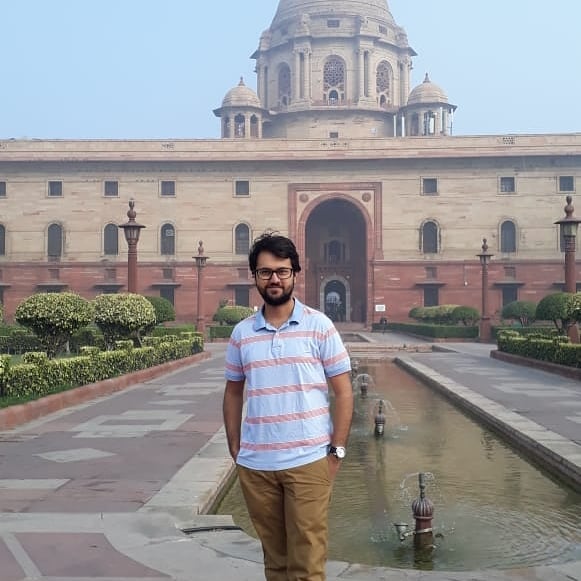
    Dharmesh Khandelwal is currently an LL.M. candidate at Penn State Law, where he is the recipient of a full scholarship. Completing his law degree from Nirma University in 2019, Dharmesh chose to enrol for the LL.M. for a number of reasons. In this FPA, he discusses his decision to enrol right after the undergraduate degree, his experiences representing Penn State Law in the Vis moot, and a lot more.

    Dharmesh Khandelwal is currently an LL.M. candidate at Penn State Law, where he is the recipient of a full scholarship.
    Dharmesh Khandelwal

    (Edited excerpts)

    You opted for an LLM right after your undergraduate degree. Did you ever consider working for a few years before an LLM?

    This was the source of a lot of confusion before deciding to go for an LL.M. I did consider working for a few years before pursuing masters as it gives an individual knowledge about the practical aspects of law and also gives clarity on the field of law in which a person wants to pursue masters.

    In my case, I was always interested in arbitration and was certain that I want to pursue do an LLM in this area of law. Just after my graduation, Penn State offered me a great opportunity to learn from very experienced scholars in this field.

    Therefore, after consulting with a lot of people I realized it’s also equally important to grab an opportunity when it’s at your doorstep.

    How did you go about selecting where to apply? What got you to narrow down on Penn State?

    My interest was always in doing an LLM in International Dispute Resolution. Therefore, at first, I listed down all the good universities in this field.

    I opted for Penn State because it has got some great faculty such as Prof. Catharine Rogers and Prof. Thomas E. Carbonneau who are very experienced scholars in the field of international arbitration. In addition, I also contacted people who have already did an LLM from Penn State and they gave me a positive feedback.

    Apart from all this, the University also offered me full scholarship which was also an important consideration.

    Any advice on how to approach the application process? How much time do you think applicants should spend on the application? 

    After you’ve selected the universities, the application process in any university usually has three important components which is the letter of recommendations, Statement of Purpose and the CV.

    Penn State and some other universities also take personal interview of the candidates.

    Applicants preparations should start as early as possible especially in terms of letter of recommendations. A letter of recommendation, by a faculty or professional who knows you personally and can give insights about you is always better that a LoR by someone who may be a big name but doesn’t know you personally and can only write a general LoR.

    “A letter of recommendation, by a faculty or professional who knows you personally and can give insights about you is always better that a LoR by someone who may be a big name but doesn’t know you personally”

    Statement of purpose is one of the most important and tricky components of an LLM application. One should spend a decent amount of time in writing an SOP. An SOP should be something which, in form of a story, convey three things to the admission committee which is, why you’re applying, why you’re a good candidate, and what you want to do in the future.

    It is very important to be yourself while writing an SOP. The admission officers can easily spot a true applicant from a false applicant with just one reading. This same advice goes for the Personal Interview as well. In terms of CV, apart from grades and publications, some universities really value all the leadership work you’ve done throughout the law school.

    Did you apply for/receive financial aid?

    Yes, I was the recipient of a full scholarship from the Pennsylvania State University Master’s tuition Waiver Program.

    How has the LLM experience been thus far? What have been some of the more challenging aspects of the course?

    The past year at Pennsylvania State University was one of the most wonderful experiences of my life. It not only developed me as a legal professional but also as a human being.

    The faculties here are very helpful and dedicated towards helping the students. The classroom lectures and discussions were of high quality. Reading before the class in order to understand the lectures and participate in the discussion was also very important.

    Apart from my specialization, the other variety of courses offered by Penn State were equally great. You can opt for any subject from other schools such as the International affairs and Business School. For example, I took few courses related to business finance which were really interesting subjects and gave me lot of understanding related to business valuations and financial aspects of a business. It also offers its students LLM students other opportunities like working in a legal clinic or research assistant positions.

    I also represented Penn State in the 27th Willem C Vis moot which was a great experience. It gave me the opportunity to work with the J.D. students and also interact with law students from other universities all around America at various events.

    The diversity of our batch was amazing. I had batchmates from more than 30 countries. It was a great experience discussing different legal concepts and learning about so many different cultures. This really helped me to understand life from different perspectives and be a better individual.

    “It was a great experience discussing different legal concepts and learning about so many different cultures. This really helped me to understand life from different perspectives and be a better individual.”

    Further, the campus of Penn State is one of the most beautiful university campuses in the US. It has got all the resources and infrastructure one could need and beyond. The University also has a great sporting culture and a great sense of belongingness which makes this LLM a completely different experience altogether.

    How has Penn State Law dealt with the Covid pandemic? How has the shift to online teaching been?

    In my opinion, Penn State has dealt with the Covid-19 pandemic very effectively.  They were one of the first few universities in the US to shift the semester on a virtual platform. The classes have been running smoothly through Zoom.

    The University has also adopted different mechanisms for finals like projects submissions instead of written exams in some subjects to adopt to the present unprecedented circumstances.

    It is also paying attention to each student individually and providing medical as well as financial support to all the students.

    Lastly, any advice for the Indian law graduate who is considering a master’s abroad? 

    It is very important to start preparing your application as soon as possible. Choose your university very carefully, don’t just follow the rankings and do your research carefully according to your own long-term goals.

    Also, don’t forget to enjoy the journey.


    We need your help in keeping this blog alive. If you feel that the content on this blog has helped you, please consider making a donation here

  • We asked five law students about Coursera’s offerings. This is what they said.

    With law students, and law schools, moving to online learning, we thought it would be a good idea to see just how the learning experience has been thus far. We asked five Indian law students to share their experiences with one of the most popular online course providers, Coursera.

    And this is what they had to say.

    1. Course: Introduction to Intellectual Property

    Affiliated with: University of Pennsylvania

    Reviewed By:  Ipsita Kate, 4th year student at Pravin Gandhi College of Law.

    Fees: Self-funded.

    This course is conducted by Prof. Polk Wagner, and has three aims. First, to provide a basic introduction to Intellectual Property Law (IP), second, a review on 3 forms of IP and finally, to provide an insight on the other regimes for the protection of IP.

    This course helped me understand the differences between various forms of IP. It also provides brief knowledge about the various policies and trade-offs related to IP. The course material is concise and simplified. The only drawback is the peer reviewed final assignment, which can get you a low grade in case it is not reviewed honestly by your peers. I personally found this course useful and would highly recommend this to any law student who is interested in IP laws.

    2. Course: International Criminal Law

    Affiliated with: Case Western Reserve University

    Reviewed by: Grishma Mahatma, 2nd year student at Symbiosis Law School, Pune.

    Fees: Self-funded.

    The 8-week course covers a wide range of topics, beginning with the Nuremberg trials and the formation of the International Criminal Court, and going on to specialised defences and developing courtroom expertise.

    The course had experts such as Prof. Michael Scharf who explained the concept of peace and justice and how justice is an important factor in order to attain peace. One could also study important conventions such as the Geneva Convention, and the SUA Convention on protecting maritime navigation.  I was also taught about forms of pre-trial such as self- representation, plea bargaining, exclusion of torture evidence and exceptions to the same

    Each week’s explanation was done with the help of reading material and videos. There were some questions which were asked in the middle of the videos to make sure the concepts were clear. Also, simulations were provided after every week to have a better understanding of the topic. In the end, a 100-marker test with 10 questions each was also to be submitted in order to obtain a certificate.

    3. Course: Children’s Human – An Interdisciplinary Introduction

    Affiliated with: University of Geneva

    Reviewed by: Abhishek B. Singh, 4th year student at Christ University, Bangalore

    Fees: University funded. 

    This course draws on the contributions of several academic disciplines including law, psychology, sociology, history, educational and health sciences, economy and anthropology, an interdisciplinary approach guides the student into a selection of critical issues concerning children’s rights.

    This course aims to enable the students to gain insight relative to the development of this specific human rights category, as well as to the evolution of the challenges and violence’s faced by children over time and how society respond to it. Successful international programmes and strategies that are promoting child rights are highlighted in the course and also involve the international organisations that are working in the field of child rights.

    A central portion of this course consists of a presentation of the international and regional standards on children’s rights and the related international and regional judicial and quasi-judicial bodies designed to ensure their implementation. The course is well structured and makes the student understand the concept of children human rights.

    4. Course: International Humanitarian Law in Theory and Practice

    Affiliated with: Leiden University

    Reviewed by: Adhya Manickavelu, 4th year student at Christ University, Bangalore.

     Fees: University funded.

    This course is hosted by the Kalshoven-Gieskes Forum on International Humanitarian Law, Grotius Centre for International Legal Studies of Leiden University. This course explores the regime of IHL and its application in cases of the various types armed conflicts. It highlights how the aim of IHL has been fostered by balancing humanity and military necessity through the Four Geneva Conventions and its Additional Protocols that preserves the interests and mandates behavior of persons in conflict. It also portrays examples of IHL’s usage or violation in the recent past, thus outlining the field’s successes and shortcomings.

    This course not only accentuates the theoretical application of IHL, but by enabling a forum that enhances discussion and interaction with distinguished scholars and practitioners from the International Committee of the Red Cross and other esteemed institutions, underlines the practical applicability and its scope in the dynamic field of warfare and human rights.

    Additionally, being an honors course, it provides an opportunity to the participants apply their learnings to a case study, thus enabling direct contribution to the development of IHL. This course captivates the participants and immensely contributes to translating lessons into potential career benefits.

    5. Course: Introduction to English Common Law

    Affiliated with: University of London

    Reviewed by: Ipsita Kate, 4th year BLS LLB student at Pravin Gandhi College of Law.

    Fees: Self-funded.

    This course covers the factors that are most important to English law in detail that leaves one confident in your understanding of the English Common Law. The ability to discuss and compare your ideas with others is an interactive element that forces you to evaluate your ideas whilst also allowing you to consider the strengths and weaknesses of the legal system. It provides a very comprehensive review of English Common Law. The basics, such as common law concepts, were covered in sufficient detail.

    More complicated topics such as the legal system in the UK was also covered in detail and were made easy to understand. I would recommend this to anyone who wants an insight to English Common Law system.

    6. Course: Public Policy Challenges of the 21st Century

    Affiliated with: University of Virginia

    Reviewed by: Muskaan Wadhwa, 4th year  student at Christ University, Bangalore.

    Fees: University funded.

    The course public policy challenges of the 21st Century adopts a different route than the usual MOOCs on Coursera. Instead of the traditional lecture method, the course invites several policy advocates and captures their interaction with the students of University of Virginia.

    This leaves you with not only a deep understanding of the policy issue but also how students our age would approach these issues in the future. Although modelled around the issues prevalent in the United States, the application of these issues is universal. One of the hallmarks of the course for me was the GT 2030 Planning Exercise which forces the participants and the students of University of Virginia to think over the possible policy challenges of 2030.

    The lecture given by Dee Dee Myers, the first female US Press Sectary, is something that particularly resonated with me. She emphasises the importance of listening as a leadership skill, the necessity of homogeneity to foster robust problem solving, and how to overcome failures. I do however wish the course was more interactive by incorporating discussion forums where participants could debate over the policy issues of their countries to make it more relevant.


    (If you have any recommendations on useful courses that law students can take, please leave your suggestions in the comments below)

  • First Person Accounts (FPA’s) are meant to provide a first-hand account of Indian graduates who have pursued, or are pursuing, a post-graduate course (LL.M. or otherwise) from different universities across the world.

    Vassupradha Rengarajan is an LL.M. candidate at Arizona State University’s Sandra Day O’Connor College of Law.  After completing an undergraduate degree in law from Sastra University, Vassupradha worked for three years before enrolling for the master’s. In this FPA, she discusses her reasons for choosing ASU, what prospective LL.M. applicants ought to keep in mind, and much more.

    Vassupradha Rengarajan is an LL.M. candidate at Arizona State University's Sandra Day O'Connor College of Law.
    Vassupradha Rengarajan

    At what point in your career did you start considering an LLM? Were you interested in this even as an undergraduate student of law?

    I became interested in doing an LLM ever since my final year of law degree in India. After 2 years of law firm practice in India, I was sure about my decision of pursuing an LLM in the United States.

    How did you go about selecting just where to apply? What got you to narrow down on ASU?

    I had to consider other personal and family circumstances while selecting universities to apply. So I took my time to carefully analyze the pros and cons before applying to the universities. I visited ASU in person before applying for an LLM to make an informed decision.

    I liked the infrastructure, faculty members and flexibility of ASU and I decided to go for an LLM at ASU.

    Any advice on how to go about the application process, more specifically the statement of purpose, and the recommendation letters?

    It is important to articulate the interests and achievements without losing one’s originality. I personally do not believe in using too many adjectives and sugar coating the application materials.

    As far as I have learned from the admission committee, it is good if the applicant is able to clearly demonstrate the following questions.

    • Why an LLM?
    • Why this institution?
    • Why should the candidate be offered with an admission?
    • What are the future plans? and
    • How efficient the candidate is in studying in a foreign soil with multicultural classmates?

    I personally advise LLM aspirants to have a story to indicate and answer all the above questions. With regard to recommendation letters (LOR), some universities like ASU give more importance to the LORs.

    It is always advisable to get a letter from one of the Professors who directly evaluated the candidate during the law degree in India and another letter from the employer/ senior who directly supervised the candidate’s work.

    Did you apply for/receive financial aid?

    Yes, I applied for a scholarship and I received Dean’s Scholarship which partially covered my fees.

    How has the LLM experience been thus far? What have been some of the more challenging aspects of the course?

    This LLM has been one of the best experiences I have had so far. It definitely improved my communication and people skills and ability to thrive well in the field of law. Perspectives are important in the field of law and I feel, the LLM has presented to me different perspectives in huge quantity and quality.

    The major challenge I faced during the course: I had to compete with the JD students. They have much more experience and depth in the US legal system and it was a challenge initially to get hold of the system.

    Another challenge which is less spoken about is the language/ communication skills. It is not just enough to be fluent in English, it is also highly important to understand various accents of English. The candidate’s accent should also be familiar to others for efficient communication. This is an initial challenge which will be gone by the time we graduate.

    With the Covid pandemic, how has ASU adapted to the changing circumstances? How has the switch to online classes been?

    ASU has been wonderful in handling the COVID-19. Classes were handled through Zoom and they have made every possible resource (books, study materials, etc.,) virtually available. It felt different in the beginning, but the online classes were conducted as efficiently as the in-person classes.

    Lastly, any advice for the Indian law graduate who is considering a master’s abroad?

    A foreign LLM is a costly decision in terms of money and time. So, you better have a basic plan about what do you want to do after the LLM. Please talk to as many LLM graduates as possible to understand whether the LLM is going to be helpful in achieving your long term goals.

    For instance, if the candidate is interested in practicing law in the US after LLM, weigh the pros and cons of choosing an LLM over a JD degree. Check the eligibility requirements for taking the Bar examination.

    Ask yourself why do you really want an LLM and whether it will bring you a step closer to your goals. Without having answers to these questions, choosing an LLM may not be beneficial but burdensome.

    Having said that, I personally believe that LLM is a great experience and an excellent opportunity to improve one’s skill set. If you can afford the opportunity in terms of money and time, please go for it! All the vert best 🙂


    We need your help in keeping this blog alive. If you feel that the content on this blog has helped you, please consider making a donation here

  • Here are 7 Summer Schools law students can still attend this year

    While COVID-19 has forced most law school-related activities to come to a standstill, learning must go on. Short-term summer programs have been long sought after by law students as a means to expose themselves to foreign education, interact with faculty members from some of the best universities in the world, and foster relationships.

    While they may not be taking place offline this year, a few of them are taking the online route. Here are seven of them:

    1. International Commercial Law,  King’s College London

    Organised by the Dicksoon Poon School of Law at King’s College London, this course will not only give you an overview of International Commercial Law but also its intersection with international trade and insights into several contemporary issues.

    Course Dates: June 29-July 17, 2020
    Apply By: June 15, 2020.
    Fees: GBP 1,800
    Eligibility: Minimum 60% in your undergraduate program.

    Application Requirements:

    • Academic transcript
    • Evidence of English proficiency level (if required)
    • Personal statement

    More information on the course can be found here.

    1. International Human Rights Law, King’s College London

     This course promises to have guest speakers from the UNHCR and the UN Refugee Agency among others. It will take participants over the theoretical aspects and challenges faced by human rights movements through interactive case studies.

    Course Dates: June 29-July 17, 2020
    Apply By: June 15, 2020.
    Fees: GBP 1,800
    Eligibility: Minimum 60% in your undergraduate program.

    Application Requirements:

    • Academic transcript
    • Evidence of English proficiency level (if required)
    • Personal statement

    More information on the course can be found here.

    1. Digital Law (formerly Internet Law), University of Geneva

    This summer school offers a unique opportunity to participants to get hands-on experience in a wide array of cutting edge issues, ranging from artificial intelligence, big data to privacy and free speech.

    Course Dates: June 15-June 26, 2020
    Apply by: May 15, 2020
    Fees: CHF 1,600

    Application Requirements:

    • Curriculum Vitae
    • Motivation Letter
    • Reference Letter

    More information on the course can be found here.

    1. Intellectual Property Law, WIPO and University of Geneva

    Jointly offered by the University of Geneva and World Intellectual Property Organisation, this summer school guarantees an enriching exposure to both, theoretical and practical aspects of IP as well as the role and functions of WIPO.

    Course Dates: June 22-July 3, 2020
    Apply By: May 15, 2020
    Fees: CHF 90 (Developing countries)

    Application requirements:

    • Curriculum Vitae
    • Statement of Motivation
    • Identification Document
    • Applicants should also have completed the Distance Learning Course on Intellectual Property Law offered by WIPO Academy

    More information on the course can be found here.

    1. International Law, SOAS University of London 

    The  Academic Summer School has gone online in light of the pandemic and is offering a range of courses. The International Law course provides participants with a basic understanding of the foundations of international law and contemporary issues such as business and human rights and technology from an international law perspective.

    Course Dates: June 29-July 10, 2020
    Apply By: May 25, 2020
    Fees: GBP 1,200

    This course is open to all university students and graduates above the age of 18. More information on the course can be found here.

    1. The United Nations and Global Advocacy, SOAS University of London 

    This course provides an advanced introduction to global advocacy and policymaking at the international level. The course also offers its participants a master class by Mr. Andre Gilmour, retired UN Assistant Secretary General for Human Rights.

    Course Dates: July 20-July 31, 2020
    Apply By: May 25, 2020
    Fees: GBP 1,200

    This course is open to all university students and graduates above the age of 18. More information on the course can be found here.

    1. International Relations and World Politics, Maastricht University

    The importance of international relations and global politics could not be stressed more in today’s global scenario. This course offered by Maastricht University will include studying theories of international relations, real-life events as well as the Global South’s perspective on international relations.

    Course Dates: July 20-August 6, 2020
    Apply By: June 8, 2020
    Fees: 675 Euros

    Application requirements:

    • Academic Transcripts
    • Proof of English Proficiency
    • Identification Document

    More information on the course can be found here.


    (This post was prepared by our research intern, Muskaan Wadhwa)

  • First Person Accounts (FPA’s) are meant to provide a first-hand account of Indian graduates who have pursued, or are pursuing, a post-graduate course (LL.M. or otherwise) from different universities across the world.

    IMG_20191130_171100_780.jpg

    Atharva Sontakke is a 2017 graduate of GNLU, as well as an LL.M. graduate from the London School of Economics and Political Science (’18) where he studied law and philosophy. He is currently an assistant lecturer at the Jindal Global Law School.

    In this FPA, he discusses the LL.M. experience at LSE, how Indian law schools can adopt global best practices, and the future of legal education in the post-Covid world.

    When did you develop an interest in academia? And was this the objective behind enrolling for an LLM?

    It was perhaps in the fourth year of law school that I started considering academia as a career option. Having done the usual string of internships in courts, law firms and corporate houses I immediately realized that those jobs did not appeal to me.

    On the other hand, throughout law school I had always enjoyed reading and writing about law and related subjects. I was always more comfortable living in the world of ideas and abstractions than dealing with day-to-day legal practice, a lot of which tends to be managerial in nature.

    “Throughout law school I had always enjoyed reading and writing about law and related subjects. “

    That is when I realized that temperamentally I was better suited for academia/research rather than the practice of law.

    Once I had decided to take the path of academia/research a master’s degree was an inevitable choice. Although the formal requirement of a master’s degree was indeed a motivating factor for the LLM, I was always keen on studying abroad because the sheer variety and interdisciplinarity of courses  abroad is rarely found in India.

    When it came to the master’s course, how did you go about selecting just where to apply? What were the kind of courses that you were looking for?

    Selecting where to apply can be the most daunting part of the entire application process. There is no straitjacket formula and the decision is usually a combination of multiple considerations including finances, available courses/specializations, reputation of the university, future job prospects. Right from  the beginning I was realistic about finances.

    I decided not to apply to the US as it is extremely expensive compared to UK and Europe. I eventually applied only to UK universities primarily because of the reputation of those universities. I was always keen on LSE because of the wide variety of available courses and a strong emphasis on the interdisciplinary nature of law.

    “Because LSE is primarily a social sciences based institution, there is a  great emphasis on studying law not in isolation but as it interacts with other subjects like politics, sociology, philosophy etc.”

    Because LSE is primarily a social sciences based institution, there is a  great emphasis on studying law not in isolation but as it interacts with other subjects like politics, sociology, philosophy etc. Also, I was not keen on specialization and wanted to study diverse and often unrelated subjects.

    For example, I took courses as diverse as cyberlaw on the one hand and legal and constitutional theory on the other hand, and wrote a dissertation in bioethics. LSE also allows students to take courses from other departments and I ended up doing a course from the Philosophy department as well.

    This kind of flexibility was a key factor for me.

    Any advice on the application process itself? Anything that a lot of applicants should take into consideration while developing their applications?

    Unlike law schools in the US, UK universities primarily look for academic performance in an application over other factors like work experience,  statement of purpose etc. So it is most important to have good grades.

    Apart from that the standard rules of thumb always apply; for example, personalized recommendation letters, statement of purpose tailored to that particular university etc.

    Did you apply for/receive any financial aid at LSE?

    I had applied for scholarships offered by LSE. However, my applications were unsuccessful and consequently my LLM was self-financed.

    How was the LLM experience at LSE? What were some of the most valuable experiences along the way? 

    It was a fantastic experience! It was undoubtedly the most challenging and rigorous year of my academic life. Academically, the most valuable experience for me was a massive improvement in the most basic skills that any lawyer must possess, that is, critical thinking, analytical thinking, and writing skills.

    These skills are often very underrated in Indian law schools where the focus is almost exclusively on imparting knowledge rather than development of skills. Whereas, the experience at LSE was exactly the opposite.

    “Their pedagogy is based on the belief that it is often more important to   be able to ask the right questions than knowing all the right answers.”

    Their pedagogy is based on the belief that it is often more important to be able to ask the right questions than knowing all the right answers. So the emphasis is more on how to engage with different texts and how to ask the right questions, which I believe develops the ability to think analytically and critically.

    Curious to know what you think of the Covid pandemic in terms of changes in teaching – what do you think are some of the bigger challenges that Indian law schools will face in the immediate future? 

    The biggest short-term challenge for most law schools is to scale up their technical infrastructure to make sure that online classes can be conducted smoothly and for the faculty and students to adjust to this transition to virtual classrooms. But I think every crisis presents us with an opportunity and it is often in times of crises that massive behavioural changes occur in societies.

    “In a world of   e-books, audio books, and podcasts, academic institutions must find ways to integrate technological tools into their teaching methodologies. “

    The Covid pandemic will certainly have important long-term consequences for all institutions. One positive change that may occur in the long-term is increased openness towards adoption of technology in teaching. In a world of   e-books, audio books, and podcasts, academic institutions must find ways to integrate technological tools into their teaching methodologies.

    Lastly, any advice for the Indian law graduate who is considering a master’s abroad?

    This may sound cliched, but I think it is extremely important to have clarity about why you want to do an LLM.

    One must remember that an LLM is not necessarily a sure-shot pathway either for a job abroad or to enhance your market value back in India as far as law firms or litigation based careers are concerned.

    Having said that, the LLM experience certainly opens up new perspectives for all those who are intellectually curious toward law and it’s varied facets.


    We need your help in keeping this blog alive. If you feel that the content on this blog has helped you, please consider making a donation here