• First Person Accounts (FPA’s) are meant to provide a first-hand account of Indian graduates who have pursued, or are pursuing, a post-graduate course (LL.M. or otherwise) from different universities across the world.

    Aakanksha Mishra is a 2017 LL.M. graduate of the Georgetown University Law Centre, where she enrolled right after completing her law degree from GNLU, Gandhinagar. In this FPA, she shares some insights into her LL.M. applications, the LL.M. experience itself, and a whole lot more.

    Aakanksha Mishra is a 2017 LL.M. graduate of the Georgetown University Law Centre
    Aakanksha Mishra

    At what stage of your undergraduate studies did you start planning for an LLM? And when did you start the application process itself?

    I began contemplating a master’s degree while I was in my fourth year of undergraduate studies. However, since the LLM degree was contingent on other factors such as scholarship, admission offer from a law school of my choice, etc, I spent my fourth year in trying to secure a job offer and having a solid back-up option in place.

    It was only in my final year that I started taking active steps towards my LLM application. I began the application process in September, 2015 for a summer 2016 start.

    How did you go about selecting where to apply? What were some of the aspects about Georgetown that made you narrow down on this school?

    I based my choice of law schools on three factors – (a) subject matter and faculty expertise, (b) availability of financial aid/scholarship, and (c) location.

    Based on interactions with alumni and other Indian students who were pursuing higher studies outside of India, I had narrowed down on USA as my destination of choice for an LLM. I was also clear that I wanted to study international trade law. Further, I had written to professors from different law schools, shared my academic interests and future aspirations with them, and sought their guidance.

    In the end, I applied to five law schools in USA and received offers from three.

    I finalized on Georgetown because of the following reasons – (a) they offered a specialized certification course for WTO studies and had a dedicated center for international economic law which perfectly aligned with my academic interests, (b) their faculty pool comprised of trade law experts who were not only career academicians but hailed from diverse backgrounds such as international organizations, think tanks, government service and law firms, and (c) being located in Washington DC, the policy hotbed of the world, Georgetown provided unparalleled access to the policy research, experts, conversations, and opportunities.

    Did you apply for/receive financial aid? 

    I applied for financial aid from private trusts/organizations in India. I was fortunate to be awarded the JN Tata Endowment for Higher Education of Indians. I also received a merit scholarship from Georgetown University Law Center.

    How was the LLM experience itself? What were some of the more valuable learnings made along the way?

    The year-long LLM programme was a unique experience. The course structure at Georgetown affords a lot of flexibility and allows students to dovetail the coursework to meet their needs and likeness. This allowed me to not only pursue a specialization in trade law but also learn core US law subjects that enabled me to take and qualify the New York Bar Exam.

    One of the best experiences while at Georgetown was participating in the International Economic Law Practicum. I worked on a pro-bono project for the trade ministry of an African country on the legal and economic impact of Brexit on it.

    Along with my colleague from Georgetown, I had to coordinate with students and officials based out of Uganda and Tanzania to successfully complete this assignment. The practicum course allowed me to deep dive into a particular topic, cultivate a range of legal and soft skills – managing client expectations, research and drafting, team work and time management. It infused me with confidence and allowed me to begin developing a professional identity, while still being a student.

    Finally, the year-long LLM provided immense networking opportunities – with faculty members, with practitioners, and with fellow classmates from diverse legal backgrounds from all over the globe.

    At GULC, you also worked as a TA – could you share how one goes about applying? And what are some of the roles and responsibilities that come with this post?

    After graduation, my student visa permitted for a one year practical training period in the United States. I was looking for internship/other practice opportunities and had sought help from some of my professors. Professor Joost Pauwelyn, who had supervised my project in the International Economic Law Practicum during my LLM, wanted a teaching assistant for his course on WTO Law for the upcoming academic session. I reached out to him immediately.  Since he was already aware of my work, he was happy to offer the TA position to me.

    As a TA, I had to assist Professor Pauwelyn in developing lesson plans and learning goals for the course. I was responsible for ensuring smooth organization of classroom lectures, guest lectures, and examinations. I also had to conduct practice sessions for students, prepare quizzes and presentations to facilitate their learning. I had to regularly communicate with the faculty member, administrative staff and the students in order to meet the individual needs of each student.

    Looking back, how do you think the LLM has helped you in your professional career after returning to India?

    The professional network that I built during my LLM has given me a point of contact in all major jurisdictions across the world, as I start building a professional career in India. The strong research and analytical skills that I gained while pursuing my LLM coursework have enabled me to quickly grasp and respond to new legal developments.

    Further, the soft skills that I picked up during the practicum course have helped me in navigating the law firm environment.

    Lastly, any advice for the Indian law grad who is considering a master’s abroad? 

    My first and foremost advice would be on selection of law school – don’t go by rankings, choose a law school based on subject area and faculty expertise. Also, as applications can be expensive, instead of indiscriminately applying to a large number of colleges, research and select around 4-5 colleges that truly offer what you’re seeking for yourself.

    Secondly, reach out to seniors, alumni, professors, professionals and every single person who can share their experience and guide you – know as much as you can about the course, the place and the opportunities, beforehand.

    And lastly, start the application process with ample time in hand. Spend considerable time in writing your statement of purpose/personal statements (tweak it for each college you are applying to, highlight specifics about the college which are aligned with your interests).

    For letter of recommendations, please inform your references well in advance and keep following up. Start looking for scholarships/financial aid at least a year in advance.

    Scholarships are very competitive and oftentimes applications for scholarship close before LLM application deadlines.


    We need your help in keeping this blog alive. If you feel that the content on this blog has helped you, please consider making a donation here

  • First Person Accounts (FPA’s) are meant to provide a first-hand account of Indian graduates who have pursued, or are pursuing, a post-graduate course (LL.M. or otherwise) from different universities across the world.

    Almitra Gupta is currently working as a Capital Markets Associate in Singapore. The GLC Mumbai graduate (BLS LL.B. ’13) has multiple graduate degrees under her belt. In 2018, she completed the Executive LL.M. offered by Kings College London, followed by an LL.M. at Penn Law a year later.  In this FPA, she shares her reasons for applying, as well as the LL.M. experiences at both these institutions.

    Almitra Gupta completed the Executive LL.M. offered by Kings College London, followed by an LL.M. at Penn Law a year later. 
    Almitra Gupta

    You took your time before enrolling for the LLM. In between, you took up the Sols exam, and also enrolled for an Executive LLM at Kings College London. When it came to the Executive LLM, what was the reasoning behind signing up, and how was the experience itself?

    Yes. I always wanted to pursue a master’s degree because I was keen on gaining the exposure of meeting people from different parts of the world and gaining new perspectives.

    The reason I signed up for the Executive LLM was because (i) the course was designed for people with minimum five years of work experience. This meant that I could learn a lot from them and also contribute my own learnings with them. Moreover, the course syllabus was more practical, than theoretical.

    My concentration was Advanced Financial laws and I was intrigued to study evolving subjects such as FinTech and also had the opportunity to co-author a research paper on Smart Contracts and their application in the Global Supply Chain, (ii) the Executive LLM gave me the opportunity to pursue an education from an esteemed university in the U.K. while also continuing to work. This allowed me to apply my learnings from the program.

    The experience was intellectually enriching. For the first time, I had the opportunity to meet with 25 people representing 20 different countries in the world who had a wealth of experience. We had a class on Negotiation led by Bruce Patton (Co-founder and Distinguished Fellow, Harvard Negotiation Project, Harvard Law School) which was my favourite.

    Through the simulation exercises of this class, I gained a wealth of experience on collaborating, influencing people from different cultures, striking difficult conversations in hard settings. Beyond this, we also had a great class on Transnational Law by Professor Peer Zumbansen, who promoted discussion and dialogue on issues ranging from slavery in the global supply chain to the role of corporations in modern society!

    All in all, my Executive LLM experience opened the doors of my mind to new perspectives and was very fulfilling.

    What were some of the expectations from the LLM course, and do you think they were met?

    Yes. I expected the LLM course to give me practical insights into global financial system. The Executive LLM provided me a sound understanding of the existing banking structure around the globe and also taught me the new developments in the FinTech space that is disrupting the way the financial sector operates.

    How did you go about selecting just where to apply for the full time LLM? What were the factors that helped you narrow down on Penn Law?

    I had exactly two things in mind when I narrowed down schools to apply to for my full time LLM in the U.S.A. First, I wanted to select a school that was reputed for its focus on corporate and securities law. Second, I wanted a school that gave me the opportunity to do some practical work outside of the classroom.

    I made the decision to go to Penn primarily because it met both my criteria. Firstly, the legendary Professors Jill Fisch and David Skeel teach securities regulation and corporations, respectively. I was super excited to learn from them and had been following their research work much before I went to Penn. The additional cherry on top with Penn was that I could cross register for classes at the Wharton Business School.

    Secondly, I was really intrigued by the work that students do through the Entrepreneurship Clinic at Penn (sneak peak: I had also mentioned this in my statement of purpose). Clinical experience is something that I was looking forward to since it gave me the platform to extrapolate and apply my learnings on to real life issues.

    At Penn Law, you participated in the Entrepreneurship Law Clinic – what did this entail?

    My experience with the Entrepreneurship Law Clinic (ELC) was game changing. I registered with the ELC during the Spring semester and was paired with a J.D. student. We were assigned two matters to deal with during our semester. The first was assisting a startup company called Kumba Africa, founded by Tapiwa, who was a Drexel graduate. His idea was to create an online platform to give travellers an authentic Africa experience.

    So, we were responsible in drafting the terms and conditions that complies with international standards on data privacy. We also drafted up work place sexual harassment policies and training kits to ensure Kumba Africa complies with all employment rules and regulations.

    Besides this, we worked with Gibson Music and Arts, a traditional company that imparts music lessons to children from low income communities across Philadelphia. We were responsible in guiding the company create a plan to become a non-profit that could provide greater access to funding and gain tax exemptions from the Internal Revenue Systems.

    Through our work with the ELC, my J.D. partner Cynthia Tremonte and I also received the Florrick & Lockhart award for best team work. Working with the ELC under the guidance of Professors Praveen Kasuri and Michael Murphy shaped me in many ways to be a more conscious and responsible human being. I learnt a lot of soft skills that regular courses can never teach. I learnt to harmonise cultural differences while working with people from different backgrounds. I also learnt matter management skills and understood the nuances of dealing with completely different types of clients who may not be as sophisticated as the investment bankers I encounter in my practice now as a capital markets lawyer.

    The Wharton certificate course is quite a persuasive factor – what were some of the bigger benefits of this course?

    I would breakdown the benefits into the following three items: (i) First, it made me more commercially aware as a lawyer. This was key, since I wanted to pursue transactional law and so understanding the technical business jargon was super helpful, (ii) Second, it is a huge add on especially from a networking and recruitment standpoint. Having the Wharton tag does carry immense weight! (iii) Finally, at a very practical level, the course helped me understand how businesses think differently from lawyers. For example, I had an M&A class in the Wharton certificate course and I also had this in Penn as my law school course.

    At Wharton, I learnt what are the factors that drive companies to do a merger or acquisition transaction and what it means to align synergies when companies look to go global. Whereas, in the law school, my M&A class was focused more on the regulations and the role of board of directors from a corporate governance standpoint.

    All in all, today as a capital markets lawyer, the course has helped me when I am doing due diligence on a company. Being able to read financial statements and being savvy with numbers is a huge plus for deal lawyers. One thing I would recommend anyone intending to pursue this is to pick up a book on fundamentals of accounting. This is a very underrated skill that is incredibly valuable.

    After the LLM, how did you end up at the Linklaters’ office in Singapore? Any suggestions for Indian law grads who would want to make a similar career move?

    After the LLM, I focused on passing the New York Bar exam first. When you are dual qualified (either U.K./ U.S), it can open many doors of opportunities. After passing the NY Bar exam, I started networking rigorously. I tried to go step by step in my recruitment process. I created a list of law firms I really wanted to work with and checked their website to see the relevant partners leading those practices.

    After doing this exercise, I reached out to the partners (sometimes by sending cold emails and other times being introduced through a known colleague). In my formal and informal coffee chats that I set up with people within law firms that I wanted to work with, I ensured that I focus on conversations beyond just getting a job. I had mentally prepared myself to build a stronger and larger network than just landing a job.

    Suggestions that I would have for Indian law grads is: (i) Know your own value and worth. Nobody else will blow your trumpet. Create a list of things, activities that you have done in law school and outside of school (eg. Pro bono, Moots, Research papers writings etc) that have shaped you as a person. This will help you identify what you can bring to the table and sell yourself effectively; (ii) Network right from the start – maybe also much before you move continents to pursue your masters; (iii) Try to find a mentor – Someone who can guide you through the thick and thin. The mentor could help bring a lot of perspective; (iv) While in law school abroad, please focus on the education or rather the “Why” which brought you to do the LLM in the first place. Try to contribute and gain knowledge through classroom interactions and deeper dialogue with law professors. Professor recommendations can go a long way in recruitment; (v) Have a clear objective in mind. Being clear about what you really hope to gain from the LLM experience is crucial because it helps you stay on course and not give up under any circumstances.

    Lastly, any advice for the Indian law graduate who is considering a master’s abroad?

    A master’s degree program abroad is eye opening and in simple words: “The world will be your oyster”! Make the most of your LLM experience by meeting and interacting with people from diverse backgrounds. Seek to create meaningful bonds with people without only focusing on what’s in it for me.

    During the LLM, take up some research assistant position with a professor who’s work you truly admire. Establish a strong rapport with the Professor and be genuine about taking feedback. Meet people for formal and informal coffee chats. Travel extensively through global immersion programs and make use of opportunities to cross register with different schools within the University.

    I took a class on Coding at the Penn Engineering School that helped me understand the basics of the FinTech world.

    Lastly, read “Never eat alone”, by Keith Ferrazi. This is an amazing book with action items that is super helpful for a newbie trying to understand how to network. Remember: Networking is an art; not a science.


    We need your help in keeping this blog alive. If you feel that the content on this blog has helped you, please consider making a donation here

  • The Admission Interviews, are meant to provide insights into LLM admissions right from the law school itself. The idea behind this series is to provide that little bit of extra information that may not be available on the law school’s website.

    In this edition, I speak with Tara Maulooud, the Assistant Director of International Admissions at Saint Louis University’s School of Law.

     Tara Maulooud, the Assistant Director of International Admissions at Saint Louis University's School of Law speaks with Amicus Partners
    Tara Maulooud, SLU Law

    What do you think is the value of an international LL.M.? And how does Saint Louis University School of Law deliver on this?

    The value of an international LL.M degree stems from the academic and professional legal skills students obtain during law school.  We, at SLU LAW, take pride in our quality of legal education.

    The faculty at SLU LAW are leaders in scholarship, teaching and service. Their research advances the study and practice of law and their commitment is apparent from the first day of class. Drawing from their legal expertise and experience, the faculty work closely with students guiding, challenging and mentoring them through the complexities of the law.

    The main feature of the LL.M. in American Law for Foreign Lawyers degree program is its attention to the individual needs of its students. After an introduction to U.S. law, the curriculum allows each LL.M. student to work with a faculty advisor to design a course of study meeting the student’s professional goals and interests. Our students are offered a comprehensive curriculum with significant coursework opportunities in commercial and business law, health law, labor and employment law, intellectual property, and tax law.

    Additionally, our dedicated faculty and staff work tirelessly to mentor and advise our students in obtaining practical experiences, improving their legal research and writing skills, and obtaining a job or internship during and after law school. SLU LAW is committed on creating successful lawyers, and we work closely with our students to help them achieve their career goals.

    How has SLU LAW dealt with the COVID pandemic? Is there anything that prospective LLM applicants ought to keep in mind while considering SLU LAW?

    Saint Louis University is closely monitoring the COVID-19 pandemic. The University continues to follow the latest guidance from the Centers for Disease Control (CDC), as well as state and local health officials.

    We are currently advising prospective LL.M. students on their student visas and are helping answer any questions they may have about traveling to and studying at SLU LAW. We are also working with our current LL.M. students to find them a job or internship for their Optional Practical Training (OPT).

    With respect to the Health Law LLM, could you share some more details on the externships that graduates have gotten in the past?

    Students admitted to the LL.M. in Health Law may apply for field placements (credit earning externships/work experiences during the fall or spring semester).  The Center for Health Law Studies has relationships with health care delivery systems, pharmaceutical benefits managers, health law related government agencies, and trade organizations throughout the St. Louis area where students regularly complete field placements.

    Our field placement sites include:  BJC HealthCare, SSM Health, Mercy, Hospital Sisters Health System, Ascension, Express Scripts, the U.S. Attorney’s Office, the Department of Veteran’s Affairs, Navvis Healthcare and the American Association of Orthodontists.

    Given the short nature of the LLM itself, how do you think international lawyers can make the most of their LLM experience?

    International lawyers should find an LL.M. program that has a strong academic program along with dedicated faculty and staff for professional skills and career advice.  International law students often struggle to network professionally in a foreign country, so it is imperative to find a law school that genuinely cares for their academic and professional success.

    Students should network with local lawyers, join student law groups for professional and social events, participate in externship or internship programs, and be an active student.

    SLU LAW offers detailed advising so that students can take advantage of all of the wonderful opportunities that are available to them at SLU LAW.

    What advice would you have for the Indian law graduate who may be considering applying for an LLM to a US law school?

    Indian law graduates who may be considering applying for an LL.M., should contact the international admissions office at SLU LAW. We are happy to answer any questions in regards to obtaining a student visa, finding an apartment, traveling and living in the U.S., etc.

    We are committed to our students and proud of our exceptional and detail-oriented advising. We also have wonderful resources for Indian students, including Saint Louis University’s Indian Student Association and SLU LAW’s Asian Law Student Associations.

    Our community is diverse, and we are proud of it!

    For more details on the LLM application, you can refer to this form here.

    The documents required to be submitted include:

    • An official diploma from each postsecondary school you have graduated from, including English translations.
    • Two letters of recommendation in sealed envelopes.
    • A written personal statement. The personal statement may contain information about any special factors, achievements, concerns or plans that the candidate would like to bring to the attention of the admissions committee. Please limit the statement to 500 words or less.
    • A current résumé.
    • Official TOEFL, IELTS or Duolingo scores sent to Saint Louis University (institutional code 6629). We accept a minimum TOEFL score of 85, minimum IELTS score of 6.5, and a minimum Duolingo score of 110.

    We need your help in keeping this blog alive. If you feel that the content on this blog has helped you, please consider making a donation here

  • First Person Accounts (FPA’s) are meant to provide a first-hand account of Indian graduates who have pursued, or are pursuing, a post-graduate course (LL.M. or otherwise) from different universities across the world.

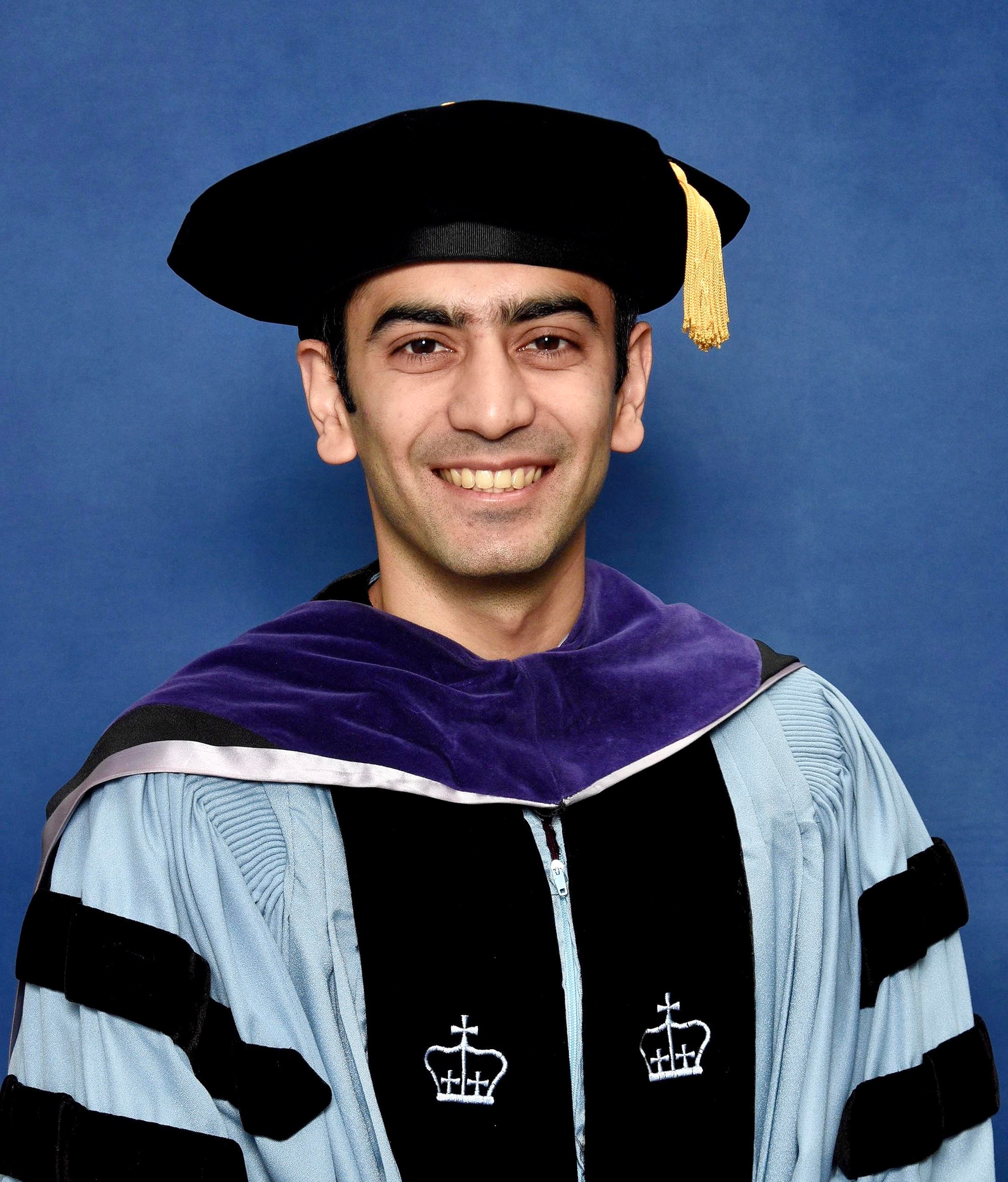
    Hiresh Choudhary recently graduated with an LL.M. from Columbia Law School. After completing a law degree from NLIU Bhopal in 2016, Hiresh worked in a litigation office for three years before enrolling for the LL.M. In this FPA, Hiresh shares his thoughts on the LL.M., the importance of work experience, and a whole lot more.

    Hiresh Choudhary recently graduated with an LL.M. from Columbia Law School
    Hiresh Choudhary, LL.M. Columbia Law School

    Did you ever consider an LLM right after your undergrad? Or was this something you decided to take up after working for a while? 

    I had decided that I want to go for an LLM while I was still in my second year or so of the five-year course. I spoke to a few seniors from my university who had gone for LLM and the unanimous advice I received was that you should go for it after getting at least some work experience.

    Looking back, I can see why and I would also say the same to people considering an LLM. I worked for about 3 years before the LLM and I found the timing to be ideal. Unless you aspire to get into academia and/or are fairly certain of the area of law you wish to build a career in, I would suggest gaining some work experience before the LLM for two reasons.

    First, you might be theoretically interested in an area of law that is not as exciting to actually work in. It is best to get an actual taste of your area of interest to make a more informed decision regarding the areas of law you would want to focus on in your LLM year.

    Second, and this is linked with the previous point, an LLM is often used as a way to change career paths. Dedicating your LLM year to a new field of law can open up new career options. Even otherwise, your perspective might change after a few years and you might want to explore areas that you ignored in law school.

    Some law schools also have a requirement of work experience, so you should be mindful of that.

    What were the criteria you used to shortlist schools? What were some of these schools, and why narrow down on Columbia?

    There are a number of things to consider. Location is quite important, especially for those who aspire to get a job in a US firm. Choosing Columbia or NYU has locational advantage over law schools based in other US cities, due to proximity to offices of law firms. We had adjunct faculty members from major law firms in the city.

    Law firms often host social events that give you a chance to network, which can ultimately be crucial in finding a job. Further, you can always reach out to alumni working in these firms to schedule a quick chat in person. This is probably true for law schools in London, Singapore, and other cities where law firms tend to have offices as well.

    Teaching cultures also differ significantly across law school in different countries, so you should look that up and choose what seems most attractive to you.

    The tuition costs also vary significantly and that is a major consideration. For example, tuition across US schools is more or less the same, but generally they are much more expensive than schools in the UK. I chose to apply for New York schools because they are in the middle of the city, while most other universities are in university towns away from cities, which is a very different experience.

    Another factor is funding. Some law schools are much more generous when it comes to scholarships. Some have scholarships for specific areas of law. For example Columbia has fully funded scholarships for students intending to dedicate their LLM to taking human rights courses. There is another one for one Indian student interesting in studying international trade law. So it is useful to check which law schools have scholarships for your nationality and area of law.

    The final consideration is linked with my answer to the previous question.

    Your choice of law school will be significantly impacted by the area of law you intend to focus on. For example, Stanford is renowned for its courses in science and technology law. On the other hand, Stanford only offers four kinds of LLM programs with choice of courses restricted to the program you choose. Columbia on the other hand offers great flexibility and places no restrictions on the choice of courses.

    The compact size of the university also means that it is easy to take courses with other departments which are just a few steps away. It also has a course exchange with NYU where some courses are offered by both law schools to students of the other one. For me, this flexibility was quite attractive.

    When it comes to the LLM application process, how did you balance work and the applications? How early did you start the process itself?

    This is the most difficult question to answer. Perhaps one of the most compelling reason in favour of applying for an LLM straight out of law school is just the time the whole process consumes, which you might find dissuading once you start working.

    My advice would be for the October-January cycle of applications, start as early as April. The first thing you must do is short list the universities that you are interested in, and make a list of all the documentation that they require. It takes a long time to get everything in order, especially coordinating submission of documents from your university. Further, TOEFL takes a long time to publish results, and then again a few weeks to post the results to the university.

    Specifically for the US, for most universities (only notable exception being Harvard if I remember correctly) documents are processed by LSAC, which itself requires a lot of time to process transcripts. It also requires that your university sends the transcripts directly, which can be a painful task. Similarly, it requires that your TOEFL/IELTS results be sent to them directly.

    So, work your timeline backwards such that such that these documents are received at least 2-3 months before the application deadline. You can then shift your focus on writing your applications in the months leading up to the application deadline. If you start early and get the procedural stuff out of the way, you can manage to write applications during weekends.

    I worked in a litigation office which meant weekends could often get unpredictably busy, so I chose to take a complete break from working for a month or so while I was writing my applications. I would not say this is necessarily required, especially if you have sufficient free time on weekends.

    Did you apply for/receive financial aid?

    I did apply for university financial aid, but as I mentioned before, Columbia has a few scholarships for students interested in specific areas of law. Unfortunately I did not qualify for any of them.

    When it comes to finding accommodation in NYC, any advice on how to go about it?

    University accommodation is extremely convenient because you are within 10 minutes’ walking distance from the law school. My apartment was one street over, so it took me about 3 minutes to reach class (an important factor for those 8/9 AM classes).

    On the other hand, if you want a more traditional New York experience, and you are willing to hunt for apartments and go through the hassle of dealing with an agent and a landlord and all the paperwork that comes with it, you could find an apartment that is cheaper and more comfortable, and in another part of the city.

    Columbia is close to the north-west end of Central Park, so it’s about 20-30 minutes away (by subway) from the heart of the city.

    How has the LLM experience been? What have been some of the most challenging aspects of the course?

    The LLM experience has been nothing less than life-changing. In my five years of law school in India, the focus was on what the law is, rather than why. The case law method only tells you the views that have been accepted by courts, and form part of what the law is.

    Undoubtedly it is important to know what the law is, since that is what is of practical consequence. But it leaves out many important questions – why is it the way it is, what are the alternatives, and if the current paradigm is better than alternatives, if at all.

    To my mind, an LLM seems like the logical culmination of your legal education, especially if you’re interested in broader theoretical and policy questions. Again, I would say that work experience offers you a practical perspective that will enhance how much you can take away from the LLM.

    At Columbia I took courses which focussed on comparative analyses as well as interdisciplinary influences on legal policy. Aside from the academic opportunities, the chance to spend a year with talented lawyers from across the world is unparalleled, and that alone makes the LLM worth it.

    The most challenging aspect would be the academic rigour. You’re required to take at least 24 credits over two semesters to qualify for the degree, up to a maximum of 30. On average, that means 12-15 hours of class per week (each credit means one hour of weekly class). On the face of it, this seems easily manageable.  But the out of class work including daily readings, assignments, reflection papers, mid-term exams, final papers, etc. really pile up and you don’t even realise as weeks fly by.

    Given the short nature of the course, how can one make the most of the LLM?

    It is important to just accept that there are more things at offer than you can manage to squeeze into one year. There are courses, externships, student associations and clubs, University events, law firm events, and then the never ending list of things that the city itself offers. It can get overwhelming. There are always trade-offs to be made so just choose what is most important to you.

    Lastly, any advice for the Indian law grad who may be considering a master’s abroad?

    Decide what your goal for the LLM is before you start applying. I always wanted to return to litigation in Delhi and that guided how I chose to spend my time at Columbia. My experience was entirely different from my Indian colleagues who wanted to take the New York bar and apply for a job with a US firm.


    We need your help in keeping this blog alive. If you feel that the content on this blog has helped you, please consider making a donation here

  • #Webinar: Learn more about the LL.M.’s offered by Koç University’s School of Law

    Are you interested in pursuing an LL.M. degree with a strong focus on international and comparative studies of law in Istanbul, Turkey?

    If you want to set yourself apart from the pack, join the Koç University School of Law webinar on Friday, 12 June at 18:30 hours (IST)

    Find out from faculty members what makes this a unique LL.M. in Private Law and Public Law and the right choice for your international career plans.

    Have all your questions answered by the School of Law Assistant Director, Asst. Prof. Ayşeğül Buğra and Law School Coordinator Ms. Esra Özcan.

    Register for the webinar here.