• First Person Accounts (FPA’s) are meant to provide a first-hand account of Indian graduates who have pursued, or are pursuing, a post-graduate course (LL.M. or otherwise) from different universities across the world.

    Anjali Chawla is a 2017 graduate of Jindal Global Law School (B.A. LL.B.) who enrolled for the Master of Law in International Commercial Arbitration (ICAL)
    Anjali Chawla (ICAL, Stockholm University)

    Anjali Chawla is a 2017 graduate of Jindal Global Law School (B.A. LL.B.) who enrolled for the Master of Law in International Commercial Arbitration (ICAL) programme at Stockholm University. In this FPA, she talks about her interest in commercial arbitration, applying for the ICAL, the ICAL experience itself, and a whole lot more.

    You undertook a number of short-term courses outside India during your undergraduate years. Did you ever contemplate an LL.M. right after you completed the law degree? Or was the plan to always work a while? 

    Yes, during my third year I went to do a Scholarship Exchange Programme in European Business Laws at EBS University, Germany. In fifth year, I undertook courses on professional ethics, advocacy, and legal integrity at the University of Hawaii at Manoa. I also did a week-long specialized negotiation workshop jointly offered by Herbert Smith Freehills-Oxford University.

    Additionally, I was fortunate to get the opportunity of an externship with the Chief Justice of the US State Supreme Court, Hawaii. Moreover, the undergraduate experience at Jindal Global Law School (JGLS) was no less than studying abroad. World-class faculty, globalized education, international collaboration, good infrastructure, and now a top ranking in the country, it has it all. Since childhood, I was always told by my parents that education is the biggest and the most profitable investment. So, a master’s degree was always on cards.

    Having said that, I had a clarity to have an international degree but when? was the issue to deal. Luckily with the guidance from the professors, seniors and some experience abroad helped me to make an informed choice. The plan was at least to work for a year, however, I almost worked for 2.5 years before going for the masters.

    Honestly, I am thankful that I listened to the advice. Working in the professional sphere prepared me for the challenges, it provided me with the maturity to efficiently use my theoretical knowledge, It taught me to comprehend the situation fruitfully. Working as a lawyer is far beyond the black letters, it enables you to understand the psychology of the people, read situations better, activate your survival instincts. It makes you much more informed about politics, society, and most importantly about your personality.

    Pursuing a master’s requires a lot of willpower and comprehending abilities. Especially, a specialization, it can cost you sleepless nights, volumes of readings, and hours of deliberation. Having a prior work experience certainly eases the process, especially when you have a specialized program within a limited time sphere.

    What prompted the interest in international commercial arbitration? And when did this culminate in the desire to pursue an LL.M.? 

    It seems amusing to me and my friends because I always wanted to do a specialization in Taxation. It was my dream to pursue international taxation at New York University. I liked the arbitration law as a part of my undergraduate curriculum and that’s about it. Until I joined the chamber of Hon’ble Mr. Justice G.S. Sistani (Retd.) as a law researcher at Delhi High Court.

    His support and encouragement made me passionate about this field of law. I grew my interest in researching, reading, and writing about commercial arbitration. Since commercial arbitration is a very dynamic field of law and has rapidly evolved in India, particularly over the last decade, it was rather obvious to read about the international perspective. Whenever I would read a new case in the courtroom, I would always find it fascinating to read about the reaction of other jurisdictions over similar issues.

    Owing to the common law background, I read and drew reference from the English arbitration cases. Additionally, Singapore, Switzerland, France, and the US were few other jurisdictions that I used as my references to have a better understanding of the commercial arbitration.

    My job provided me with the luxury to gain an in-depth understanding of the field of commercial arbitration and I thoroughly  enjoyed it. International commercial arbitration was then almost a natural and obvious choice for me. I was so delighted to learn that Stockholm University is offering a super specialization, which only focuses on the commercial aspect of the arbitration.

    Given the specialised nature of the field, what were some of the other schools that you applied to? 

    I applied to New York University, National University of Singapore, University of Southern California, Pepperdine, Queen Mary University of London, Leiden, Kings College of London, University College of London, Humboldt, MIDS Geneva and Stockholm University.

    I shortlisted these universities based on the faculty, course structure, alumni network, reputation, the scope of arbitration in that particular jurisdiction, and availability of future opportunities. I made these choices, partially because I imagined myself going in each one of them and also because I wanted to have few options while taking my final call.

    Apart from the informed inclination, I applied to all these schools because ideally, one should plan for the masters a year in advance. Additionally, a student should at least utilize 3-4 months for college applications. Frankly, I initiated my applications ridiculously late, probably a few weeks right before the deadline. Living independently and working full-time, I hardly had time to breathe. I remember working for two weeks on just a couple of hours’ sleep. With so much time crunch, It seemed impossible to even get through a single law school. One of my professors also told me to drop the idea and try next year. However, I was fortunate to have a few generous friends, who agreed to review my application last minute. The administrative staff and professors from JGLS were very supportive, they provided me with all the relevant documents and recommendations on such short notice.

    The process of application is very interesting and humbling. I remember penning my college essays popularly called a statement of purpose. Writing about your journey from where you begin and where you want to be? It makes you realize how much more you have done and how less you have appreciated yourself. It all together feels very empowering and boost your self-confidence.

    Though after a roller coaster ride and despite the sorry situation, I was fortunate to crack all of them. The part to pick an optimum law school was even the bigger challenge. However, I was relieved after accepting my offer letter from Stockholm University.

    The first and foremost reason behind choosing Stockholm was its rich arbitration history during World War and East-West trade disputes settlement. Secondly, the ICAL programme is ranked 2 internationally (LLM Guide, GAR, QS). Thirdly, it is prestigious and economical choice. Fourthly, the impressive ICAL alumni network. The founder of the ICAL programme, Patricia Shaughnessy has given many prevalent faces to the international arbitration community.

    Lastly and most importantly, its class strength, unlike other universities, Stockholm only shortlist very small and limited number of students, it is probably the smallest. We are the group of only 25 students, which implies that everyone here is purely on merits and probably the best in their sphere.

    I am glad to make that choice because having a small group not only made our classes more intimate but also very engaging, where everyone could actually engage with each other.

    Any advice on how to go about the ICAL application process itself? 

    One thing I learned after becoming part of the Swedish education system is that they love systematic and structural work. As such there is nothing different that you have to do but keep it real, simple, and crisp.

    By simple I do not mean the general and obvious information, tell them something about yourself, which cannot be traced in your resume. Talk about yourself, the statement of purpose is a slightly formal variant of a letter to a penfriend. It should speak volumes without being lengthy. It is basically your chance to make the admission committee perceive you more as a real person then just a resume.

    For a decent statement of purpose, divide it into sub-sections. Start by describing yourself in few lines, tell them what motivates you, why you want to do an LL.M., why are you picking their university, what new you can bring to the table, and give them reasons to shortlist you.

    The university website laid out the requirements, so give it a thorough read and swear by it. Swedish system plays by the book and there is not much scope of interpretation. The application system is fairly simple, despite that, if you still face any problem, get in touch with the admission office or search for an alumni network. Approach people, revise your application, ask for a review by your peers or family, and hope for the best.

    Did you apply for/receive financial aid? 

    As I mentioned earlier, I was fairly late to apply for independent scholarships but I applied for Chevening. Unfortunately, I could not make it to the interview round. However, I did apply for university scholarships. Mostly, It is a separate application that you apply alongside the admission forms. Some universities de facto consider you for scholarships based on your application.

    I did receive the Dean’s Academic Excellence Award and a Housing Stipend at USC. Additionally, I got financial aid from QMUL, NUS, Kings, UCL, Glasgow, and Pepperdine.

    Unfortunately, Stockholm University has only one non- European scholarship applicable to Indian students. However, it did not pinch much because despite being so popular and prestigious, it is affordable and very economical.

    How has the ICAL experience been? What have been some of the most challenging aspects of the course? 

    The ICAL has been a very humbling experience. I think the best part for me was the ICALians. Everyone pursue a masters’ to advance their education, extend their knowledge and learning. The integral part of my learning did not come from the University but from my classmates. Calling them classmates feels like a disgrace, we all are one big family.

    I am truly blessed to find a home overseas, each one of them is mutually exclusive in terms of skills and knowledge, yet exhaustive in terms of empathy and benevolence. I have learned so much from each one of them. Everyone was there for each other when required. We have shared laughter, insecurities, failures, and success. They have given me a new perspective in my life.

    At our University, we do not have lectures, we rather have a seminar and everyone had a unique take on the law. We always looked forward to the seminars, classroom discussions, little banter, and good professors, it kept us all going. We had professors like Ms. Daria Kozlowska, who provided us with the opportunity to argue mock arbitration in the leading law firms like Vinge, Roschier, Mannheimer Swartling,  Bakers & McKenzie. We got the opportunity to have negotiation trials with the students from Columbia Law School. Additionally, we were enabled to be lectured by institutes like Stockholm Chambers of Commerce, leading arbitrators, partners from leading firms.

    Professor Christina Ramberg designed a game to make us understand the technicalities of commercial transactions. I never thought a normal convention can be fun to read until I attended Professor Andreas Von Goldbeck’s classes, he bought new operas and historical theories to explain the nuances of the law. Professor Patricia Shaughnessy always guided us with her wisdom, shared stories, taught us to handle the legal glove and how to have fun with the law. I was lucky to get the opportunity to do my master thesis under her expert guidance.

    Professor Crina Baltag always ignited a new thought through her assignments, shared real-life examples and made us realize the importance of having each other (classmates) in our life.

    More than a professional, I have grown as a person in the past year. Overall, ICAL was a perfect blend of theoretical understanding and practical application.

    I think the main challenge for me was the language. Coming from a common law background and being a former law researcher, I had a habit of writing lengthy text. Citing case precedents, analysing the court’s opinion, fancy jargons, discussing parliamentary debates are common practices in India. However, making a switch to a civil law background and explaining the text in short words was a hard task for me. I did struggle with the word limit, but with time I was able to manage it.

    What is your reading of the employment opportunities available to ICAL graduates? 

    ICAL does not have an active placement division or guarantees an employment opportunity per say. However, as mentioned above, we do get the opportunities to meet with eminent lawyers and a sneak in the industry operations. Honestly, luck is also a big factor alongwith the brand.

    Having said that finding a job in a European market with a special language requirement is difficult. It takes patience and persistence to find a decent job. Especially with Covid’s situation, chances to find a job becomes slim but keeping a positive outlook is very important. ICAL as a brand aids you to find a job anywhere in the world.

    There are many roads to curating a professional journey post ICAL. One can undertake a researcher job, pursue a Ph.D./ LLD/ Legal practice course, or undertake a translation exam, which opens the door for institutes like ICJ, PCA, UN, etc. Additionally, one can also apply to the arbitral institutes. Students can also apply to the international law firms, which offers zero-day and graduate vacation scheme to students.

    It all depends on your requirements and criteria, with proper execution, correct strategy and the masters in law brand from ICAL will make you reach the goal.

    Lastly, any advice for the Indian law graduate who is considering a master’s abroad? 

    Never stop believing. The application procedure becomes exhausting but think about the good times ahead, tell yourself it will pay off.

    Regarding the master’s abroad, understand it is an investment. Make a roadmap for yourself, do complete research, and plan.

    • Basics: First and foremost you should ask yourself, Why do you want to do an LL.M.? Whether you genuinely want it or it is just the idea that fascinates you. Secondly, consider your interest, see whether you would like to go for a specialization or a general master. Weigh both pros and cons. Thirdly, decide when you would like to go for your master’s degree? Do you want to conclude your education in continuity or whether you would like to work for some time and then go for it. Fourthly, where do you want to do it from? Whether you want to make a switch from common law to civil law and know about the possible challenge that you might face. Also consider the course, how it has been designed instead of just looking at the ranking. Fifthly, reach out to the admission office, alumni network, and social media handles (Facebook, Instagram, twitter) of these universities. Do as much thorough research as you can. Sixthly, do not get so overwhelmed, and consider whether finances is going to be an issue, if yes, then make the decision accordingly.
    • Everything counts:  Keep reminding yourself, nothing goes waste. Keep a check on your CGPA throughout your undergraduate,  universities always look at the transcript. Although it is an important criterion but not the only one. So even if you do not have desired CGPA, extra-curricular activities, publications, research assistantship, teaching assistantship, mooting, internships, everything counts during the shortlisting process.
    • SOP/Motivation:  A Statement should be personalized and honest, therefore write it yourself. Keep it short, simple, and crisp. Make it readable, have time to make edits, make sure you do not have grammatical errors, and stick to the word limit. Re-read it, if in doubt make a third-person read it for you. Sometimes the university also mentions the guideline for the personal statement. Make sure you read it and delivers what they have asked. Try and answer what motivates you, why this university, and why you.
    • Recommendation Letters:    Always believes in quality over quantity. Ask for a personalized recommendation from the people, who know you the best. It is good if your recommendation can complement your personal statement, it makes you a promising candidate.
    • Scholarships: Scholarship deadlines are pretty short and mostly early than your regular application process. There are different scholarships, few funded by the government like Fulbright, Chevening, Commonwealth. Then we have Scholarships funded by the trust under CSR like Tata endowment, Mahindra, etc. Then comes the university-funded scholarship, read the website properly, the application for these scholarships can be either separated or included. Ask your employer (current or future), sometimes they agree to fund the education to make you as a future asset for themselves.
    • Waivers: There are two types of waivers that I am referring to under this section. First, the application fee waiver, since we know that the application process itself is very expensive. On average, a student shell 100 $ (approx.) per application. One can write to admission cell and ask for a waiver, at times universities do grant them.Second waiver is for language proficiencies. All the universities require for either TOFEL or IELTS. These exams require money and time, but in actual, this can be skipped. Ask the university, where you are applying for the TOFEL/IELTS waiver. Mostly all the university will allow since the schools/ university in India teach their kids in English. You can take an undertaking from your previous institute as proof that you are well versed with the language.

    Be humble and have courage. Also, do not forget to have fun and enjoy yourself. Make memories, it is just not an additional degree, it is going to be the best memories for you. I wish you all, the best times ahead.

    If you need more details, contact me on LinkedIn.


    We need your help in keeping this blog alive. If you feel that the content on this blog has helped you, please consider making a donation here

  • The Admission Interviews, are meant to provide insights into LLM admissions right from the law school itself. The idea behind this series is to provide that little bit of extra information that may not be available on the law school’s website.

    In this edition, I speak with Professor Eric Talbot Jensen, a professor of law at the Brigham Young University.

    Eric Talbot Jensen is a professor of law at Brigham Young University
    Prof. Eric T. Jensen, Brigham Young University

    I ask this all the time – what do you see is the value of a US LLM from the perspective of an international lawyer? And how does BYU Law deliver this?

    Our program is specifically not intended for LL.M. students who plan to remain in the US and take a State bar. So, the value of our LL.M. program may be different than others.

    We anticipate that our graduates will return to their home countries better prepared to incorporate US legal doctrines and to work in conjunction with US interests in strengthening their own community, government, and legal profession.

    I am also curious to know what drove you towards not one but two LLMs? What were your own expectations from the graduate degree and were they met?

    The first LL.M. was an effort to specialize.  The second was to make me more interesting when I entered the teaching market.

    Is there a particular profile of candidate that BYU looks for in their LLM applicants? What are some of the more common characteristics of successful LLM applicants?

    I think the most particular aspect of a successful candidate is a commitment to return to their home country and build on the experiences they had here to make their own situation better.

    How do you think international lawyers can make the most of their LLM experience given the relatively short nature of the course itself?

    We also offer an extensive OPT program to give our grads a practical experience in a US law firm.  We think that is an important aspect of what we are trying to accomplish.

    Lastly, how has BYU Law adapted to the Covid pandemic, and what advice would you have for the Indian law graduate who is considering an LLM in the US?

    We have adjusted our class teaching methodology to a mix of in person and online teaching.  Overall, I think it will make us better because we have become too complacent and not committed to engage in innovative ways to teach our topics. This is helping us rethink all of that.

    Even in the post-Covid world, I can’t see myself going back to all face to face teaching. There are too many other great options out there that can help maximize the learning experience.


    We need your help in keeping this blog alive. If you feel that the content on this blog has helped you, please consider making a donation here

  • First Person Accounts (FPA’s) are meant to provide a first-hand account of Indian graduates who have pursued, or are pursuing, a post-graduate course (LL.M. or otherwise) from different universities across the world.

    Shiv Sidharth recently graduated with an LL.M. in International Law from The Fletcher School, Tufts University. 
    Shiv Sidharth (LL.M. ’20, The Fletcher School)

    Shiv Sidharth recently graduated with an LL.M. in International Law from The Fletcher School, Tufts University.  In this FPA, the 2018 graduate of CNLU Patna discusses the reasons for choosing this particular programme, the LL.M. experience itself, and a whole lot more.

    The Fletcher School is a very, very interesting choice – what got you interested in International Law? When did you start considering a foreign LL.M.?

    Indeed, the Fletcher School of Law and Diplomacy is undoubtedly a very interesting choice for me as it is the oldest IR (International Relations) School in the United States and International Law (IL) and IR are closely linked with each other.

    Further a successful implementation and enforcement of International Law is very much dependent on comprehensive understanding of global affairs and international relations as well as crafty use of diplomacy. You can build a strong foundation in public and private international law, while deepening knowledge in political science, history, business or economics.

    I always took interest in global affairs and my interest for international law and relations solidified in my third year of law when I got the opportunity to study Public International Law. As a law student I always was inclined towards the legal aspect of international relations and diplomatic tradecraft, so gradually I started taking interest in IL including Int. Human Rights Law, International Humanitarian Law, Comparative laws, etc.

    I started planning for a foreign LL.M., when I was about to complete my fifth semester (third year) at Law School.

    Coming back to the first question, why Fletchers? Did you also consider applying for the MALD?

    I think it’s a very interesting question that why I chose Fletcher, specially when it’s not even a proper law school (per se) as recognized by the American Bar Association. Fletcher is basically an IR School and in the previous question I partially answered the question.

    Further, the reason for choosing Fletcher is the flexibility in choosing courses from the three main divisions, namely International Law and Order; Diplomacy, History and Politics; and Economics and International Business.

    Also, you have the option of cross registration with the Harvard University, where you can study one course per semester (for the LL.M.) from any of the schools of Harvard, whether it’s Harvard Law School, or Harvard Kennedy School, or Harvard Business School, and so on. Fletcher is really a good option for international law and related studies. But always mind, it’s not a recognized law school.

    Actually, I didn’t consider for the MALD (MA in Law & Diplomacy) as I never intended to invest 2 years for a Master’s degree and MALD is not a law degree. But I would suggest to the prospective students who want to get expertise in law, IR and diplomacy with a bachelor’s degree in law, or a public policy degree they can consider the MALD degree program.

    I must say, it’s one of the best as well as an unique degree program in the world because for the 4 semesters who can literally design your program and area of specialization, whether you want to go for public relations, policy research, environmental studies, law & politics, gender & religion studies, international relations and use of force in international politics, or a mixed degree with different smaller specializations.

    But don’t get confused in the MALD program where you have plenty of specialized fields available to study and get expertise, because many students get confused in-between.

    Any advice on how to approach the application process at Fletchers? How much time do you think one should spend on the application itself? 

    To the best of my knowledge, there is no definitive rule to approach the application process. I would suggest, just go through the whole process and practice once before making a final application because Fletcher has a different application process (different from the law schools).

    As far as I can recall one needs to furnish atleast 3 letters of recommendations (2 – academic and 1 – professional), along with an updated CV and descriptive essays (not typically SOPs), e.g. one general essay outlining your interest and motives, etc. for the course. Further you need to furnish two short essays, like in which city you’re born and why it matters to you most? Why you want to join Fletcher? ….. etc.

    I think it’s difficult to answer that how much time one should spend on the application process as it’s very subjective thing – it depends on the candidate. But I think one month is enough (when you have all ideas about your future prospects, and you’ve done your homework regarding School selection).

    It could be even less than a month if you’re applying to similar schools as you’re only required to get the specific recommendations and sharpen your expressions and clarity for the SOP or the application essays in a particular way.

    Did you apply for/receive financial aid? 

    Yes, I applied for the financial aid. This is separately from the program application. You have to opt that whether you want an aid or not. I got $9,000 as aid. But it is needs based and varies with the financial conditions of the students. You have to furnish your financial condition while applying for the aid.

    Although, there are some other Fletcher scholarships or aid available where they fully waive the tuition and, in some cases, the entire expense.

    Previous Fletcher LL.M. grads have benefitted from the “multi-faceted faculty” at Fletchers – what would you say were some of the highlights of your LL.M. experience? 

    I think the greatest asset to Fletcher is a very strong alumni network, which is only possible due to the multi-faceted faculty. Fletcher has really a great pool of faculties, which are at par with any other elite institution around the world, in terms of academics and professional expertise.

    I just not benefitted from them, rather I learnt a lot of things from them in a holistic way including academics, professionalism, loving the subject-matter, legal etiquettes, etc.

    I really had a great experience in my LL.M. program because I got the guidance of the highly equipped faculties. They just didn’t help me in academics, but they also guided me for course selection, thesis/research topic selection, career opportunities, future course of action, higher study prospects, etc.

    I always felt that I’m studying in a top Law School. I still remember how I always bothered my law professors particularly with my questions related to US politics and laws particularly the Trump Impeachment Trial, US Supreme Court rulings, US foreign policy, Massachusetts State laws, etc. and they happily answered my queries and at the same time encouraged me to ask more deeper questions.

    How did the Covid pandemic affect your LL.M. studies? 

    Undoubtedly, the Covid pandemic has negatively affected my LL.M. studies, particularly the career prospects in the US. I immediately came back to India at closure of my school campus and also faced some logistical problems.

    I didn’t find much difficulty in transition to online classes in the last two months of my LL.M. program except some technical problems. The professors were super flexible with the students’ needs.

    But I must say that online mode can never substitute the real classroom experience and I personally felt that online classes are not enough for an overall learning process, especially when you’re on the verge of completing your program.

    Looking ahead, how do you plan on using the LL.M. for your own professional growth? 

    We all are facing a difficult and uneasy time and I’m not an exception. As I mentioned previously this pandemic has totally changed my career plans.

    After my LL.M., I wanted to work in the International Organizations e.g. the UN, the ICRC or IGOs. Further I want to continue my studies and pursue a PhD or SJD. But I must say these things are contingent and depend upon the coming 4-5 months. I’ve also applied for some foreign fellowships in Human Rights. I have inclinations towards academics and research.

    Lastly, any advice for the Indian law graduate who is considering a master’s abroad? 

    Again, it’s a very difficult to answer this question because now-a-days, the Indian law graduates have plenty of options to consider for a master’s abroad. Every legal sub-field has a different approach process. So, I’ll limit my self to answer the question in a generalized way.

    The most important thing according to me is to ask ‘WHY’, why you want to pursue an LL.M. from abroad – what you want to learn, what professional benefits you want to reap from it, how you’re going to build your career based upon that degree, and so on.

    Then obviously you’ll have some other pertinent questions related to (sub) area of interest, school selection, how you’re going to finance your study, etc.

    I’m saying so because I personally know some of foreign degree holders who are still confused as to what to do with their degrees or what professional recourse they should take.

    You cannot afford to make mistakes at a crucial juncture of your professional life.

    In a nutshell, please do your homework – consult your professors, talk to your parents, friends, alumni, LL.M. degree holders, etc, do extensive research on courses and schools, consider contingencies (e.g. Corona pandemic). Just don’t get confused (also please don’t take advice from everyone) because if you’re going to take a decision out of hundreds of options, aim for the best.


    We need your help in keeping this blog alive. If you feel that the content on this blog has helped you, please consider making a donation here

  • First Person Accounts (FPA’s) are meant to provide a first-hand account of Indian graduates who have pursued, or are pursuing, a post-graduate course (LL.M. or otherwise) from different universities across the world.

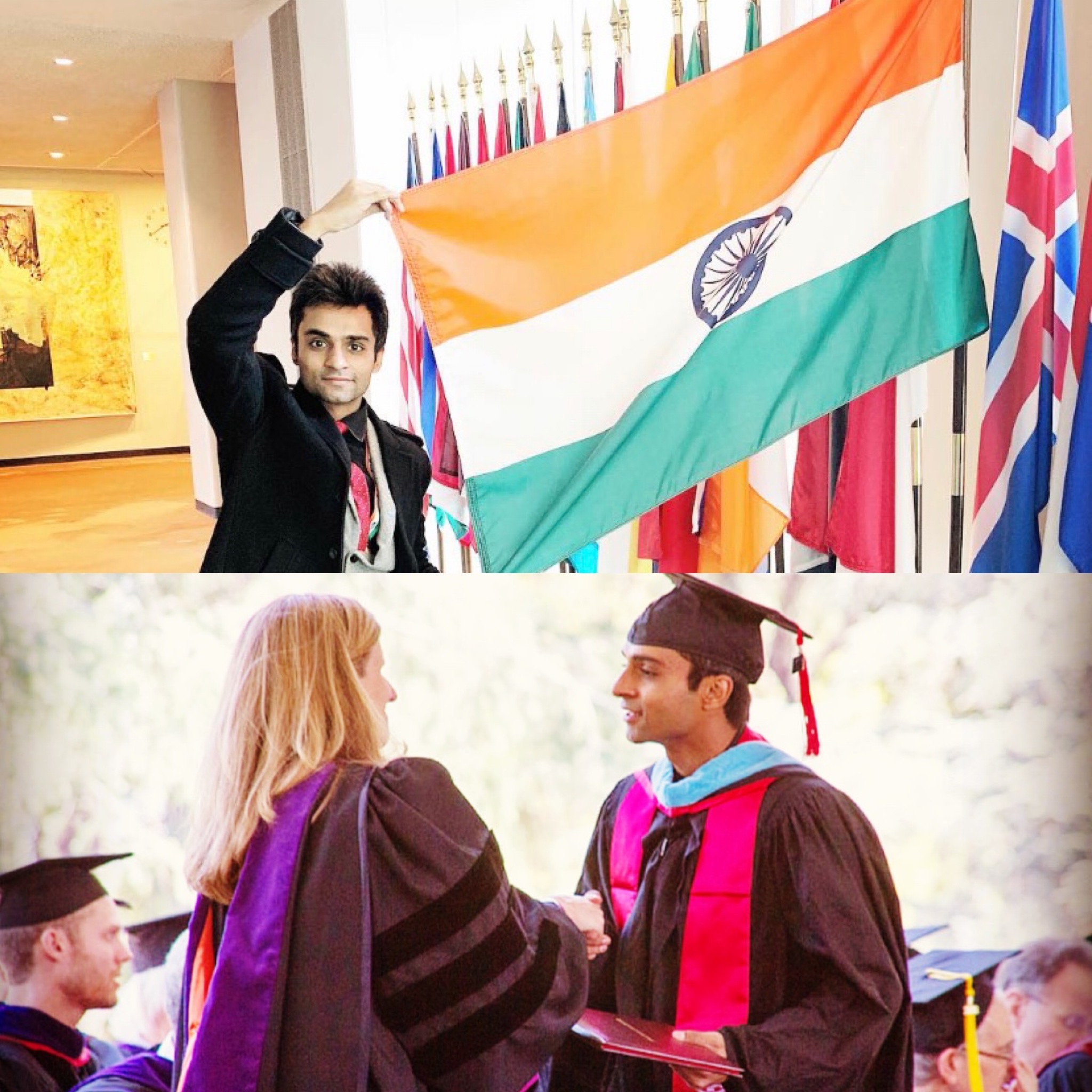
    Mohit Khubchandani graduated with an LL.M. from Stanford Law School, and is currently working as a Research Fellow at the United Nations International Law Commission in Geneva.
    Mohit Khubchandani, LL.M. Stanford Law School

    Mohit Khubchandani graduated with an LL.M. from Stanford Law School, and is currently working as a Research Fellow at the United Nations International Law Commission in Geneva. In this FPA, the Guru Gobind law graduate discusses the Stanford Law LL.M. experience, the Fellowship at the International Court of Justice, and building a career in international law.

    Do you think it is essential to pursue an LL.M if one wants to have a career in International Law? Is that why you opted for an LL.M too?

    If one wishes to enter into academia, then an LL.M. and/or PHD is paramount in any field, regardless of my opinion. It is almost an educational convention in law. If its public-policy in any field, then its highly desirable.

    Unlike the fields above, practitioners at law firms or those who are a part of a chamber practice in municipal litigations in their own countries do not require an LL.M. One can develop an expertise by way of their experience on the job.

    Contrary to the domestic regimes, International Law, whether it is Public International Law or International Arbitration is a different ball-game all together. Whether it is academia, public-policy or litigation, an LL.M. is essential.

    It is also imperative for me to underscore that more often than not, International Lawyers traverse through academia, public-policy at International organisations and litigation either simultaneously or at different point of times in their lives. This is owing to the very nature synthesized of International Law. Thus, it is not seldom that we see practitioners also take up visiting faculty positions at universities and vice-versa professors being counsels at law firms. A lot of professors also argue cases before international courts and tribunals, something that we don’t usually see in domestic regimes.

    My motivation to do an LL.M. in International Law was similar. It is not certain, but it gives a foot in the door and a bargaining power at International institutions. I also opted for an LL.M. in order to apply for an ICJ Judicial Fellowship, which people cannot in their individual capacity.

    I shall elaborate this further in the foregoing questions.

    You decided to work for 2 years and then opted for an LL.M at Stanford. Was there any particular reason for doing that?

    I worked at the Office of the Attorney General for India for 2.5 years before pursuing my LL.M. First and foremost, unlike any other school that I am aware of, it is mandatory to have a minimum of two years of working experience before even being eligible to pursue an LL.M. at Stanford Law School.

    I had precisely that; usually a lot more is required. I was lucky to be selected and was one of the youngest students in my cohort. This requirement makes Stanford Law a very unique intellectual experience. Not only do we get to learn the academic best practices, but also those related to work in different jurisdictions from our professors as well as peers. I had the great fortune of acquiring a 360 degrees’ learning experience from several brilliant minds from all across the globe.

    Secondly, I wanted to take some experience before an LL.M. In hindsight, it was a great decision as our classes and courses were designed such – that discussions surrounding the perspective of someone who has practiced law were inevitable. At these junctures, my experience as a litigator in India practising common law and international law was extremely relevant and helpful.

    Finally, it goes without saying that taking work experience can better place you to crack the best universities in the world.

    What made you narrow down on Stanford? Did you receive any financial aid?

    It might be eternity till I keep counting my reasons to join Stanford. But let me begin by what struck with me at first. My background search about Stanford Law was startling, and it was in a way an intellectual love at first sight that resonated with my soul.

    This was because Stanford whilst evaluating an application sees the overall personality and the impactful work that a law student has done in her/his career whilst not laying the primary focus on grades (though they are important).

    What was even more pleasant to hear, was that it holds the unique distinction of not awarding any specific grades to students to avoid any toxic competition. It only had a pass and honours category. I had accordingly aimed at Stanford Law since a very nascent stage in my law career.

    Since an impressionable age, I have strived to develop an all-rounded personality fuelled with a desire to excel and never ran behind the best grades. This motto wasn’t any dissimilar even while being a law student. This is not to say that I didn’t focus on them at all, but that is how I built my resume and backed myself to crack Stanford with my strengths.

    I must also state here that Stanford besides its otherwise repute, also holds the distinction of offering four niche LL.M. sub-specialisations unlike other top schools. I had an avid affinity towards the intersection of International and Environmental Law. Stanford happened to be one of the best programs in the world for that course. So I was again lucky to be able to balance the eternal debate about university vis-à-vis course reputation.

    One can apply to one out of these four specialisations, and is eligible for the seats in that specialisation only, which are typically not more than 15-17. This also makes Stanford have one of the smallest class sizes in an LL.M. program (it also has a great campus with the perfect bay area weather as a cherry on top).

    The said distinctions above were not favourable insofar as a financial aid application was concerned. It did not offer any such application for applicants till the time I graduated in 2018. I believe that they have come up with one now, which if I’m not wrong is given to only 1 student based on need and merit and is therefore highly competitive.

    You were recently selected to be a fellow at the ICJ. Can you tell us more about the procedure for applying and what your responsibilities are going to be?

    It is a very straight-forward procedure. You need to have at least an LL.M. and desirably a few years of relevant work to be eligible. The application pertains to a detailed account of what you’ve done in your career thus far. So, if you have been true to your goal (i.e. done international moots, publications, RA positions/ worked in international law by and large) then you will make it. I must say that I had to apply for 3 years consecutively before finally being selected.

    You have to first apply to your university from which you graduated in an LL.M.; if they shortlist you, then your application is sent to the Court. The Court then has another rigorous selection procedure. Finally, 15 international legal scholars worldwide are selected to assist the 15 judges at the Court as Judicial Fellows.

    Typically, your university sponsors your tenure at the Court and awards a scholarship in lieu of that. I am glad, that I will be able to redeem my scholarship now from Stanford in this way. I am yet to know my responsibilities, but it can be construed as being something similar to what law clerks to judges are expected to do.

    How was your experience as a Research Assistant to Professor Jonathan Greenberg? How did you get this post? What value do you think RAship has to offer? 

    As an International disputes resolution attorney, it is highly desirable to have some serious academic work-based simulation for a while, even if you decide to not take it up full-time later. In my case, to be honest it was also need based than want based. [It] turned out to be a blessing in disguise. I was not able to find jobs and desperately needed to be working in order to avail my post LL.M. one year work visa in the U.S. When there was no opportunity, I created one.

    There was no relevant research position available. But I pitched myself as relevant to professors. I went from one door to the next. That is how I got the position with Professor Greenberg in International Investment Law. I had earlier been elected and served as the President of my LL.M. class. As a result, had organised a few events with him. So, we had also built some rapport.

    I cannot emphasize enough the importance of research positions enough. In fact, I still continue to be a Research Assistant at the United Nations International Law Commission since nearly a year. When you work as a practitioner, you are mostly exposed to contemporary issues.

    However, as an RA, you are also required to research on several foundational issues of International Law as well. Such a strong foundation can help one in the longer run even as a practitioner, and not just an academic. As an incidental advantage, you also end up researching on a lot of issues and your resource bank of work can help you in getting renowned publications under your belt.

    You have also worked with the UN extensively. How will you describe your experience, and how can law students in India also get a chance to work with the UN?

    I have been working with the UN since only nearly 2 years now. So not sure how extensive [that is], but I have definitely tried to explore it from the different lenses that it has to offer. It has been a holistic experience. I began by working with the Permanent Mission of India to the United Nations in New York. With a diplomatic mission, you are involved in the real action that transpires at the United Nations General Assembly and Security Council.

    You are involved in International law-making.

    Then, I worked as a Consultant at the Central Emergency Response Fund at the UN Secretariat’s Office for Coordination of Humanitarian Affairs. These agencies liaise with countries to on specific subject-matters depending upon their mandate. Therefore, they help in proposing and implementing international law.

    Currently, my work at the United Nations International Law Commission, Geneva involves progressive development of International Law. It has been a full-circle and one that has been highly satisfying.

    For Indian students, I must emphasize that there are many international organisations that do equally if not more important work as the UN. So one must broaden their horizon. Pursuing a masters can help in a transition to such organisations, especially at consultant levels. Besides, internships at International NGOs, foreign ministries; publications concerning International Law and the UN; participation in Moots and Model United Nations (MUNs) all count towards a compelling UN application.

    The reason why I was able to get to the UN was because I never aimed only at the UN. As a result, I have been able to acquire diverse experiences: the pedigree required for UN positions. For details of the several job descriptions with the UN, websites such as inspira.un.org  and careers.un.org are great sources.

    Lastly, do you have any advice for Indian law graduates interested in Public International Law and International Arbitration?  

    An interest is not enough. It has be pure unadulterated love and passion for the subject. This is particularly because Public International Law can seem like a bumpy road, especially in the initial years of your practice. You have to zone out yourselves and not look at the steady career progression of your peers working at law firms or as litigators.

    You need to be prepared to have a zen state of mind and be prepared to fail, albeit with a big heart.

    Besides, you must not premeditate work targets in a particular fields within Public International Law and International Arbitration. Neither should you focus on a few organisations. Grab whatever you get, whether it is in academia, policy or practice. Whether it is Research position in a University or at organisations.

    In fact, I would recommend people to experience all of these simulations. It is also noteworthy that these areas of law change more dynamically than we can predict. So to be updated, the trick is to only read, read and read.

    I for one have substituted reading novels for leisure to reading International Law for fun.

    (This interview was conducted by law student Muskaan Wadhwa)


    We need your help in keeping this blog alive. If you feel that the content on this blog has helped you, please consider making a donation here

  • The Admission Interviews, are meant to provide insights into LLM admissions right from the law school itself. The idea behind this series is to provide that little bit of extra information that may not be available on the law school’s website.

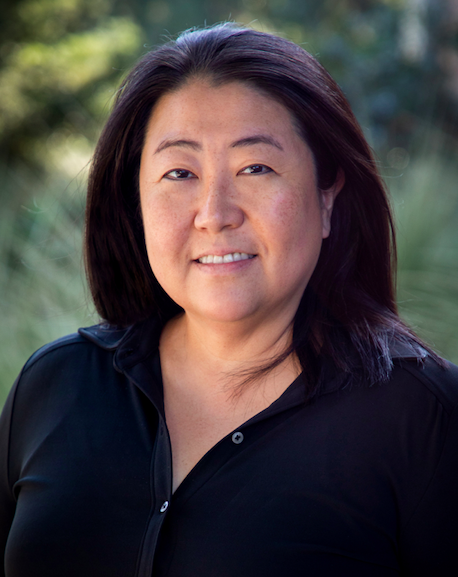
    In this edition, I speak with Helen Rho, the LL.M. Admission Officer and Academic Coordinator, International Programs at UC Davis School of Law.

    Helen Rho, the LL.M. Admission Officer at UC Davis School of Law. 
    Helen Rho, UC Davis School of Law.

    I know that the Fall semester plans are uncertain at the moment, but anything that you would like to communicate to prospective LL.M. applicants from India who are looking to enrol at UC Davis?

    UC Davis School of Law will be open and will offer on-site classes with physical distancing beginning in August. All classes will also be available be online and most classes will be recorded.

    While not all of the details are currently available, the law school will follow the guidance of the UC Davis campus and Public Health Agency in determining the number of people in a classroom, the configuration of classes, and which classes will be on-site.

    We will work very closely with each student as everyone has specific needs.

    In your experience, what have been some of the advantages of a US LL.M. for the international lawyer? And how has UC Davis facilitated this?

    There are many benefits from pursuing a US LL.M. degree such as, learning the common law system, strengthening your legal English language skills, developing specializations, diversifying your prior career track, extending your professional network, and gaining independence and self-motivation.

    The LL.M. program at UC Davis School of Law focuses on your individual professional and academic goals.  You will design an individualized curriculum with the support of one on one advising with our Associate Dean.  You will participate in many workshops including bar preparation and career services.

    Many of our students also participate in Optical Practical Training, which provides invaluable work experience.  Most of our students tell us that they were able to receive better job offers when they returned home with their US LL.M. degree from UC Davis School of Law.

    When it comes to prospective LL.M. applicants, does UC Davis prefer those with some work experience? Or to put it differently, what are some of the advantages of applying with a bit of PQE as well as fresh out of undergrad?

    We believe all applicants have many unique strengths and talents.  Some have a wealth of experience; others are just starting their careers.  Our focus is helping each applicant pursue their individual academic and professional goals. We work with each person wherever they are on their personal and professional journey.

    The UC Davis School of Law looks to create a LL.M. cohort with different backgrounds. We welcome fresh graduates, applicants with some work experience, and legal professionals with significant experience.

    What advice would you have for LL.M. applicants who are not sure of how to go about writing the personal statement?

    It is your time to shine!

    We want to learn more about you other than what we read on your transcripts. Generally, our applicants share information about their personal, academic, and professional background. They also address why they want to pursue a LL.M degree and why at UC Davis School of Law.

    We do not require interviews, but think of what you might want to share if you were meeting with our admissions committee.  I have read many amazing personal statements – the ones that really stand out are the ones that are personal.

    Lastly, given the short nature of the course, how do you think LL.M. candidates ought to make the most of the LL.M. experience?

    LL.M. students make a great investment to pursue an advanced degree away from home.  You want to make the most of your experience and gain the most from your investment.  Network! You will meet amazing colleagues from around the world.  Our fall 2019 class had students from 23 different countries.

    As you return to your practice, you will benefit from knowing attorneys from all across the globe.  Get involved!  UC Davis School of Law is renowned for its sense of community, and you will find a friendly, vibrant, and active student body at King Hall.  More than 50 student organizations and their activities are at the heart of academic and social activities, which include softball leagues, intramural sports clubs, and the annual student talent show.

    With so many exciting groups and programs, our students enjoy endless opportunities to get involved in extracurricular activities and explore varied interests. King Hall is a place where students, faculty, and staff take pride in a strong sense of community and encourage a supportive academic environment.


    We need your help in keeping this blog alive. If you feel that the content on this blog has helped you, please consider making a donation here