This group is a fantastic initiative, and I hope that more Rhodes applicants continue to make use of the opportunity. The forum members have been quite generous and patient with their time, answering a number of queries within a very, very short span of time.
Clearly looking to build on this, the group will be organising a webinar, one which I would encourage all applicants (and potential applicants) to attend. The email about the webinar indicates that the webinar will be used to discuss:
“[the] main concerns that might be on your mind as well as several other frequently asked questions, ranging from crafting your personal statement, our thoughts on the legacy of Cecil Rhodes, and even the laborious task of soliciting references.”
The group has also sought out questions in advance which can be submitted here.
The details of the webinar are as follows:
When: Jul 11, 2020 04:00 PM India Topic: Rhodes India Applicants Webinar Register for this webinar here.
First Person Accounts (FPA’s) are meant to provide a first-hand account of Indian graduates who have pursued, or are pursuing, a post-graduate course (LL.M. or otherwise) from different universities across the world.
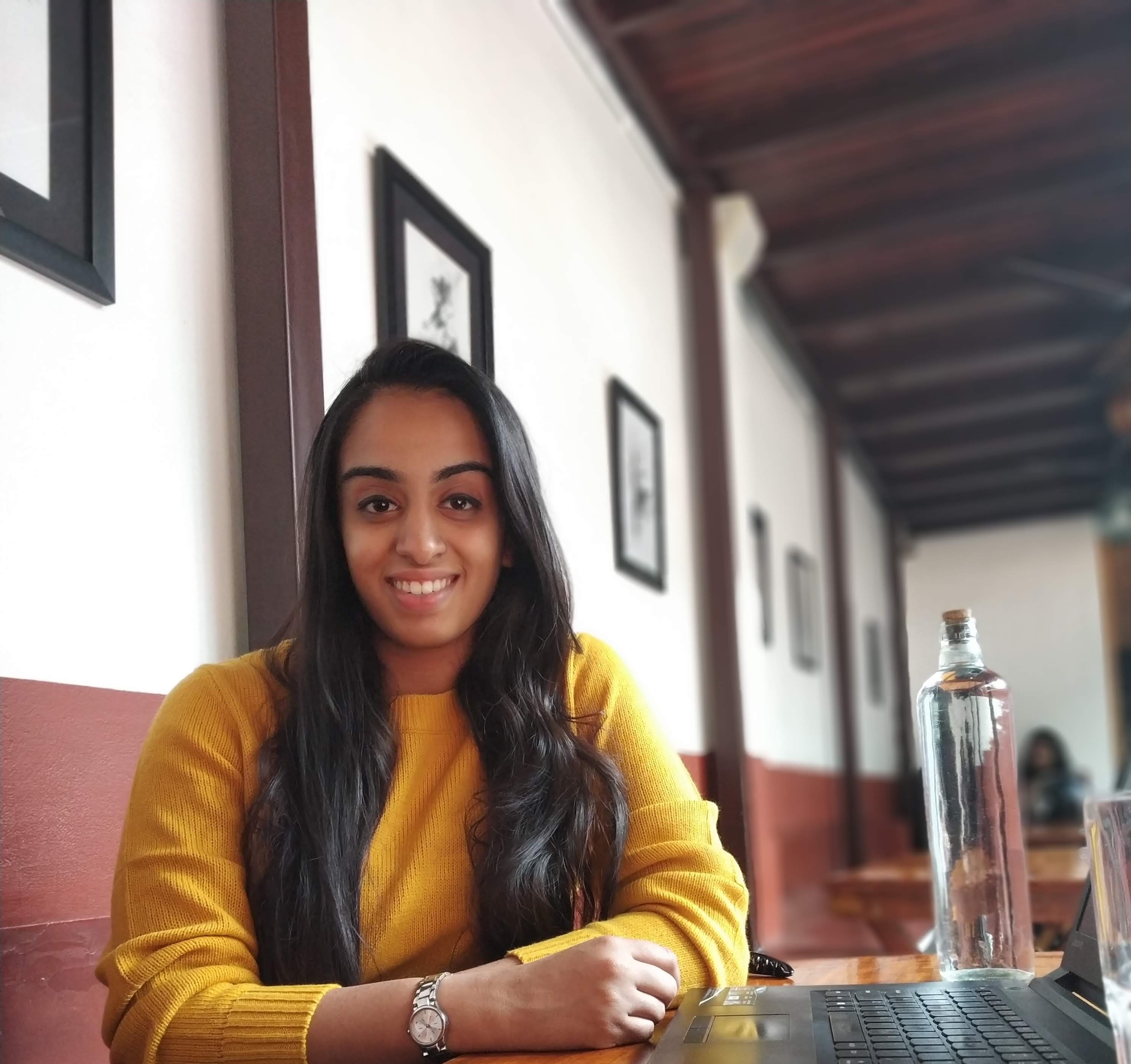
Roshni Menonis an incoming LL.M. candidate at King’s College London, as well as a Chevening Scholar. In this interview, the Christ University law graduate (’18) discusses how one ought to go about applying for the scholarship, her decision to not defer the LL.M., applying to KCL, and a whole lot more.
Roshni Menon (Chevening Scholar, LL.M. ’21 at King’s College London)
When did you start planning for an LL.M.? Was it something you wanted to do right after your undergrad?
After obtaining my bachelor’s degree, I was certain that I wanted a career in corporate and commercial laws. However, a bachelor’s degree in India doesn’t allow you to specialise in a particular field. Therefore, to enhance my understanding of the corporate legal industry, I knew that I had to obtain a higher education. At this juncture, I decided to put my master’s on hold and enter the legal profession instead.
The benefit of having real work experience is that you learn certain things that simply cannot be taught in a classroom. By working on real corporate law matters, I was able to find my area of interest in which I wanted to specialise and this urged me to go after a master’s degree in International Financial Laws. I did not want to do a master’s degree for the sake of doing one. Because to my mind, it is more than just a career milestone – rather, it needs to serve some predefined purpose.
I told myself I would pursue a master’s degree only if I felt that my career requires me to broaden my depth of knowledge in that subject. After two years, the answer to this question is ‘yes’. I feel that my career would significantly benefit from the knowledge and world exposure of pursuing an LLM in the UK.
How did you go about selecting just where to apply? And what got you to narrow down on Kings College London?
My selection criteria were primarily based on legal jurisdiction, quality/reputation of academics, and the research facilities available. However, I also wanted the university to have a healthy mix of extracurriculars, external events, and fun student life! For this reason, Queen Mary University of London, Oxford, Cambridge, and King’s College London were my choices.
I’ve decided to go to King’s College London mainly because my course allows me to choose unique modules that I am interested in, which is taught by a highly acclaimed professor who is at the top of his field. Secondly, because King’s is situated in London, I will have access to several networking events conducted by prestigious law firms and groups.
Also, I am very interested in holding editorial positions and the King’s Student Law Review is a highly acclaimed journal that I hope to be a part of!
When it comes to applying for the Chevening Scholarship – what would you say is the most important bit that prospective applicants ought to keep in mind? When should they start the application process?
Applying for scholarships is an important experience to undergo in my opinion. The questions asked in a scholarship application may seem fairly straightforward but you’ll need to really think about your life and indulge in deep reflection.
The questions asked in a Chevening Scholarship revolve around leadership, networking, career goals, and the course you wish to study. The best way to approach the Chevening application is to find a common theme in your life or something that has been a recurring force or reason for doing what you do. For me, it was to become an authority figure on corporate laws.
Before sitting down to write your answers, I highly recommend that applicants talk to Chevening alumni. You should connect with them and ask them about their experience. This will help you get a sense of what life is like as a Chevening scholar. Soon you’ll find yourself drawn to the programme and envisioning all the possibilities it can give you and your career.
This will clue you in on what your dreams or goals are!
The Chevening application is open from August to November each year. I would suggest that students start the application process at least 2 months before the deadline. This will give them ample time to understand what Chevening is all about, how it can add value to their life, and why they are deserving of it.
This post has dealt with the Chevening essay. When it comes to the interview stage, any advice for future applicants?
While preparing for the Chevening interview, the main thing you should do is read and study your application essays. This is because applicants have been shortlisted based on the essays submitted and at the interview stage, you are most likely going to be asked questions about it.
It is important to remember the examples you’ve given in your essays on leadership and networking, and you must be prepared to elaborate on these topics.
During the interview, you must also demonstrate your personal and professional aspirations, and how Chevening can facilitate your achievement of these goals. After finishing your basic preparation, I highly recommend that you take part in mock-interviews with your family and friends. The best way to beat nerves in an interview is to know your content and know it well.
What are your expectations from the Chevening scholarship? Apart from the financial aid aspect of it, what do you think is the most valuable bit about this scholarship?
Chevening is the UK government’s international awards programme aimed at developing global leaders. Unlike other scholarships, it is far more than just financial aid to pursue higher studies. It offers a unique opportunity to become and meet future leaders from all over the world, to develop professionally and academically, to network extensively, to experience the UK culture, and build lasting positive relationships with the UK.
Personally, I am very excited by the networking events and opportunities it presents. It will allow me to create a global network of friends and engage in cultural and cross-disciplinary activities!
I plan on collaborating within this community to launch social and legal projects in India in the context of financial development.
Lastly, you have decided not to defer the LL.M. – what made you take this decision? And will it change if classes are completely online for the first semester?
Unlike several universities, King’s College London has decided to open its doors to students this year. I have decided not to defer the LL.M because the classes will be a blend of online and face-to-face teaching, only for a part of the first semester, with social and spatial distancing maintained and good access to the university library.
Also, pursuing a master’s degree for me is more than just about the classroom experience; it’s also about undertaking research projects with professors and peers, editing articles for the law review, visiting museums of a historic city, and making friends from all over the world.
As of now, these activities are within reach because of the positive steps taken by the UK government to open up London through a structured plan.
We need your help in keeping this blog alive. If you feel that the content on this blog has helped you, please consider making a donation here.
First Person Accounts (FPA’s) are meant to provide a first-hand account of Indian graduates who have pursued, or are pursuing, a post-graduate course (LL.M. or otherwise) from different universities across the world.
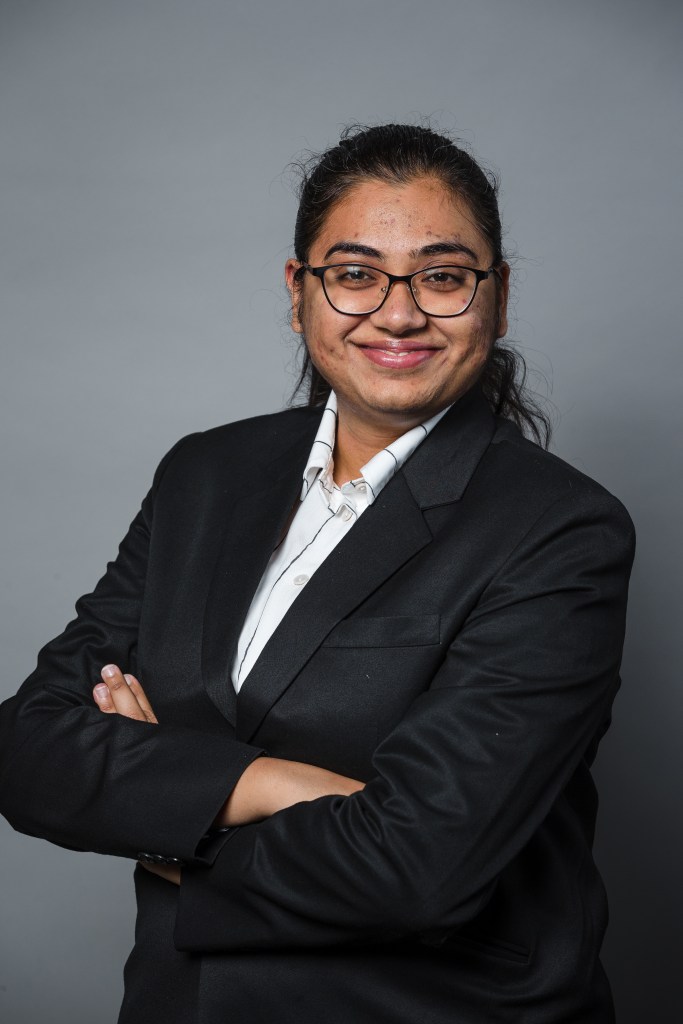
Niyati Jigyasi (LLM ’20 Georgetown University Law Centre)
Niyati Jigyasi is a ’20 LL.M. graduate from Georgetown University Law Centre, where she completed the Taxation LL.M. In this FPA, the ’14 NLIU graduate discusses ways her reasons for applying to Georgetown, the LL.M. experience itself, rediscovering the love for studying, and a whole lot more.
Five years into your career, you opted for the LLM. What were some of your expectations from the LLM itself?
Doing Master’s was something I always wanted to do, so when I came to Georgetown University Law Center for my Taxation LL.M, some of the expectation which I had were- to study international as well as U.S Taxation Laws from the amazing professors at Georgetown, meet lawyers from other countries, meet U.S Tax professionals, improve my networking skills, make new friends and more importantly improve my international tax knowledge and skills.
With an interest in tax law, how did you go about selecting where to apply? What drew you to Georgetown in particular?
The first thing I did was to finalise the country to pursue my Master’s. When it comes to Taxation, there are only few universities abroad, which are best known for their Taxation LL.M program. I did an online research and read about the Taxation LL.M programs at various Universities.
While doing this research, I focused on the courses which are offered at the Universities, the other opportunities which are provided to students during the LL.M program and what ranking does that program hold on various websites. After doing my research, I also spoke to few graduates who went to U.S. to pursue their Taxation LL.M. After considering all these factors, I decided to pursue my LL.M from U.S.
Once I had finalized the country, I applied to about five Universities and got offers from two.
When I got the admission to Georgetown, I was kind off sure that I would go there as Georgetown has one of most prestigious Taxation LL.M program in the U.S. Georgetown is one of the few universities with the Externship program which gives LL.M students the opportunity to work with an organization during the academic year and get academic credits for the same.
Apart from this, Georgetown offers specialization certificates in various areas of Tax Law which one can opt for along with the LL.M. However, it becomes difficult for Indians to get any of this certification, as we also end up taking subjects for Bar Exam, but if planned properly one can manage to get the additional certificate as well.
Moreover, Georgetown in collaboration with NYU organizes the Taxation Interview Program– a job fair specifically arranged for the Taxation LL.M students.
I considered all these advantages of Georgetown in comparison to the other universities and decided to go with Georgetown. Moreover, the fact that I will get the opportunity to be right in center of the capital of the country with walking distance to Supreme Court, White House and Capitol Building is also something which drew me towards Georgetown.
Any advice on how to juggle work and the LLM applications? How early should one start with the application process?
Ohh that’s a really difficult task. Good Luck to all those who are doing that or are planning to do that! I feel working on LL.M applications is itself a huge task and when you have to do that along with a full-time job, it is hard. But take it from someone who has been there done that, if you are really focused and determined to pursue the LL.M, it is very much possible and the LL.M is worth the hard work and sleepless nights.
I started working around September and I had my first deadline in end of November. Trust me those 3 months were not enough. I don’t think that I had any weekends free during those 3 months. Either I was busy with my office work or was working on my LL.M applications.
I used to try and work after office hours whenever I had time and on almost all the weekends when I was not working. Going through various statements of purpose (SOPs) to get an idea as to what and how one should write helped me a lot. Being in Mumbai I had to travel almost an hour to work, so I used to utilize that time in cab/train/bus to just write down the points which I want to include in my SOP or used to read my drafts and mark wherever I want to make changes. Also having someone to review your drafts really helps.
I would definitely advice everyone to start working as early as possible as it gives you more time to perfect your SOP and get it reviewed from your friends and family and makes your life a bit easy. Also, one needs to keep in mind the documentation which is required to be sent to LSAC so if you start to work early, you do not have to worry about the procedural issues.
But if you are not able to do that, it is okay! Start as early as possible and at least 3 months prior to your first application deadline as according to me you will need at least that much time to get your documents processed as well as have a decent SOP in place.
Did you apply for/receive financial aid?
I applied for all the possible financial aids. But unfortunately, I wasn’t able to get any financial aid either from Georgetown or any other organization. I got approximately 50% tuition fee waiver from the other university where I did not end up going.
I would advise anyone who is looking for getting the financial aid to keep a check on the scholarship applications as some applications have deadline prior to the university applications. Further, as per my understanding, apart from your credentials and applications, the letter of recommendations might also play important role in getting financial aids. I would suggest do your thorough research about the organization giving scholarship and submit the letter of recommendation keeping in mind the value which that letter of recommendation will hold before the organization.
As we are speaking about financial aid, I would like to use this forum to put across the point that its completely fine if you don’t get the financial aid, don’t get disheartened about it. I didn’t have any. I believe that you should not let finances come in between achieving your goals in life.
If you can get admission to the best Universities, you have the capability to take an education loan like I did and pay it off after graduation. The experiences I had in this one year was definitely worth all the stress I took of continuously questioning myself whether does it make sense to take such a huge loan for doing LL.M.
Take it from me, it might not make sense initially but it will make sense later on when you complete your LL.M. I think this investment was worth the experience and I am saying this even when I completed my LL.M in midst of a pandemic.
How has the LLM experience been? Were the pre-LLM expectations met?
Even though we 2020 graduates weren’t able to end our LL.M year the way we expected, it was still one of the best decisions I made. My experience has been great and overwhelming. I never ever expected that I will have such an amazing experience at Georgetown. The LL.M experience is not only about the subjects one studies or the prestigious degree, but it is also about the people you meet, the professors who eventually become your mentors, friends you make, the opportunity to meet and learn about the different cultures.
Personally, for me this experience went beyond my pre-LL.M expectations. I think I have grown as a person and as a lawyer. I realized that I don’t just like, but love, working on Taxation laws. I always used to consider myself as an Indirect Tax Attorney as that is what all I practiced in India and was always skeptical that I might not like the International Taxation and Income Taxation courses at Georgetown. But to my surprise, I loved those subjects as much as I loved my Indirect Taxation subjects.
While working for five years in India, a question always crossed my mind that do I really want to work as a Taxation Attorney all my life and I never had a clear answer to that. But now, I can say with all clarity that I want to be only a Taxation Attorney all my life and can do anything under the roof of Taxation. This year also introduced me to my newfound love for studying.
One of the common refrains we hear is that it is difficult to make the switch from working to studying – thoughts?
I can completely understand that. This was one of the biggest doubts I had when I decided to pursue by LL.M. But by the end of LL.M, I realized that I just love studying Tax Laws. I had taken some subjects for the New York Bar Exam but studying those subjects was definitely not as interesting as Tax Laws.
Attending the Summer Experience program at Georgetown helped me to get into the routine of studying when there is less pressure of reading and less events to attend. I would say if you choose the subjects which you like and which is the core of your practice area, you are able to relate more which makes studying easy and interesting.
It definitely takes some time to get into the routine, adjust in the new environment and specially the socratic method of studying. But with time you get used to that and it will be same as work just that you are no longer accountable to your partner or client but to yourself. So, with self-discipline and clear goal in mind, one can without a doubt go back to studying at any point of time. I had people who had worked way more years than me and when you have friends who are in the same position, together you all can get through the studies.
In fact, I think after working for few years, we all are more prepared to sit for those long hours of studying and attending back to back classes. Most of us are already in the habit of sitting for extended hours in the office or working late nights. We don’t have a typical 9-5 job.
So after sometime, the LL.M also becomes as full day job for us and we are used to doing that. The added advantage that this job comes with lot of breaks and you can decide what you want to work on! I considered each day as a full-time law firm job and that made it easy for me to study as well as attend other events at University.
What is your reading of the employment opportunities available to international LLM graduates in the US?
I wish had an answer to this question! Due to the COVID-19 pandemic, no one has any clue when and how the economy will open and hiring freeze would be lifted. I just hope it happens soon. International students anyways have a lot of issues getting jobs in U.S. due to visa restrictions and this pandemic has just added another level difficulty in getting jobs here.
In a pre-COVID or a normal scenario, there can be opportunities available for international LL.M graduates in U.S., specifically Taxation LL.M. But with all the visa issues, it is difficult to convince the employers to hire international students as the employers are not open to sponsoring the international students for work visa.
With a Taxation LL.M from Georgetown or few other universities which are a part of TIP/TARE program, the chances of getting a job for an international LL.M graduates becomes a little less difficult. A university organized recruitment event only for Taxation LL.M graduates for job opportunities in the U.S., gives international students an opportunity to compete at equal level with the U.S students. I know there is an International Students Interview Program which is also a recruitment event specifically for international students, but that is mostly for opportunities outside U.S.
However, either it is through these events or otherwise, getting a job in U.S depends a lot on networking and sending tons of applications. It needs a lot of hard work and patience to get a job in U.S for international students. It is difficult but not impossible. With correct approach and determination, one might be able to get a job.
Lastly, any advice for the Indian law graduate who is considering a master’s abroad?
I personally feel that having some good experience in India before going for Master’s abroad is very helpful in deciding the area of law in which you would want to get your LL.M. Having experience also builds up your resume and develops good credentials for your applications as well as for looking for jobs after LL.M. So, I would definitely suggest go for your Master’s after having some work experience.
But I definitely suggest if you are thinking about doing your Master’s, you should go for it. Financial investment, taking a break from work, doubts about whether you will be able to study or not, etc should not hold you back.
An LL.M will give you the experience which you would have never expected. The entire process of applications is tiring and stressful, but the kind of exposure you get during your one year of LL.M, at a personal and professional level, will make it all worth it. So, if you are considering about doing your Master’s abroad just start working on it as soon as possible. There is so much that awaits you, and you might have never even thought about it.
An LL.M from abroad is that experience which I would say every Indian law graduate should have, even if they never want to settle or work abroad.
This is one experience which would definitely make you a better lawyer and a better person.
We need your help in keeping this blog alive. If you feel that the content on this blog has helped you, please consider making a donation here.
The Daksha Fellowship is an extremely interesting (and innovative) addition to India’s legal education, and one that holds a lot of promise. What I am particularly interested in is the skill-building aspect of the fellowship, one that is quite removed from the theory-heavy pedagogy that is followed by most, if not all, Indian law schools.
To find out more about the course, I spoke with Ananth Padmanabhan, Dean at the Daksha Fellowship. I wanted to know what the Fellowship seeks to do, his thoughts on endowment-based legal education (the Fellowship’s tuition is waived), as well as the future of legal education in general.
Ananth Padmanabhan, Daksha Fellowship.
Personally speaking, what has been the most exciting aspect of building the Daksha Fellowship?
Designing an innovative curriculum and bringing together experts from academia and industry who can enrich this vision through great teaching and mentorship!
The three pathways at Daksha that we identified as areas for advanced learning – technology law and policy, law and regulation, and disputes resolution – and our philosophy of simultaneously strengthening knowledge and skills in areas like finance, accounting, public policy, data-driven decision making, writing and expression, and leadership, has helped generate important discussions on what ails legal education.
All along my professional journey, I had been waiting for the right moment to transition fully into academia and Dr. Pramath Raj Sinha’s vision took no time to convince me.
“I believe that educational institutions and projects cannot be structured top-down and rather must encourage free-thinking and competing ideas. And of course, the best ideas and solutions emerge from this process of open discussion and debate.”
I believe that educational institutions and projects cannot be structured top-down and rather must encourage free-thinking and competing ideas. And of course, the best ideas and solutions emerge from this process of open discussion and debate. The fact that Daksha is gradually becoming a crucible for this approach to institution building makes me happy, and excited about its trajectory.
From an admissions perspective, what are some of the characteristics of the ideal Daksha Fellow?
A Daksha fellow is someone who is –
curious to learn
has a collaborative spirit
communicates his/her thoughts clearly
ambitious in life
has the intent to solve problems
Could you tell me a bit about the incoming batch of Daksha Fellows? What are some of their expectations from this Fellowship?
We are very lucky to have extremely bright graduates from diverse backgrounds. While admission stats are usually sacrosanct till we close admissions (we have a fresh round ongoing on account of the interest and demand in this fellowship), I will add that the geographical distribution, the fresher to working professional ratio, the gender ratio, the spread across tier 1, 2 and 3 colleges etc. have given us much cause to rejoice.
There are also a few who have preferred the Daksha fellowship over a foreign LL.M.
We had conducted a week-long series of knowledge transfer through DakshaDialogues and DakshaMasterclass on data governance and on disputes resolution respectively. These conversations, in general, had set positive expectations in the broader legal fraternity about our work as well as helped attract applicants who self-selected into these areas of expertise.
Many of them have now accepted our offers too.
Incoming Daksha fellows who I spoke with are very excited to be a part of this fellowship model and in building this community. They are optimistic that this fellowship will set them on a journey of excellence in their chosen area of specialisation. More immediately, they are curious to see how our hybrid mode of teaching – we begin online and then transition to residential by early next year – is going to pan out. They are also expecting some great internships that can place them on the career advancement track.
If a Fellow wants to switch pathways midway through, how early/late can this decision be made?
We start our program online from Sept 28 and our pre-term courses for the fellows will commence from mid-August. The fellows will have their first term to finally decide on the pathway and they will be guided and mentored along the process in deciding their interest.
The specialization courses actually begin only after this term. This will be the only window to choose the specialization, of course, so to put a date to it under our current schedule, they need to make this call sometime by beginning of November.
Curious to know your thoughts on the endowment driven education model – do you think this model can work in India? More specifically, with Indian law schools?
Yes. It has worked in fact better than any other educational model and we have some examples before us like Ashoka University and now, Plaksha University. In India, where the quality of higher education is significantly below the rest of the world, a philanthropic model alone can pool the resources that even a standalone private body or government institutions cannot afford.
“In India, where the quality of higher education is significantly below the rest of the world, a philanthropic model alone can pool the resources that even a standalone private body or government institutions cannot afford.”
Bringing in internationally trained academic advisors, faculty, and practitioners incur huge costs. Giving a full tuition waiver for the entire cohort again along with a global immersion requires a big corpus. If national law schools had the freedom to spend through endowment/philanthropic initiatives, they could definitely do much more for student learning and welfare.
Sticking with this theme, do you see Indian law schools reducing their dependency on State aid and student fees? What are the sources of funds that they could concentrate on?
While some of them have started working towards reducing such dependency with endowments already in place, it has mostly been limited to supporting conferment of gold medals to the graduating cohort and so on. Some try and accommodate students coming through IDIA with full scholarships. But these are mostly in the name of an individual – a former judge, a senior lawyer, or a law firm very rarely. There is much reluctance in opening up the endowment outside the legal fraternity to the corporates.
“Philanthropists and corporate leaders are open to shaping the Indian higher education ecosystem. But this has to be professionally managed as we are speaking about extremely busy and detail-oriented people here.”
Philanthropists and corporate leaders are open to shaping the Indian higher education ecosystem. But this has to be professionally managed as we are speaking about extremely busy and detail-oriented people here. In short, to get the benefit of this support, you have to spend on a development person and present your case well. Your past reputation may help, but can only take you so far.
An alternate way, of course, is to ramp up online and executive education. This needs a different kind of vision but with the kind of stellar reputation and alum network that some of our national law schools have, it can be done if leadership displays the right vision.
Lastly, given your own experience, do you think the Fellowship would help those who are considering studying outside the country? And if so, how could they best use their time as Daksha Fellows?
Definitely. The comprehensive specializations that we offer are extremely useful when pursuing specialized LL.M. programs later, or even in picking courses and professors for a general LL.M. program like the one I did at Penn Law. The set of skills that are imparted- research methods, mathematical and statistical thinking, presentation and communication skills, critical thinking and leadership – will ensure that our fellows stand out when pursuing any subsequent program.
The fellowship also provides an extremely helpful orientation to public policy and non-legal domains, which can potentially help our fellows identify better the appropriate discipline in which higher education may be pursued. For instance, not every lawyer needs to do an LL.M. Some may choose to switch to economics or public policy, and Daksha Fellowship can help them navigate these choices better.
There is nothing special they need to do in order to help them in this regard.
The structure of our program is such that if they diligently pursue all the activities we have lined up for them, it will lead to much-needed self-realisation at some point along the course of the Daksha journey.
(Applications for the Fellowship close on July 27)
We need your help in keeping this blog alive. If you feel that the content on this blog has helped you, please consider making a donation here.
First Person Accounts (FPA’s) are meant to provide a first-hand account of Indian graduates who have pursued, or are pursuing, a post-graduate course (LL.M. or otherwise) from different universities across the world.
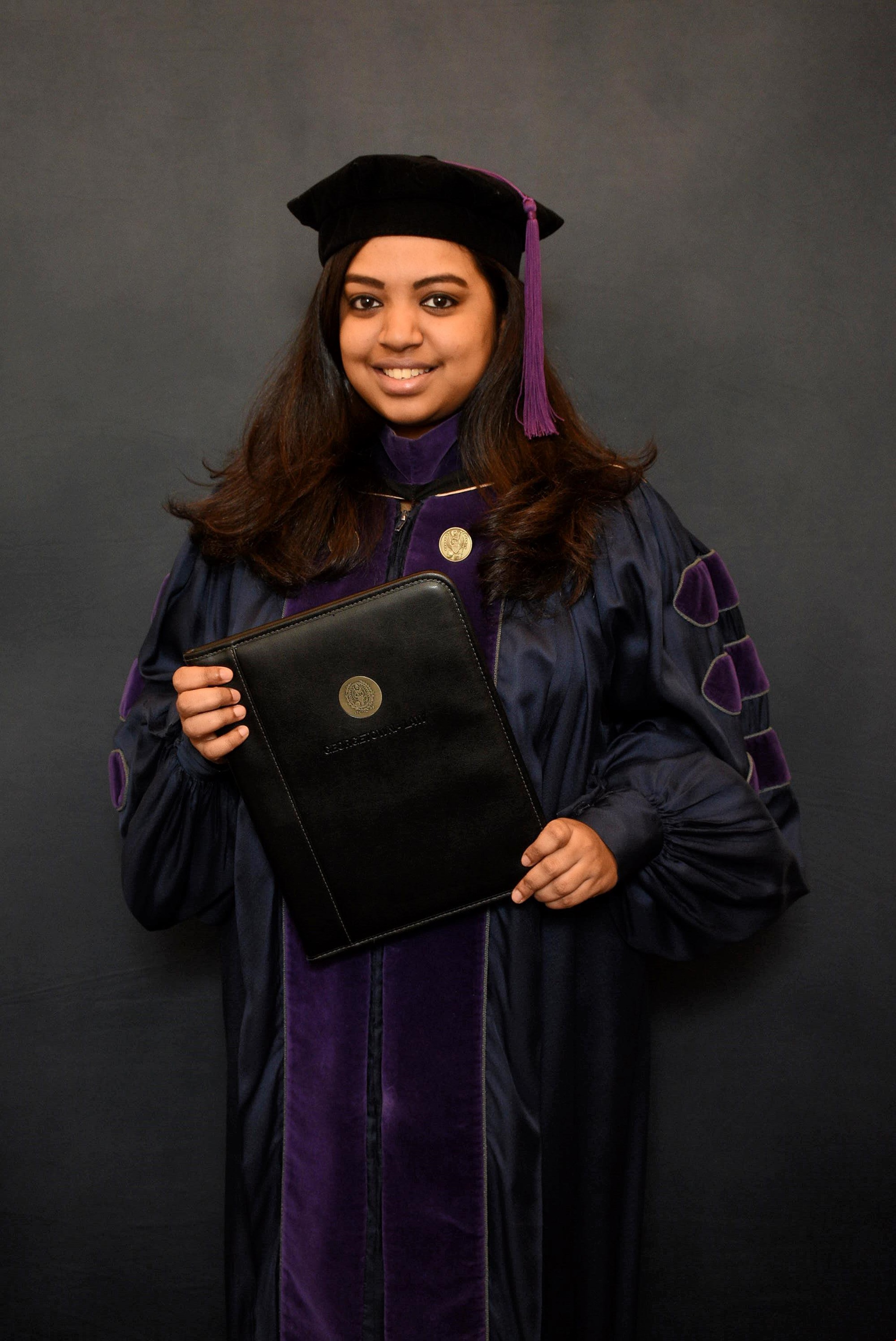
Aarthi Sivarajan (LLM’20, GULC and JD’23 SMU)
How early on did you know that you wanted to take up an LL.M.? And when did you begin the application process?
I was inclined to take up the LL.M. Program sometime during my third year of law school. At the end of that year in 2017, I had pursued a Summer Abroad Program at the American University Washington College of Law (AUWCL) in Washington D.C.
This Program enabled me to explore the depths of International Law and I was particularly intrigued by the teaching methods that made my experience all the more enriching. Following this, I took an interest in Arbitration / Dispute Resolution and considered specializing in this field of law.
In 2018, I received the opportunity to attend a Semester Abroad Program (SAP) at the National University of Singapore (NUS). In this Program, I elected International Dispute Settlement as one of the courses, which reaffirmed my decision to do my Master’s in the field of International Arbitration.
I started the application process when I was doing my SAP at NUS, which was around August-September 2018. I was in the final year of my undergraduate law degree then. Since I was extremely keen on Arbitration as my major, I narrowed down Universities well known and recognized for their LL.M. Programs in International Arbitration and Dispute Resolution.
I created a table with the list of Universities I had in mind, along with the respective information such as the course name, admission requirements, documents to be submitted, program commencement date and the deadline for submitting the application. It took a lot of time and research to gather the information since each University has its own requirements.
I would personally suggest students to start thinking about the LL.M. as early as possible, since it requires a level of commitment and effort to get into the University you desire. I would also recommend starting ahead of time to arrange your application materials/documents instead of pushing it towards the deadline, as it can be extremely tedious to submit your application/s in a rush.
What were some of the schools that you shortlisted while applying? Why narrow down on GULC?
As previously mentioned, I was keen on specializing in Arbitration. Hence, I chose Universities that stood out for their Dispute Resolution Programs. Some Universities that I had in mind were National University of Singapore (NUS), MIDS (Geneva), Queen Mary University of London (QMUL), New York University (NYU) and King’s College London (KCL).
That being said, I was also interested in Universities that provided a holistic approach to their LL.M. Programs by issuing Certificates of Specialization in different practices of law, including Arbitration. One such University was Georgetown University Law Center (GULC).
While I received a couple of offers, I chose GULC’s International Legal Studies LL.M. Program for a variety of reasons. First and foremost, the LL.M. programs at GULC allow the students to sit for the New York Bar Exam upon completion of the program. This was an added advantage that I didn’t have in most of my other choices of Universities.
Secondly, the faculty members who taught Arbitration at GULC caught my eye and I was extremely interested in being tutored by the best minds in this field. Thirdly, GULC allows LL.M. students to pursue an externship program in the Spring Semester, which I felt would increase my practical exposure in the United States in addition to theoretical knowledge.
Lastly, having previously been to Washington D.C. for the Summer Abroad Program, I believed I would be able to cope with the curriculum as well as the place. D.C. is simply amazing to visit!
When it came to the personal statement, what were some of the aspects of your own journey as a law grad that you chose to highlight?
The Statement of Purpose (SOP), as I am sure it would be for many, is something that requires great attention, detail and care. It is practically a 1-2 page document that speaks to your eligibility as a prospective candidate to join a particular University.
As such, the pressure to make it appealing and interesting to the Board of Admissions is immense. I started off my personal statement with this mindset.
However, as I was trying to make it sound appealing for the person who would be reading my SOP, I realized I was putting too much of an effort to create an impression rather than speaking to my abilities and stating the reasons as to why I would make an eligible candidate.
I restarted my personal statement with a mind to highlight why I wanted to do the LL.M. and what I have achieved to support my application, instead of worrying over how it would be perceived by someone else. I began by explaining my interest in law and my gradual inclination towards International Law and Arbitration. I substantiated my interest by highlighting my experiences during my study abroad programs at AUWCL and NUS.
Further, I supported my academic credentials and professional experience by touching upon my achievements during my undergraduate program as well as the various internships I had pursued.
At this point, it is essential to mention that the SOP shouldn’t really be a replica of your resume/CV. The Board of Admissions receives plenty of applications with various outstanding credentials. Therefore, while highlighting your grades, achievements and other details in the resume might serve testament to your intellect and abilities, they might not do justice to the personal reasons you may have for doing the LL.M.
I would suggest spending more time on listing the reasons for wanting to do an LL.M. in the first place and how you believe it would support your career or other future plans. Each candidate has a unique story to narrate and the best way forward is to put yourself out there honestly. I believe that makes you a more credible candidate instead of putting together something that you think the Admissions Committee wants to hear. This is based on my own personal experience.
Did you apply for/receive financial aid?
I applied for financial aid in most of the Universities I had applied for, and received aid from one of them (not GULC). However, since I was set on GULC, I decided to turn it down.
I did not receive any financial aid from GULC as the deadline for applying was over by the time I received the offer. However, I would strongly recommend students to apply for financial aid nevertheless, by making a compelling and convincing case.
Receiving financial aid and scholarships makes you a promising candidate and is advantageous, without a doubt.
How was the LL.M. experience at Georgetown? What were some of the highlights along the way?
To say that the LL.M. experience at Georgetown was amazing would be an understatement. It is a mark of how much I have learned and grown in the 8 months that I was at GULC. The LL.M. program commences only in August, but they offer a Summer Experience program that starts a month earlier in July. I chose to attend the program, despite the little time I had post completion of my undergraduate law degree, and it turned out to be the best decision I had made.
I was able to meet so many students from diverse backgrounds and that one month passed by faster than I thought it would. Once all the students had arrived in August for the LL.M. and JD Programs, the atmosphere became more vibrant with plenty of activities and entertainments.
I was selected as a Board Member of the Georgetown International Arbitration Society (GIAS), which paved the way for me to meet many distinguished professionals in this field. We organized plenty of events and seminars on different topics in International Arbitration.
It was a great pleasure serving as an Event Co-Organizer in GIAS throughout the academic year. There was so much to learn and it was engaging to listen to various perspectives on a subject that I was studying in parallel.
With regard to academics, I was extremely happy and satisfied with my choice of courses and the respective faculty. One of the subjects I had to take in the Fall Semester was U.S. Legal Research, Analysis and Writing, which is a prerequisite for taking the New York Bar Exam. The style of writing and drafting a memorandum in the US was completely different from what I had learnt back in India, and it took me plenty of time to get accustomed to the Bluebook citation and formatting methods.
But I had the best Professors who guided me along the way and eventually I was able to earn the Honors grade for that subject. I also received good grades for the other subjects I took, and graduated with Distinction (Honors) as well as a Certificate in International Arbitration and Dispute Resolution.
In the Spring Semester, I received the opportunity to pursue an externship at Xtrategy LLP. I worked for the Founding Partner of the firm, who was also my Professor for one of the subjects I took that semester – Investment Treaty Arbitration, Public International Law and Landmark Judgments of the ICJ. I believe the externship complemented my course perfectly as a lot of the work I did was based on what I had learnt in class.
I had the pleasure of interacting with professionals from other firms as well as drafting plenty of memorandums and non-disclosure agreements. I had a great mentor who explained the nature of the work patiently to me, guided me academically and professionally, and helped whenever I had difficulties comprehending certain aspects of the subject.
One unfortunate incident that occurred, which everyone in the world faced, was the impact of Covid-19. All my classes were shifted online, including my externship program. Ultimately, I had to return back home towards the end of March, thereby ending my time in D.C. in an abrupt and unexpected manner.
However, Georgetown did everything to ensure that we had minimum disruptions to our academia, in light of the pandemic. Apart from the online Zoom classes, prompt communication and replies to any queries students might have, Georgetown also adopted the policy of an Optional Pass/Fail for the Spring Semester.
This means that students had the discretion to convert any letter grades into a Pass (Pass grades do not affect the overall GPA), if they feel they could have done better in any subject without the Covid-19 difficulties. I feel that Georgetown has been very effective in attending to students’ needs and providing help every step of the way.
Looking back, what were your expectations from the LL.M., and were they met?
The main reasons I chose to apply for my LL.M. abroad were twofold: One, I wanted to learn more about Arbitration from the best minds and at a University that provided an effective curriculum.
Two, I was seeking a global exposure in terms of academia and professional experience. I strongly believe these goals of mine were satisfied.
I elected a variety of Arbitration courses such as International Commercial Arbitration, Investment Treaty Arbitration, International Negotiations and International Commercial Arbitration with a Foreign Sovereign. The Professors who taught me these courses had so many different perspectives to the subject and sometimes their ideologies complemented each other perfectly well. On that front, I am confident that my knowledge in this field of law has significantly broadened.
My externship program, as aforementioned, has been particularly insightful as I was able to comprehend how law firms in the United States function and what to expect while pursuing a career abroad. I also picked on the minds of the various faculty members (not just those who taught me) by meeting them individually in a professional capacity.
I was surprised at how easy it was to communicate with them without any reservations, given their extensive experience and impressive backgrounds. Further, I also had the pleasure of meeting so many students who had significant work experience and academic records from different countries.
Having pursued my LL.M. immediately after completing my Bachelor’s, I found it immensely beneficial to learn about others’ personal and professional background. It was, all in all, a fulfilling learning experience. In this regard, I believe I received the global exposure I was looking for.
Overall, I feel my time at Georgetown was very enriching and rewarding, in the sense that I have so much more to take back with me than when I first landed in D.C. I am positive that this program has equipped me with the tools and resources to pursue my professional goals.
You are currently enrolled as a JD student at SMU – am curious to know the reasons behind this move.
Although I pursued my undergraduate law degree in India, I was brought up entirely in Singapore. I have always been very keen to work in the country that I consider home. In Singapore, it is possible to write the Bar Exam only if you have completed your Bachelor’s in Law or Juris Doctor (JD) in Approved Universities such as NUS, SMU (Singapore Management University) and SUSS (Singapore University of Social Sciences).
Singapore legislation also recognizes certain applicable law degrees from countries like Australia, New Zealand, the United Kingdom and the United States of America. Since my Bachelor’s and Master’s in Law degrees do not satisfy these requirements, the most I could do was to apply as a Foreign Lawyer in Singapore.
In a way, I believe the Covid-19 pandemic was a blessing in disguise for me to pursue the J.D. Program at SMU, as it was something I decided on after returning back to Singapore in the middle of my LL.M. Program. Had I been in the United States, I don’t think the idea would have crossed my mind and I would have missed this valuable opportunity.
I was exploring various ways to work in Singapore, but there were two main shortcomings. One, firms mostly prefer candidates who are Singapore Qualified Lawyers. Two, the pandemic made employment opportunities all the more scarce. At this point, I came across the J.D. Program at SMU and was particularly interested in the curriculum.
It is a three year program, during which time students have to complete a 6 week internship and 20 hours of pro bono service in order to graduate. Since the J.D. intake each year was rather small in number, I decided I would at least try applying for it and didn’t really have too much of hopes, much unlike the time I had applied for my LL.M. Program.
After submitting the application, there was a mandatory written test. If candidates passed the written test, there would be a final interview. I was truly surprised that I had cleared both the written test and interview when I received the offer.
Following this was an arduous week of making a decision – to accept the offer or not? I guess I knew on some level that I would accept the offer. But I wanted to be sure of the reasons before doing so. For some, it may seem like a repetition of what one may have learnt in their Bachelor’s law program. But I have always been keen to learn the law from the Singaporean standpoint. I would also be able to pursue Arbitration as part of the curriculum. The internships at Singaporean law firms would prove extremely beneficial, as I have previously interned in such firms.
The most important reason for ultimately accepting the offer was knowing that I would be eligible to sit for the Singapore Bar Exam. It was a tough decision to make, given the three year time commitment and investment to be made, but ultimately the pros outweighed the cons. I believe the J.D. Program would enable me to pursue a fruitful career in Singapore, which is my primary goal.
Lastly, any advice for the Indian law grad who is contemplating a master’s abroad?
I would suggest pursuing a Master’s only if you’re absolutely sure about it. While I was positive about doing the Master’s program, I had my own reservations about pursuing this degree immediately after my undergraduate degree, since most people I know have at least a couple years of experience before doing their Master’s.
However, I felt it was appropriate to complete studying before stepping foot into a job. As it turns out, I feel that my J.D. admission might not have been possible if not for my LL.M. experience.
Additionally, doing a Master’s abroad involves studying foreign law and getting accustomed to how that particular country functions. Do ensure that you’re genuinely interested in learning about different laws and that you would be comfortable in such a place.
Reach out to your friends and family to get an idea before setting your mind on one University in particular. In case of any questions or clarifications, please feel free to reach out to me as well.
Furthermore, do consider the amount of time, energy, investment and efforts you have to put during this rigorous 1-year program. You wouldn’t want to feel like you could have spent this time doing something else if you aren’t entirely prepared for everything that the Master’s program entails.
Ask yourself if a Master’s would help you achieve the personal and professional goals that you have. If yes, start well in advance to gear up for your Master’s and make the best out of it! I surely did during mine.
We need your help in keeping this blog alive. If you feel that the content on this blog has helped you, please consider making a donation here.

 Amicus Partners