• As most readers know by now, First Person Accounts (FPA’s) are meant to provide a first-hand account of Indian law graduates who have pursued, or are currently pursuing, a post-graduate course (be it an LLM or otherwise) from different schools across the world.

    The FPA (International) is meant to broaden this scope somewhat, getting non-Indian law graduates to discuss their LL.M. experiences in different law schools from across the world. The idea behind the FPA(I) interviews is to help the Indian law graduate better understand her potential cohort, and also expand the LL.M. conversation in general.

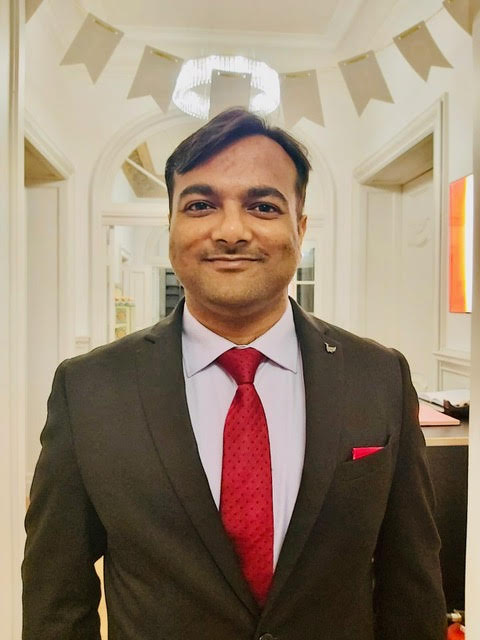
    Sharareh Dastmalchi is an Iranian law graduate who recently completed the International Dispute Resolution LL.M. from the Humboldt University of Berlin. In this interview, she discusses her reasons for enrolling for this particular master’s, the course itself, and a whole lot more.  

    Sharareh Dastmalchi is an Iranian law graduate who recently completed the International Dispute Resolution LL.M. from the Humboldt University of Berlin. 
    Sharareh Dastmalchi

    The IDR LL.M. is your second master’s course in law. What made you take the first master’s course, and what were some of your expectations from the second master’s?

    I wanted to broaden my knowledge on international commercial law and strengthen my research skills. I pursued the LL.M. to enter into the career market, and specialization in the topic always plays a significant role to get a position.

    Due to the two mandatory modules during my bachelor and first master’s, I had got some information about international arbitration.  I have been always passionate about it and wanted to enter to the arbitration community.

    After accomplishing my first master’s, I could start my career under the direct supervision of one the prominent Iranian arbitrators in well-known Iranian law firm which specialized in international matters. During my job, I was involved in arbitration cases as an assistant and researcher.

    That was the time that the idea of pursuing my studies in international dispute resolution took place. I also gained some knowledge about this field during extra courses and international workshops that I had participated in. However, obtaining a degree is an experience totally different from any extracurricular course.

    Considering the theoretical and practical aspects of the IDR LL.M. curriculum, I expected to achieve first-hand information from renowned lecturers and practitioners. Moreover, I was looking forward to build strong networks within the dispute resolution community and also gain some international practical experiences.

    Given the specialised nature of the course, what were the other schools (if any) that you shortlisted? What made you narrow down on Humboldt University? 

    I got admissions from two other schools that I had applied for: MIDS Geneva and Leiden University. I could also get the Leiden University Excellence Scholarship.

    However, I was determined to join the IDR LL.M. program at Humboldt University of Berlin since it was the second time that I had received an admission from the program. The first time, I could not join it due to the long queue of visa interview appointments in Iran.

    So, it was a programme that I have waited for almost two years!

    Moreover, the curriculum of the program was a balance of theory and practice with a strong concentration on arbitration. On the other hand, the small size class makes the engagement of every students possible. Thus the students can enjoy the interactive courses and bring up their questions easily.

    On the application front, any advice on how to go about writing the personal statement? As well as sourcing recommendations? 

    It is important to be organized, to sort out what kind of qualifications are needed from the university’s side. You need to make the personal statement as personal as you can, narrow it down to the issues that might play a vital role for the process of decision making of admission committee rather than noting down your CV again.

    In respect to the recommendations it would be really important to choose an academic referee or practitioner who knows you perfectly and could highlight your considerable qualifications and characteristics.

    Did you apply for/receive financial aid? 

    I did not apply for financial aid, since I were not aware of its availability. I have also searched for the external scholarship opportunities, but those mostly needed German language qualifications.

    Looking back, what were some of the most rewarding aspects of the course? Do you think your expectations from the course were met? 

    The most rewarding aspect of the course was the close bonds formed with the international and German dispute resolution community. I had the opportunity to learn from the best; we had lecturers from ICC, DIS, PCA and many well-known law firms.

    By accomplishing internships in two prominent law firms, I could say that I could get the best out of the course.

    Going ahead, how do you see yourself using the IDR LL.M. for your own professional growth? 

    The knowledge and experience that I gained during the IDR LL.M. could benefit me in my career. It also made me more comfortable with an integration into a multi-cultural and international environment.

    Lastly, any advice for other international LL.M. candidates who are considering this particular course? Anything that they should be aware of before leaving their home country? 

    I would highly recommend candidates to ask for their superior graduates about their experience. It is important to know how you could utilize the LL.M. opportunity best.

    Moving abroad and experiencing new cultures can be an enjoyable experience when you learn to be patient, tolerant, flexible and open-minded into the changes.


    We need your help in keeping this blog alive. If you feel that the content on this blog has helped you, please consider making a donation here

  • Five Schools you should look at for a Master’s in International Relations

    by Harsh Mahaseth

    Over the past few decades, Indian law graduates have been seen to make a jump to the area of International Relations. Both of the subjects, law and international relations, are interconnected and this combination does open up numerous avenues for such individuals.

    While applicants tend to look at the top 5-10 universities of the world and apply to them for their postgraduate studies, here are five schools worth considering for a career in International Relations.

    Fletchers School of Law and Diplomacy, Tufts University 

    The Fletchers School of Law and Diplomacy is the graduate school of international affairs of Tufts University. It is the first exclusively graduate school of international affairs in the United States. The multidisciplinary approach to international relations by the Fletcher School prepares students for leadership roles that cover markets, frontiers and sectors. 

    The alumni from the school are really strong with them representing the highest level of leadership in the world. The strong alumni base and future job prospects easily make this University one of the top preferences for most of the applicants.  

    Visit Website

     Rajaratnam School of International Studies (RSIS), Nanyang Technological University 

    RSIS is a Nanyang Technological University Graduate School, one of the leading universities in the world. Ranking 11th in the world, it has also been awarded the best young university in the world in the last six years. Its main campus has also been called among the world’s most stunning.

    The MSc (International Relations) program at Nanyang Technological University offers an integrative set of courses which aim to equip students with the ability to understand theories of international relations and develop their own concepts for dealing with real-world situations.

    This Master’s degree program is taught by the best faculty and would also help you connect with several international organizations within Asia.

    Visit Website

    Harvard Kennedy School of Government, Harvard University

    Harvard University has a Master of Public Policy program in which there is an option to focus on international and global affairs. Harvard’s Kennedy School of Government includes this option which is specifically targeted at students seeking to join the ranks of international policy organizations.

    The faculty also includes former presidential advisors.

    This Master’s would help in gaining valuable insights into today’s pressing global issues and a deeper understanding of the factors that affect relationships between nation-states and supranational organizations.

    Not to mention the endless number of opportunities for students to work along with the University and also outside the University on projects, assistantships, and internships. 

    Visit Website

    Walsh School of Foreign Service, Georgetown University 

    The Georgetown Walsh School of Foreign Service (SFS) awarded its first graduate degree in the early 1920’s. Since then, thousands of graduates have applied to leadership positions in various fields of international relations based on the values-led training they received at the Academy. SFS Master’s alumni include global leaders, diplomats, international corporate executives, high-ranking military officers, innovators in growth, award-winning reporters and advocates of human rights.

    SFS has been designing creative pathways to higher education for technical careers in international relations for nearly a century now. 

    Located in the heart of Washington D.C., the students learn from academics and professionals at the top of their professions and also get the opportunity to network, intern, and even work with for global events. 

    The unprecedented opportunities provided to the students have actually helped the University gain the  #1 ranking in 2018 for this Master’s program.

    Visit Website

    London School of Economics and Political Science

    Considered as one of the best Universities for their Master’s in International Relations, the London School of Economics and Political Science has a broad range of courses on offer, also including the opportunity to focus on a particular region.

    With an illustrious alumni base and deep rooted connections with various international organisations, financial institutions, corporations, etc. LSE is considered to be one of the best places if you want to pursue a career in International Relations.

    Visit Website

    Photo by Brett Zeck on Unsplash

    (Harsh Mahaseth is a consultant at Amicus Partners)


    We need your help in keeping this blog alive. If you feel that the content on this blog has helped you, please consider making a donation here

  • First Person Accounts (FPA’s) are meant to provide a first-hand account of Indian graduates who have pursued, or are pursuing, a post-graduate course (LL.M. or otherwise) from different universities across the world.

    Arpit Mallick recently completed the International Dispute Resolution LL.M. at the Humboldt University of Berlin. A graduate of Campus Law Centre at Delhi University, Arpit worked for a few years before enrolling for the master’s course. In this FPA, Arpit shares his reasons for choosing this particular LL.M., the IDR LL.M. experience itself, and a whole lot more. 

    Arpit Mallick recently completed the International Dispute Resolution LL.M. at the Humboldt University of Berlin.
    Arpit Mallick

    At what stage did you decide to pursue an LL.M.? And were you always planning to pursue an LL.M. specialising in IDR?

    I developed an interest in international dispute resolution (IDR) while pursuing my LL.B. Degree at Campus Law Centre, University of Delhi, but it was during my internship at Delhi International Arbitration Centre (DIAC) that I decided to pursue an LL.M. specialising in IDR.

    Moreover, international dispute resolution and more specifically international arbitration is not part of the standard law school curriculum. However, it is a broad and thriving international legal market and a specialised LL.M. program conveys the theory and teaches the skills necessary to excel in that market.

    Being a member of various young international arbitration communities such as Young ICCA, YIAG and Young MCIA enabled me to network with leading international arbitration practitioners whose valuable insights provided me with much needed clarity on how to embark on a career in international dispute resolution.

    My further professional experiences with arbitration and dispute resolution only strengthened my resolve to explore the field of IDR and gain an international perspective.

    How did you go about selecting just where to apply? What were some of the schools that you shortlisted?

    Firstly, I researched on the best LL.M. Programs specialising in IDR and shortlisted the Universities. I went through the Global Arbitration Review (GAR) Ranking and got in touch with the alumni for their honest reviews and feedback about the programs.

    Secondly, I applied to MIDS Geneva, Queen Mary University of London and Humboldt University of Berlin. Besides, I had also shortlisted Stockholm University, University of Hong Kong and Tsinghua University Beijing each offering top-rated specialised LL.M. programs in IDR across the globe.

    However, I did not apply to any of these since I had already received admission offers from Queen Mary University of London and Humboldt University of Berlin by then.

    There were many decisive factors that influenced my decision to join the IDR LL.M. program at Humboldt University of Berlin: the well-structured curriculum of the program taught by a mix of law professors and leading practitioners, the learning and networking opportunities, guest seminars and workshops by international professionals, the unquestionable reputation of the University, the high quality of teaching, the exclusivity of a small class size, the various internship opportunities that the program offers and the financial considerations.

    What were some of the expectations you had from the LL.M. experience?

    I expected an academically challenging and exciting year pursuing the IDR LL.M. in the beautiful city of Berlin, which turned out much more than I had imagined. Besides, I expected that being exposed to different system of legal education would bring its own set of challenges, which soon manifested into a multicultural outlook of both common law and civil law jurisdiction which is so critical in the realm of international arbitration.

    I expected the curriculum to be demanding and rigorous.

    Instead, the curriculum was  well structured and the lectures were evenly spread across the week. In hindsight, I believe this allowed me to learn and grow, and gain and contribute to the views and insights of my colleagues and friends. The sheer international diversity of the LL.M. class offered enormous networking and socialising opportunities throughout the year. Each day of the LL.M. brought new episodes and perspectives and the pandemic only brought us more stronger and closer together.

    Lastly, I expected to expand my network of friends. I not only accomplished this, but made fantastic friends for life. This is important in the life of an international lawyer for you never know when you might need any professional help in another jurisdiction in the future.

    I started the LL.M. expecting a great academic experience, and now I find myself part of the IDR LLM family!

    Any advice on how to go about the application process itself? More specifically, on sourcing recommendation letters from faculty? 

    It is important to initiate the whole process of shortlisting and applying to the LL.M. programs at least six months in advance. This avoids last minute stress of arranging for academic transcripts, review of the Letter of Motivation/Statement of Purpose, seeking letters of recommendation or more crucially, missing the scholarship deadlines.

    In addition, different law schools might have slightly different documentary requirements so starting early accounts for some buffer time and provides a head start.

    There were two letters of recommendation required for the IDR LL.M. which I believe is more or less the practice across other LL.M. programs as well. Ideally, one letter should be from an academic referee while the other should be from a professional practitioner whom you have worked with. But in case of a fresh undergraduate, both the letters of recommendation can be from academic referees. My advice would be to seek a referee who you share a good equation with and can provide a strong recommendation for your candidature.

    I personally believe a persuasive and compelling narrative in your recommendation letter is more vital than a big referee name.

    Did you apply for/receive financial aid? 

    I did not apply for financial aid. Given the very small size of the LL.M. class and relatively low tuition fees, the option of obtaining a tuition fees waiver is made as a very special exception. However, there exist other external scholarship opportunities which one can explore.

    How was the LL.M. experience itself? What were some of the most rewarding aspects of the course?

    The LL.M. experience by far exceeded my expectations. I would personally recommend the IDR LL.M. program because it provides the student a tailor-made combination of both theoretical knowledge and practical skills of international dispute resolution necessary to meet the sophisticated demands of the global legal market.

    We had modules on mediation, adjudication, negotiation, international commercial arbitration, international investment arbitration and EU private international law. The ICC Arbitration Rules and DIS Rules were taught by leading counsels from these institutions who provided a comparative perspective which is very useful in practice. But most of the times, our teachers instruct us to think outside of the box.

    We had soft skills training in Oral and Written Advocacy where we were taught on how not to only focus on substance but also in all the other elements that involve a dispute resolution.

    In my view, it is essential to be a great writer and to be a great speaker so your language skills and your drafting skills are really essential. And then you need some analytical capabilities in order to assess the facts. The module on Academic Writing trained us to proactively analyse and draw-up an individual dispute strategy for the particular case at hand. A Master Thesis to write and defend in oral examination allowed students to deepen their knowledge and conduct research in a specific area of their interest.

    Further, our class is a very small size class with 25 international students from 23 different countries. This exclusivity created a stimulating and unique learning environment where we can benefit from direct contact and discussion with the lecturers. I can say that we are more of a family than a class. Also, Berlin is such a beautiful and multicultural city and as a student you can enjoy the most out of it.

    I found the whole experience very rewarding and I couldn’t have finished the IDR LL.M. on a higher note than being conferred with ‘Best Student’ award for outstanding performance.

    What is your reading of the employment opportunities that such an LL.M. affords?

    In general, the benefits of an LL.M. vary depending on the legal culture where you’re hoping to practise. In civil-law jurisdictions in western Europe, most firms consider an LL.M. essential.

    If you want to practise in Germany, your chances of being hired without an LL.M. are very limited.

    That said, the IDR LL.M. offers a wide spectrum of legal and networking opportunities with leading practitioners of the international arbitration world. Furthermore, the guest lectures every week provides broad exposure to different niche application areas of international arbitration.

    In such an environment, it is not difficult to find valuable internship opportunities with these experienced professionals. Subsequently, with a right approach and strategy, these internships may be converted into a future position.

    Lastly, any advice for the Indian law graduate who is considering a master’s abroad?

    An LL.M. is never a bad thing, but I would highly recommend a specialised LL.M. over a general LL.M.  A specialised LL.M. degree from a top or well-known law school may give you the edge. There are several international arbitration lawyers doing wonders who might not have done so without a specialised master’s degree.

    The more specialised the program, the better it’s going to be regarded. So, if one institution has an amazing arbitration program, it would be wise to choose this over another top law school where its arbitration offering may be less substantial.

    There’s now a plethora of arbitration courses for students to choose from and it’s hard for a student to have a sense of where to go. One important variable is the level of specialisation that the program offers.

    Many LLMs label themselves as arbitration-focused but turn out to include a relatively small number of arbitration-related courses. Before applying, students should search for details about how many arbitration courses there are and who teaches them. The presence of big names from the international arbitration world coupled with a small size of the class offers a fantastic opportunity to learn from and network with arbitration luminaries.

    Lastly, having a couple of years of prior professional experience before applying for LL.M. is imperative for it helps to effectively choose and focus on the specific branch of law that one enjoys working in and wishes to delve further.


    We need your help in keeping this blog alive. If you feel that the content on this blog has helped you, please consider making a donation here

  • Searching for the ideal master’s course for you? Here is some useful advice

    The search for the ideal law school or university can be, quite understandably, a difficult task. Given the myriad set of variables and preferences in addition to the amount of information available online, it is easy to get overwhelmed at just the idea of finding the ideal LL.M. or post-graduate course for you.

    But, it is important not be discouraged. And, to help you along the way, Harash Mahaseth shares some useful pointers to keep in mind while going about the search process. 

    One, keep all of your options open at the beginning of the university search process. There are thousands of law schools and each may have their own strengths and weaknesses. There are law schools that are famous due to their fame and prestige, while there are a lot of law schools that are famous for particular specializations. 

    Two, it is useful to research the law school’s size, specializations, student profile, professors, etc. Hence, there is a need to start your search early as you first need to decide on your specialization, if you do intend on choosing any, and then you need to go through a huge list of universities before deciding on your final application list. 

    Three, it is not only the college list that takes time but also the scholarship opportunities. There are numerous scholarships and funding opportunities for studies, either by the respective governments or by organizations.

    It is imperative to search for all the scholarship opportunities as they are quite competitive.  Even if the scholarship amount is less, they are still worth applying for as they do help towards your expenses. There are also options for working while pursuing your masters.

    Now, between your course loads, athletics, extracurricular activities, and olt (one last time) experiences, balancing all of them can be quite hectic in the final year. Adding the entire college and scholarship search into the final year is a lot to handle. However, if you do your research early then you will have more time to devote to other activities.  

    Ultimately, whether or not to start your LL.M. application early depends upon you. Many students may not be ready to think about their master’s during the earlier years of their undergraduate course, while others may be anxious to start.

    However, university preparation activities can help set you up for future college admission processes which could you avoid a lot of unnecessary stress in the future. A solid foundation in the coming years can help you prepare for your college preparation.

    (Harsh Mahaseth is an LL.M. graduate from the National University of Singapore, and a consultant at Amicus Partners)

    (Photo by Chase Clark on Unsplash)


    We need your help in keeping this blog alive. If you feel that the content on this blog has helped you, please consider making a donation here

  • First Person Accounts (FPA’s) are meant to provide a first-hand account of Indian graduates who have pursued, or are pursuing, a post-graduate course (LL.M. or otherwise) from different universities across the world.

    Dyuti Rikhi is a 2019 graduate of the University of Glasgow, where she completed an LL.M.  in Intellectual Property Law. In this FPA, the 2017 law graduate shares her reasons for opting for the University of Glasgow, the importance of scholarships, and a whole lot more. 

    Dyuti Rikhi is a 2019 graduate of the University of Glasgow, where she completed an LL.M.  in Intellectual Property Law.
    Dyuti Rikhi

    Let’s get right to it – how did you end up choosing Glasgow? What were the other schools that you shortlisted based on your interest in IPR? 

    There were many parameters that I had in mind before rolling out my applications for my master’s degree in law, since my course was an upcoming field worldwide choosing the right university with just the right faculty, library and resources was imperative.

    I had applied to six of the best Universities in UK for LL.M.in Intellectual property rights amongst which were LSE (London School of Economics), UCL (University College London), KCL (Kings College London), QMU (Queen Mary University), UoG (University of Glasgow), and the University of Edinburgh.

    Luckily, I got a letter of Acceptance from all of them. Personally, for me an additional deciding factor was financial aid keeping in mind my academic credits and achievements.

    The University of Glasgow had it all with its world-renowned faculty and dreamy yet modern architecture. They recognized my academic and expressive potential and rewarded me with an LL.M. India Scholarship worth 10,000 GBP.

    But that wasn’t all. Glasgow city, and  the university, whole heartedly welcomed international students. The city gave a feeling of being one with the world, it was just a home away from home.

    This concoction of great academia, culture, and academic recognition made me zero down on University of Glasgow.

    You opted for the LL.M. a year into practice – what were some of the expectations you had from the LL.M.?

    In my view you should have a goal and a dream that you want to achieve and not [just] expectations. Expectations are fulfilled when you get your dream and pursue your goal.

    My goal was to specialise in the field I really wanted to pursue as a lawyer and my dream was to get my specialization from one of the best law schools for IPR in the world. I achieved what I had dreamt of and surpassed my goals par excellence and I am proud of it.

    My only advice to all the aspirants of LL.M. is dream big and set goals. LL.M. is a milestone in an advocate’s life, just a step towards a better understanding of laws and getting in depth knowledge of your cores. Also, an actual work experience of at least a year holds utmost importance to understand your area of interest better.

    Any advice on how to go about the application process itself? How much time do you think one should spend on the applications?

    Applications are foremost and laborious. One needs to be really practical and well versed with the kind of course and corresponding best universities they want to apply to in accordance to their opted subject to avoid the unfathomable hurdles and confusion during and post the process of application.

    I had made myself a chronology of steps to make the application process facile, it helped me have a better hold of the application process.

    How was the LL.M. experience itself? Looking back, what were some of the most rewarding aspects of the course? 

    It was definitely an extensive and enriching experience. The LL.M. degree with a merit was a huge achievement. I had the opportunity to experience an academically and culturally different environment which added to making my masters a wholesome and rewarding experience. The interactions and exchange of ideas amongst colleagues from worldwide and wonderful academicians gave a new horizon to my existing knowledge and ideas.

    The finest of all was my selection to the Harvard Law school copyright programme in association with Glasgow Law school that gave me an extra edge over the others. I got the opportunity to associate myself with the most brilliant minds.

    To encapsulate it all, the academic enhancement has been amazing, not negating the city which lives up to its tag line ‘People make Glasgow’.

    What is your reading of the employment opportunities that an LL.M. such as yours offers? 

    Employment opportunities are never minimal to anyone who really strives to achieve them. It’s not merely the best of academics but the personality, the promptness and presence of mind that makes it all easy.

    Intellectual Property rights is an upcoming field in the legal panorama worldwide, the job opportunities are immense both nationally and internationally one just needs the right guidance and patience to make opportunities come ones way.

    But I must mention that job opportunities that interest you should be followed up rigorously. Keeping an eye on traineeship programmes and applying for opportunities on time makes all the difference.

    Lastly, any advice for the Indian law graduate who is considering a master’s abroad? 

    I just believed in myself and kept my goals clear to achieve the best. I had offers from all the best UK universities, but I still chose Glasgow and I am proud of my decision. It is just not the name but all innumerable factors that matter when studying abroad, keep the basics clear in your mind and then choose the best for you, follow your course and not the brand.

    At this juncture I should also mention the importance of financial aid. Finances are one of the most cumbersome hurdles when applying abroad. Try and ease out the expenses with sponsorships as they not only give you financial relief but also give you that extra added confidence.

    Work on your statement of purpose to make it stand out from the rest. The key is always to give your personal touch.

    Summing it all: ‘Believe in yourself as nothing can beat you or your dream, but you.’


    We need your help in keeping this blog alive. If you feel that the content on this blog has helped you, please consider making a donation here