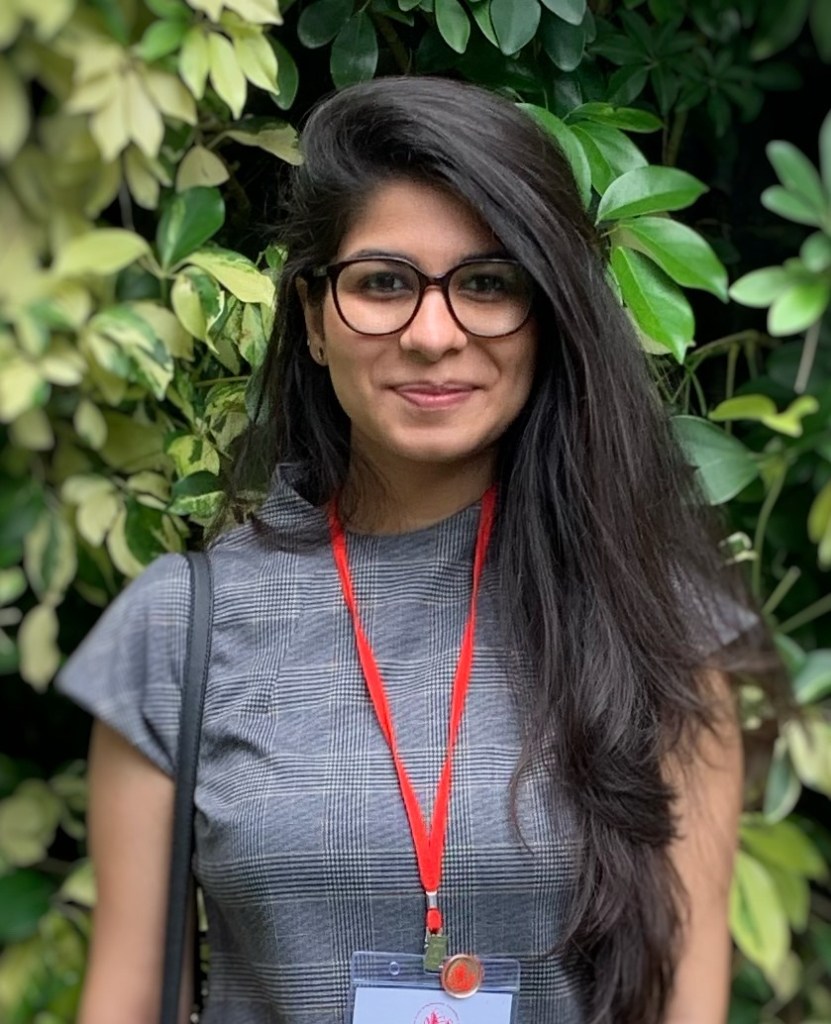
• I recently came across this rather interesting article by Megha Mehta, an LLM graduate from Harvard Law School who is currently teaching at NLSIU. In the article, Megha offers a critical view of the US LLM experience, and how it (the LLM) is often not quite what it is made out to be. 

    In a world where peer pressure, soft marketing, and “signalling” are almost impossible to ignore, I thought Megha’s article (and her views on other topics) deserved a bit more attention.

    Hence, this interview. 

    Megha Mehta (LLM, Harvard Law School)
    Megha Mehta

    Your recent article on the Harvard LLM published in Quirk was such a refreshing read – how has the response to the piece been? And, if you had some additional word space, anything else you would have included? 

    I got some pretty good responses thanking me for being candid about the experience.

    I don’t think there’s anything else I would have included but I might do a separate written piece on general issues involved in pursuing an academic career and whether there’s really that much of a difference in terms of sexism, microaggressions, mental health fallouts, etc. involved relative to law firms and litigation. 

    Coming to your own decision to pursue a master’s – what were some of your own motivations in pursuing a US LLM? 

    At that time I was sure that I wanted to take up a career in Indian legal academia.

    Having a LL.M. from a foreign university helps in increasing your ‘legitimacy’ and credibility both in terms of applying for academic jobs and being taken seriously by students/other academics though I personally don’t think it should be the case.

    I specifically wished to study feminist legal theory and the course catalogue and faculty present at U.S. law schools seemed a lot more diverse and interdisciplinary as compared to the U.K. and Indian colleges.

    I also felt that U.S. scholars had produced more cutting-edge scholarship in this field. Hence I specifically applied only to U.S. law schools. 

    Follow up question – what were the criteria used to shortlist schools, and which schools did you end up applying to?

     U.S. law schools generally favour their LL.M. candidates/graduates when it comes to J.S.D./S.J.D. applications.

    So, I chose colleges which had professors I saw myself doing my doctorate-level research under. From a more strategic perspective I shortlisted Ivy Leagues as a LL.M. from those schools would favour my resume on the job market.

    Finally,  I shortlisted schools which offered interesting courses related to feminist legal theory, criminal law and constitutional law, which were my research areas of interest.

    Taking all these factors into account I applied to Yale, Harvard, Berkeley, Columbia and NYU. I received acceptances from all except Yale. 

    You were a recipient of the Global Hauser Scholarship at NYU, but opted for HLS instead – what was the rationale behind this? In hindsight, do you think the financials of this decision worked out?

    I looked at the course offerings of both law schools for the upcoming academic year. HLS was offering courses by Prof. Janet Halley and Prof. Catharine MacKinnon.

    Both are stalwarts in the field of feminist legal theory, which was my core academic research interest area. Hence even though Hauser is a prestigious opportunity, I opted for HLS.

    I was able to financially sustain this decision through a combination of financial aid from HLS along with Indian scholarships. I was also fortunate to get a decently-paying academic job in India after the LL.M.

    However the financials of the decision have obviously restricted my ability to join litigation or take up other opportunities which may not offer enough to pay off student loans. 

    Just on the funding question alone – anything that you would like prospective LLM applicants to know? 

    Most law schools do not list the financial aid criteria for LL.M. students separately on their website.

    Please check the criteria for J.D. students before filling out your financial aid applications so you know what information to include.

    Also keep in mind that apart from internal financial aid, opportunities for funding for Indian LL.M. students in the U.S. aren’t that many. Try to renegotiate the initial aid package offered by the school. 

    The Quirk piece discusses the cultural differences quite a bit, especially the difficulty some students face in networking, and (essentially) selling your profile – any other examples of difficulties that you think more applicants ought to know? 

    This is fairly basic but please learn cooking and housekeeping before you go.

    I feel like Indian students are used to other people picking up after them even if they have lived in dorms earlier.

    American dorm-mates will be quick to call you out on this and will be quite racist/passive-aggressive about it even if their own habits aren’t particularly perfect.

    It’s a very self-reliant culture so don’t expect help when it comes to performing basic housekeeping tasks (e.g. even small things like opening a can).

    Also generally be prepared to tackle some amount of microaggressions/subtle racism due to differences in skin colour, nationality and purchasing power. 

    Lastly, any general advice for the Indian law grad who is considering a master’s abroad?  

    Do it only if you’re seriously interested in one of the three things:

    • Doing a Ph.D. abroad .
    • Getting a job and/or eventual citizenship abroad
    • Taking a break from practice to study and travel abroad;

    AND have saved up enough to sustain the financial hit of the LL.M. (especially if you’re also considering a Ph.D. later where your net savings will continue to be zero)

    Have serious discussions with your parents about whether they can loan you the money. If your parents are unsupportive or lack resources make sure you have peers who are willing to help you out.

    Do NOT fall for the romanticization of LL.M./academia as some kind of break or ‘chill’ getaway from Indian law firm/litigation culture.

    Most of the people who successfully make this transition are:

    • privileged enough to resume practice in India without hiccups (e.g. famous SC judges/senior advocates), and/or
    • already have a support system abroad and have been planning to move there and/or
    • have been seriously considering a change of nationality for other reasons.

    If you have any doubts, please wait and make an informed decision. 

    We need your help in keeping this blog alive. If you feel that the content on this blog has helped you, please consider making a donation here

  • First Person Accounts (FPA’s) are meant to provide a first-hand account of law graduates who have pursued, or are pursuing, a post-graduate course (an LLM or otherwise) from different universities across the world.

    Prerna Deep has completed an LLM in Criminal Law and Criminal Justice from the University of Edinburgh, where she was also the recipient of the British Council GREAT scholarship. 
    Prerna Deep

    Prerna Deep has completed an LLM in Criminal Law and Criminal Justice from the University of Edinburgh Law School, where she was also the recipient of the British Council GREAT scholarship. 

    In this FPA, she discusses her reasons for opting for a foreign LLM, the GREAT scholarship application process, and a whole lot more. 

    What prompted you to study law at CLC? And, looking back, was a foundation in English literature useful during your time as a law student?

    Studying English Honours at the Miranda House, University of Delhi was the turning point of my life. My classmates and professors were terrific and supported my aspirations. I learned to be independent and understood what I wanted in life.

    I became conscious that I never wanted to be a doctor but to work in a profession that would serve people and make a significant difference in their lives. I then chanced upon law.

    My academic literature coursework included ‘The Merchant of Venice’ by William Shakespeare, ‘The Trial’ by Franz Kafka, and ‘Crime and Punishment by Fyodor Dostoyevsky,’ to name a few, which strengthened my profound conviction to study law.

    Driven by my instinct for community service, I worked at the college unit of ‘Leaders for Tomorrow,’ an organization where I was in charge of conducting donation drives, analysing primary problems of society, and helping organise events with professionals across the nation. It drilled into me the ways and mannerisms of formal communication as I interacted with eminent lawyers and jurors.

    I also spoke to some seniors from school and college who went to pursue law after graduation, and towards the end of my final year, I knew that law was my true calling, and I wanted to be a lawyer.

    When did you decide to apply for a foreign LL.M.? What were some of the criteria you used to shortlist the schools to apply to?

    After three years of law, I knew nothing piqued my curiosity like criminal law. I absolutely loved my criminal law coursework and internships and decided to study the subject in depth before taking a full-time legal role.

    Hence, I chose to pursue LLM in Criminal Law and Criminal Justice.

    Applying for LLM abroad is a challenge in itself as it is a time-consuming and intense process. I gave substantial time and consideration to my University application and scholarship applications.

    After multiple rounds of applications, tests, and interviews, I finally made it, and it was worth all the pain.

    The destination of LLM location is subjective on many factors and one’s preference. However, one could narrow it down by considering some crucial facets like country, programme, university, finances, area of practice, and future career plans.

    I primarily focused on University ranking, course structure and scholarships.

    Could you tell us a bit about the British Council GREAT scholarship? Any advice on the application process?

    GREAT scholarships are scholarships to study at UK universities across various subjects for students from 18 countries. Each Scholarship is worth a minimum of £10,000 towards tuition fees for a one-year postgraduate course.

    Each Scholarship is jointly funded by the UK government’s GREAT Britain Campaign and the British Council with participating UK higher education institutions.

    My Scholarship covered the total tuition fees for my LLM in Criminal Law and Criminal Justice at the University of Edinburgh. Here is a brief overview of my scholarship process.

    I applied to the University of Edinburgh and received a conditional offer letter (since I was a final year law student) in February, which I accepted.

    Stage 1:

    In March, I received an email from the University stating that they will nominate one candidate for the GREAT Scholarship to the British Council (only University nominates their best candidate, you cannot directly apply for it). If I would like to be considered for it, I should give my application which I did. After a month, I received a letter from the University that they had selected my application and were nominating me to the British Council for Scholarship.

    Stage 2:

    I received an email from the British Council inviting my application for the Scholarship. Now, I was competing with all the best and all-nominated candidates across universities in the UK. I submitted my application.

    Stage 3:

    A month later, I received a letter saying my written application was successful, and now I have to appear for an interview which is the final stage. The interview had a panel discussion and one-on-one chat, which I gave. Then about 15 days later, I received my scholarship result from the British Council and my scholarship letter. One of the best moments of my life.

    Looking back, what were some of the most rewarding aspects of the LL.M. at Edinburgh? How different was the LL.M. experience from your LL.B. experience at CLC?

    The law seminars and the interactive tutorial-based comparative academic approach is a unique teaching method that fascinated me about Edinburgh Law School.

    The exuberant and diverse background of students that the University caters to and the lecturers and speakers of international repute further allowed me to gain a distinct outlook and put forth my analysis.

    I tried to make the most of my master’s student life at the University of Edinburgh. I participated in many societies and activities. I loved my challenging roles, such as Chief Copy editor at the Edinburgh Student Law Review and Chair of Alumni and Community Relations at the Postgraduate Law Society. I absolutely adored my time dancing at the Edinburgh University Tango Society and participating in various workshops.

    I also thoroughly enjoyed my dissertation time at the Law School. It was the first time I was creating a 10,000 words research piece. With the support of my Supervisor, I made a special request to the University of Edinburgh Law School to incorporate empirical research in my dissertation which is usually not allowed at LLM level but after some training my request was accepted.

    It made my dissertation really interesting and allowed me to speak with legal professionals and academicians from around the world.

    The universities in the UK and India are very different. It is not an abstract difference but an overall 360-degree change in how education is perceived. These changes cannot be brought solely at the university level, but the education system would need a lot of reformation.

    There are minor shifts that Indian law universities could adopt for the overall development of the student. The professors should encourage more interaction in the classes, let students submit their arguments and opinions without the fear of being rebuked about it.

    The tutorials should be well implemented and inspire a scholarly discussion. The university could provide better guidance about future career options, be it a job or higher education. They could organise quality lectures and workshops to teach the students more than just textbook knowledge.

    There is often a gap between what students learn in the classroom and the applied knowledge in the workplace. Conscious steps should be taken to bridge the gap and support the students from an early level.

    How has the LL.M. helped you in your professional career?

    As part of my LLM, I worked on an empirical research-based dissertation on “A Comparative Analysis of Independent Legal Representation for Complainers of Sexual Offences.” in which I secured a distinction.

    I interacted with professionals and academicians from eight jurisdictions (India, France, Australia, Canada, England & Wales, Ireland, Scotland, and Northern Ireland) which gave me an in depth understanding of how policies are framed and implemented across the globe. 

    As someone who is deeply passionate about legal policies I wanted an insight into the mind of a judge, whom I believe to be one of the most influential individuals in the legal system. As a law clerk, I am assisting the Judge in filling the gap in research and reasoning.

    The research I contribute is also used in writing judgments and framing legal propositions. I am also a qualified advocate in the Indian Jurisdiction.

    In 2020, during my LLM, I attended an interactive session at the Scottish Parliament, Edinburgh, UK on Reform Policies of Criminal Justice System. Sharing the platform with other respectable dignitaries gave me an opportunity to share my opinions. Now, I have the opportunity, the knowledge and resources to work on the reforms.

    Lastly, any advice for the Indian law graduate who is considering a master’s abroad?

    It is really easy to feel overwhelmed and burnt out as a young law student. Pause and think about your priorities and career goals. Even if you are not sure about what you want after law school, it is okay. Explore your options, talk to your professors, seniors, course mates but decide for yourself.

    You need to elaborate the database of all these conditions to choose the best course in the best law school for yourself. It is challenging and time-consuming.

    I would recommend starting at least 2 years in advance; you would probably need to give IELTS, the applications are sent a year in advance of the course, and every university has its own requirements and procedures.

    Make sure you have read everything correctly. Consult your professors, seniors and reach out to alumni of the college you are interested in.

    Give your best, and don’t give up!

    (This interview was conducted by our intern, Swati Sabharwal)

    We need your help in keeping this blog alive. If you feel that the content on this blog has helped you, please consider making a donation here

  • First Person Accounts (FPA’s) are meant to provide a first-hand account of law graduates who have pursued, or are pursuing, a post-graduate course (an LLM or otherwise) from different universities across the world.

    Raashika Kapoor graduated with a law degree from Guru Gobind Singh Indraprastha University in 2021. The very same year, she enrolled at Humboldt University for an LLM in International Dispute Resolution.
    Raashika Kapoor

    Raashika Kapoor graduated with a law degree from Guru Gobind Singh Indraprastha University in 2021. The very same year, she enrolled at Humboldt University of Berlin for an LLM in International Dispute Resolution. In this FPA, she shares her reasons for choosing this particular programme, completing an internship in Germany, the LLM experience itself, and a whole lot more. 

    At what stage of your undergraduate course did you start planning for a foreign LLM? Did you consider working for a few years before enrolling? 

    The year I joined my undergraduate law school, I had made up my mind to go abroad for an LL.M. Planning for the LL.M. essentially began in the 3rd year. It is however important to consider that applying for an LL.M. is not an overnight process.

    It takes consistent grades through the years, extra-curricular activities and motivational drive.

    As for working for a few years before enrolling, I had  considered that on a few occasions, especially when Covid-19 hit the world. But as my applications went forward and I received positive responses, I decided to study first, gain more theoretical knowledge and then practice.

    What were some of your expectations from a specialised LLM? 

    My undergraduate law degree (B.A.LL.B.) was very generalised, where I gained an insight into many areas of law. From a specialised LL.M. I had expected to gain deeper knowledge in my field of interest and see for myself if I really want to move forward in it.

    Given the specialised nature of your interests (ie international dispute resolution), what were some of the schools you shortlisted apart from Humboldt? And what got you to narrow down on Humboldt?

    I had shortlisted schools such as LSE, QMUL, UCL, Kings and MIDS Geneva. and had received admits from all four UK universities.

    However, I didn’t not make it to MIDS.

    Out of the four schools in London and Humboldt. QMUL, UCL and Kings offered a specialised LL.M. in dispute resolution but I proceeded with Humboldt.

    Firstly, the course at Humboldt covers the broad area of international dispute resolution with a strong focus on international arbitration, which is what I wanted to expose myself to and only a few schools deal with that.

    Even though the course is primarily focused on commercial and investment arbitration, participants will have the opportunity to learn about other areas of arbitration, such as sports arbitration, arbitration of cross-border M&A disputes, energy arbitration, mediation, negotiation and so on, from professionals located all over Europe.

    Secondly, the small class size attracted me. We are a cohort of 27 students and it feels like a family. There is enough room for individual interaction with professors and practitioners and no hesitation in clarifying questions.

    Thirdly, there is an exponential difference in cost of education as well as that of living between London and Germany. Moreover, I did not want this year of mine to be limited to college. I had wanted to travel and for that I felt Germany would be a better option.

    Additionally, making a life abroad is not easy at all.

    As much as I would want to work here, there are a number of factors that may not be in favour of international students. While there is definitely no guarantee of landing a job in the EU, after Brexit, I was not very sure of prospects in London either.

    So, I decided to take the plunge and came to Berlin.

    Any advice for prospective LLM candidates on the Humboldt LLM application itself? For example, how much time did you spend on the applications, how did you choose your referees etc?

    My applications in total took nearly 8-9 months of my time. All applications require a statement of purpose / letter of motivation. My approach was to decide two stories that I want to tell the universities and make individual alterations for respective colleges.

    As for referees, I chose people I had a close association with.

    My mentors, who played a very important in role in my journey through law school, academic director who was part of every administrative as well as academic decision through the years and professors with whom I had a rapport and whose subjects had a relation to my future course applications.

    For the IDR LL.M. at Humboldt the application deadline is March 31st for the academic year beginning in October. The applications are sent through an online portal on the website.

    The primary documents that must be submitted are the application form, the letter of motivation and two letters of recommendation.

    How easy or difficult was it to land an internship in Germany? Did you receive institutional support in this regard? 

    Landing an internship is not easy, be it in India or Germany. As Indian students, we face a number of obstacles in getting an internship; abroad we are outsiders. Simply phrased, it is not easy to land an internship in Germany.

    Law firms tend to look for people who know the law of the land. They have to be convinced to take you over someone who is their own.

    Hence, it is very important to highlight how you can contribute to their team / work. One thing that people do not really stress upon is that rejections are normal.

    You will receive a number of rejections through the process. I personally have lost count and that is absolutely alright. Unless you try you wouldn’t know.

    I was fortunate to receive an internship opportunity and gain an insight into the German work culture.

    Institutional support with regard to work opportunities has been there throughout, in the form of making available documents required to be submitted. Assisting with administrative work, informing about open opportunities etc., the institution however, does not bring opportunities to you, there is no placement cell for that purpose.

    What have been some of the most rewarding aspects of the LLM experience? Looking back, have your expectations (from an LLM) been met?

    Living with myself, managing my life and balancing between college and home is what I definitely give credit to myself for.

    As one of the youngest students in my LL.M. batch, my entire experience here has been rewarding. Intellectually stimulating discussions, close interaction with practitioners as faculty and interacting with students from nearly 15 different countries (in a class of 27) has broadened my perspective.

    I did not enter the program expecting myself to be the guru of arbitration, I came here to learn, interact with people from different backgrounds (cultural and educational), make mistakes, memories and experience a different life.

    My undergraduate studies at GGSIPU were very conventional. At Humboldt, I had to familiarise myself with the socratic method, the readings and discussions.

    I believe it is safe to say that looking back, my expectations have been met.

    Lastly, any advice for the Indian law graduate who is considering a master’s abroad?

    My advice for prospective LL.M. candidates would be to start preparing in time. You cannot possibly anticipate the outcome but what you can do is not beat yourself up about it. Preparing to go abroad can be very intimidating and it does feel like a rat race. You may be the smartest of the lot and still get rejected without knowing the reason for it.

    What I learned through the process is to not take this personally.

    You can study at the best- known college in this world and decide not to pursue your area of study further. So, give yourself time. Do not apply to a university for the sake of applying.

    Furthermore, master’s abroad is not limited to universities alone. It is an experience of a lifetime where you learn to live with yourself away from your comfort zone, meet new people, blend in a different culture and also feel homesick sometimes.

    In your batch of 100-200, everyone will be equally qualified / educated. What will make you stand out is your skill set, your abilities to express and communicate and to have your own identity. The year would be for you to understand and discover yourself!

    With the kind of finances and risks involved, I would recommend taking an informed decision.

    Lastly, an experience abroad can positively add to both personal and professional growth. It is not going to be a bed of roses or a stroll in the park but it may be worth it.

    We need your help in keeping this blog alive. If you feel that the content on this blog has helped you, please consider making a donation here

  • First Person Accounts (FPA’s) are meant to provide a first-hand account of law graduates who have pursued, or are pursuing, a post-graduate course (an LLM or otherwise) from different universities across the world.

    Subornadeep Bhattacharjee is a 2018 graduate of the National Law University and Judicial Academy in Assam, and former judicial clerk at the Calcutta High Court.
    Subornadeep Bhattacharjee

    Subornadeep Bhattacharjee is a 2018 graduate of the National Law University and Judicial Academy in Assam, and former judicial clerk at the Calcutta High Court. In 2021, he enrolled for the the LLM at SOAS University of London. In this FPA, he shares his experiences of applying in the midst of a pandemic, the LLM experience thus far, some advice for prospective LLM applicants, and a whole lot more. 

    Were you considering a foreign LLM right after you finished your law degree? Or was this something you decided to take up after gaining some work experience? 

    Well, honestly speaking, I was ready to pursue an LL.M. as soon as I had completed my undergraduate studies in law in the summer of 2018.

    Early in 2018, I was invited for the interview rounds of the Commonwealth Scholarship that year and I was in the process of applying to my short-listed universities in the United Kingdom.

    However, three specific events delayed my plan. Firstly, my mentor, the late Prof. (Dr.) Shamnad Basheer, who I had the privilege of working with at IDIA, suggested that I pursue an LL.M. only after I had acquired some qualitative, post-qualification experience.

    He opined that the Masters, post the work experience, would provide me with a much more nuanced take on the law, which would also delve into its praxis, and not merely the theory of law.

    The second reason, and the more pressing reason, was the moment when my father was diagnosed with terminal illness. Everything (including the processes of applying to universities abroad) took a backseat from that moment on, up until, we as a family, successfully battled the disease head on.

    It was during this tumultuous time, that I aligned myself to the idea of a judicial clerkship, in line with the advice rendered by Dr. Basheer.

    Eventually, things fell into place; I succeeded in the clerkship exam that was conducted by the Calcutta High Court in 2019 and was assigned as a law clerk to the Mr. Justice Dipankar Datta, who is now the Chief Justice of the Bombay High Court.

    Eight months into the clerkship, when I again commenced with the process of applying to universities abroad, the tsunami that was the Covid pandemic, engulfed all of our lives. However, this time around, I completed the processes of applying to my shortlisted universities in its entirety.

    And when you did start the application process, what were some of your expectations from the LLM experience? 

    As I’ve made it clear, I was raring to go when it came to pursuing my Masters.

    But certain events, in hindsight, gave me more time to reflect on my choices. I was certain that public international law was my calling, and I’d specialise in it. I started preparing for my application towards (what now seems to be) the end of 2019, not knowing what awaited all of us in 2020!

    All established notions of what I sought from my Masters experience had to be reconfigured purely because of the uncertainty arising out of the public health emergency.

    My foremost consideration was if one of my shortlisted universities was going to provide me with a deferral, if my application was eventually selected by the Admissions Committee.

    How did you go about shortlisting just where to apply? Why narrow down on SOAS? 

    It was an emotive but a straightforward experience when it came to short-listing my preferred universities. Once I had zeroed in on specialising in public international law, it was a two-way competition between the School of Oriental and African Studies (SOAS) in London and the Graduate Institute of International & Development Studies (Graduate Institute) in Geneva.

    Both are excellent institutions, not only in terms of the faculty members and resources available at their disposal, but also in terms of locational advantages (Geneva and London) when one considers specialising in public international law. However, three specific factors, led me towards SOAS.

    First, my guru, and the founder Vice-Chancellor of my alma mater at National Law University, Assam, the late Prof. (Dr.) Gurjeet Singh, had once made a very passionate request to me in my second year of law school; that when (and not if) I contemplated my options about pursuing a LL.M., I should opt for SOAS. In his opinion, alongside the excellent, academic eco-system which was widely known for positively disrupting ‘business as usual’ mindsets, SOAS was also an excellent institution where one ended up ‘forging personal bonds for a lifetime!’

    His quote had a profound impact on me, and eventually, SOAS was right up there when it came to making my decision.

    Second, SOAS is a niche institution, which specialises in teaching and exposing the subject of public international law from the perspective of the Third World (Third World Approaches to International Law or TWAIL, as it is referred to in academic literature).

    It’s at the forefront of challenging the Eurocentric notion of the discipline and that was also a decisive factor in my decision making process.

    Lastly, because SOAS is overtly focused on the needs of Asia, Africa and the Middle East and caters to the very realistic needs of students who largely hail from developing economies.

    I can’t speak about other universities which might have done this, but the Admissions Office at SOAS had immediately offered students an option of deferring their offers without the stipulation of payment of the GBP 1,000 deposit, to confirm their acceptances of the offers that were on the table.

    Faced with a climate of uncertainty because of the Covid pandemic, it ended up providing succour to a lot of students.

    Any advice on how to go about the application process? Was there anything specific about the application process that you think prospective applicants ought to know about? 

    I chuckle as I write this, but I honestly hope that prospective applicants do not end up applying to their dream universities, in the backdrop of a (hopefully, what will remain to be a once in a century) pandemic.

    However, I can suggest two crucial insights, that might prove to be helpful for applicants in the future:

    First, please bear in mind that there are universities which do not charge you any non-refundable amounts for the application forms. For candidates from working class families with limited financing options, this is an element that is often overlooked.

    Candidates have often crafted their list of preferred institutions which end up charging non-refundable amounts merely for applying, to various degrees, and applicants may, as a result, end up spending a small fortune, given the multiplier effect of applying to multiple institutions.

    Instead, you can apply to institutions like SOAS and the Graduate Institute (which did not demand a single penny for applying to them) and you can save the amount for more, meaningful expenses in the future, in furtherance of your LL.M.

    Second, please personalise your personal statement to a degree where your voice and identity is omnipresent. It is a daunting task, no doubt, to represent yourself meaningfully before the Admissions Committees in a few hundred words and that is exactly why, you need to get creative!

    Please do not feel compelled to write a very ‘formulaic’ personal statement, based on sample statements that Google might offer you!

    Be genuine and humane; that resonates with the Admissions Committee.

    What have been some of the more rewarding aspects of the SOAS LLM experience? Any memory that you particularly cherish? 

    The most rewarding experience, in my opinion, has been how interdisciplinary SOAS is, in its teaching pedagogy. Off the 120 credits that are reserved for taught modules, 30 credits are at a candidate’s disposal to study any module being offered by any department at SOAS!

    I’ve had my batchmates dabbling with many diverse modules from different departments – be it development studies, history, politics and international studies, etc.

    I ended up opting for one such module from the department of politics and international studies and I was the only lawyer in the class!

    The class offered me with a diverse range of perspectives on the issue of global energy and climate policy, with people from the energy sector, mining sector, public sector, construction sector, and banking sector providing their viewpoints on an issue which will prove to be the most defining issue of this century.

    Having struggled with the challenges of Covid collectively, I cannot isolate any particular memory that I cherish but the manner in which we’ve had each other’s back, people who waltzed into the classroom as mere course-mates, are now, as Dr. Singh once famously remarked, my friends (at least) for this lifetime!

    Lastly, any advice for the Indian law graduate who is considering a master’s abroad? 

    Please ask yourself why you want to do the Master’s degree and be certain that you’re doing it for the right reasons.

    For individuals who may be attracted to countries on the promise of a post-study work visa, as is the case with the UK with its Graduate Route, please bear in mind that it comes with its fair share of challenges, considering an extremely competitive economy, which is also plagued by the post pandemic recovery, high inflation, cost of living crises and the consequences of an invasion in East Europe.

    As they say, the law does not operate in vacuum to societal realities; your decision to pursue a Master’s should also conform to the same dictum.

    We need your help in keeping this blog alive. If you feel that the content on this blog has helped you, please consider making a donation here

  • First Person Accounts (FPA’s) are meant to provide a first-hand account of law graduates who have pursued, or are pursuing, a post-graduate course (an LLM or otherwise) from different universities across the world.

    Aishwarya Chaturvedi is a 2017 LLB graduate from Campus Law Centre at Delhi University.
    Aishwarya Chaturvedi (LLM ’21, Cornell Law School)

    Aishwarya Chaturvedi is a 2017 LLB graduate from Campus Law Centre at Delhi University. After three years of working in a law firm as well as an NGO (Nirman), she decided to enrol for the LLM at Cornell Law School. In this FPA, she discusses how she went about identifying where to apply, making the most of the foreign LM experience, and a whole lot more. 

    Before getting into the LLM, let’s start with the LLB at DU – why did you opt for law? And, looking back, has it been a fulfilling decision thus far?

    Since childhood, it always intrigued me as to how a document in the form of a Constitution enshrines the hopes and aspirations of people along with acting as a bastion for a society to survive and flourish in peace.

    This curiosity gave me the impetus to explore various thought structures that serve as the basis for law formation. As a result, from a very young age I started to get exposed to the writings of Aristotle, John Rawls, and Immanuel Kant.

    My introduction to these thinkers led me to pursue an undergraduate honors program in philosophy which not only gave me a detailed insight on the various philosophical underpinnings of law as it is, but also on how it should be.

    Along with this, almost in parallel, was the realization of a vast gap between the rights made available to the citizens by law and the real access to justice available to them.

    I realized that a society which fails to provide for a vast majority of its population is a society that requires structural change and that the structure can only be changed by changing the laws of the society.

    Thereafter, I pursued a degree in law to figure out how the social structure can be changed through laws so that the  manifold people who form the Indian society and run its economy can live a life of dignity. It has been extremely fulfilling thus far. It helps one facilitate access to justice. 

    I have had the opportunity to work on different kinds of matters, witness the functioning of different  legal forums in India and most importantly, read and understand a variety of legal problems that plague India.

    Law has made me realise that it is extremely important to understand and respect different perspectives.

    After the LLB, you chose to join the NGO Nirman, which focuses on child illiteracy – what prompted this decision? At that point in time, was a foreign LLM something you were considering?

    I was always interested in working on child rights and particularly, child education. I had interned with NGO Nirman during college.

    Nirman gave me the opportunity to apply some of the knowledge on human rights that I gained at the law school and facilitate greater access to education for underprivileged children.

    While I was not particularly considering higher studies when I joined Nirman, the literature that I read and the problems that I dealt with on a day-to-day basis in expanding the work of the NGO prompted me to explore opportunities of further study abroad.

    Finally, what got you to look at the US LLM? What were the schools you shortlisted, and what made you narrow down on Cornell?

    I was familiar with the works of some of the professors of premier US law schools and was intrigued by the same. Further, some of my family members had pursued their higher education in the US and they encouraged me to consider it.

    Additionally, my experiences at NGO Nirman and the law firm I worked with prompted me to delve into deeper questions about legal issues in India, and I wanted to learn how similar problems are dealt with in other common law jurisdictions such as the United States. 

    Accordingly, I shortlisted Cornell University, UC Berkeley, University of Pennsylvania, Leiden University and World Trade Institute, Switzerland.

    Eventually, I narrowed down on Cornell because of its accomplished faculty, Ivy League status, small class size and of course the picturesque Ithaca campus.

    Additionally, my older brother pursued his masters in public administration from Cornell University and spoke highly of the institution.

    When it came to the application itself, any advice for future candidates? More specifically, how did you go about choosing your referees? And how long did you devote to the entire application process? 

    I would advise future candidates to work hard on their statements of purpose. Be as clear, concise and honest as possible.

    Since I had work experience at the time of application, I chose to secure two professional letters of recommendations from my employers and two academic references from my professors at Campus Law Centre at Delhi University.

    I devoted about three to six months to the entire application process.

    At Cornell, you handled a fairly wide range of responsibilities, from being an RA to working with the schools South Asian Law Students Association – how did you find the time for all of this? Also, how do you think prospective LLM candidates can make the most of the (relatively) short LLM programme?

    I wanted to make the most of my time at Cornell and thus, used my time judiciously. I wanted to explore Cornell and the opportunities it offered both academically and socially.

    I also made use of technology by utilizing tools such as Google calendar which helped me schedule my meetings and gave me a clear sense of my tasks throughout the week.

    I think the key is to prioritise.

    I would advise prospective LLM candidates to prioritise the things they want to accomplish during their programme.

    It is extremely important to explore the institution and make the most of the opportunities that it offers because an LLM programme abroad is essentially a culmination of various  academic, professional and social experiences.

    Now that you are in academia, any best practices from US law schools that you think Indian law schools should follow? 

    I believe that like US law schools, the Indian law schools could also make their curriculum more application based and make classes more interactive.

    As far as possible, instructors should be encouraged to adopt a Socratic method and class simulations to develop critical thinking amongst students, and also to engage with the material.

    In courses which are more application based, schools can mark students on assignments, papers and class simulations instead of a final examination.

    Lastly, any advice for the Indian law graduate who is considering a master’s abroad? 

    It is important to have a clear idea as to why one wants to pursue a master’s abroad. It is equally important to do a thorough research on the schools one wants to apply to.

    I would encourage prospective applicants to explore a field that interests them and analyse which school would offer good opportunities in the desired field. 

    An LLM abroad offers one various academic, professional and social opportunities. Thus, it is crucial to identify what kind of environment and exposure one is looking for, in addition to the post qualification work opportunities that one may be interested in.

    We need your help in keeping this blog alive. If you feel that the content on this blog has helped you, please consider making a donation here