• The Amicus Interviews are meant for broader discussions on legal education, and the legal profession at the global level. Along with the legal research and law schools, these interviews are meant to bring across a slightly “macro” perspective on things.

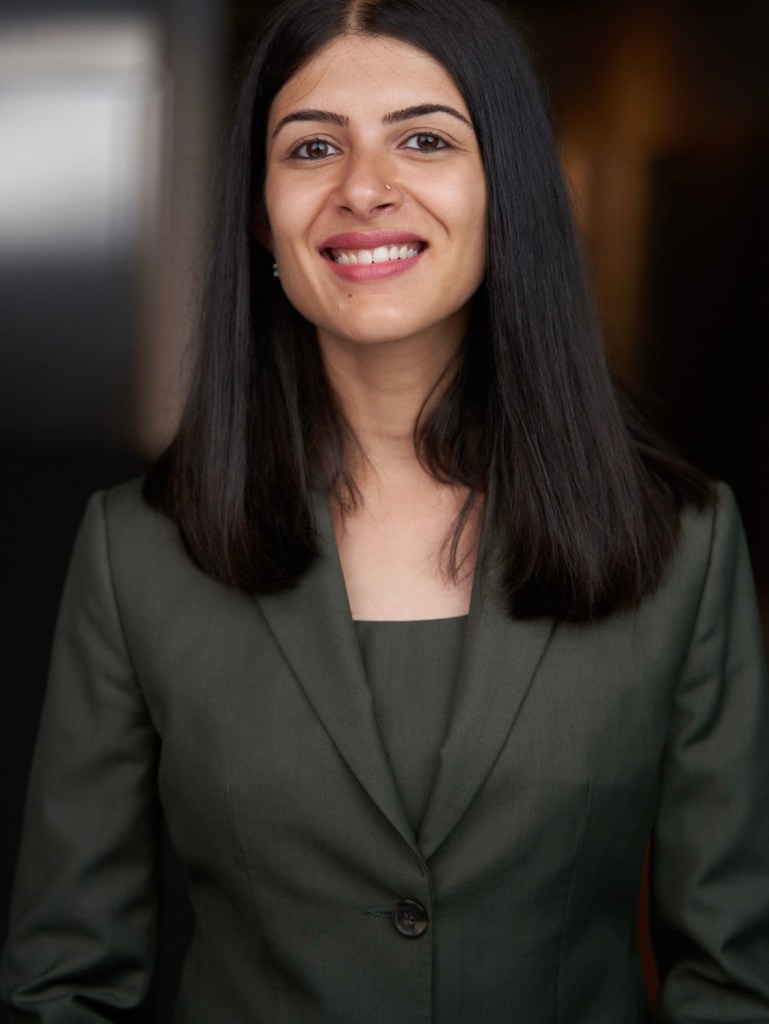
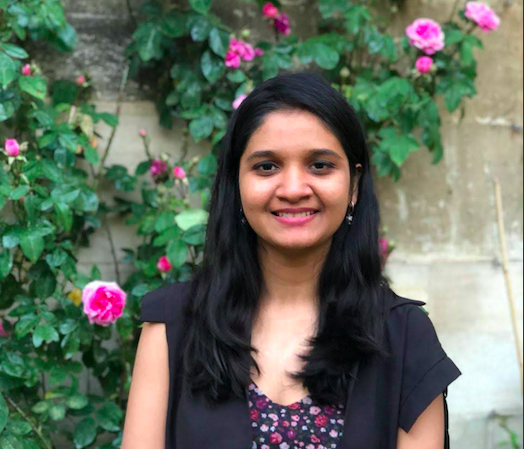
    Yi Song is the Executive Director of Graduate and International Programs and Adjunct Professor at Georgetown Law.
    Yi Song

    Yi Song is the Executive Director of Graduate and International Programs and Adjunct Professor at Georgetown Law. She also happens to be the force behind Master of Laws Interviews Project, a collection of interviews with foreign trained lawyers on, inter alia, how to build a successful international practice.  

    In this interview, Yi talks about her own LLM experience at Georgetown Law, the reasons behind setting up the interviews project, the learnings made thus far, and a whole lot more. 

    So, one of the goals behind the Masters of Law Interviews Project is to inspire the next generation of foreign-trained lawyers – looking back at your own journey as a foreign-trained lawyer in the US, who were the people who inspired and guided you in your own professional and personal life?

    There are so many people who have helped and supported me by taking a chance on me, offering me opportunities and opening the doors for me. Professor James Feinerman who selected me to study in Hong Kong on a full scholarship. That led to me studying at @Georgetown University and doing a summer internship in DC, where I met my husband David Wu, a lawyer and an entrepreneur, and the funniest guy I know till this day.

    Professor Craig Hoffman taught me how to write like a U.S. lawyer and inspired me to continue pursuing writing. He brought me back home to Georgetown Law.

    Mr. Ting Qiao took a chance on me and offered me the in-house counsel job. Ting is one of the sharpest entrepreneurs I’ve had the pleasure of working with and a fun boss to travel with. I have had some of the best meals on business trips with Ting.

    Now I’m inspired by my colleagues and students, our fabulous community of multilingual lawyers with global careers. I hope the Master of Laws Interviews Project can make our community more visible in the legal industry.

    One of the interesting comments you made in this interview was that you wished you had been a lot less stressed during your time as an LLM candidate at Georgetown – is this something that LLM candidates continue to do, and if so, are there any ways in which this can change?

    Stress management is easier said than done. Studying in the U.S. for my LLM is probably one of the most stressful times of my life. Students today face similar stress and uncertainty at this juncture in their lives with studying, the bar exam, job searches, adjusting family and living arrangements.

    Too many moving pieces in a young person’s life that could have life-changing impacts.

    Law schools and American society, in general, are more aware of mental wellness issues today than a decade ago.

    Students have more support in terms of counseling and academic advising in law schools. I wish I heard this more often when I was a student: give it your best, but also know your limits. If you feel like you can’t focus any more, it may be more beneficial to move away from your desk, go to the gym, take a walk, or have a nice meal with friends.

    Are there any common characteristics in the foreign lawyers who have made a successful career in the US? Any broad based learnings that more foreign trained lawyers ought to know about?

    Networking: Almost everybody I talked to finds their first job through networking, using alum networks, LinkedIn, professional and social contacts, etc. One often overlooked advice may be to explore events outside the legal field. There are candidates who get connected to their current employers through playing soccer, tennis, exchanging recipes, hosting dinner parties etc.

    Motivation: They are self-starters with an entrepreneurial mindset. As junior lawyers, they think holistically as if they are in charge of the case. When they make partner, they go the extra mile and think a few steps ahead for their clients.

    Passion: To excel at what you do, you have to love what you do and love the people you work with. Each job has its pros and cons. The lawyers I talked to seem to identify their interest in broad terms. (i.e. working in a multicultural environment, being intellectually challenged, helping solve real-life problems that have positive social impact, etc.) and manage to find the elements of their interest in their jobs.

    How has the Interviews Project been received thus far? Have you been able to identify where your readers are coming from, and the kind of information they are looking for?

    The best thing about founding the project is to be connected with this fabulous international community on LinkedIn! It means a lot that so many people reached out to tell me that it gives them hope to see these lawyers being successful in the U.S., despite being foreign-trained and non-native English speakers.

    That’s why I include a short audio clip, to make the point that you don’t need to be a native English speaker to make it as a lawyer. Many of the BigLaw partners and senior counsel of multinational corporations speak with charming accents.

    My readers are mostly LL.M. candidates and new lawyers with international backgrounds from around the world. Their questions focus on how to find a job or internship in the U.S. I hope that the Master of Laws Interviews Project offer them not a playbook of job search, since the job search journey is individualized.

    These are stories of hopes and inspiration. I hope that these interviews can make the legal industry more inclusive for linguistically diverse lawyers, and inspire law students and new lawyers with international background to think outside the box, to discover their true calling, to reach their full potential.

    I hope they walk away thinking if that guy or gal can do it, I can do it too.

    Lastly, not to put you in a spot, but is there any one interview conducted so far that has been your favorite? And if so, why?

    Haha! It’s like choosing the favorite (brain) child for a parent. I love storytelling. The interviews with the best plot twist are the most memorable ones. For example, Jose Garcia Cueto turned his love of cooking into dinner parties, where he was connected to the right person who eventually hired him. Alfie Battista found externship opportunities in the most unexpected ways, through playing soccer and he happened to be playing with a guy, who connected him to two managing partners of his dream job at the Big Four.

    Don’t miss out on Alfie’s “thong” story.

    Another favorite interviews of mine will be published in Season 2, Yao Liu who cold showed up at the doors of each firms he was applying to, not by begging them to give him a job, but by asking the question: “why are you not hiring international law students with stellar grades?” He ended up being the first international lawyer hired in the firm’s 137-year history. He is a shareholder at the firm today. How did he make it happen? Stay tuned for Season 2 of Master of Laws Interviews!

    We need your help in keeping this blog alive. If you feel that the content on this blog has helped you, please consider making a donation here

  • First Person Accounts (FPA’s) are meant to provide a first-hand account of law graduates who have pursued, or are pursuing, a post-graduate course (an LLM or otherwise) from different universities across the world.

    Swathi Bhojaraj

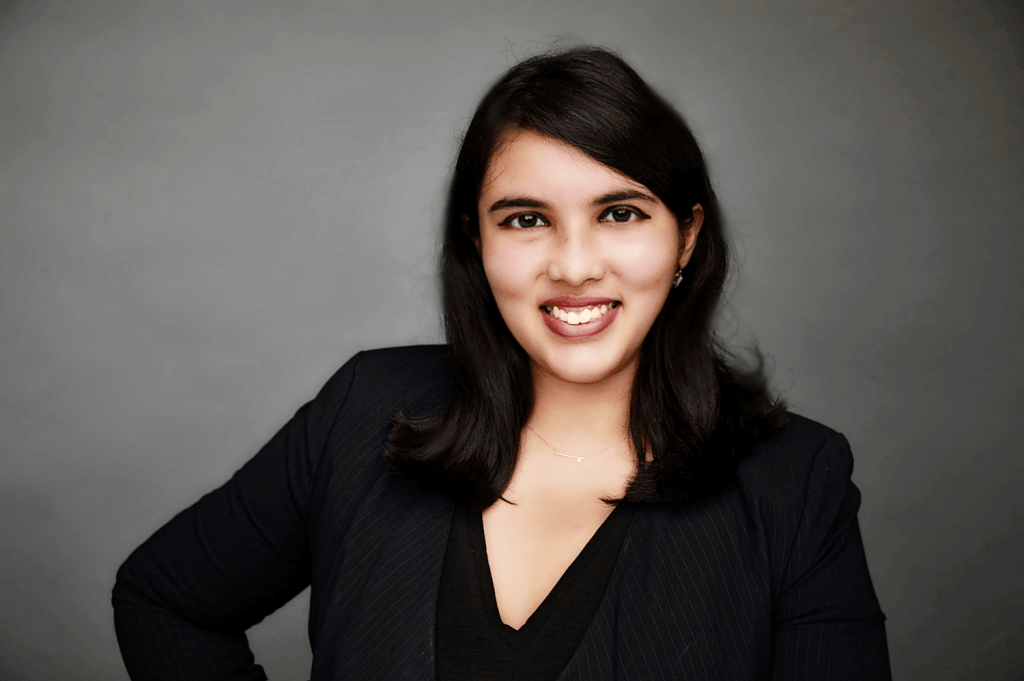
    In 2022, Swathi Bhojaraj graduated with a Masters in Sports Management and Legal Skills with FC Barcelona offered by ISDE University. A 2014 graduate from NALSAR University, Swathi spent seven years as an in-house counsel at Infosys before enrolling for this course. In this FPA, she discusses the future of sports law in India, the master’s course itself, and a whole lot more. 

    (Edited excerpts)

    Okay, straight off the bat – what on earth got you looking at such a niche area like sports law? Was sports always close to your heart? I see that you attended a course on sports law at Griffith University during your undergraduate days.

    Thank you for asking this and I am very glad that I get to start with this!

    Yes, sports has always been very close to my heart and life. My life has been intertwined with sports ever since I can remember. Be it as the least athletic kid in primary school, to somehow turning out to be the kid on most school teams (no idea when and how this happened).

    As a young child, I played a little bit of volleyball. Then I fell in love with fencing, and had the fortune of representing India at the U-17 World Championship, and also won a bunch of medals for the Karnataka fencing team. I did quite a bit of shooting and participated in several Tal Sanik Camps representing the 7 KAR BN NCC of the Karnataka and Goa NCC Directorate.

    Law school happened, and I kind of picked up basketball. I signed up for sports, media, IP and entertainment law electives; and interned with sports law firms. I also had the opportunity to help organize sporting competitions; worked closely with quite a few fencers in India  to help them manage their career by assisting with legal documentation review, sponsorship and endorsement contract support. 

    At Infosys, there was a little bit of formalized running, playing football for the corporate team, and yoga.

    So, all through my life, no matter what I was pursuing, sports has been a constant. I always saw myself working in the sports industry in some capacity, but just had to figure out when and what that would be. I believe it was just a matter of time for me to take the leap of faith and dive in completely. 

    After seven years as an in-house counsel, what made you think that this was a good time to apply for a master’s? 

    While I was in law school I did research for a sports law masters course. My initial plan was to work for a few years (2 or 3), pay off my educational loan and then maybe get another one to pursue a masters.

    But, as we all know, life works in mysterious ways, and owing to personal reasons I had to take a two-year break right after law school where I spent most of the time tending to my father in the hospital.  I was very particular about landing an in-house role, specifically in Bangalore so that I would be close to family. 

    With my dad passing away in 2017, and being the only child, I chose to stay back with my mother, and along the way got consumed by many life’s happenings. But with each passing year at Infosys, I picked up so many interpersonal and professional skills, which I believe were truly required to appreciate the masters program for what it offered.

    The last few years, I was part of the America’s Transactional Team negotiating technology deals, including digital innovation deals, sponsorship and licensing deals for global sporting events. My favorite part was always working with a very diverse cross-cultural, truly global team of experts from varied backgrounds – business, tax, information security, data privacy, legal, finance functions, sales, risk, etc and learning different aspects of the same business.

    ISDE University offers two masters programs for sports business and law enthusiasts. One is a masters program purely focused on aspects related to sports and the law, and another a business masters in sports with focus on legal aspects. Both courses are taught by industry experts with real life experience in the world of sports business and include lawyers, agents, communications and marketing professionals, members of player rights forums and clubs across different sports etc.

    I also just got lucky that we had a lawyer working with the world’s leading Italian fencer teach us!

    Having been a business lawyer led and guided by incredible leaders and mentors (without whom this would not be possible) who constantly emphasized on the need to learn the business in depth to be a better lawyer, I really wanted to get an insight of the global sports business ecosystem, and the ISDE Master in Sports Management and Legal Skill with F.C.Barcelona seemed to fit this requirement.

    Any advice on the application process? Did it involve having difficult conversations with your team?

    Of course, my first go to place for detailed information on the course and admission process was the university website.

    With ISDE there are three rounds of selection process. First you send in your CV, Statement of Purpose and 2 recommendation letters. On being shortlisted there is a written and psychometric analysis examination, before which you need to make an administrative fee payment.

    The written examination is open book, and very simple. It focuses on understanding one’s aptitude for the course and views on happenings around the world in the business of sport. There may be a few basic questions of law or legal principles. There is no need for detailed preparation for this examination, as they are trying to assess whether you are right fit for the program, and really passionate about pursuing the course. 

    At the end there is a telephonic interview with a panel where the goal is to assess your personality.

    What I did was talk to a batchmate from law school who had pursued the same masters a few years ago. I recommend aspirants to either reach out within their network or research on LinkedIn and connect with the alumni.

    Get an actual understanding of what the course feels like, whether it is really suited to their aspiration, whether it is academic oriented or practice based course, whether there are scholarships offered, prospects after completion of course, etc. Request for a call, and be prepared with the questions you have. This will help you ascertain whether this is the course for you or not, and help you prepare for the admission process.

    In terms of difficult discussions with my team, yes there were lots. But each of them made it easy and seamless with the tremendous support that they provided.

    I have been fortunate to have been led and mentored by Jyoti Panwar, Mary Kostopolous, Frank Clark and Inderpreet Sahwney from the legal fraternity, and Murali Vasudevan, Nageswar Cherukupalli, and Sanjeev Bode from business teams – they have been my source of inspiration and strength, guiding me not just while in the organization but also after leaving.

    The legal leadership was all in support of my aspiration to pursue a masters program, they never hesitated to write me a letter of recommendation be it for college or scholarships! As the masters course was only 20 hours a week, I was considering working part-time in Spain, and got an opportunity to continue my journey with the Infosys Legal team while in Spain on a part-time basis (which was not an easy task for any team that worked on it).

    The most difficult of all was saying goodbye to the leadership, colleagues and friends that stood by me over the several turns and tides, including while stepping out of the organization to chase a dream. I am aware and acknowledge how fortunate I am to have had such incredible mentors, garnered all the skill sets that I could and bid adieu with warm wishes from everyone. 

    What were some of the expectations you had from the ISDE master’s and, looking back, were these expectations met?

    The expectation was to learn about how the business of sport is run in practice. 

    How do agents do what they do for their players? What are the considerations that organizations consider while relying on making a sponsorship or a partnership proposal? How different is the functioning of a sports organization from that of any other company? What are the views of varied stakeholders on the role and importance of women’s sports and gender-equity on and off the court?

    I wanted to learn these aspects from experts in the industry who have led these projects.

    Based on the course’s website, I expected the program would be very practice driven with industry experts speaking and teaching their personal learnings. Which is what the program provides – an opportunity to learn from the industry best! Experts like the head of the FIFA legal department, legal counsels, successful sports agents, leaders of player unions, business experts from leading sports clubs in Europe, in-house CSR experts of sporting organizations, etc.

    It allows you an opportunity to interact personally with these leaders and build professional, hopefully long standing relationships.

    What were some of the more interesting learnings made during the course? How did you find your work experience helping, if at all, during your time in the course?

    As I mentioned earlier, while working at Infosys, I discovered an interest in working with varied kinds of people and learning from varied cultures and perspectives. 

    My masters course consisted of members from 21 nationalities, one can only imagine spending almost a year on a day to day basis with people from varied backgrounds!

    The life lessons learnt are invaluable. You learn that stereotypes are just stereotypes, and that first impressions are not everything. Sometimes you find [a greater connection with] people who have nothing in common with you than people who have many things in common with you.

    Besides classroom learning, all the interactions, cultural and professional experiences with colleagues has only expanded my perspective which I hope to bring to the table everyday in what I do.

    My prior work experience definitely helped me understand and appreciate the masters program much more. No matter what the matter of discussion was – communications, marketing, project management, digital innovation, I was able to identify similarities in these businesses and propose solutions which are not obvious to the sports business but very successfully implemented elsewhere.

    Also having worked 7 years as an in-house counsel , I am comfortable venturing on the business side and exploring different opportunities. This helped me make a decision to join a sports technology start-up, StadioPlus. Today I have gained insights on fundraising, partnerships, sponsorship activations, business development, digital marketing, communication, strategy, etc.

    If not for the experience that I garnered over these years, I probably wouldn’t have made this choice.

    Am curious to know what is your reading of the future of sports law (and their practitioners) in India – do you think this is a field that is going to grow in the coming years?

    I believe that the sports industry is still one of the most difficult industries to break into, not just in India but also in Europe.

    Having said this, I am optimistic about the growth of the sports business in India.

    I say this basis the market movement in India, the number of sports leagues that are coming up, the incredible performance of athletes at international tournaments, the incredible work of sports law firms and  organizations like GoSports Foundation, the investment by clubs of the LaLiga and English Premier League in Indian football academies, NBA and FIBA in basketball academies etc.

    As of January this year, there were about 1,200+ sports technology startups in India. These are all signs that the industry will grow. Some experts have even commented that India could be the future sports hub.

    This means that the opportunities for us lawyers in the field of sports are expanding!

    My personal view is that this is definitely an area to watch out for and pursue if it interests you. There is most likely not going to be dearth of opportunities soon.

    Lastly, any advice for the Indian law graduate who is considering a masters abroad?

    Sometimes, I receive requests to chat on LinkedIn from aspirants wanting to pursue the master’s I did.

    In most of my discussions, one of the first things that I ask is what their expectation out of the master’s is? Most of the time, I hear that pursuing the masters will open doors to the sporting world (which is true) and land them with jobs in leading sports organizations across the world (this not necessarily).

    These are aspirants not just from India but parts of Europe including Spain too.

    A master’s is definitely an opportunity to enter the world of sports and learn about the business of sports, but that does not mean the journey is going to be easy. There are way too few jobs available. Working rights, number of languages one knows, prior work experience,  entrepreneurial spirit, and willingness to take risks amongst others do play a major role in getting a job.

    Do take up the opportunity if you are really willing to ride the highs and lows of the tide, and there are going to be many of those, during the masters, during the practical training and definitely after. Research on the available scholarships, and whether the course and/or the university that you intend to pursue are eligible for those scholarships.

    It is perfectly fine to explore and learn what you want to pursue post your masters, but it is definitely better to at least have an idea of what you intend to achieve. Pick the course that really caters to your needs and requirements and not the one that is fancy.

    If you have an opportunity to deep dive into the field of sports business or law even without a master’s, give it a shot. It could be working in a boutique law firm with IP practice, dispute resolution, commercial transactions, media and entertainment laws, or maybe even an internship in a non-legal role (if you are still in law school and have the time to).

    We need your help in keeping this blog alive. If you feel that the content on this blog has helped you, please consider making a donation here

  • Interested in Columbia Law School’s LLM? These 7 FPA’s might help

    Columbia Law School’s LLM is one of the more popular US LLM options when it comes to the Indian law graduate. Known for its strong faculty across practice areas, the LLM is also aided by it’s “general” nature, allowing candidates to pick and choose their courses.

    Having said that, with estimated cost of attendance that crosses one hundred thousand dollars, and a highly competitive admissions process, this law school may not be for everyone. 

    In this FPA Compilation, we look at seven LLM graduates from Columbia Law School, and find out what made them choose this particular law school. 


    Dhruv Suri, PSA Legal

    Who: Dhruv Suri

    Why the Columbia LLM?

    “One key factor for me was to pick a university that had active alumni. I was clear that the real value of a LLM degree cannot be absorbed during the 9 months on campus but over the rest of your legal (and sometimes even non-legal) career.”

    (Read the entire FPA here)


    Who: Tara Ollapally

    Why the Columbia LLM?

    “I was lucky enough to get the human rights fellowship at Columbia Law School. So again I was fully focused on human rights for that one-year program.

    Before the LLM, I was ingrained in domestic issues. [After the LLM] I switched to the international practice of human rights law which was very exciting.”

    (Read the entire FPA here)

    Tara Ollapally, CAMP Mediation

    Pallavi Railkar graduated from NLIU Bhopal in 2011. Five years later, she enrolled for the LL.M. at Columbia Law School.

    Who: Pallavi Railkar

    Why the Columbia LLM?

    “….the vast resources that Columbia offered in terms of faculty, courses, advantage of being in NYC. Columbia is a much bigger brand [than Upenn] and is extremely resourceful in every field that it offers.

    This is how I narrowed down on Columbia.”

    (Read the entire FPA here)


    Who: Hiresh Choudhary 

    Why the Columbia LLM?

    “The compact size of the university also means that it is easy to take courses with other departments which are just a few steps away.

    It also has a course exchange with NYU where some courses are offered by both law schools to students of the other one. For me, this flexibility was quite attractive.”

    (Read the entire FPA here)

    Hiresh Choudhary recently graduated with an LL.M. from Columbia Law School

    Who: Aaina Duggal 

    Why the Columbia LLM?

    “I applied to several law schools based on their locations and courses.

    Subsequently, once I was admitted to a few, I researched the courses more deeply, and found Columbia most exciting.”

    (Read the entire FPA here)


    Who: Mrinali Menon

    Why the Columbia LLM?

    “….my reason to pursue Columbia Law was bolstered with my desire to get a General LL.M.

    While my other admitted schools provided me the opportunity to specialize in Intellectual Property, I chose Columbia as it provided me the option to handpick my subjects..”

    (Read the entire FPA here)


    Who: Namrata Shah

    Why the Columbia LLM?

    “I had the impression…that US schools encourage out of the box thinking and have classes that mix different streams (Columbia used to have a brilliant class on Law and Literature). I also expected to improve my academic research and writing skills……I chose Columbia because of the location, the smaller class size, the courses, and specific professors I wanted to learn from. 

    (Read the entire FPA here)


    Lead image from Beyond My Ken, CC BY-SA 4.0, via Wikimedia Commons

    We need your help in keeping this blog alive. If you feel that the content on this blog has helped you, please consider making a donation here

  • Six LLM alternatives that Indian law graduates can consider

    Way back in a 2019 interview, Indian law graduate Lakshmi Neelakantan and I were discussing her reasons for opting for an MSc in Evidence-Based Social Intervention & Policy Evaluation at the University of Oxford. After working as a transactional lawyer for a few years, Lakshmi decided to pursue higher education abroad. And the way she ended up deciding what and where to study was quite interesting.

    “There was a whole world of courses out there,” she said, “once I started to think of options apart from law….there were just so many possibilities.”

    This is a thought that I come back to quite frequently, whether it is while speaking with LLM applicants on their goals or while discussing India recruitments with foreign universities. The (often ignored) aspect of a strong legal education is that it opens up so many doors, in terms of vocation as well as further education.

    And it is this thought, this seemingly endless list of “possibilities” that led towards this particular post where I hope to provide a few options for those Indian law graduates who wish to study abroad, but don’t necessarily want to enrol for an LLM.


    Accelerated Juris Doctor

    Probably the closest to an LLM, the accelerated JD is a 2-year course that is offered by a small number of US law schools.

    This program is ideal for those looking to pursue a US JD in a shorter period of time.

    Read: FPA’s of Vidhi Shah (Rutger’s Law School), Ojas Patil (James E. Rogers College of Law)

    (Photo by Tingey Injury Law Firm on Unsplash)


    MSc in Law & Finance, University of Oxford

    Offered by the Faculty of Law and Said Business School, this course is particularly useful for lawyers looking to build their fundamentals in finance

    Read: FPA of Param Pandya

    (Image  by Ben Seymour on Unsplash)


    MA in Law & Diplomacy, Fletcher School at Tufts University

    One of the most well-known schools in the field of international policy, the Fletcher’s MALD course is useful for lawyers who are interested in understanding international affairs.

    Read FPAs of Deborshi Barat, Annapurna Sreehari

    (Image from from here)


    Masters in Corporate Law, University of Cambridge

    A relatively new course (it was introduced in 2012), the MCL is ideal for lawyers who want a specialised degree in corporate law along with the branding and access that Cambridge brings to the table.

    Read: FPA’s of Kavya Lalchandani, Kirthana S. Khurana, Pranjal Doshi

    (Image by Dorin Seremet on Unsplash)


    Master’s in Public Policy (MPP)

    The idea behind an MPP is to provide a “….grounding of the theoretical and analytical disciplines, frameworks and tools essential for analysing the world we live in, and real-world policy applications.”

    Read: FPAs of Pallavi Sharma (University of Oxford), Ananya Chhaochharia (Harvard Kennedy School)

    (Photo by Alexandre Van Thuan on Unsplash)


    Master’s in Business Administration

    An option that is definitely worth considering, especially for transactional lawyers who are looking to move to the “other side” of the negotiations table.

    Read: FPA’s of Sanjana Tikkoo (Tuck School of Business), Akansha Singh (INSEAD), Shekhar Sumit (Yale School of Management)

    (Photo by Kevin Matos on Unsplash)


    Click here for a complete list of FPA’s with law graduates who opted for a non-LLM course while pursuing higher education abroad. 

    (Lead photo by Brendan Church on Unsplash)

    We need your help in keeping this blog alive. If you feel that the content on this blog has helped you, please consider making a donation here

  • Interested in the BCL at the University of Oxford? These seven FPA’s might help.

    The Bachelor of Civil Law (BCL) offered by the University of Oxford’s Faculty of Law remains one of the most desirable degrees for internationally trained lawyers. With a demanding academic schedule,  the world-renowned tutorial system of instruction, an illustrious alumni and faculty, and of course the prestige associated with Oxford, it is not too difficult to discern just why this is the case.

    In this FPA compilation, we share what seven BCL graduates from India had to say about the BCL experience. 


    Ayushi Agarwal

    Who: Ayushi Agarwal (Weidenfeld-Hoffmann scholar)

    What: “…..the peers are all extremely hard-working and driven, and the professors are amongst the top in their respective fields. This can be intimidating at first but as long as you try your best to keep pace, it is manageable.”

    Read the full interview here.


    Who: Dhvani Mehta (Rhodes Scholar)

    What: “….In going to Oxford, my expectations from the BCL were definitely matched and then some. It was one of the most exciting courses that I did. It was unlike any style of teaching or examination taking that I had ever been used to.”

    Read the full interview here.

    Dhvani Mehta, VCLP

    Talha Abdul Rahman speaking with Amicus Partners

    Who: Talha Abdul Rahman (Shell Chevening Centenary Scholar)

    What: “The greatest benefit of the BCL is that I learnt how little I know and that there is so much knowledge to seek. Other benefits of the BCL included getting habituated to long reading lists and preparing for discussions in the class where every student came with different experiences from his or her own country.”

    Read the full interview here.


    Who: Aishwarya Amar (Cornelia Sorabjee scholar)

    What: “In short, the BCL is more of an experience that teaches you to think, reason and ideate, and this is more intellectually stimulating than anything you can learn in a classroom, and that’s what I wanted.”

    Read the full interview here.

    Aishwarya Amar

    Sneha Priya Yanappa on the BCL, Oxford University

    Who: Sneha Priya Yanappa

    What: “One of the other reasons I chose the BCL is because of the subjects it offered- the interaction it has with neighbouring academic disciplines allows one to appreciate and develop a critical attitude towards law. Oxford gives you the intellectual freedom to think differently and independently, and that is exactly what I wanted.”

    Read the full interview here.


    Who: Dr. Shashwat Bajpai

    What: “In addition to the richness and grandeur of the course itself, Tutorials are the heart and soul of BCL. These are one-to-one sessions with the teaching faculty, which are apart from the usual lecture/seminar structure, but are instead positioned towards engaging sessions having a maximum of only 2-3 students per faculty per Tutorial.”

    Read the full interview here.

    Shashwat Bajpai completed an undergraduate law degree from Amity Law School, New Delhi in 2011. That very year, he enrolled for the BCL at the University of Oxford.

    Who: Anjali Rawat (Ambriti Salve Scholar)

    What: “The BCL program at University of Oxford attracts some of the best law graduates and I decided to pusue it both because of the repute of the course as well as the prospect of studying under some of the best academics and professors in family law, human rights law and socio-legal studies.”

    Read the full interview here.


    (Lead image by Ben Seymour on Unsplash)


    We need your help in keeping this blog alive. If you feel that the content on this blog has helped you, please consider making a donation here