• First Person Accounts (FPA’s) are meant to provide a first-hand account of law graduates who have pursued, or are pursuing, a post-graduate course (an LLM or otherwise) from different universities across the world.

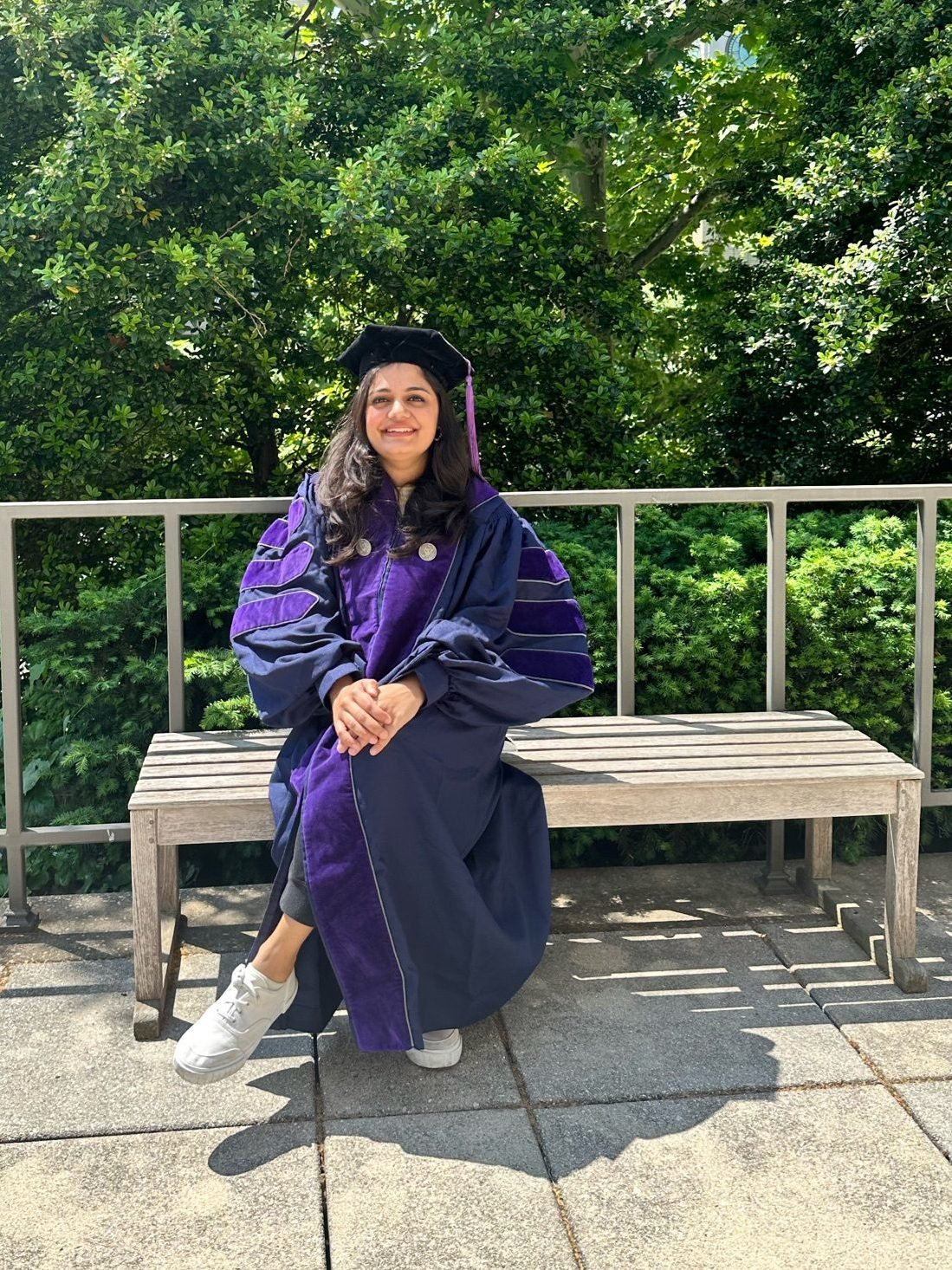
    Ramandeep Saini on the LLM at NYU School of Law

    Ramandeep Saini graduated with an LLM from the NYU School of Law this year. With an Indian law degree from Panjab University (LLB ’21) as well as a BA from the same university, Ramandeep opted to work for a year before embarking on the LLM. In this FPA, she discusses her reasons for opting for an LLM, the LLM experience itself at NYU School of Law, and a whole lot more. 

    Alright, let’s start at the start – what got you looking at an LLM, and was this something you had decided to do even as an LLB student?

    Honestly, becoming a lawyer wasn’t on my radar as a kid. It’s not like I had this grand plan from day one. But there was always something about the legal profession that fascinated me. I mean, you look at history, and a lot of the world’s big shots were lawyers, right?

    That got me thinking about the kind of impact law can have on society, whether it’s in the economy or politics. Also, I didn’t have a mentor or anyone to guide me through the whole legal career maze. So, I took a bit of a detour. I decided to go to grad school, taking courses which, I believed were related to law, because I wasn’t sure if I could crack it straight into a law school.

    After that, I got into one of India’s prestigious law schools.

    Being there, I got to mingle with people from all walks of life, and that really broadened my horizons. During my time in law school, I made it my mission to be at the head of the class and got pretty good at dissecting legal puzzles.

    Plus, I did a bunch of internships that gave me some real-world know-how.

    Then, the pandemic hit, and I helped a startup to set up their pharmaceutical consulting firm from the ground up – from paperwork to shaping company policies, I was the go-to person. Somewhere along that journey, I got drawn to corporate law. So, I thought, “Hey, why not take this show global?” That’s when I started eyeing an LL.M. in the USA. Their legal systems have serious worldwide impact, and it just made sense to dig deep into corporate law with an international exposure.

    What were some of your expectations from the LLM program? And based on this, what were some of the schools that you shortlisted? 

    When I was considering my LL.M., I had certain expectations in mind, and those expectations played a big role in my school selection. I made a list of things of what I was looking for from an LL.M. and based upon those expectations I shortlisted these schools. 

    First, would have to have Global Exposure: I wanted a program that would give me a broad, international perspective on law. It was important to me that the program had a diverse student body and opportunities to connect with legal professionals from around the world. 

    Second, I wanted to take courses taught by Industry Experts: I aimed to learn from experienced professionals, not just academics. Having faculty members with practical industry knowledge can really deepen your understanding of the subject matter. 

    Third, an Interdisciplinary Approach:  Law often intersects with other fields like business, politics, and technology. I wanted a program that encouraged exploring these connections, as they can be quite relevant in the real world. 

    Fourth, the Extracurriculars: Beyond the classroom, I was interested in schools that offered a variety of activities. This could include moot court competitions, legal clinics, or chances to do pro bono work. These activities provide hands-on experience and a chance to build practical skills. 

    Last but not the least, the location: This was a big factor for me. Being in a legal hub or a major city can offer unique opportunities for networking, and exposure to different legal practices.

    So, based on these criteria, I shortlisted a few schools: New York University (NYU) my dream choice, Cornell University, University of Southern California (USC), University of California, Los Angeles (UCLA), University of California, Berkeley (UC Berkeley)

    Why narrow down on NYU?

    I chose NYU for my LL.M. because it was my dream school, and it aligned perfectly with my goals and aspirations. NYU offers an unparalleled wealth of knowledge, resources, and exposure.

    The LL.M. program at NYU is like gathering of the world’s intellectual elite, and that’s an environment I’m eager to be a part of. I knew that my primary focus would be on corporate law, and NYU has some captivating offerings in this area.

    The Transactional and Law and Business classes at NYU present a unique opportunity to delve deep into how business transactions create value across deal negotiation, financing, implementation, and client relationships. Courses like Cross Border Mergers and Acquisitions, Negotiating Corporate Transactions and Corporate Governance by Martin Lipton also caught my attention as they directly relate to my interests. 

    NYU stands out with its exceptional faculty, and particularly I was excited about the interdisciplinary approach that would have allowed me to take business courses at NYU’s Stern School of Business and I believed that this cross-disciplinary perspective would be invaluable in understanding the complexities of modern corporate law.

    Additionally, NYU promises an extraordinary cross-cultural experience. New York City is a melting pot of languages, legal systems, and cuisines from around the world. I was confident that this multicultural environment would offer me a unique chance to form lifelong relationships and broaden my horizons.

    With the benefit of hindsight, what were some of the most rewarding aspects of the NYU LLM? Any pleasant surprises along the way?

    Looking back on my time at NYU for my LLM, there were several aspects that stand out as truly rewarding and even some pleasant surprises along the way.

    I had the opportunity to take some of the best courses offered by NYU. One that really stands out was the Corporations course taught by Robert Jackson, who also happened to be a former SEC commissioner. His energy and teaching style were out of this world. It was one of those classes where you couldn’t help but be spellbound and interested. I remember smiling through the exam because the material was just so fascinating. It made corporate law come alive in a way I hadn’t experienced before.

    Another gem was the course on Negotiating Complex Corporate Transactions by David Pollak. It felt like I was working as an associate on a real deal. The practical skills and insights gained from that course were invaluable.

    Beyond the classroom, the experience of being in New York City itself was incredible. The city has a vibe like no other, and it was a privilege to live and study there. I got to explore all the different neighborhoods and try amazing food.

    One of the most unexpected rewards was the friendships I made. Being away from home for the first time, I had to do everything on my own. This forced independence led me to some fantastic people who became lifelong friends. We went through the challenges of law school together and supported each other along the way.

    Overall, the NYU LLM program was not just about academics. It was a transformative experience that helped me grow as a person.  My time at NYU has to be the best year of my life.

    I am also curious to know if you found your undergraduate BA degree of assistance as an LLM student? 

    Yes, the undergraduate BA degree was an absolute asset during my LL.M. During my undergraduate years, I took courses in economics and political science, and surprisingly, they provided a solid foundation for some of the LLM courses that I took at NYU.

    Understanding economic principles came in handy when delving into corporate law, where financial aspects play a significant role. Political science gave me a broader perspective on the regulatory and policy aspects of the legal field, which also proved valuable.

    So, while my undergraduate degree wasn’t directly related to law, the skills and knowledge I gained from those courses did come in handy and complemented my LLM studies. It’s a reminder that sometimes, the interdisciplinary nature of education can be quite beneficial in unexpected ways.

    Specifically with NYU – was finding housing a challenge? How early did you start this process?

    Finding housing at NYU was a fairly straightforward process for me as I opted to stay in NYU housing during my LLM program.

    NYU Law has two dorms available, and each has its own advantages. The process was well-organized and efficient. It’s recommended to start the housing application process early, typically once you get your acceptance you should register for campus housing.

    This way, you have a better chance of securing your preferred accommodation.

    Living in the dorms was a popular choice with NYU alumni, and I can see why. It allows you to live near your friends and classmates, which can enhance your overall experience. Plus, you’re right in the heart of the NYU campus and the vibrant Greenwich Village neighborhood, so you get the true New York City experience.

    So, in a nutshell, finding housing at NYU for my LLM was quite manageable, and I found that living in the dorms added an extra layer of camaraderie to the whole experience.

    When it came to the learning experience at NYU, what were some of the bigger differences between NYU and Panjab University?

    The learning experience at NYU was quite different from my previous experiences at Panjab University.  At NYU, you have the freedom to choose your courses and professors, which allows you to tailor your degree to your specific interests and career goals. This flexibility was a significant departure from the more structured and fixed curriculum at Panjab University.

    The teaching methods at NYU were also distinct. Professors often encouraged active participation and class discussions. They emphasized critical thinking and real-world application of legal principles and one of the most noticeable differences was in the style of examinations.

    At NYU, exams often involved real-time problem-based questions that required applying legal principles to practical scenarios. It was more about testing your ability to analyze and solve complex issues rather than regurgitating theoretical knowledge.

    Further, the level of class interactions and discussions was much higher at NYU. Students were encouraged to engage in debates, share perspectives, and challenge ideas. It created a dynamic and intellectually stimulating environment that fostered a deeper understanding of the subject matter. 

    Overall, the education systems in the USA and India are quite distinct, and my experience at NYU was marked by a greater emphasis on critical thinking, practical application, and active engagement in the learning process.

    Lastly, any advice for the Indian law graduate who is considering a master’s abroad? 

    For an Indian law graduate considering a master’s abroad there are a few things that I think, they should keep in mind. 

    Before you make any decisions, thoroughly research the universities and programs that interest you. Consider factors like the location, course offerings, faculty, and the reputation of the institution. Make sure it aligns with your career goals and interests.

    Define your goals for pursuing an LLM. Are you looking to specialize in a particular field of law, gain international experience, or broaden your legal horizons? Knowing your objectives will certainly help you choose the right program.

    LinkedIn is a valuable resource for connecting with people who have already gone through the LLM application process or have completed their LLM abroad. Reach out to them, ask about their experiences, and seek advice.

    If possible, connect with alumni from your undergraduate institution or law school who have pursued LLMs abroad. They can provide valuable guidance on the application process, writing a statement of purpose (SOP), and securing strong recommendation letters.

    Pay careful attention to your statement of purpose. It should clearly articulate your reasons for pursuing an LLM and how it fits into your career aspirations. When requesting recommendation letters, choose professors or employers who know you well and can speak to your qualifications effectively.

    It’s essential to be well-prepared, both academically and personally, and to make the most of this unique educational opportunity.

    Good luck!

    We need your help in keeping this blog alive. If you feel that the content on this blog has helped you, please consider making a donation here

  • First Person Accounts (FPA’s) are meant to provide a first-hand account of law graduates who have pursued, or are pursuing, a post-graduate course (an LLM or otherwise) from different universities across the world.

    Maitrayi Jain completed an LLM from Georgetown University Law Centre in 2023
    Maitrayi Jain

    Maitrayi Jain completed an LLM from Georgetown University Law Centre in 2023, a program she applied to after working for about four years in India. In this FPA, she discusses why she chose GULC, the LLM experience itself, and a whole lot more. 

    So, one of the more interesting bits about the foreign LLM is the “when” – at what point should one apply for an LLM. In your opinion, what is a good time to apply, and what got you to look at an LLM at this specific point in your career?

    I think there is no right or wrong answer to this. People have different reasons for pursing  an LLM, and when to apply is completely dependent on that. If pursuing an LLM is a step towards a career in research and academia, one can go immediately after graduating from law school.

    But if it is meant to help you enter international legal market, then getting a few years of experience (4-5 years) would be helpful.

    My motivation to apply for an LLM was dependent on my own ability to cover the cost of the programme.  Studying abroad is expensive and I wanted to make sure that I will be able to cover a major chunk from my own savings.

    Covid also gave me some perspective on life and since an LLM was on my radar when I was in law school, the pandemic pushed me to actively take steps towards it.

    Once you had decided to apply, how did you go about shortlisting schools? Why narrow down on GULC?

    Shortlisting schools is the hardest part and I took a lot of time doing it. Several factors go into shortlisting schools:

    • Jurisdiction
    • Courses offered
    • Ranking of the university
    • Cost of education and living.

    I had worked as a transactional lawyer and I was looking for universities with good business law courses, who are generous with their scholarships.

    I used the QS World University Ranking list as the starting point and read up on the universities mentioned in the list. I reached out to people in my network who had graduated from foreign universities.

    Once I had all the information I needed, I made a list of schools I wanted to apply to.

    Choosing GULC wasn’t hard. It is a prestigious law school, offering diverse courses. The one thing about GULC I absolutely loved was its roster of adjunct faculties. The opportunity to be taught by industry professionals with practical experience was exciting.

    All these factors helped me narrow down on GULC.

    At GULC, you managed to work as an RA and then a Research Fellow – could you tell me a bit about the steps involved for each? Was it difficult to balance the RA-ship and the course load?

    I understand that most universities advertise open positions on their internal job portal. So if someone is interested in being an RA, they can always apply through the portal.

    My experience was a little different. I got my first RA position through networking. I was attending an event and a friend introduced me to the professor who was looking for students to work for him.

    The second was through writing cold emails to professors expressing my interest in working with them. I wrote to 40 professors, who I knew were taking courses I found interesting. A few of them responded and asked me to interview with them. Finally, Prof. Zytnick offered me a position. I worked for him through the year and it was an amazing experience.

    The Centre for Transnational Law and Business was looking for Research Fellows and considering the kind of work they had done in the past, I applied for it and got selected.

    In the Spring semester, Prof. Zytnick had put me on a big project which required me to work everyday. There was no pressure from his side and he let me decide the pace of the project but I enjoyed it so much, I made an effort to take time out everyday. Some days were tricky but I enjoyed what I was doing so it never felt like a burden.

    Looking back, what have been some of the most rewarding aspects of the GULC LLM? Conversely, was there anything about the LLM experience that you wished you had known before applying?

    GULC made learning really fun. The classes were interactive and required us to use class learning and common sense to solve problems. The professors were more than happy to guide and help. Also, the cohort was diverse and interacting with people from different jurisdictions and culture definitely expanded my horizon.

    I wish I had a better idea of how fast paced and power packed the whole year is. There was always something happening and some days it felt impossible to keep up. But I was lucky to have found like minded people who helped me sail through the year.

    I am sure you get asked this a lot but what is your reading of the employment opportunities in the US when it comes to the foreign trained lawyer?

    It is an uphill task for a foreign trained lawyer to get a job in US firms, especially if you are an Indian. People are unaware about the Indian legal system and visa process scares everyone off. Networking is the key, and even after networking extensively things might not work out.

    You need to decide the objective of your job search before you start it. If the objective is to find ‘a’ job in the US, and practice area is not something you are really fussed about, I would suggest exploring job opportunities in taxation, policy space and international organisations.

    Lastly, any advice for the Indian law graduate who is considering a master’s abroad? 

    If you wish to pursue master’s abroad, please go ahead and do it. It is an investment in your future and the experience is unparalleled. Do reach out to people who have done it before to get an idea of what it actually entails and have realistic expectations from the year.

    Your LLM year is what you make of it. So do not follow the herd and do what works for you.

    We need your help in keeping this blog alive. If you feel that the content on this blog has helped you, please consider making a donation here

  • As most readers know by now, First Person Accounts (FPA’s) are meant to provide a first-hand account of Indian law graduates who have pursued, or are currently pursuing, a post-graduate course (be it an LLM or otherwise) from different schools across the world.

    The FPA (International) is meant to broaden this scope somewhat, getting non-Indian law graduates to discuss their LLM experiences in different law schools across the world. 

    Bilge Ozaslan is a 2023 LLM graduate from the Boston University’s School of Law. With a law degree from the Istanbul Kultur University in 2018, Bilge opted for a US LLM after gaining some work experience. In this interview, she shares her reasons for opting for Boston University, the LLM experience as a foreign trained lawyer, and a whole lot more. 

    Bilge Ozaslan is a 2023 LLM graduate from the School of Law at Boston University. With a law degree from the Istanbul Kultur University in 2018, Bilge opted for a US LLM after gaining some work experience. In this interview, she shares her reasons for opting for Boston University, the LLM experience as a foreign trained lawyer, and a whole lot more. 
    Bilge Ozaslan

    When you started considering a US LLM, what were some of the expectations you had from the LLM program? And based on this, what were the schools you shortlisted, if there was more than one?

    I studied law in Turkiye which is a civil law country and worked there for four years before starting my LLM studies. I wanted to learn the common law perspective, and extend my knowledge in different legal systems.

    I wanted to be in a school where they offer programs to students all over the world and create an open minded environment. This way, it was easier to have friends from different countries, have conversations about their lives, countries, and legal systems.

    I had to make a difficult choice between two reputable schools: Boston University and Washington University in St. Louis.

    Why narrow down on Boston University?

    Before applying to LLM programs, I had conversations with people in different universities over zoom or in person. I wanted to gather as much information as possible since it was an important transition from professional life to becoming a student again. I was not sure if I was going to apply for the program but I also had this powerful desire to learn more.

    I went to Boston University in person before applying for the program. There, I met with Associate Director John LaPlante who shared with me what to expect in the program, potential challenges and opportunities related to it.

    Boston University has a wide selection of courses where students can choose more theoretical or practical courses or a combination of them with a chance of having a lot of cross-disciplinary courses. That was one of the reasons why I chose Boston University.

    The other reason was, I wanted to study in Boston city because it offers opportunities in law, technology, and their intersection which is where my passion lies.

    With the benefit of hindsight, what have been some of the most rewarding aspects of the BU LLM?

    I think the most rewarding aspect is having lifelong friends from JDs and LLMs.

    I would say the second one was being free in designing your coursework in alignment with one’s own interests. For example, I was interested in legal tech but I had no idea where to start. So, I took legal innovation, transactional simulation, law and algorithm classes. During these courses I had a chance to meet students from different backgrounds such as computer science, business, etc.

    The other rewarding aspect was having great professors who are the best in their area, have experience in the professional world, and really there to help students.

    I am still in contact with my professors and friends and we always support each other.

    As a foreign trained lawyer, were there any specific difficulties you encountered during the LLM experience at a US law school? For instance, was the mode of teaching quite different from what you were used to in Turkiye?

    I think there were two difficulties- one of which you already asked, teaching techniques. In Turkiye, law students usually go to classes, learn the basics, listen to professors, and after 3 or 4 weeks into the semester, they start to solve hypothetical legal problems according to what they learn and [Turkiye’s] Supreme Court decisions.

    In the US, even in the first class, law students do their readings given by the professor before the class. So, they are prepared for most of the questions and usually, the professor doesn’t give a lecture but asks questions and waits for the students to answer them. Thus, the teaching technique is more interactive in the US.

    The other difficulty was more of a cultural one. I was used to being quiet in class and asking my questions afterwards in Turkiye. However, in the US, students are more involved and they discuss their ideas, ask questions during the class. It was a shock at first, but I got used to it pretty quickly.

    What is your reading of the job opportunities available to foreign trained lawyers in the US? How do you think they can maximize their chances of finding employment?

    As a foreign trained lawyer it is really hard to find a job in the US. The biggest issue is we have a one year working permit and after that, we need a sponsorship which a lot of legal companies do not offer.

    During my LLM year, everyone told me that the most important thing is networking and I can’t emphasize this more.

    Network, network, network!

    Find people who do things that you are interested in, talk to them, send an email, go to legal events, and meet new people. They are going to be the ones that will help you after graduation. Be open to volunteer or intern positions. If you have time, do some internships during your LLM year.

    Lastly, and this is more of a cultural question, but what do you wish more international students knew about the US master’s experience?

    You need to leave your comfort zone. I know it is easy to talk in your native language, be friends with people who are from your country but you miss the opportunity to widen your vision and enrich your life if you get stuck to what you already do in your home country.

    It is hard to be in a different country, get used to a new legal system, and try to understand different cultures and accents. However, it is going to be one of the best experiences you’ll ever have. Talk to students who got through the US education system and learn more about their cultures. They are going to teach you a lot and help you to blend in.

    Do not be afraid to speak up and do not worry that you may have a different accent than others, raise your hand in classes. Everyone is there to help you and you are going to appreciate it in the future. Be open-minded and try new things, such as food, music, etc.

    And, I think the most important one is to have fun.

    Your LLM is probably going to be stressful but do not stay stuck between books; make sure you take opportunities to hang out with your new friends. One year passes by so quickly- accumulating fun memories are part of the full experience!

    We need your help in keeping this blog alive. If you feel that the content on this blog has helped you, please consider making a donation here

  • Things no one told this (almost) forty-year-old grad student: You will miss home. A lot.

    I suppose I knew this was coming, this feeling of missing home. Of wanting to just go back to where you come from, of where you “belong”. Perhaps what is surprising me is the intensity of this emotion, and the fact that I believed it would not hit me as hard as it has.

    After all, I have always had the traveler’s itch, wanting to see things that are new and different. The “Indian uncle” version of Dora the Explorer.

    How little I know of both, the world and of me.

    Anyway, back to the urge to go back home.

    It is a strange kind of desire, one that arrives in powerful waves that surround and pull you in. Strange because there are times when it comes without any warning, without the slightest whisper, and envelopes you until you can see nothing else.

    In the early days of course, the reasons were not too difficult to discern. After all, you are surrounded by people and things who look different, talk different, and are bound by social mores and codes that will take time to observe and then learn. This holds true for life within the classroom, and without.

    These differences, this “otherness” extends to the city you live in, one that sounds and feels so unlike the one you came from. Even the food you eat and cook tastes alien, somehow the flavors just not adding up even though you followed those handwritten recipes down to the last letter.

    As time passes, as things become more familiar, the desire does not go away. Instead, it changes. Perhaps not in intensity but rather in the way it tastes. The sharp bitterness is replaced by a tinge of sweetness, the sadness of loss with the healing touch of memories.

    Now, when the desire to return is overpowering, you smile because you remember more deeply the way your friends would laugh and make fun of you. You hear more clearly the mad rush of rain hitting the ground, a rain that felt like it would never ever end. You can almost taste that final kick of spice in that favorite dish which is only made at what was once your home.

    I suppose this urge to return will never completely go away, nor do I wish for that to happen. For I want to be reminded of where I was, of who I was, and of the people and feelings that got me to where I am today.

    For that is precious, that is something I would never want taken away.

    We need your help in keeping this blog alive. If you feel that the content on this blog has helped you, please consider making a donation here

  • First Person Accounts (FPA’s) are meant to provide a first-hand account of law graduates who have pursued, or are pursuing, a post-graduate course (an LLM or otherwise) from different universities across the world.

    Yashu Bansal recently completed the Law & Digital Technologies LLM offered by Leiden University, a course she enrolled in after four years of working as a corporate lawyers. In this FPA, she discusses her process for narrowing down on Leiden University, the LLM experience itself, and a whole lot more. 
    Yashu Bansal

    Yashu Bansal recently completed the Law & Digital Technologies LLM offered by Leiden University, a course she enrolled in after four years of working as a corporate lawyers. In this FPA, she discusses her process for narrowing down on Leiden University, the LLM experience itself, and a whole lot more. 

    You opted for an LLM nearly four years into your professional career – were there any specific events that made you realise that this was a good time to pursue international higher education?

    Pursuing academics and research has always been my end goal – I however had plans to first experience the practical application of law before diving into teaching and research. I believe that understanding how law works helps me in my legal research and will help me in imparting impactful teaching.

    After four years of working with law firms and as in-house counsel, I had gathered sufficient insight into the practicalities of the law – I was able to translate bare act provisions into ground level realities – for clients and companies. It was crucial for me to understand the same so that I can efficiently teach law to my students and research on real issues.

    With a deep interest in technology, I had already worked on IT and E-commerce laws in India and had spent considerable time self-studying GDPR and the Indian data protection bills. Before India had its own technology laws, I wanted to finish my LLM from a country which had substantial experience with technology laws and that is when I decided to go for my masters.

    And once you had decided to pursue an LLM, what were the factors you used to narrow down on schools? What were some of the schools you shortlisted, and what made you pick Leiden University?

    I was determined to pursue an LLM which focused on technology laws. I found some interesting courses in Europe, UK and the USA – some were a mix of tech and IP; some were more about tech and telecom laws; and some courses were tech-intensive.

    After a lot of deliberation, I had chosen Europe for my masters, for two reasons mainly. Firstly, Europe has been a leader in framing rules and regulations to govern the cyber world. In contrast with the USA, when it comes to cyber regulation, I believe that Europe is more about a ‘balanced approach’ and strikes the much-needed balance between the chaos of the cyberworld and the need for regulation.

    Secondly, considering my end goals of starting an academic career in India after my LLM, I did not want to invest hefty amount of money which is generally the fee requirement in USA.  

    In Europe, including UK, I had to choose between universities like KCL, QMUL, University of Edinburgh, Tilburg University, and University of Oslo.

    I found Leiden University to be the best in academic research. I had spent time learning about the clinical research practices at the Universities, and reading research papers of the faculty. The research-centric environment at Leiden University, along with its highly reputed e-Law Centre, highly inspired me and hence, I made the decision to join Leiden University.  

    Looking back, what were some of the most rewarding aspects of the Leiden LLM? Also, what were the most challenging? 

    My LLM in Leiden University has been life-altering for me. When I look back, there are various aspects which have been highly rewarding for me and my future career goals.

    The top three aspects for me are: one, the faculty – we had faculty coming from various backgrounds, and the same clearly reflected in their expertise and teaching style. For instance, we had faculty members who were practising in the Netherlands– working on GDPR and other technology laws; and we also had faculty who were coming from tech-background and gave us a deeper understanding of the intersection of technology and law;

    Two, the exposure – Leiden University actively worked towards giving more exposure to its students and organised activities, guest lectures, tours and conferences for us. For instance, we had the chance to visit TU Delft and see their quantum computer – Quantum Inspire, which was truly fascinating for me. 

    Three, my fellow students – Leiden University certainly has a unique admission criterion where they try to maintain a balanced mix of students who can learn from each other. With students from various countries and different work experience, every lecture was intellectually stirring.

    The most challenging aspect, in my opinion, was adapting to the different teaching and evaluation methods at Leiden University. When it comes to teaching mechanisms, we were given sufficient reading material for class, and to be honest, I am yet to finish my “recommended reading” material. Covering all subjects, including thesis, in less than a year was indeed very challenging.

    With regard to evaluation mechanisms, it took me the first two exams to get a grasp of the expectations of the faculty with regards to examination. Unlike my experience in India, we were required to be very crisp and to the point, and this challenge is rather rewarding in the long run.

    Did you find yourself falling back on your work experience during the classroom teachings? Also, do you recommend other candidates to gain some amount of work experience before applying for an LLM?

    For me, having work experience was very helpful during classroom interactions, especially considering that I had already worked with tech-focused clients. For instance, I had worked on privacy policies, SaaS Agreements, EULA and other legal documents in India which gave me a strong understanding of how businesses function in the real world. It was also interesting for me to analyse EU laws and understand how any provision would work in the Indian scenario – which is now very critical for me.

    Before working towards a masters course, I would definitely recommend gaining some work experience. Work experience gives a different critical perspective, which is especially necessary in the field of law, where understanding the practical application of law is very crucial.

    Along with the LLM, you also worked with a data security organisation, STRM – how did this come about, and was it difficult to manage the consultancy work along with the LLM course load?

    Getting an opportunity to work with STRM was pure luck for me – a result of shared passion for bridging the gap between technology and law. I had come across the founders of STRM through a podcast which aims to bring law and technology together, and had the chance to meet them in Rotterdam at STRM office.

    Working at STRM was a great experience – I had a front row seat to data protection in the EU while I was studying technology laws in depth. In addition to strengthening my understanding of the technology side, working at STRM helped me apply my legal expertise to finding solutions to protect the personal data of businesses in various sectors such as healthcare, fintech, and HR.

    When I look back, with regard to managing the work load of a full time LLM and a part time role at STRM, I cannot thank my founders enough for making it so easy for me. With regard to my course subjects, it was a beautiful coincidence that my course topics often aligned with my research work at STRM. Additionally, I also had a great team who always helped me with my doubts – explaining me some very technical aspects, thereby adding to my overall experience at Leiden University. The work culture at STRM was also very supportive – I had the flexibility to take leaves before exams, and also work from home when need be.

    What is your reading of the employment opportunities that such an LLM provides, whether in India or elsewhere? 

    Employment opportunities depend on various factors of course. I can guarantee one thing though – India has great employment opportunities right now with such an LLM. We are gearing up on technology laws and such an advanced LLM will equip one with the required skill set.

    In the field of data protection specially, there are great employment opportunities in EU as well, but visa requirements and language barriers must be considered. I am however not the correct person to comment on getting a corporate job in EU, but seeing my fellow classmates, I understand that it is challenging – but possible.

    With regard to academic opportunities in the EU, I had come across some very interesting roles for students who want to pursue an academic career abroad. For me personally, I was determined to apply my learnings from my experience and contribute to the development of technology laws in India.

    Lastly, any advice for the Indian law graduate who is considering a master’s abroad? 

    In my opinion, having clarity on why you are doing an LLM is very important. Pursuing a masters abroad offers several benefits, be it academic learning, cultural exposure, or relocation to a foreign country. It is very essential to be certain on your expectations from an LLM and invest accordingly.

    We need your help in keeping this blog alive. If you feel that the content on this blog has helped you, please consider making a donation here