First Person Accounts (FPA’s) are meant to provide a first-hand account of law graduates who have pursued, or are pursuing, a post-graduate course (an LLM or otherwise) from different universities across the world.
Varaa Masood
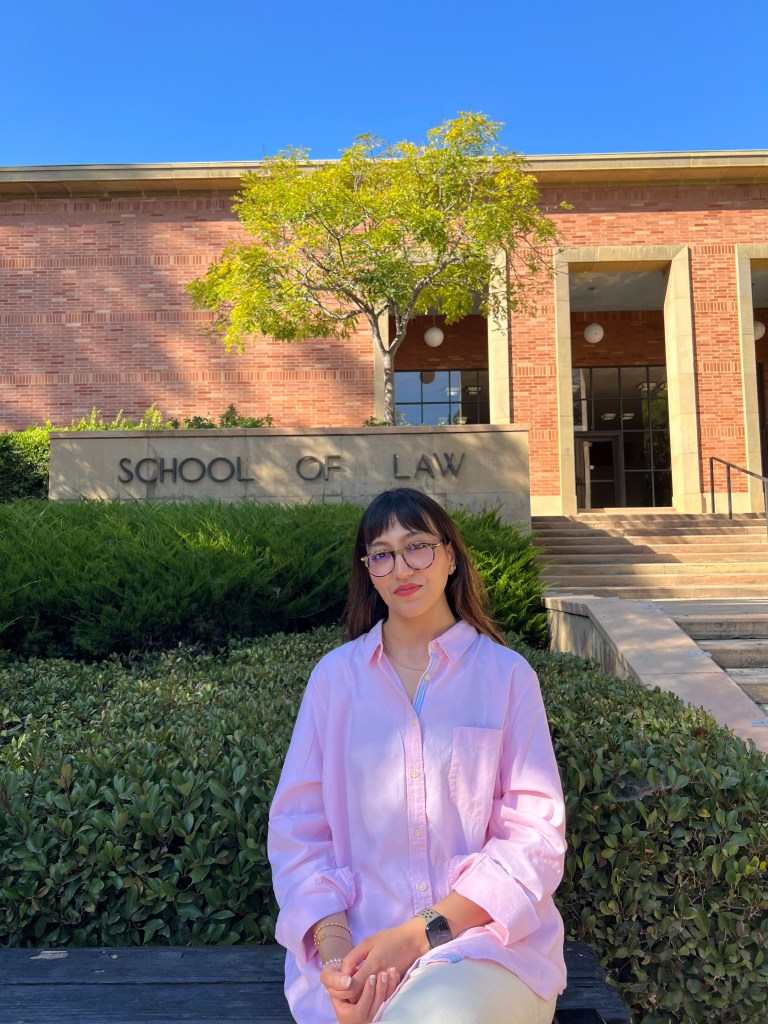
Varaa Masood completed an LLM from UCLA earlier this year, her second master’s degree in law. In this FPA, she discusses her reasons for enrolling for another LLM, the UCLA LLM experience, and a whole lot more.
The UCLA LLM was, in fact, your second master’s after the one at NMIMS. What made you consider a second LLM, and what were some of the factors considered while shortlisting schools to apply to?
Pursuing an LLM abroad has always been a long-held aspiration for me. However, I came to the realization that gaining work experience before embarking on this academic journey would enable me to make a more informed decision about my specialization.
Working in litigation exposed me to various facets of law, and during this period, I discovered my passion for Intellectual Property Law. Graduating with the highest GPA in my Master of Laws program in Intellectual Property Rights at NMIMS, boosted my confidence and inspired me to pursue a second LLM abroad.
Interestingly, the opportunity to fulfil my dream came when I got married and relocated to the United States with my husband, who was working in Los Angeles. Therefore, my primary criterion was to apply to law schools in Los Angeles.
UCLA, being one of the most prestigious universities, naturally became my goal due to its extensive range of LLM specializations. Their LLM program in Media, Entertainment, Technology, and Sports held particular appeal for me, thanks to its renowned faculty and industry experts. This program offered an extensive examination of both the business and legal dimensions within the US entertainment industry.
Why narrow down on UCLA? What were some of your expectations from the UCLA LLM, and looking back, have these expectations been met?
The curriculum at UCLA was very engaging with the best team of experts in Media, Entertainment, Technology and Sports Law, ranking it the best in the world.
Reaching out to some of the professors at UCLA, I realised they appreciated foreign students coming in and learning about a new jurisdiction. One of my biggest goals coming to UCLA for an LLM program was to learn about a new subject matter in a different jurisdiction at the same time receiving guidance in preparation for the California Bar Exam.
I definitely feel my knowledge has broadened not only in terms of US jurisdiction but also acquainted me with the business practices of the US. The LLM program at UCLA made me more self-confident and outspoken. I will always cherish my experience at UCLA and the friends that I have made for life.
How was the LLM experience at UCLA – what were some of the most challenging and rewarding aspects of the course?
The first month at UCLA was very challenging in terms of class scheduling and teaching methods. The faculty practices a socratic method of teaching which is very different from my previous law schools. One has to be prepared with the materials and be proactive in class.
The professors do value student participation and can sometimes evaluate grades on its basis. In my experience the class curve was the most challenging aspect for me, as most of my classes were with the JD’s or Juris Doctor Degree students, which put pressure of doing well and trying to stand out in classes.
However, the professors and American students love interacting and really help you out with outlines and paper writing patterns. In the US, all law schools use the IRAC method of writing style, which basically stands for I: Issue, R:Rule, A: Application and C:Conclusion, which is also the writing style if one is planning to sit for a US bar exam.
Going to law school helped me in grasping a good sense of writing style for the law school exams as well as the bar exam. Certainly the most rewarding aspects of the course was the experience of studying with International students and the networking events hosted by the law school.
I am also curious to know how you would compare the two LLMs? What were some of the more obvious differences between the learning experiences at NMIMS and UCLA?
The LLM program at UCLA differed significantly from NMIMS. At NMIMS, the program was characterized by its rigor, involving continuous research paper assignments for all subjects and offering in-depth study of Indian IP laws, with a relatively cursory examination of international IP.
In contrast, UCLA’s lectures followed a more uniform U.S. framework, sparingly referencing the European laws. I would describe my LLM experience at NMIMS as predominantly focused on academia, while my time at UCLA provided a more comprehensive and well-rounded educational experience.
One of the more common reasons for considering a US LLM is finding employment – what are your thoughts on this? How do you think foreign trained lawyers can increase their chances of finding employment in the US?
I agree with the common reasoning of considering a US LLM lays the eminent value of being a qualified US attorney and finding employment. However, considering the demographic of the Indian population in the US finding employment as a foreign trained attorney becomes extremely difficult.
A H1B sponsorship is needed to work in the US for any employer, which unfortunately happens through a lottery system. The chances of getting through the lottery and finding a sponsor are very slim but one should definitely try luck.
However, working for an NGO can definitely exempt you from the H1B lottery but one will have to find an NGO that can sponsor.
Lastly, any advice for the Indian law graduate who is considering a master’s abroad?
Indian Law graduates should keep the takeaways below while considering a masters abroad:
Purpose of applying for masters abroad to a particular university.
Research about the financial aid/scholarship provided by school or other private scholarships.
Get information about the law school or a specific program by reaching out to the current students or alumni through LinkedIn.
Reach out to the professors of the universities asking about the specifications of a course.
Lastly, you should not feel ripped off while pursuing the masters.
We need your help in keeping this blog alive. If you feel that the content on this blog has helped you, please consider making a donation here.
First Person Accounts (FPA’s) are meant to provide a first-hand account of law graduates who have pursued, or are pursuing, a post-graduate course (an LLM or otherwise) from different universities across the world.
Yash Agarwal
Yash Agarwal is a candidate for the LLM in Intellectual Property Law at George Washington University , a course he enrolled for immediately after completing an LLB from Aligarh Muslim University. In this FPA, he shares some of the expectations he had from the GW LLM, the LLM experience itself, and a whole lot more.
(Edited excerpts)
You chose to apply for an LLM right after you completed the Indian law degree – how early did you begin the application process? And what were some of the schools you shortlisted?
During my last semester of B.A.L.L.B degree I started the application process beginning from shortlisting schools and checking their coursework, professors and application requirements. While shortlisting always remember to check for the minimum TOEFL score required.
I shortlisted three Law schools Vanderbilt law school, George Washington University Law, and the University of Southern California.
When it came to the LLM application itself, what was the most challenging bit about the entire process? Where do you think prospective applicants ought to spend most of their time when it comes to the application process?
For me it was preparing Statement of purpose(SOP) since SOP is given greater importance during selection process. Also, the scholarship is sometimes dependent on a good SOP because in that you explain your interest in the desired field, university and your previous experience and education.
Another challenging process is to get a visa appointment and get the visa itself. When I visited the Mumbai consulate for my appointment I saw some students getting rejected and I was scared but my interview was smooth. Some questions which were asked from me were the university you going to and the universities you have shortlisted with some questions relating to educational background in India.
What were some of the expectations from the specialised LLM at GWU – and now, looking back, were these expectations met?
My four expectations from a LLM degree in intellectual property were:
To gain an In-Depth Specialization and expertise in the field of IP. A lot of professionals working in IP in the US are alumni of GWU which demonstrates GW’s expertise in the field of IP.
Networking Opportunities in GW are great primarily because of the location and secondly because of the alumni network.
Career Advancement as an LLM degree in specialized field opens door to various career opportunities in United States as well as outside the states. I can definitely tell about IP field as most of the big companies around the globe want to register their intellectual property in USA and if you know the laws it would be very helpful for an individual in further career advancements.
And of course a Global Perspective and a global network as most of the LLM students in my class are from around the globe like the Middle East, Europe, South America, Canada and also from other Asian countries.
All of these expectations were met.
Not quite connected to the LLM but as a law student, you also co-founded WriterNest, an online publication covering legal news and legal developments – what prompted you to start this? And how has that experience been?
This happened during Covid when classes were online and I didn’t have much pressure so me and classmates decided to create a website. On this website we published information regarding latest news in the legal field, case briefs of landmark judgements and articles which students may submit to be published on the website.
We also hosted events on the website like poster making competition, article submissions and we also used to give prizes which include coupons of restaurants/cafes and sometimes cash prizes too.
It was an amazing experience to conduct events like these and keeping ourselves busy during such hard times. I personally managed the news section of the website which helped me a lot. Even now, I keep close eye on the legal happenings around India and the world. However, when me and my classmates graduated we got busy in our careers so the website is inoperative now.
Coming back to the LLM – what do you think have been some of the most rewarding aspects of the LLM?
The most rewarding thing which I gained is specialized knowledge in Intellectual property laws because of an extensive coursework provided by the university along with my connections with professors and alumni. GWU has been known for its IP curriculum and pursuing the LLM has made me believe this. Apart from this LLM degree has also helped me to develop personally in various aspects.
Lastly, any advice for the Indian law graduate who is considering a master’s in the US?
I would strongly suggest if anyone is considering to pursue masters in US to do a good research of the university they are shortlisting, what opportunities do the university offer and what are the further career opportunities they are looking for because you are investing a large amount of financial resources along with time and effort.
After that I started practicing TOEFL exams questions via YouTube and the ETS website. In February I appeared for TOEFL exam. Fortunately, my TOEFL score was good enough to pass minimum requirements.
Law schools in US accept applications through a common portal called LSAC. We have to create an account on this portal and upload all the documents like resume, SOP’s, recommendation letters and TOEFL Scores. Your university also has to send transcript via courier to LSAC.
Once all the documents and transcript are verified you can apply to individual law school through LSAC. I got offer letters from two universities out of the three I applied for, namely George Washington University and the University of Southern California. Since GWU is located in DC and the scholarship offered was also generous, I decided to accept the offer from GWU.
We need your help in keeping this blog alive. If you feel that the content on this blog has helped you, please consider making a donation here.
First Person Accounts (FPA’s) are meant to provide a first-hand account of law graduates who have pursued, or are pursuing, a post-graduate course (an LLM or otherwise) from different universities across the world.
Ayesha Mohanty
Earlier this year, Ayesha Mohanty completed the LLM in National Security Law from Georgetown University Law Centre. In this FPA, she talks about her interest in working at the grassroots, her time as a law student at Indraprastha University, the LLM experience itself, and a whole lot more.
I will come to the LLM in a bit, but as an undergraduate student at Guru Gobind, you managed to do an incredibly diverse set of extracurriculars, with quite a few connected to the UN. Was this something you consciously worked towards, or things just fell into place?
This journey began way before my undergraduate course or even before I decided to study law. Growing up in two different cities in India, Bhubaneswar and New Delhi, and receiving my primary education in a Catholic school, I was exposed to different perspectives and became deeply aware of the challenges in society.
This became a catalyst to contribute meaningfully to addressing societal issues.
As I became more conscious of the inequalities that exist while also recognizing my own privileges, I felt compelled to make a difference in the best way I could. Grassroots organizations became my avenue for being an ally and actively engaging in issues I was passionate about, be it mental health, gender equality, or peacebuilding.
This drive to contribute was something that I carried with me even during high school. Interestingly, many of the UN-affiliated organizations I aspired to work with during high school had age limits that I didn’t meet at the time.
Nevertheless, I made a mental note of these organizations, their community engagements (direct vs. indirect), and the kind of impact they were making. As I progressed through my undergraduate course, I actively sought out opportunities to apply for positions within these organizations when vacancies arose. Fortunately, I was selected for some of these roles.
However, my motivation stemmed from the realization that the laws I was studying in the classroom were not abstract concepts detached from the real world. They had a direct impact on the communities I was serving. When faced with challenges in areas I was passionate about, I asked myself, “As an individual, how can I do more?” This question was the driving force behind my involvement in a diverse range of extracurricular activities.
How early on as an undergraduate law student did you begin thinking about an LLM? What were some of the expectations you had from the LLM experience?
While I had decided that I wanted to do an LLM from the first year, this was still wishful thinking. It wasn’t until my third year, as I began to select elective courses and engage in interesting research projects supporting organizations like Ara Trust and the Center for Communication Governance, that the idea of pursuing an LLM became more concrete.
During this time, I started to consciously lean towards the decision to pursue my LLM immediately after completing my undergraduate degree, rather than waiting for a few years to gain professional experience.
In terms of my expectations, several factors weighed on my mind.
Firstly, I sought a university that offered specialization programs that were unconventional and allowed for some degree of flexibility in course selection. Secondly, I valued a faculty composed of academicians, policymakers and industry professionals. Thirdly, institutional values were significant – I wanted an institute that was actively engaged on social issues and demonstrated meaningful commitment. Fourthly, diversity in the student body, not just amongst the LLM students but also a diverse JD program.
Given that LLM programs often attract international students, I believed it would be enriching to study alongside a diverse group of JD students from various backgrounds.
Fifth, I wanted the ideal school to be situated in a city like New Delhi – a vibrant urban city with diverse crowd, good pace of life and where there is an intersection of policy, private sector and research. This way, I could meet with people beyond LLM programs and understand the legal landscape.
When did you begin the application process, and what was the most time-consuming aspect of the entire process? In other words, what should prospective LLM applicants keep in mind when it comes to applications and time management?
I started making conscious efforts towards my application the summer before my final year of undergraduate law school. The most strenuous part of the application process is drafting the Statement of Purpose – which has to be reflective of your motivations and achievements but also emphasizes why you are choosing a particular course or school.
In hindsight, I wish I had started to work way earlier on my SOPs as you need to constantly revisit them and prepare a new SOP for each university.
For prospective university students applying straight from law school, striking a balance between university commitments, final year internships and thesis papers can be challenging. Yet, applications such as Notion or Evernote can be helpful.
Personally, I tend to be very methodical in my approach. I would prepare an Excel sheet of the university I was interested in applying to, the status of my Statement of Purpose (SOP), which professors I intended to request Letter of Recommendations from and what stage I was at in the application process.
[In terms of steps, I would say these would be:]
Understanding your law school and your motivations: When advising my friends who are in the process of applying, I always emphasize the importance of truly understanding the schools they are considering. Going that extra mile to know what the things you are looking at – whether the courses, faculty members, diversity of the student body, post LLM job prospects or perhaps a childhood dream to study at renowned institution. Every single factor that inspires and motivates you is important, and balancing these interests can help provide clarity in the decision making process.
Complete all pre-application checklist before September: The period between September – November is quite hectic, so having all your documents ready can significantly ease the burden for you.
Revisit Resume and SOP for every school you apply – Customizing your resume and Statement of Purpose (SOP) for each school you apply to is a critical step in the application process. Certain elements of your background, like coursework completed during your undergraduate studies or participation in summer school programs, may hold particular relevance to specific universities. Emphasizing these experiences in your application documents is essential. Generally, your resume should be 1-2 pages in length.
Finally, surround yourself with friends and family who can really support you in this journey and general well-being. It can be a very challenging and stressful period, but having a great support system and taking breaks helps you to visit the SOPs and all application related documents with fresh perspective every time.
Were you always contemplating a specialized LLM? Which schools did you end up shortlisting, and what got you to narrow down on Georgetown?
While supporting the Center for Communication Governance at National Law University Delhi, I developed a keen interest in topics related to national security and technology. This was also during the time when the Personal Data Protection Bill was tabled and there was a lack of consensus on the ‘interests of the state’ vis-a- vis the interests of the people.
Gradually, I delved deeper into this subject and engaged in discussions on international politics with my father, it became increasingly evident to me how national security interests often served as a source of conflict between states. I also observed a shift in focus from traditional notions of military might to non-traditional domains such as gender, cyber issues, and economics in the realm of global interests.
Georgetown University, perfectly aligned and covered all the expectations I had from an LLM program. It boasts the best national security program in the world. Additionally, being located in DC and studying at the political capital of the world, when global interests were undergoing significant transitions– nothing better could I asked for.
While I did consider few other schools, Georgetown was always the first on the list. There was no place I would have rather been than here!
It has not been too long since you completed the LLM, but what have been some of the most rewarding aspects of the GULC LLM? And some of the most challenging?
To say that I had just a single most rewarding experience would be an understatement. Every experience and aspect of my program was unique and rewarding in its own special way.
However, if I must pick one, it would be gaining incredible life-long friends who I always was inspired by.
Within the national security cohort, I studied alongside brilliant woman and non-binary members whose experiences and careers far outlived my life. These were congressional officers, US Army, Marine Corps and Navy Judge Advocate Generals (JAGs) who had served their countries in different parts of the world, policymakers who drafted first technology-related legislations, represented their governments and states at international bodies and diplomats of different nations.
In a world where these spaces are often representative of only a few, it was refreshing to just break bread and share perspectives on anything and everything.
As the youngest person in the room with these incredible individuals, there were also moments of doubt and feelings of impostor syndrome would kick in. However, as the program progressed and I gained a foothold of the subject-matter, I was able to actively contribute to many classes and it really helped my self-confidence.
Lastly, any advice for the Indian law graduate who is considering a master’s abroad?
First, during the initial two years of your legal studies, aim to gain practical experience in various legal settings, such as litigation, law firms, and non-governmental organizations (NGOs). By doing so, you’ll get a clearer understanding of your strengths and interests within the legal field.
As you progress into your third year, it’s wise to start narrowing your focus on a specific area of law that you can envision yourself practicing for the long haul, possibly over the next two to three decades. This focused approach will enable you to align your academic coursework, work experiences, and extracurricular activities.
When it’s time to apply for your LLM, you’ll likely find that you’ve already built a strong foundation and won’t need to go to extraordinary lengths solely for the sake of pursuing a master’s degree.
Secondly, during the pre-application phase, I would strongly advise revisiting and revising your Statement of Purpose (SOP) on a regular basis. This proactive approach, even if it involves making minor edits such as punctuation changes, can have a significant impact.
I recall my own experience of writing my SOP for Georgetown University just three hours before the application deadline. However, the continuous process of drafting and refining SOPs was instrumental in helping me clarify my motivations and aspirations. It was through countless iterations, with some drafts never seeing the light of day, that I was able to present a compelling case for my admission to my dream university.
Thirdly, it’s essential to understand that while having professional work experience can be advantageous, it’s not an absolute requirement for pursuing an LLM. While some LLM programs may prefer applicants with a year or two of work experience, not having it doesn’t necessarily put you at a disadvantage compared to peers with professional backgrounds.
Academic excellence and professional experience are distinct factors, each contributing to an individual’s qualifications in its unique way. The relevance and importance of these factors can vary depending on the specific area of legal practice.
Lastly, believe in yourself throughout this journey. From the pre-application phase to the selection process and even after enrolling as a student, you may encounter moments of doubt and uncertainty. However, if you have faith in your own capabilities and recognize that each person has a unique mission of their own, you will navigate this path successfully.
We need your help in keeping this blog alive. If you feel that the content on this blog has helped you, please consider making a donation here.
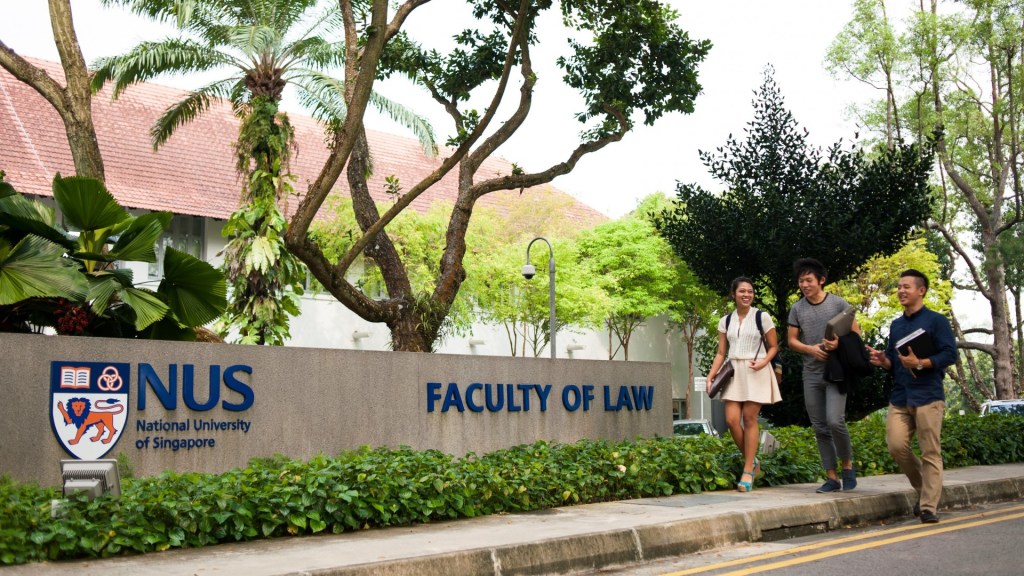
The Faculty of Law of the National University of Singapore (NUS Law) is one of the premier places for legal research in Asia. It has an active research culture with seven research centres, an intense and diverse array of research events and seminars, and large numbers of eminent researchers visiting it from around the world.
In 2023, the Law School was ranked 9th and 12th globally by the Times Higher Education and the Quacquarelli Symonds (QS).
NUS Law is offering several fully funded places for its PhD programme starting August 2024.
Successful applicants will receive (i) a monthly stipend of between S$2,200 and S$2,800 per month (please click here for the full list of scholarships available), and (ii) a full tuition fee subsidy for a maximum of four years.
PhD students who successfully pass the Doctoral Candidate Qualifying Exam will receive an additional monthly stipend of up to S$500 per month.
In addition, NUS Law will provide funding for research expenses and conferences up to a maximum of S$8,000 during the period of the programme.
Outstanding applicants in any field of law are strongly encouraged to apply. Prospective applicants are strongly encouraged to consult the Faculty Research Interests here.
The closing date for all applications is 31 October 2023. Application instructions and requirements can be found here. For any enquiries about these positions, please e-mail lawGRADadm@nus.edu.sg
You can also view the profiles of current PhD students here.
First Person Accounts (FPA’s) are meant to provide a first-hand account of law graduates who have pursued, or are pursuing, a post-graduate course (an LLM or otherwise) from different universities across the world.
Atrayee De
Atrayee De graduated with a BCL from the University of Oxford in 2019. Since then, she has been making her way through the dual-qualification process in the UK, and is currently working as a Trainee Solicitor in the UK. In this FPA, she talks about the BCL experience, gaining work experience in the UK, Project i-Care and a whole lot more.
You opted to read the BCL right after your Indian law degree – even back then, was the goal to eventually immigrate to the UK?
The UK seemed an exciting place to study, but I did not have a grand plan to immigrate long-term. After qualifying in India, I decided to continue my legal education in another common law jurisdiction. Initially, I considered both the UK and the US as both countries have world-class universities and highly regarded legal courses.
However, the cost of attending the top US institutions is famously high compared to top institutions elsewhere and I quickly found that they had very few scholarships available to Indian nationals studying law. In contrast, the UK was more open in that respect.
The appeal of Oxford was also a big part of my decision. The university is highly respected globally, and the BCL is widely regarded as one of the most prestigious master’s degrees in law. I was humbled by the opportunity to learn alongside some of the sharpest legal thinkers from around the world, particularly as I was one of the youngest people offered a place on the course, and I knew many of my peers were taking the BCL to build on years or even decades of legal experience.
The chance to be pushed intellectually by brilliant peers and faculty at Oxford was very appealing to me as a young lawyer, and that is primarily what I was seeking. I planned to maximize my legal knowledge and analytical abilities and build my future there.
What were some of the schools you had shortlisted? Was there anything in particular about the BCL that got you to Oxford?
When considering master’s programs, I was lucky enough to receive offers from several prestigious UK universities, including Oxford, Cambridge, UCL, QMUL, LSE, and KCL. I ultimately chose the BCL program at Oxford. The beautiful location and chance to study at the closest thing to a real-life Hogwarts appealed to my inner child and added to Oxford’s allure.
But more importantly, I was drawn to the BCL for its renowned rigor and excellence in legal education. I could see that the BCL would be intense and demanding, but I saw that challenge as an opportunity to take my legal knowledge to the next level. I was eager to receive the best possible instruction from experts at the height of each area of law alongside exceptional students from around the world. The curriculum focused on global legal perspectives was also highly appealing to me.
I should also mention that I am incredibly grateful that I was given the Bodh Raj Sawhny Memorial Scholarship, which goes to the top Indian student reading for the BCL. This scholarship enabled me to attend, which I’m incredibly grateful for. I found it humbling to be given this special chance to gain the tools to advance my legal career and I knew I had to seize it.
With the benefit of hindsight, what were some of the highlights of the BCL experience? How do you think the BCL helped you in your professional career?
Looking back, a major highlight of my BCL experience was having the honor to represent Oxford as a speaker at the International IP Moot Court competition. I was also fortunate to be offered opportunities to judge prestigious moot court events alongside distinguished judges, barristers, solicitors and law professors. I am extremely grateful that the course provided so many opportunities to interact with current and future leaders in law, as well as with exceptional scholars.
Serving as a Research Associate on an interdisciplinary law and technology project was another highlight as it allowed me to pursue my passions for both fields while developing talents that enabled me to attain my current role, where I practice at the intersection of law and tech.
More broadly, the BCL provided an invaluable foundation for my legal career. The rigorous curriculum and global approach sharpened my analytical abilities and understanding of complex legal issues. Learning from renowned academics and brilliant peers elevated my thinking and knowledge.
The demanding workload, while difficult, instilled mental discipline, expanded my legal mindset and equipped me with practical abilities central to my profession. The knowledge and capabilities I honed there have served me well so far and I’m sure will continue to do so.
Since the BCL, you have been working your way through the dual-qualification process – I will come back to this in a minute, but what I wanted to know more about was the mini pupillage you were selected for – how difficult was this to find? And what were some of the learnings made?
There is a lot of competition for mini-pupillages, and especially during the pandemic, there were limited opportunities available, so I was very fortunate to be selected. I gained some eye-opening glimpses into life as a barrister and found that extremely valuable. I gained firsthand exposure to the day-to-day work of barristers in commercial law which was a major area of interest for me.
In practical terms, the mini-pupillages let me apply and sharpen my legal research, writing, and analytical abilities in a new context. Shadowing barristers on cases and collaborating on arguments enhanced my skills and knowledge substantially. The intensive workload and quick turnarounds mirrored the demanding but stimulating reality of practice I could expect in any future legal role.
While at times difficult, the mini-pupillages endowed me with practical legal skills and experiences that have served me well since. I remain very grateful for those opportunities. I ultimately decided to train as a solicitor myself but my experiences have given me huge respect for the barrister profession and helped equip me to work closely alongside them in my current role and my future career.
As someone who has now worked with a number of UK-based organisations, what is your reading of the career opportunities that foreign trained lawyers have in the UK? Any specific aspect that you think has worked in your favour thus far?
As a foreign-trained lawyer who has worked at several UK organizations, I’ve found promising career opportunities in the UK legal market. With London as a global business and finance hub, demand exists for lawyers like myself who offer an international background and adaptability. My varied perspectives and flexibility to understand complex cross-border issues have been assets.
Whilst there are limitations on how I can practice here compared to a UK-qualified lawyer, my employers have recognized the value I bring to the table as an India-trained lawyer given the shared common law principles that underpin our legal systems and the international nature of many of the cases I work on.
Their recognition that the BCL program at Oxford provided me with a strong foundation in the commercial awareness, critical thinking and soft skills needed to work with UK and multinational clients has certainly helped create opportunities for me.
However, success as a foreign lawyer in the UK rests primarily on merit, skills, and a willingness to learn the intricacies of British legal practice. As much as my academic or geographic background, I think a consistent effort to keep performing at the high standards I know I’m capable of and seize on any opportunity to learn and develop expertise in UK law are qualities that have enabled me to add value in roles so far.
There are challenges navigating a new legal system, but recognising you can overcome those through learning and collaboration has allowed me to gain knowledge and progress my career. My experiences in London working on a large international class action in my previous role and on meeting the legal needs of multinational clients in my current role have been very rewarding.
I think this exemplifies how the legal field is increasingly global, and I’m very fortunate to have these experiences as a foundation for my future career.
Coming back to the dual-qualification process, it would appear that you are interested in becoming a solicitor – is this correct, and if so, was this a decision you had made early on in your academic career? What have been some of the most challenging bits in this process?
Yes, that’s right – I am currently on the path to becoming a dual-qualified solicitor in the UK. This was not something I had in mind when I originally came to the UK to study, but after graduating and working here for several years, the greater flexibility to practice and, consequently, greater opportunities available to UK-qualified solicitors became highly appealing to me.
Qualifying here is a very different process to qualifying in India.
The two year training contract and ongoing examinations at the core of the process is famously rigorous and whilst I was able to get partial exemptions to reflect my Indian qualification and previous experience, it’s still a long road ahead. Intense studying alongside a full-time work schedule and responsibilities I’ve accrued as an already practicing lawyer has taken discipline and tested my time management abilities at times.
However, I have embraced the challenge, and I think it’ll make the reward of becoming a UK-qualified solicitor even sweeter in due course. I’m very excited by how this qualification and specialised expertise will expand my ability to serve clients and the justice system and very grateful for the opportunity.
Moving away from education, you are also the founder of Project iCare – could you tell me a bit about the hows and whys behind this organization?
I really appreciate you asking about this. I founded Project iCare in May 2020 to honor my late grandfather, who suffered from Alzheimer’s, to raise mental health awareness, educate people on the real world impact of mental health issues, and create a supportive community.
Project iCare offers an anonymous platform for individuals worldwide to share their mental health experiences through our “Care Stars” program. We also distribute bite-sized informational resources on various conditions. Additionally, our blog explores the intersection of law and mental health. To be clear, we do not give medical or legal advice but we offer a judgment-free space for honest dialogue and, where possible, we point people in the direction of other resources.
I’m so grateful to the team of volunteers that have joined the project, contributing skills ranging from programming to graphic design and helped the project to reach a wider audience. I’m also extremely thankful and full of admiration for the people who have shared their personal stories on the platform and in doing so, allowed us to learn from their journeys and helped to de-stigmatise mental health issues.
Mental health issues affect people from every background and every walk of life, but they currently don’t always get the same level of recognition and empathy as physical health issues. I hope Project iCare can contribute to promoting inclusiveness and challenging misconceptions, and through this we can help encourage understanding and compassion.
Though still small, I know we have already had an impact on our audience and I hope Project iCare can continue to grow and make a difference in creating awareness and community around mental health. My hope is that by shining light on mental health challenges, we can realize that we are never alone in this fight.
Please visit our website to learn more and join our community.
Lastly, any advice for the Indian law graduate who is considering a masters abroad?
I moved to the UK without any prior connections to the country and I can testify from firsthand experience that the change in culture (and weather!) can be a bit daunting at times and that there are challenges and downsides as well as upsides.
For me, those upsides outweighed the downsides and it’s been an amazing experience but I wouldn’t say it’s the right path for everyone.
My advice is to stay true to whatever your dreams are. If a masters in the UK or elsewhere aligns with the dream of someone reading this then I wish them the best of luck in applying, I’d like to reassure them that the obstacles to studying abroad are surmountable if you do your research and put the effort in, and that when they get there I hope they enjoy their time studying as much as I did.
On deciding where to go, I’d encourage them to avoid choosing where to go purely by how prestigious an institution is and research programs thoroughly so they can take into account whether the curriculums and strengths of the faculty fit their interests. It’s also important to be think about costs, whether you’ll need a scholarship or to work part-time, as well as career prospects.
For those considering a similar career path to myself I’d add that with a foundation in Indian law, you bring invaluable experience and diversity of thought. Legal training at any level is challenging but it’s also a very rewarding career that gives you a bright future.
Finally, on a personal note I am extremely grateful for the support of my parents and professors in making my journey possible. I hope others studying abroad will have their own support network, remember their roots back home during difficult times, share their culture proudly and never let anyone limit their journey based on background.
We need your help in keeping this blog alive. If you feel that the content on this blog has helped you, please consider making a donation here.



 Amicus Partners