First Person Accounts (FPA’s) are meant to provide a first-hand account of law graduates who have pursued, or are pursuing, a post-graduate course (an LLM or otherwise) from different universities across the world.
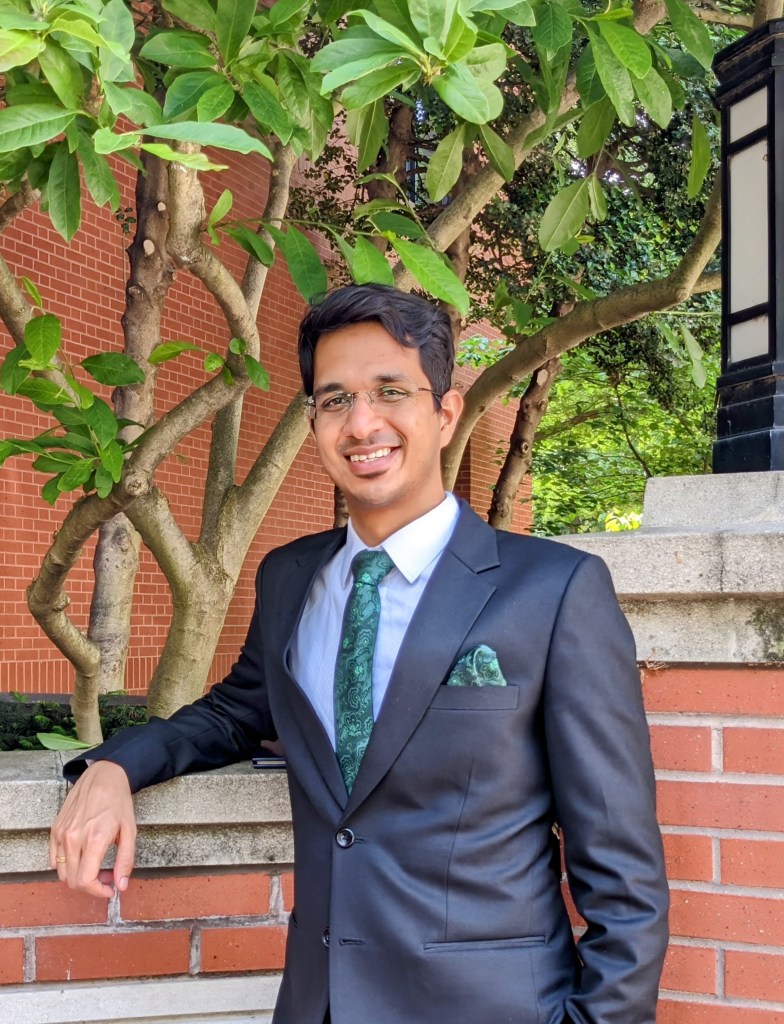
Sushant Mahajan recently graduated with an LLM from George Washington University (GW Law), where he took up a concentration in international dispute resolution. In this FPA, he shares his experiences of enrolling for a master’s abroad after seven years of work experience, balancing his India practice and the LLM coursework, and the GW Law LLM experience itself.
When we spoke about your reasons for pursuing the LLM at GW, one of the things you mentioned was the need to cater to a global set of clients. Was this something that you thought of from the very start of your legal career? Do you foresee a growing interest for high quality legal work from India?
My decision to pursue an LLM was significantly influenced by my early exposure to international legal work. One pivotal experience was my involvement in the ‘Italian Marines’ case at the International Tribunal for the Law of the Sea (ITLOS), where I gained first-hand insight into complex transnational issues.
This exposure was supplemented over the years by participation in numerous international arbitrations at SIAC, LCIA, and DIAC, which allowed me to appreciate the global nature of legal practice and underscored the importance of catering to a diverse and international clientele.
Pursuing an LLM was a strategic step to enhance my expertise in areas such as international law, international business transactions, international dispute resolution, and international finance. I aimed to equip myself with the skills and knowledge necessary to effectively address the needs of clients with international interests.
I anticipate a notable surge in the demand for high-quality legal work originating from India. The dynamic nature of the Indian economy, coupled with its increasing integration into the global market, suggests a growing interest in sophisticated legal services. With businesses in India actively participating in cross-border transactions and the influx of foreign capital in India, the need for legal professionals capable of delivering comprehensive and informed legal support is definitely going to rise.
Another reason why you chose GW in particular was the university’s reputation for IDR – could you tell me a bit more about this? Any other schools that you looked at or would advise other lawyers to consider in this particular field of law?
GW Law is one of the few top law schools that offers a concentration in international dispute resolution. The concentration offers a unique opportunity to delve into the intricacies of international dispute resolution and is committed to providing a practical and immersive experience in the field. There are dedicated courses focusing on international arbitration, investor-state dispute settlement, and international business transactions.
What further solidified my decision was the prospect of learning from globally renowned academicians and practitioners such as Sean Murphy, Stanimir A. Alexandrov, Marinn Carlson, John R. Crook, and Steve Charnovitz.
In addition to this, the strategic location of GW Law in Washington, D.C., provides unparalleled access to influential practitioners and institutions. This exposure allows students not only to grasp the theoretical aspects of international law but also to gain practical insights and build connections within the vibrant international arbitration community based in the heart of Washington, D.C.
For lawyers interested in pursuing a career in IDR, I would recommend thoroughly researching programs at various institutions, and assessing factors such as faculty expertise, access to practical experiences, and alumni achievements.
Ultimately, the choice should align with one’s professional goals and the specific aspects of IDR that one wishes to specialize in.
Are there any notable developments in international dispute resolution that you believe are relevant in the Indian context?
In recent years, the landscape of international dispute resolution has witnessed several noteworthy developments that bear implications for the Indian context. With the global legal framework continually evolving, one key development is the call for reform of the Investor-State Dispute Settlement system, which I have elucidated more in ‘The Future of EU Investment Law’ and ‘Studying International Investment Treaties and Investor-State Disputes through a Central Asian Lens’.
India is a major destination for FDI and as such it may find it necessary to contribute to the discussion on the reform of ISDS.
Another important issue, that I have highlighted in ‘Entry to Foreign Lawyers & Law Firms in India & its impact on International Arbitration in India’ is how the entry of foreign lawyers and law firms in the Indian legal market would influence the dynamics of international arbitration within the country.
This development could potentially impact the quality of legal representation, and contribute to the internationalization of dispute resolution practices in India.
Given that you already had a well-established practice, was it a difficult decision to move to DC for the LLM? Any “cost benefit” analysis tips that you can share?
The decision to come to Washington, D.C., for the LLM at GW Law was indeed a thoughtful one, given my well-established legal practice. Undertaking a cost-benefit analysis did play a pivotal role in the decision-making process.
I considered the professional growth and networking opportunities that the LLM program and its location offered. The potential for expanding my professional network and gaining exposure to diverse legal perspectives was a significant benefit that factored into the decision. Another critical consideration was the specialized expertise offered by the LLM program. The concentration in international dispute resolution at GW Law complemented my existing practice, allowing me to deepen my expertise in a targeted area.
Nonetheless, a thorough analysis of the potential return on investment was crucial. This involved weighing the costs of tuition, living expenses, and any temporary disruption to my practice against the long-term benefits of acquiring specialized knowledge and expanding my professional network.
Early days yet, but how has the LLM experience been? What have been some of the most rewarding aspects of the program?
The LLM experience has been extremely fulfilling and rewarding. One of the standout features was the opportunity to immerse myself in a specialized learning environment and freely engage with distinguished faculty known for their expertise in international law. The professors bring a wealth of practical experience and academic insight contributing to wholesome discussion of the law.
The program has also facilitated extensive networking opportunities, allowing me to interact with fellow students, legal professionals, and industry experts from all across the globe. The diversity of experiences among my peers substantially enhanced my understanding of the interconnected nature of legal practice around the world.
From a purely professional perspective, how do you think the LLM builds into your plans for growth?
The program’s concentration in international arbitration and dispute resolution aligned seamlessly with my career trajectory, offering specialized expertise crucial for navigating the complexities of global legal practice.
This targeted knowledge enhances my proficiency in handling international disputes, positioning me as a sought-after expert in an increasingly competitive legal landscape. Moreover, the program’s emphasis on practical application ensures that my learning extends beyond theoretical knowledge. Participation in moot court competitions, negotiations, and real-world case studies hones my practical skills, preparing me to adeptly navigate complex international legal challenges in my professional practice.
Additionally, the unique advantages of engaging with notable professionals, law firms, and international organizations during the program creates a valuable network that can catalyze future collaborations, partnerships, or career advancements.
Also, you had to balance your work along with the LLM course load – was this tricky? How did you manage to do both?
Balancing my professional commitments with the LLM course load did present its challenges, but effective time management and a strategic approach allowed me to navigate both responsibilities successfully. Striking a balance required meticulous planning and prioritization.
I structured my work hours efficiently, dedicating specific blocks of time to coursework, research, and assignments. Clear communication with colleagues about my academic commitments fostered understanding, and their support proved instrumental in managing expectations during peak academic periods.
Moreover, effective use of technology streamlined communication and collaboration, ensuring that work tasks were efficiently addressed even while pursuing the LLM.
Making the most of my time, I successfully revitalized the ‘International Arbitration Students Association at GW,’ organized panels on contemporary issues in international dispute resolution, graduated with highest honors, and received the ‘Thelma Weaver Award’ for my contributions to the law school—achievements attained without compromising the quality of my work.
Lastly, any advice for Indian legal practitioners with a similar amount of PQE who are considering a master’s abroad? What would you say are two or three of the most important factors to be taken into account before enrolling?
Embarking on an LLM program abroad after several years of legal practice can be a transformative experience, offering unique opportunities for personal and professional growth. When advising legal practitioners with a comparable PQE, it is imperative to stress the significance of thorough research before choosing a program.
A well-informed decision involves considering factors such as the program’s curriculum, faculty expertise, and available specializations.
Opting for universities with a strong reputation in the specific field of law that aligns with one’s career goals is necessary to ensure an enriching and relevant educational experience.
We need your help in keeping this blog alive. If you feel that the content on this blog has helped you, please consider making a donation here.
 Amicus Partners
Leave a comment